




Whether you're a seasoned business owner or an entrepreneur at the start of your journey, understanding the concept of Minimum Order Quantity (MOQ) is crucial to managing your inventory and maintaining profitability. This comprehensive guide will delve into the nuances of MOQ, exploring strategies to negotiate lower MOQs with suppliers and offering insights on how to find low MOQ products and suppliers on platforms like Alibaba, 1688.com, and Globalsources.com.
Table of Contents
Part 2. High and Low MOQ: What's the Difference?
Part 3. Why Some MOQs on Globalsources.com are So High and Why Suppliers Need MOQs?
Part 4. How to Find Low MOQ Products and Suppliers on Globalsources.com?
Part 5. How to Negotiate Minimum Order Quantity (MOQs)
Part 6. Sourcing from China: Strategies to Lower MOQ
Part 1. The ABCs of MOQ
Minimum Order Quantity, or MOQ, is a commonly used term in business. It outlines the smallest number of units that a supplier or manufacturer is willing to sell in one order. As a buyer, understanding MOQ is crucial because it influences your inventory management, cost, and supplier relations.
How Many Units Are “Low MOQs” or “High MOQs”?
The concept of "Low MOQ" (Minimum Order Quantity) and "High MOQ" varies significantly depending on the industry, product type, production capabilities, and specific requirements of both the manufacturer and the buyer. However, some general guidelines are provided to help you understand what might be considered low or high in different contexts.
Low MOQ
- Small Businesses and Startups: For small businesses or startups, a low MOQ could range from 1 to 100 units. This range allows these businesses to order small quantities, reducing their risk and initial investment.
- Custom or High-End Products: For custom-made or luxury items, a low MOQ might still be around 10-50 units due to the specialized nature of production.
- Apparel and Fashion: In the fashion industry, a low MOQ could be anything from 50 to 500 units, especially for smaller brands or when producing multiple variations of a product.
High MOQ
- Mass Production: For mass-produced items, a high MOQ could be in the thousands or even tens of thousands. This is common in industries like electronics, toys, and household goods where economies of scale significantly reduce production costs.
- Commodities: For commodity items like raw materials, packaging, or standard components, high MOQs could be in the hundreds of thousands or even millions, depending on the item.
Factors Influencing MOQ
- Production Costs: Higher production costs often lead to higher MOQs as manufacturers seek to ensure profitability.
- Customization: More customized orders usually have lower MOQs since they cater to specific needs and are typically priced higher.
- Industry Standards: Some industries have established norms for MOQs based on common practices and expectations.
Part 2. High and Low MOQ: What's the Difference?
The difference between High MOQ (Minimum Order Quantity) and Low MOQ revolves around the minimum number of units that a supplier is willing to produce and sell. Each has its implications for businesses, affecting everything from inventory management to financial investment. Here's a breakdown of the differences:
High MOQ
- Larger Investment Required: A high MOQ means that you need to commit to purchasing a larger quantity of goods upfront. This can tie up significant capital in inventory.
- Lower Unit Cost: Generally, suppliers offer lower prices per unit for larger orders due to economies of scale. This can lead to higher profit margins per unit sold.
- Inventory Management: With a high MOQ, you'll have more inventory to manage. This requires more storage space and could increase the risk of unsold stock, especially for seasonal or trendy items.
- Suitable for: Established businesses with predictable demand, larger storage capacities, and the financial resources to invest in inventory.
Low MOQ
- Lower Initial Investment: A lower MOQ allows businesses to purchase smaller quantities, reducing the initial financial outlay and risk.
- Higher Unit Cost: The cost per unit is typically higher with low MOQs due to the lack of economies of scale. This could mean lower profit margins unless prices are adjusted accordingly.
- Flexibility in Inventory Management: With fewer units required, businesses can manage inventory more flexibly, quickly adapting to market trends or demand changes.
- Suitable for: Small businesses, startups, or those testing new markets or products without the desire or capacity to hold large amounts of inventory.
Key Differences Summarized:
- Investment Size: High MOQs require a larger upfront investment compared to low MOQs.
- Unit Cost: Unit costs are generally lower with high MOQs due to economies of scale.
- Inventory Risk and Management: High MOQs increase inventory levels and associated risks, whereas low MOQs offer greater flexibility and lower risk.
- Suitability: High MOQs are more suited to established businesses with predictable demand, while low MOQs cater to smaller businesses or those wanting to minimize risk.
In essence, the choice between high and low MOQ depends on a business's financial capacity, storage capabilities, risk tolerance, and market demand understanding. Negotiating MOQs that align with your business strategy and goals can be crucial for operational efficiency and profitability.
Part 3. Why Some MOQs on Globalsources.com are So High and Why Suppliers Need MOQs?
MOQs are set by suppliers for several reasons. Primarily, it is to cover their costs and ensure profitability. Producing and selling products in bulk is more cost-effective for suppliers, as they can spread their fixed costs over a larger number of units. High MOQs also protect suppliers from low-volume orders, which can increase administrative costs and reduce profit margins.
Minimum Order Quantities (MOQs) on platforms like Alibaba, Global Sources can sometimes be surprisingly high, but there are several compelling reasons for suppliers to set these thresholds. Understanding these reasons can help buyers navigate the sourcing process more effectively. Here are the primary factors behind high MOQs and why suppliers need them:
- Economies of Scale: Producing in larger quantities allows manufacturers to spread out their fixed costs (like machinery and labor) over more units, reducing the cost per item. This efficiency is especially crucial in competitive markets where margins are thin.
- Raw Material Purchase Minimums: Suppliers themselves often face MOQs from their raw material providers. To ensure they can produce efficiently and cost-effectively, they pass these minimums onto their buyers.
- Customization and Setup Costs: If a product requires customization, setting up production lines or adjusting machinery for small orders can be disproportionately expensive. High MOQs ensure that these setup costs are justified by a sufficient volume of production.
- Shipping and Handling Efficiency: Larger orders streamline the logistics process, reducing the per-unit cost of shipping and handling. This efficiency is particularly significant for international trade, where logistics can be complex and costly.
- Market Focus and Brand Strategy: Some suppliers set high MOQs to position themselves in the market as wholesalers or to cater specifically to larger businesses. This strategy aligns with their operational capacities and business goals.
- Quality Control and Consistency: Producing in larger batches helps maintain consistency across products, as it's easier to manage quality control processes. This consistency is crucial for both the supplier's reputation and the buyer's satisfaction.
- Risk Management: High MOQs can also be a way for suppliers to manage risks associated with new clients or products. By requiring larger orders, they ensure a commitment from the buyer, which can offset potential losses from untested market entries or unreliable partners.
Understanding these reasons can help buyers approach negotiations with suppliers more effectively. In some cases, suppliers may be willing to negotiate on MOQs, especially if there's a prospect of a long-term relationship or if the buyer agrees to certain conditions, such as paying a higher price per unit to offset the supplier's costs for smaller orders. Building a good relationship with suppliers and demonstrating a clear understanding of their needs and challenges can often lead to more favorable terms for both parties.
Part 4. How to Find Low MOQ Products and Suppliers on Globalsources.com?
Finding suppliers who offer low Minimum Order Quantities (MOQs) is crucial for small businesses and startups looking to test the market without committing to large inventory volumes. GlobalSources.com, a leading B2B platform for connecting buyers with suppliers from Asia and beyond, offers a variety of tools and features to help you find low MOQ products and suppliers. Here’s how you can navigate the platform to find these opportunities:
Explore the Low MOQ Section
Global Sources has a dedicated section for small orders, which is a treasure trove for finding low MOQ products. This section is designed specifically for buyers looking to place smaller orders, and you can easily browse through a wide range of products available in smaller quantities. It’s an excellent starting point for those new to sourcing from Asia.
Utilize Minimum Order Filters
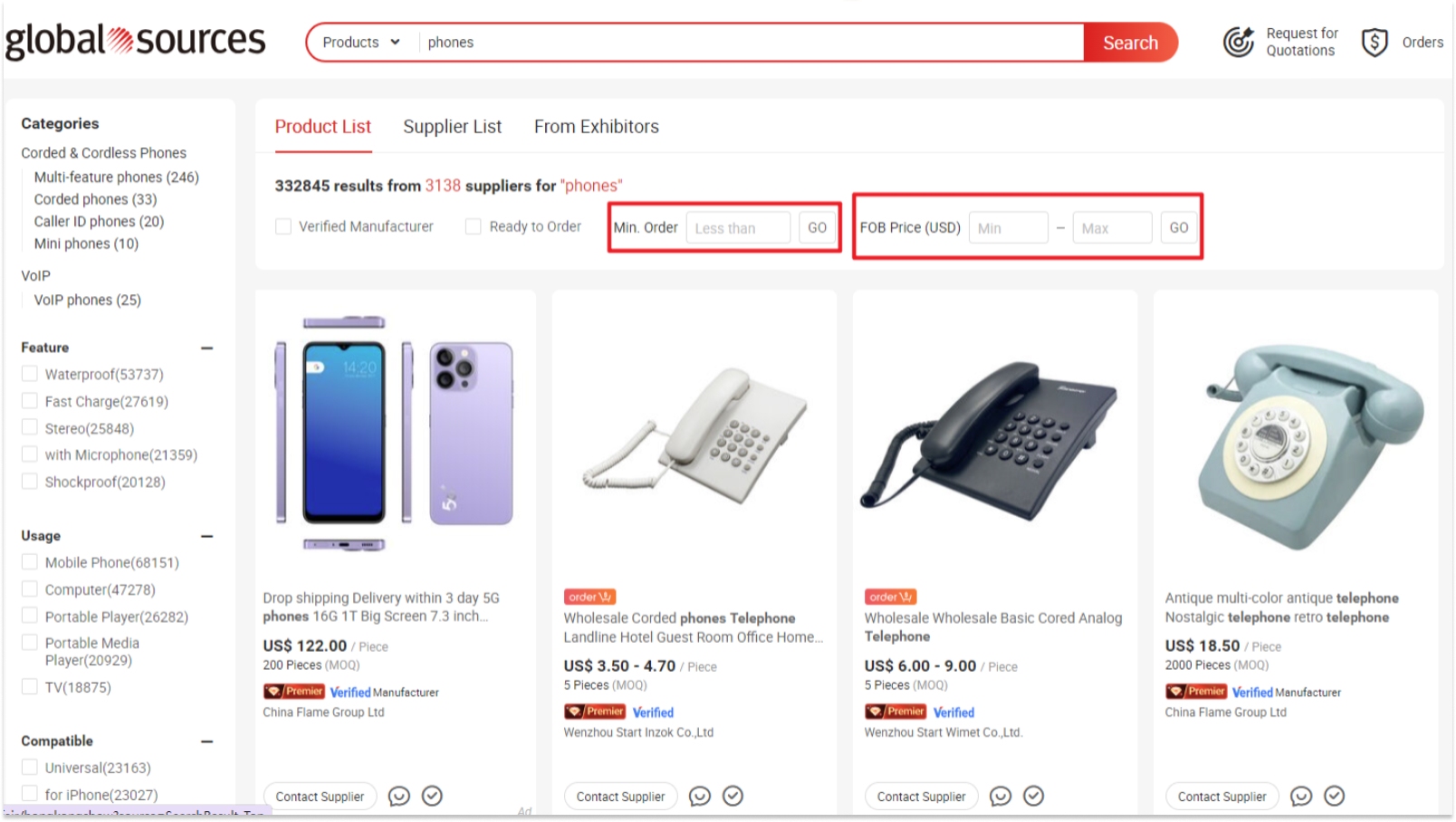
When searching for products or suppliers, use the filters available on GlobalSources.com to narrow down your search based on MOQs. The platform has a direct MOQ filter, you can also use price filters as a proxy, as lower-priced items may have lower MOQs. Additionally, filtering by business type (e.g., manufacturers vs. trading companies) can also influence MOQs, as manufacturers might offer more flexibility for direct orders.
Check Supplier Profiles
Once you have a list of potential suppliers, delve into their profiles for MOQ information. Suppliers on GlobalSources.com often list their MOQ requirements on their profile or product pages. This detail can vary significantly from one supplier to another, even for similar products, so it pays to compare.
Direct Communication
Once you’ve identified potential suppliers, the next step is to communicate directly with them. Use the contact forms or chat features on GlobalSources.com to inquire about MOQs. Be clear about your requirements and ask if they are willing to negotiate on MOQs. Some suppliers may lower their MOQ if you discuss longer-term partnerships or agree to higher unit prices for smaller orders.
Attend Trade Shows Virtually or in Person
Global Sources also organizes trade shows that can be an excellent opportunity to find low MOQ suppliers. These events allow you to meet suppliers face-to-face or virtually, discuss your needs in detail, and negotiate terms directly. Trade shows are also a great way to discover new products and trends.
Stay Flexible and Open to Negotiation
Finding the right supplier with a low MOQ often requires negotiation. Suppliers may be more willing to reduce their MOQ for long-term business relationships or if you're flexible with other terms, such as unit price or payment methods.
Sourcing products with low MOQs on GlobalSources.com is an accessible process if you know where to look and how to engage with suppliers. By leveraging specific search strategies, utilizing platform features designed for small orders, and engaging in direct communication with suppliers, you can find suitable partners willing to accommodate your business needs. Remember, building a good relationship with suppliers can often lead to more favorable terms, including lower MOQs, so approach each interaction with professionalism and a view towards long-term collaboration.
Part 5. How to Negotiate Minimum Order Quantity (MOQs)
Negotiating for low minimum order quantities (MOQs) with suppliers on Globalsources.com can be a game-changer for small businesses and entrepreneurs looking to source products cost-effectively. In this comprehensive guide, we'll explore proven strategies and tactics to help you navigate the negotiation process and secure favorable MOQ terms with suppliers on this popular B2B platform.
#1 Understanding Minimum Order Quantities (MOQs)
Before diving into the negotiation process, it's essential to understand the concept of MOQs. Minimum order quantities refer to the smallest quantity of a product that a supplier is willing to sell. These quantities are often set by manufacturers or wholesalers to ensure that their production runs are economically viable and to cover their operational costs.
MOQs can vary significantly depending on the product, supplier, and industry. Some suppliers may require MOQs as low as a few units, while others may demand thousands of units per order. High MOQs can pose a significant challenge for small businesses and startups with limited capital or storage space.
#2 Preparing for Negotiations
Effective negotiations begin with thorough preparation. Here are some crucial steps to take before reaching out to suppliers:
- Define Your Needs: Clearly outline your product requirements, desired quantities, and budget constraints. This will help you communicate your needs effectively during negotiations.
- Research the Market: Conduct market research to understand the average MOQs for the products you're interested in. This information will give you a baseline for negotiation and help you identify suppliers with potentially lower MOQs.
- Identify Potential Suppliers: Use Globalsources.com's advanced search filters to find suppliers that offer the products you need. Pay attention to their MOQ information, if available, and create a shortlist of potential suppliers to contact.
- Build Rapport: Before initiating negotiations, try to establish a rapport with the supplier. Engage in friendly communication, ask questions about their business, and express genuine interest in their products and services.
#3 Negotiation Strategies for Low MOQs
Once you've prepared, it's time to put your negotiation skills to the test. Here are some effective strategies to consider:
- Start High, Then Negotiate Down: Begin by expressing interest in a higher quantity than you actually need. This approach can make your desired lower MOQ seem more reasonable during negotiations.
- Offer to Be a Test Customer: Suggest being a test customer for the supplier, allowing them to evaluate your business potential. This can incentivize them to offer lower MOQs initially to secure your business.
- Leverage Existing Relationships: If you've worked with the supplier before or have a strong referral, leverage that relationship to negotiate better terms, including lower MOQs.
- Propose a Trial Order: Suggest placing a smaller trial order first, with the potential for larger orders in the future if the partnership is successful. This can help mitigate the supplier's risk and make them more open to lower MOQs.
- Highlight Long-Term Potential: Emphasize your long-term growth plans and the potential for increased orders in the future. This can incentivize the supplier to offer lower MOQs to secure your business early on.
- Negotiate Payment Terms: If the supplier is hesitant to lower MOQs, consider negotiating more favorable payment terms, such as upfront payments or shorter payment cycles, to offset their perceived risk.
- Seek Bundle Deals: Explore the possibility of bundling multiple products from the same supplier. This can increase your overall order volume and potentially lead to lower MOQs for individual products.
#4 Communication and Follow-Up
Effective communication is crucial throughout the negotiation process. Here are some tips to keep in mind:
- Be Polite and Professional: Maintain a respectful and professional tone, even when negotiations become challenging. Building a positive relationship with the supplier can pay dividends in the long run.
- Listen Actively: Pay close attention to the supplier's concerns and objections. This will help you address their reservations more effectively and find mutually beneficial solutions.
- Provide Justification: Be prepared to explain why a lower MOQ is important for your business and how it can benefit the supplier in the long run.
- Follow Up Promptly: After each negotiation session, follow up promptly with a summary of the discussed points and any agreed-upon terms. This helps maintain transparency and ensures both parties are on the same page.
- Be Willing to Walk Away: If negotiations reach an impasse and the supplier is unwilling to meet your reasonable requests for lower MOQs, be prepared to walk away from the deal. While this may seem counterintuitive, it demonstrates your resolve and can sometimes prompt the supplier to reconsider their position. However, it's essential to approach this decision carefully and professionally. Avoid burning bridges or making threats, as you may need to revisit negotiations with the same supplier in the future. Instead, express your regret that an agreement couldn't be reached and leave the door open for future discussions.
- Seek Alternatives: If one supplier remains inflexible, don't be discouraged. Globalsources.com offers a vast network of suppliers, and you may find others more willing to accommodate your MOQ requirements. Explore alternative options and continue negotiating until you find a suitable partner.
- Leverage Competition: In some cases, you may find it beneficial to share competing offers from other suppliers with your preferred vendor. This can create a sense of urgency and incentivize them to match or improve their terms to secure your business.
- Consider Compromise: Negotiation is often a give-and-take process. If a supplier is unwilling to budge on MOQs, consider exploring other areas where you can find common ground, such as payment terms, delivery schedules, or product customization options.
- Maintain Professionalism: Even if negotiations become tense or frustrating, it's crucial to maintain a professional demeanor. Avoid emotional outbursts or confrontational language, as this can damage your credibility and harm future negotiations.
- Express Gratitude: Regardless of the outcome, express gratitude to the supplier for their time and consideration. A positive attitude can leave a lasting impression and pave the way for future collaborations.
- Effective communication and follow-up are essential components of successful MOQ negotiations on Globalsources.com. By employing these strategies, you can increase your chances of securing favorable terms, building strong supplier relationships, and positioning your business for long-term success in the global sourcing arena.
#5 Building Long-Term Relationships
While securing low MOQs is important, it's equally crucial to foster long-term relationships with suppliers. A strong partnership can lead to better terms, priority treatment, and access to new products or exclusive deals in the future. Here are some tips for building lasting relationships:
- Be Reliable and Consistent: Fulfill your end of the bargain by placing orders on time, making prompt payments, and providing clear communication. This establishes trust and credibility with the supplier.
- Provide Feedback: Share constructive feedback with the supplier regarding their products, services, and overall experience. This feedback can help them improve and strengthen your partnership.
- Offer Referrals: If you're satisfied with a supplier's performance, consider referring them to other businesses in your network. This can incentivize them to maintain high standards and offer preferential treatment.
- Attend Trade Shows: Participate in relevant trade shows or events where your suppliers exhibit. This provides an opportunity to meet face-to-face, discuss new products, and strengthen your relationship.
- Stay Updated: Keep track of the supplier's news, updates, and new product launches. This demonstrates your interest in their business and can open doors for future collaborations or exclusive deals.
#6 Negotiating with Integrity
While negotiating for low MOQs is essential for cost-effective sourcing, it's crucial to maintain ethical practices and respect the supplier's business needs. Here are some guidelines to follow:
- Be Transparent: Provide accurate information about your business and requirements. Avoid misrepresenting your situation or making unrealistic promises.
- Respect Intellectual Property: Ensure that you're not infringing on the supplier's intellectual property rights, such as trademarks or copyrights, during negotiations or product sourcing.
- Maintain Confidentiality: Respect the supplier's confidentiality and refrain from sharing sensitive information with competitors or unauthorized parties.
- Comply with Regulations: Ensure that your negotiations and product sourcing comply with all relevant local and international regulations, including import/export laws and trade agreements.
#7 Case Study: Successful MOQ Negotiation on Globalsources.com
To illustrate the effectiveness of these strategies, let's explore a real-life case study of a successful MOQ negotiation on Globalsources.com.
Company A, a small e-commerce startup, was looking to source a line of eco-friendly kitchen utensils. After extensive research, they identified a promising supplier on Globalsources.com, but the supplier's standard MOQ was 1,000 units per product, which exceeded Company A's initial budget and storage capacity.
Following the strategies outlined in this guide, Company A took the following steps:
They reached out to the supplier, expressing interest in a higher quantity (2,000 units) to start the negotiation process.
During the initial conversation, they highlighted their long-term growth plans and the potential for larger orders in the future, incentivizing the supplier to consider lower MOQs.
Company A proposed a trial order of 500 units per product, with the option to increase quantities if the partnership proved successful.
They also offered to be a test customer, allowing the supplier to evaluate their business potential and potentially gain a foothold in a new market.
Throughout the negotiations, Company A maintained a professional and respectful demeanor, actively listening to the supplier's concerns and providing justifications for their requests.
After several rounds of negotiations and follow-ups, the supplier agreed to a reduced MOQ of 500 units per product for the initial order, with the potential for further reductions on subsequent orders based on performance.
This case study demonstrates the power of effective negotiation strategies, clear communication, and a willingness to build long-term relationships with suppliers. By following the principles outlined in this guide, Company A was able to secure favorable MOQ terms and lay the foundation for a mutually beneficial partnership with the supplier.
Part 6. Sourcing from China: Strategies to Lower MOQ
Sourcing products from China has become an integral part of the global supply chain strategy for many businesses, offering opportunities for cost savings, access to a wide range of products, and scalability. However, navigating the complexities of working with Chinese suppliers, especially concerning Minimum Order Quantity (MOQ) requirements, can be challenging. High MOQs can pose significant barriers for small to medium-sized enterprises (SMEs), startups, and even larger businesses looking to test new markets or products. This introduction explores effective strategies to lower MOQ when sourcing from China, facilitating more flexible, risk-managed procurement practices.
The Challenge of MOQ in Chinese Manufacturing
MOQ refers to the minimum quantity of items that a supplier is willing to produce in a single order. It's a common practice in manufacturing, particularly in China, where the economy of scale significantly influences production costs. High MOQs can tie up capital in excess inventory, increase storage costs, and elevate the risk of obsolescence, especially for businesses testing new products or markets. Understanding and negotiating MOQs are crucial for maintaining a lean and agile supply chain.
The Importance of Lowering MOQ
Lowering MOQ offers numerous benefits, including reduced financial risk, improved cash flow management, and the ability to respond quickly to market trends and consumer demands. It allows businesses to test the market with new products without committing to large volumes. For startups and SMEs, this can be a game-changer, enabling them to compete more effectively without the need for substantial upfront investment.
Strategies to Lower MOQ When Sourcing from China
Building Strong Relationships with Suppliers
A strong relationship with your suppliers is foundational to successful negotiation, including MOQ adjustments. Suppliers are more likely to accommodate the needs of businesses they trust and see as long-term partners. Regular communication, understanding their production challenges, and prompt payments can foster goodwill and flexibility.
Leveraging Total Business Volume
If you're sourcing multiple products or anticipate regular orders, use your total business volume as leverage in negotiations. Suppliers may lower MOQs for individual items if they see potential for substantial overall business. This approach requires a strategic view of your procurement practices and open discussions about future business potential.
Opting for Standard Products Over Customizations
Customized products often come with higher MOQs due to the specialized molds, materials, or designs required. Whenever possible, opt for standard products or request minor modifications to existing items. This strategy can significantly reduce MOQs while still meeting your product needs.
Consolidating Orders with Other Buyers
Consider joining forces with other businesses that have similar sourcing needs. By consolidating orders, you can meet higher MOQ requirements while each business maintains lower individual order volumes. This approach requires coordination and trust among the participating businesses but can be highly effective in reducing per-unit costs and MOQs.
Exploring Product Bundling
Product bundling involves ordering a mix of different products but treating them as a single order to meet MOQ requirements. This strategy can be particularly useful for businesses looking to offer a range of products without overcommitting to any single item. Discuss with your supplier the possibility of bundling products as a way to diversify your offerings while keeping order volumes manageable.
Negotiating Payment Terms
Sometimes, suppliers may be willing to accept lower MOQs in exchange for more favorable payment terms, such as upfront payments or shorter payment cycles. This strategy can be beneficial if you have the cash flow to support it, as it minimizes risk for the supplier while allowing you more flexibility in order volumes.
Utilizing Trade Shows and B2B Platforms
Trade shows and B2B platforms are excellent venues for finding suppliers open to lower MOQs. These settings often foster competitive environments where suppliers are more willing to negotiate terms, including MOQs, to secure new business. Additionally, they provide opportunities to discover emerging suppliers who may offer more flexible terms as they seek to establish themselves in the market.
Conclusion
Navigating the complexities of MOQ when sourcing from China requires a strategic approach and a willingness to explore creative solutions. By building strong relationships with suppliers, leveraging total business volume, opting for standard products, consolidating orders, exploring product bundling, negotiating payment terms, and utilizing trade shows and B2B platforms, businesses can effectively lower MOQs. These strategies enable more flexible procurement practices, reduce financial risks, and allow companies to respond agilely to market demands and opportunities.
Also Read:

