Download App
Better Online and Trade Show Sourcing Experiences.Scan the QR code to download.
Learn More
Hot Topics
The logistics sector plays an integral role in facilitating trade and commerce and helping businesses get their products to customers – and the ongoing pandemic has put an unprecedented strain on the industry. Mandated lockdowns, travel restrictions, and border closures across the globe had disrupted activities at both manufacturing facilities and logistics operations. In the wake of the disruptions brought by the pandemic, key supply chains in logistics and transportation industries were impeded across air, ocean and land freight sectors. Cargoes were backlogged at major container ports, shipments were delayed, and orders took longer to arrive.
This e-book from Global Sources takes a hard look at the impact of the pandemic on the global supply chain and logistics, the challenges in key transportation segments, and what the future holds for the industry and beyond.
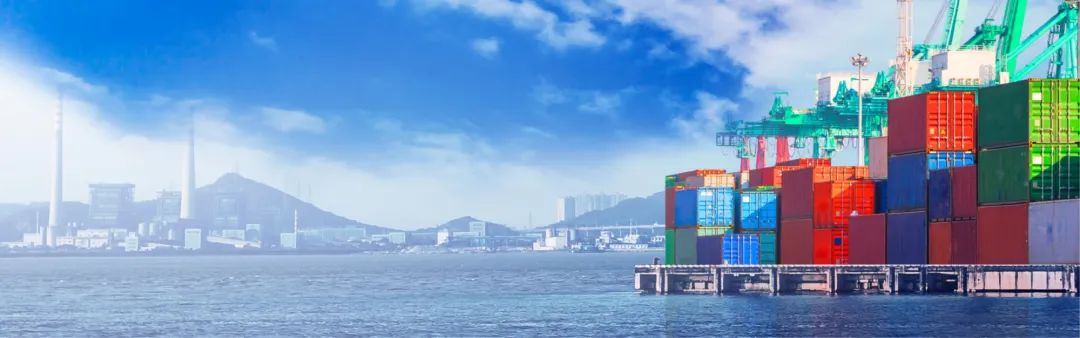
As businesses are gearing up for reopening, it is crucial to understand key global developments emerging from the pandemic. The impact of COVID-19 on the world’s logistics discusses the significant economic impact of the pandemic on the global logistics industry and how businesses are coping with the disruptions to the supply chain. The book gives an outlook of the logistics sector, the challenges in three key transportation segments, and recommended solutions to ensure trade and commerce continue. Through this book, sourcing professionals will be able to make the right decisions and strategies to move their business forward. Visit globalsources.com to find out more smart sourcing tips on relevant issues affecting the industry. About this book
Crucial in the movement, storage and flow of goods, the logistics industry provides one of the most vital services in today’s globalized and interconnected world. Based on a recent report from International Finance Corporation, the global logistics market is estimated to grow from US$2,734 billion in 2020 to US$3,215 billion by 2021, at a YoY of 17.6 percent post-COVID-19. The growth is primarily driven by the increasing demand for supply of essential commodities as well as the massive distribution of personal protective equipment and medical supplies.
FMCG and healthcare are expected to take the largest slice of the global logistics market during the forecast period. In the transportation department, roadways occupy the biggest segment, with trucking seen as a critical mode of transferring goods and supplies amidst the pandemic. Among the first to take stringent measures to contain the spread of the virus, Asia Pacific is projected to hold the largest logistics market size. Moreover, the region is expected to show positive signs in the foreseeable future as the supply chain gradually recovers.
The disruption wrought by the pandemic on the supply chain has presented vast challenges to the logistics industry everywhere in the world. According to Statista, the global logistics sector has contributed a decrease of 6.1 percent in gross value to the economy – with the impact varying across countries, from a 0.9 decline in China to 18.1 decline in Italy.
From much-reduced ocean and air cargo capacity to a rapid shift from physical store purchasing to online shopping, companies were compelled to operate in new ways and come up with strategies to mitigate disruption and ensure business continuity. Meanwhile, in its report “The Impact of COVID-19 on Logistics”, International Finance Corporation cited major impacts on freight capacity in three global transportation segments.
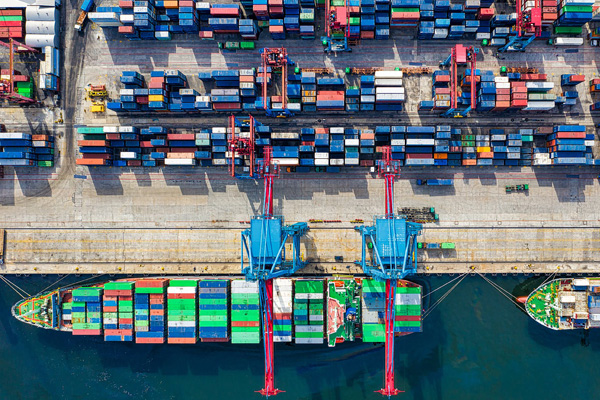
COVID-19 has turned the tide on ocean freight. According to Agility, ocean freight is typically around 90 percent of global trade volume in normal times. But with the onset of the pandemic, everything changed. Supply of manufactured goods out of Asia was impeded and created a ripple effect across the world and sent demand for goods shipped by ocean freight plummeting.
Based on International Finance Corporation’s report, total container volumes handled at Chinese ports nosedived by 10.1 percent in the first months of 2020. Primary reasons for this drop were the constraints on ocean freight worldwide, as well as the cancelation of sailings and elimination of strings (where vessels call on several ports before reaching a destination) by ocean carriers.
Perhaps the worst-hit sector is the aviation industry.
Freight capacity vanished into thin air. Statista’s report showed that total air freight volume fell by 19 percent in March 2020, amounting to only four million metric tons. This drop in capacity was largely due to the reduction and cancelation of passenger flights – which carried a significant portion of freight as belly cargoes. Another reason was the decrease in manufacturing in China. While passenger aircraft are feeling the effects of the pandemic, the freight aviation industry is more mildly affected due to less stringent restrictions. According to International Finance Corporation, many shippers and even governments are turning to air cargo to deliver essential goods and commodities, resulting in a rise in air freights and delays due to the increased congestions at airports. There’s also the matter of air freight rates changing since the outbreak started in 2019. According to Statista, air freight rates between Hong Kong and North America were roughly US$6.43 per kilogram in January 2021. As many countries are still restricting the transport of goods across borders, it is expected that international air freight rates will soar as well.
Compared with ocean and air transport, land freight is relatively less affected by the pandemic. Land transport has remained available globally as roads have continued to be in operation. As the preferred mode of moving essential goods and commodities, it’s not surprising that the demand for trucking services has increased.
However, with the surge in demand, the road transport segment has faced driver shortages, not to mention cross-border restrictions. As a result, road freight capacity shrank in some places, transit times were longer, and shipments were delayed. Mandated social distancing measures in the warehouse to ensure the safety of workers also contributed to bottlenecks for freight. Meanwhile, demand for rail services is growing – driven by higher air freight rates, blank sailings and longer transit time for trucks.
According to International Economics, roughly 80 percent of global trade volume is being transferred by commercial shipping. Companies around the world are doing their best to meet this demand and ensure trade continues and goods reach their destinations. To reduce the impact of the pandemic on global supply chain and logistics, Agility recommends the following solutions: Capacity
The economic turmoil caused by the pandemic has exposed many vulnerabilities in supply chains and has caught many sectors off-balance. While others proved to be more prepared and faced the crisis with admirable resilience, some did not fare well. And given the devastating impact to the logistics ecosystem, what do these hold for the future of sourcing? What the future holds for sourcing
Professor Eric Buatois of the Switzerland-based International Institute for Management Development proposes a broad overhaul of the supply chain infrastructure to enable sourcing that is responsive to the vagaries of natural and man-made disasters. He suggested three paradigm shifts to the supply chain in a post-COVID-19 reality:
According to Buatois, the pandemic has exposed the hidden costs of single-source dependencies, which he deems as too rigid and inflexible to deal with unforeseen disruptions. This, he said, will lead to the re-emergence of logistics hubs at the regional level where “product integrators, sub-system suppliers and component suppliers will source, assemble and deliver from their own backyards.” In Europe, Buatois said the pandemic is expected to compel the regional block to see the importance of 10 The impact of COVID-19 on the world’s logistics
drawing critical supplies from its own sphere to create a more flexible and adaptable supply chain. He noted that in the pre-COVID era, Europe’s pharmaceutical industry has heavily relied on Asian suppliers, importing as much as 80 percent of the active components for its drug supply from China and India. In a recent research report, US-based credit rating agency Moody’s
“A move to more regional supply chains, as already is the case in the auto and electronics sectors, could accelerate the shift to domestic production of critical goods, such as pharmaceuticals and food,” Moody’s said. “The crisis has also laid bare the vulnerabilities of just-in-time supply chain management and could prompt companies to consider moving supply chains closer to their final markets and building redundancies. Data flows and trade in digital services may accelerate as more consumption and work shift online.”
According to Buatois, the struggle to fulfill the high demand for ventilators at the height of the pandemic exposed a lack of preparedness in the supply chain sector to meet a sudden surge of orders. He attributed this to the lack of optimization within the industry, which was behind the failure to anticipate or forecast demands. The adaptability required to respond to crises, he said, entails optimization through the use of advanced "visibility" where both suppliers and end-users can see real-time production and shipment status. 11 The impact of COVID-19 on the world’s logistics
Powered by robotic process automation to more advanced machine learning and artificial intelligence, Buatois envisioned these "dashboards" to "refresh every 20 minutes to provide a real-time overview of the entire supply chain."
In short, the supply chain industry should continue to leverage innovative platforms and digital technologies to increase resilience while, at the same time, producing more consistent products at lower prices.
As more companies emerge from the COVID-19 crisis, the so-called "human touch" will play an even bigger role in terms of adaptability and resilience, according to Buatois. The most ideal mix, he said, is the Toyota Principle of “autonomation” or automation with a human touch, which combines the power of computers with the unique abilities of the human mind itself.
"Big and unexpected changes in volume render statistical models useless. These assess events such as the pandemic as “outliers” and, therefore, discard them from the data. Although we need visibility for the people in the supply chain to be able to make decisions, most decisions should be made manually. Ergo, the human factor is key," Buatois said.
Autonomation involves automating around 80 to 90 percent of the system but allowing a 10 to 20 percent opportunity for human expertise to improve system operation, underscoring the role of manual labor as “a key asset of adaptation that plays a fundamental part of a crisis response program.”
Global Sources is a trusted, internationally recognized B2B sourcing platform that has been driving global trade for more than 50 years. The company connects authentic buyers and verified suppliers worldwide with tailored solutions and trusted market intelligence through trade shows, digital platforms, and magazines.
To be the most trusted, customer-centric, multi-channel B2B trade platform that promotes authentic global trade geared towards enhancing the quality of human lives Connect authentic buyers and suppliers worldwide with tailored sourcing solutions and actionable market intelligence. Help them meet the rapidly changing dynamics of global trade, source more effectively, and seize new opportunities.
Global Sources helps buyers find the right suppliers and products through its range of customized sourcing solutions
More Sourcing News
Read Also

关注 “环球资源外贸” 官方微信,获取实时外贸资讯
iOS & Android
iOS & Android(Mainland China)
Copyright © 2026 Publishers Representatives Limited. All rights reserved.




