Download App
Better Online and Trade Show Sourcing Experiences.Scan the QR code to download.
Learn More
Hot Topics
Despite the rise of facial recognition system in the mobile biometrics market, finger-print scanning is here to stay, and here’s why.
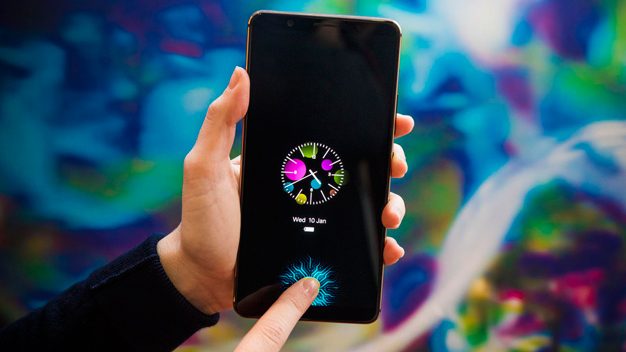
Image Source: James Martin/CNET
It’s been half a decade since fingerprint scanning became a hit in smartphone biometric security through capacitive scanning technology. It makes use of capacitors that store electric charges in order to read and identify the ridges and makes of a fingerprint. The scanning sensors are usually placed in smartphone home buttons like that in the iPhone 8 or at the rear of the phones like in the Samsung Galaxy S9 lineup. But in the advent of the bezel-less smartphone era, manufacturers are opting to take fingerprint scanning to the next level. Removing the home button in order to achieve a greater screen-to-body ratio might leave one asking: where will the fingerprint scanner go? This is where in-display fingerprint scanning comes in.
There are two types of fingerprint scanners used now in smartphones: optical scanners and ultrasonic scanners. Big brands such as Huawei, Samsung, OnePlus and Vivo have already released smartphones that incorporate these.
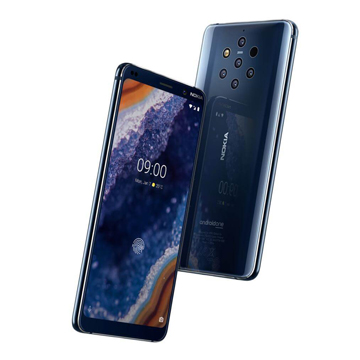
The 9 PureView in Nokia’s first smartphone with in-display scanning technology.
Image source: Nokia
In the recently concluded MWC 2019, Nokia announced the Nokia 9 PureView which sports five rear cameras and an in-display fingerprint sensor that uses optical scanning technology. The phone’s screen will light up in order to reflect light off a finger then capturing an image of the fingerprint. From there, algorithms will be used to map out fingerprint patterns, ridges and differentiating marks, as noted by Android Authority. However, according to Android Guys, there are a few drawbacks in this type of scanning. It can be tricked by hi-res photos, its slower and less accurate than capacitive fingerprint scanners, and lastly, it doesn’t work well with wet, oily or dirty fingers. This is why Samsung opted to use the other method of in-display fingerprint scanning: ultrasonic. This technology is found in the South Korea tech giant’s latest flagships, the Galaxy S10, S10 Plus and S10 5G.
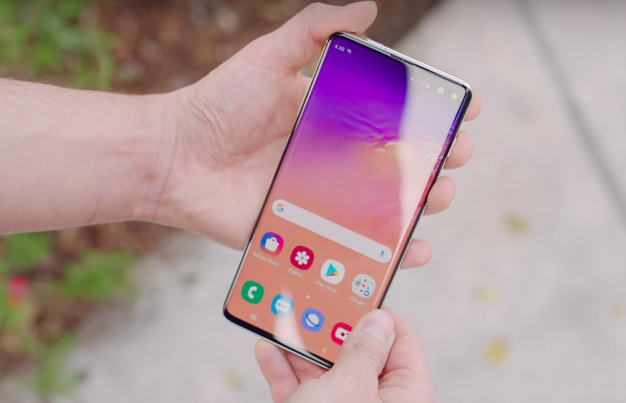
The Galaxy S10 Plus can be unlocked even with the display off just by tapping the screen.
Image source: Jonathan Morrison | @tldtoday
Unlike optical scanning which requires light in order to identify a fingerprint, ultrasonic technology uses inaudible soundwaves to create a 3D fingerprint map. When one touches his or her finger through the screen, soundwaves travel through the display, and then a 3D map of the fingerprint is created. Since it uses 3D mapping instead of 2D mapping as used in optical scanning, it is generally more secure and harder to fool. It also is faster than optical scanning, and it can work through dirt, water and oil. Thus, there is great promise in ultrasonic scanning.
The only downside of ultrasonic in-display scanning is that phones that use this technology will need compatible screen protectors. Plastic protectors can be used, but for now, only specific tempered glass protectors are compatible. Expect a lot of upcoming smartphones that will incorporate this technology. Start sourcing with Global Sources today for fingerprint scanning technology in the mobile market is still here to stay.
More Sourcing News
Read Also

关注 “环球资源外贸” 官方微信,获取实时外贸资讯
iOS & Android
iOS & Android(Mainland China)
Copyright © 2026 Publishers Representatives Limited. All rights reserved.




