Download App
Better Online and Trade Show Sourcing Experiences.Scan the QR code to download.
Learn More
Hot Topics
by Cecile de Veyra (Managing Editor)
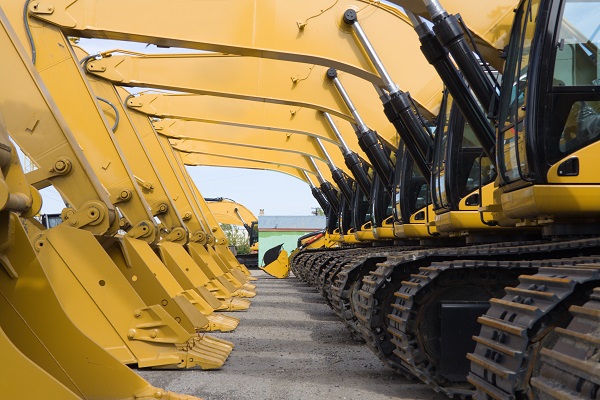 Image source: Getty
After slowing down in 2020 as a result of the pandemic, construction activities resumed and new ones begin in the following year, restarting postponed purchases for heavy equipment. From $176.2 billion in 2020, the construction equipment market is forecast to increase to $273.5 billion by 2030 at 4.4 percent CAGR from 2021, according to Allied Market Research. An upward trend in the used machinery sector is also expected, which had a value of $109 billion in 2021 and will be $152 billion by 2027 according to Mordor Intelligence’s projection.
There is a wide range of construction machinery, categorized into four main types: earth-moving, material-handling, and construction equipment and vehicles.
In the earth-moving group are excavators, graders, loaders, skid loaders, crawler loaders, backhoes, bulldozers, trenchers, scrapers and wheeled loading shovels. For moving, lifting and lowering materials, there are cranes, conveyors, hoists and forklifts, while construction equipment include concrete mixers, compactors, pavers and road rollers, and those specific to tunneling such as road headers and tunnel boring machines. Dump trucks, boom trucks and mobile cranes are examples of construction vehicles, as well as many wheeled versions of earth-moving equipment. But the most commonly used in various building sites are excavators, backhoes, bulldozers, dump trucks, loaders, compactors and cranes.
While most heavy equipment is still running on diesel engines, there are alternatives that may, hopefully, bring the building industry to a greener future. Switching to all-electric technology will help reduce carbon emissions, lessen noise pollution and lower project costs, according to Big Rentz, a US-based equipment rental company with an online marketplace. “Electric construction equipment isn’t a new concept. Hybrid electric machines have been available for years, and all-electric models of excavators, loaders, forklifts and other heavy machinery are currently available to rent or buy all over the world,” the company says. One example is Volvo CE’s ECR25, an electric excavator with a built-in charger that can charge up to 80 percent in less than six hours and an optional fast charger that can do the same in an hour.
Elsewhere in the industry, other innovations have been introduced, with many more expected to follow. They include semiautonomous excavators from Caterpillar that can provide real-time payload estimates without having to swing and prevent over- and underloading trucks. Komatsu’s bulldozers are another example, being equipped with automatic functions such as tilt steering control and fill material spreading.
“New models will feature a variety of innovative technologies, such as advanced sensors, electric engines, and sophisticated data collection capabilities,” according to Research and Markets.

Liyang Hengyu Machining Co. Ltd manufactures construction machinery parts such as the Machining 2014-0035-5606. Made of carbon steel, this product is laser-cut, sandblasted and plated with zinc. For a minimum of 50 pieces, orders can be shipped in 20 to 25 days.
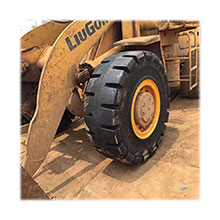
From Xuzhou Full Ocean Tyre Ltd, the 20.5-25 L5 Solid Tire for heavy equipment has a 14in rim, 1,490mm overall diameter, 520mm section width and 495mm tread cap width. Maximum load is 11,500kg. An order of one piece is accepted and has a lead time of 20 to 30 days.
More Sourcing News
Read Also

关注 “环球资源外贸” 官方微信,获取实时外贸资讯
iOS & Android
iOS & Android(Mainland China)
Copyright © 2026 Publishers Representatives Limited. All rights reserved.




