Download App
Better Online and Trade Show Sourcing Experiences.Scan the QR code to download.
Learn More
Hot Topics
Declining prices of the higher-efficiency type widen adoption. Polycrystalline kinds continue to lead supply.

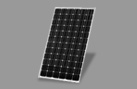
Matching the trend for greater product efficiency, the solar cell industry in China is moving toward monocrystalline units, especially as falling prices boost adoption. In coming years, makers look to gradually increase output, which is dominated by polycrystalline variants. The current ratio between the types is 87:13.
This is a redirection of earlier efforts to highlight thin-film kinds due to the anti-dumping measures of the EU and the US against China. One factor for the shift is the weakening global market of such solar cells while mainstream crystalline silicon technology strengthens its hold. Releases based on the latter account for more than 90 percent of yield worldwide. On the other hand, the already small share of thin-film varieties is projected to stagnate at 7 percent from 2015 to 2019, according to IHS. In 2014, the portion was 8 percent.
As for the monocrystalline category, the forecast production share will climb to 35 percent in 2017 globally, said NPD Solarbuzz. Polycrystalline's lead is based on its price advantage. The type represents about 69 percent of turnout in 2015, according to the same source.
To complement current initiatives, China solar cell companies will keep focus on improving product efficiency further by using high-quality silicon wafers, and silver and aluminum paste. They have realized up to 21 percent in monocrystalline units from 19.3 percent in 2014. Manufacturers have also done the same for polycrystalline counterparts, which now reach 18.5 percent from 17.8 percent.
To ensure healthy margins, suppliers pursue opportunities in emerging export destinations while taking advantage of the huge domestic requirement.
Lowering solar cell prices are expected to accelerate adoption of the green power technology in Africa, the Middle East, Asia and Latin America. By 2015's end, the global solar market would have posted 36 percent growth, according to GTM Research. The Asia-Pacific region would account for more than half of the projected 55GW total installed capacity by then, and Europe 21 percent or about 11.6GW. The latter area will have 31 percent share in 2020 based on the 42GW goal. China targets to have 70GW as early as 2017. In 2020, it will lead, followed by Japan and the US. By then, the cumulative solar market will hit 700GW.
From all this, the solar cell industry stands to benefit, with annual output growth to reach about 20 percent in the near term.
China is the world's largest production base for solar cells, churning out nearly 60 percent of aggregate yield. Its manufacturing capacity is approximately 47GW. In 1H15, output was 18.2GW, 30 percent higher than the same period in the previous year.
About 150 makersconstitute the line there, congregating mainly in the provinces of Zhejiang, Jiangxi and Hebei. The key local players include Yingli Green, Trina Solar, JA Solar, JinkoSolar and Hareon.

More Sourcing News
Read Also

关注 “环球资源外贸” 官方微信,获取实时外贸资讯
iOS & Android
iOS & Android(Mainland China)
Copyright © 2026 Publishers Representatives Limited. All rights reserved.