Download App
Better Online and Trade Show Sourcing Experiences.Scan the QR code to download.
Learn More
Hot Topics
Junior flagships and midrange phones are now part of the smartphone market trend.
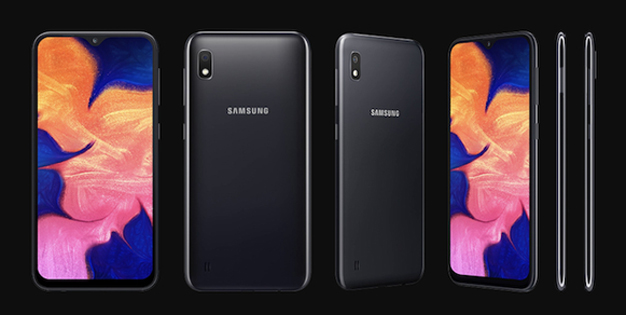
Image Source: Samsung
Affordable is more favorable. With premium flagship phones costing around $1,000 to $1,500, people are looking for more affordable alternatives. This trend is shown in the decline of smartphone sales, especially that of Apple’s iPhones due to the company’s skyrocketing prices. And so, the tech market has responded by producing a variety of lower-priced models that may not have the most premium flagship features but are powerful enough for the average consumer.
JUNIOR FLAGSHIPS
Last September 2018, Apple released the iPhone Xr along with its more premium brothers, the iPhone Xs and the iPhone Xs Max. At $750, the base model of the iPhone Xr is $250 less than the iPhone Xs and and $350 less than the iPhone Xs Max. In order to lower the price, Apple manufactured the Xr with a single rear camera instead of two, and its display is an LCD instead of an OLED. Around six months after the release, statistics have shown that the less expensive model, the iPhone Xr has become Apple’s best-selling phone out of the bunch. These results show that most people aren’t willing to shell out a thousand dollars or more for a phone as they’d prefer the less expensive one.
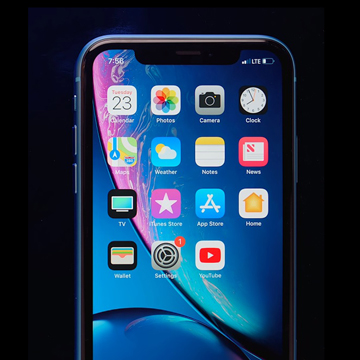
Image Source: Jonathan Morrison | tldtoday
South Korea tech giant Samsung has also recently followed suit on this trend. Last February, a more affordable Galaxy S10e was also included in the S10 and S10 Plus lineup. An answer to Apple’s iPhone Xr, the Galaxy S10e is also priced at around $750, and is $150 less than the S10 and $250 more affordable then the S10 Plus. The S10e sports dual cameras instead of three and has a physical fingerprint reader on the side rather than an in-display fingerprint reader found on the two other premium models.
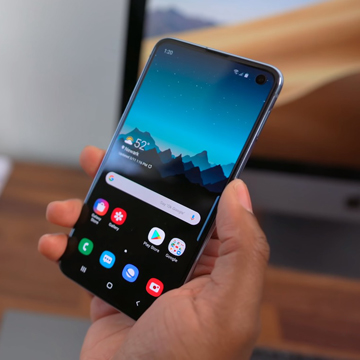
Image Source: uraverageconsumer
Never wanting to get left behind, the second leading smartphone maker Huawei also released the budget flagship Huawei P30 Lite alongside the P30 and P30 Pro last month. This lower-cost version costs around half the price of the $600 P30. The tradeoff is the 2x zoom camera and a less premium processor.
MIDRANGE PHONES
But budget flagships are not the only ones on the rise. The midrange segment in the smartphone market is currently thriving. In response to the cut-throat competition in this tier, Samsung recently updated its midrange A series with eight different models starting from the Galaxy A10, Galaxy A20, and until the Galaxy A80.
You might have heard of Huawei’s sudden rise in becoming the world’s second largest mobile manufacturer, proudly taking Apple’s runner-up spot next to Samsung. According to an article by Medium, “Apple’s brand focuses on the wealthy; those who can hastily squander $1000+ on a brand-new smartphone. Huawei, on the other hand, has priced its phones to reach the growing middle-class denizens of emerging markets that Apple has failed to target and serve. It is, indeed, Huawei’s aggressive pricing strategy that secures its growing market shares.” There is a bigger market for the middle-class citizens compared to the wealthy, which explains why selling smartphones at a more affordable price has brought Huawei success.
Around two weeks ago, Android manufacturer Google also released its own midrange versions of its Pixel 3 flagships. These mid-rangers are the Pixel 3a and the Pixel 3a XL which retail starting at around $400 and $480, respectively. This is the first time ever that Google has released phones in the midrange segment. As noted by CNET, “with a lower price, the Pixel 3A has a better chance of attracting a new set of customers and ultimately increasing sales.”
But in comparison to other Android-based phone brands that choose to incorporate a less powerful camera and processor in budget-friendly phones, Google decided to place the same powerful flagship-like camera in the Pixel 3a and 3a XL. So what was the compromise to lower the price? The phones do not have a water resistance rating, do not support fast charging, and they run on a more dated chipset – the Snapdragon 670 instead of the latest and most powerful Snapdragon 855.
Indeed, flagship devices with premium features cost a lot. They tend to cause a dent in people’s wallets leaving them unwilling to upgrade immediately in the next coming years. Not everyone can afford them, but smartphones nowadays are necessities in life. But with more affordable alternatives, consumers are still able to enjoy the smartphone experience which everyone deserves.
Looking foraffordable Android phones to sell to consumers? Start sourcing a plethora of budget-friendly smartphones from suppliers at Global Sources. From phones with in-display fingerprint scanning technology and AI face unlock for security, to phones in gradient designs and many more, we’ve got you covered.
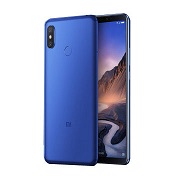
Company: Hi-power (Shenzhen) Technology Co. Ltd
The model Mi Max3 is a 6.9in smartphone from Hi-power that is powered by a 5,500mAh battery. The phone also supports AI face recognition.
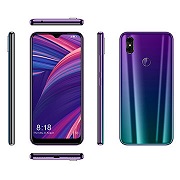
Shenzhen Pretech Industrial Co. Ltd
Shenzhen Pretech offers the 19Q1-L614HM model, a 4G smartphone with a water drop notch that comes in gradient color.
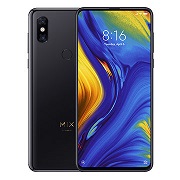
Shenzhen Ruihan Supply Chain Co. Ltd
Shenzhen Ruihan’s model SKU392368801 runs on a Snapdragon 845 chipset and has 6GB RAM + 128GB ROM.
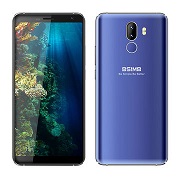
ShenZhen JoyHong Technology Co. Ltd
ShenZhen JoyHong offers the D20-NFC-IDWELL model, a smartphone with Air Gesture feature.
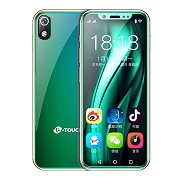
Shenzhen Anica Technology Co. Ltd
This tiny but mighty 3.5in phone from Shenzhen Anica feels premium with its glass and metal texture. The KI9 model comes in classic colors like black, jade white, local gold, platinum gold, aurora blue and emerald green.
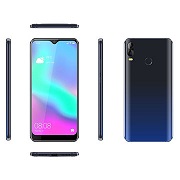
Shenzhen Cheng Fong Digital-Tech Ltd
The model Q628M-0295 smartphone from Shenzhen Cheng Fong brings portability to consumers with its super slim body. The phone also comes in gradient colors.
More Sourcing News
Read Also

关注 “环球资源外贸” 官方微信,获取实时外贸资讯
iOS & Android
iOS & Android(Mainland China)
Copyright © 2026 Publishers Representatives Limited. All rights reserved.




