




Table of Contents
Part 1. The Origins and Philosophy of QRQC
Part 2. Defining QRQC: A Holistic Problem-Solving Methodology
Part 3. Unraveling the Steps of the QRQC System
Part 4. Key Management Activities to Support a QRQC System
Part 5. Implementing QRQC Structure: A Step-by-Step Guide
Part 6. How to Increase the Impact of QRQC: Key Strategies for Success
Part 7. FAQs (Frequently Asked Questions)
Part 8. Useful Tips about QRQC
Part 9. B2B Platform - Global Sources
In contemporary manufacturing, maintaining product quality is vital to success. Companies work to minimize imperfections, regulate divergence from norms, and stop issues from arising once more to meet customer desires properly. To achieve these objectives, a reliable quality management system is essential.
A method that has attained widespread recognition for its productivity is the Quick Response Quality Control (QRQC) system. This article explores the topic of QRQC, shedding light on its origin, philosophy, and how it works.
Part 1. The Origins and Philosophy of QRQC
The Quick Response Quality Control (QRQC) scheme can trace its origins to the Total Quality Management (TQM) concept that sprouted in Japan in the 1950s. TQM reformed the approach to quality control by focusing on continuous improvement, customer satisfaction, and employee participation. This approach laid the groundwork for the development of QRQC, as organizations searched for more effective methods to deal with quality issues and refine their products.
Renault, the celebrated French carmaker, was key in developing QRQC during the 1990s. Confronted with the difficulties of more complicated production methods, Renault initiated an organized solution-finding strategy that would rapidly recognize and mend quality difficulties. The accomplishment of QRQC in Renault's operations caused its prompt adoption in other businesses, including aerospace, electronics, and healthcare.
Embedded in QRQC's thought system is the concept of Kaizen, a Japanese term which means "progressive improvement." This philosophy promotes ceaseless progression in all divisions of a business, including quality inspection, work rate, and consumer satisfaction. By assimilating the maxims of Kaizen into QRQC, manufacturing firms endeavor to generate an environment of relentless growth, allowing them to tackle quality predicaments ahead of time and sustain an upper hand in the changing marketplace.
Part 2. Defining QRQC: A Holistic Problem-Solving Methodology
QRQC, at its core, is an ordered and organized technique for addressing troubles in the manufacturing field. It go beyond basic diagnosis; rather, it presents a broad guide for managing quality problems economically and proficiently. By comprising distinct parts of the manufacturing cycle, QRQC ensures that each segment gets thorough consideration, not permitting any space for confusion.
The main aim of QRQC is to react speedily to quality issues and discrepancies in regulations. By acting quickly and precisely, manufacturing businesses can impede the escalation of dilemmas, resulting in minimized stoppages and increased proficiency. On top of that, QRQC encourages a proactive mindset, wherein teams are aware of probable difficulties and take preventive steps to ensure the ultimate caliber of the concluded output.
The advantageous factor is that QRQC relies on the strength of collaborative efforts. It puts together interdisciplinary teams, assembling people from various branches and regions of specialization. This unified atmosphere spurs varied perspectives, creative contemplation, and knowledge-sharing, leading to better solutions to difficult problems.
Additionally, QRQC emphasizes heavily on the notion of ongoing development. Promoting organizations to embrace an unceasing education approach, QRQC encourages an ongoing pursuit of betterment. Through incessantly honing practices, refining systems, and utilizing input, production companies can quickly adapt to business conditions and evolving consumer requirements.
Even more, QRQC perceives this fact and orientates its approach towards hastening issue decisions. Customary quality management tactics could contain drawn-out investigation and formal systems, yet QRQC simplifies the course from predicament discovery to answer deployment.
In essence, the QRQC framework seeks to find and handle quality concerns within hours, preventing the extended wait times that can obstruct fabrication agendas and lessen patron delight. the ability to quickly resolve problems not only enhances efficiency but also builds customer loyalty, generating a reputation for dependability and excellence.
Part 3. Unraveling the Steps of the QRQC System
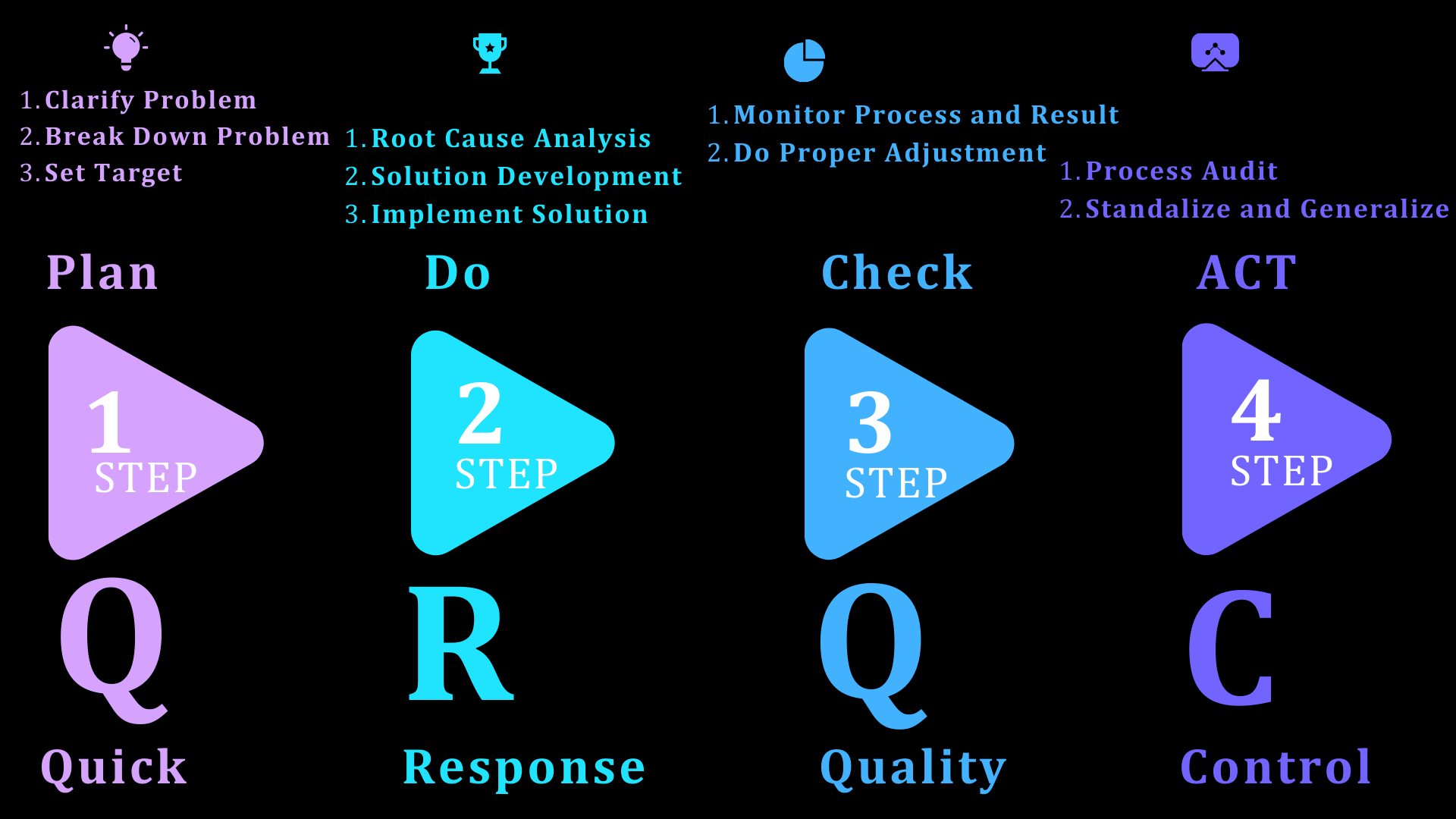
The Quick Response Quality Control (QRQC) system executes on an organized composition, directing fabrication establishments through a progression of clearly characterized steps to efficiently locate, inspect, and address quality issues. Here are the steps of QRQC systems and their role in the overall problem-solving process.
A. Identifying Quality Issues: Proactive Approaches and Data Analysis
The first step in the QRQC system involves vigilant monitoring and proactive identification of quality issues. Companies make use of several techniques, including client responses, product descriptions, and internal audits, to find divergences from rules and likely trouble spots. Data examination is an important part of this process since it grants judicious decisions dependent on habits, sequences, and source origin recognition.
B. Documenting and Tracking Non-Conformities
Comprehensive documentation forms the backbone of the QRQC system. Each quality issue identified is meticulously recorded, detailing what went wrong, when it occurred, and any pertinent information about the context.
C. Digging Deep: Root Cause Analysis Made Effective
Root Cause Analysis (RCA) is the center of QRQC's problem-resolution process. In this stage, crews endeavor to distinguish the hidden sources that resulted in the quality dilemma. RCA requires the intensive assessment of figures, interviewing, and applying distinct analytical methods, such as Fishbone plans or Pareto graphs, to expose the aspects leading to the trouble. By dealing with the essential cause, institutions can avert repetition and generate permanent remedies.
D. Proposing and Implementing Corrective Actions
After pinning down the primary factor, teams conceive corrective plans of action. These outlines highlight concrete maneuvers to handle the quality problem, with timelines for accomplishment and attributed roles. Effecting corrective actions necessitates joined-up initiatives across sections, centering on fast and efficient performance.
E. Cascading Information and the Escalation Process
To ensure that quality issues receive appropriate attention and resolution, QRQC incorporates an escalation process. As issues vary in severity and complexity, the escalation process defines clear management levels responsible for addressing each case. This ensures that matters are tackled quickly and the essential supplies are apportioned to promote efficient solutions.
F. Holding QRQC Meetings and Daily Huddles
Communication is paramount in the QRQC system. Regular QRQC meetings and daily huddles gather cross-functional teams to discuss progress, share information and collaboratively address emerging quality issues. These centered congregations create a unified atmosphere, hastening resolution formation and advocating a community of responsibility and cooperation.
Part 4. Key Management Activities to Support a QRQC System
For the Quick Response Quality Control (QRQC) system to thrive within a manufacturing organization, strategic management activities are indispensable. The following are essential in providing backing and maintaining the QRQC program, allowing effortless problem-solving and consistent progress.
A. Inspections, Audits, and Checklists: A Proactive Approach to Quality Control
QRQC relies on a preemptive way to deal with quality control, and evaluations, reviews, and checklists fill in as pivotal apparatuses in this exertion. Intermittent examinations and reviews enable associations to screen and affirm the viability of their quality control cycles and techniques. By recognizing potential issues or disparities early, organizations can quickly make remedial moves, keeping these issues from heightening into greater issues influencing item quality and client fulfillment. Verification records give an institutionalized way to guarantee that significant advances and prerequisites are met consistently, propelling consistency to build up quality guidelines.
B. Documentation of Issues and Non-Conformities: A Gateway to Understanding and Improvement
The recording of troubles and inconsistencies is a key factor in the QRQC procedure. Through recording the specifics of quality dilemmas and their remedies, firms form an advantageous collection of knowledge. This documentation allows for grasping the origin of quality dilemmas, monitoring patterns over time, and discovering reoccurring issues. This type of understanding facilitates data-backed decision-making and ceaseless betterment efforts.
C. Base Source Evaluation: Unraveling the Core of Quality Issues
The moment a quality issue is discerned within the QRQC framework, the first course of action is to encase it to avert further injury. Still, to attain durable resolutions, firms should plunge into the heart of the predicament through root cause analysis (RCA). RCA necessitates a detailed inquiry to uncover the hidden origins that engendered the issue. By confronting these primary sources, enterprises can employ sustainable and efficient solutions that avert the issue from repeating, thus upgrading overall product quality.
D. Corrective and Preventive Actions: Driving Sustainable Improvement
After the root cause is detected, the QRQC framework highlights the formulation and realization of remedial and precautionary measures. Remedial activities intend to deal with the quick quality issue nearby, while preventive measures are crafted to stop analogous issues from occurring later on. Every activity plan outlines exact steps, due dates, and commitments, guaranteeing an unmistakable street map for the goal. By reliably executing remedial and precautionary measures, associations fabricate a way of life of ceaseless improvement, invigorating progressing enhancements in item quality and cycle productivity.
E. Communication Cascade and Escalation Process: Streamlining Information Flow
The success of the QRQC structure is extremely reliant on proficient communication. To streamline the dissemination of data, QRQC implements a communication cascade and a progression process. The communication cascade ensures that quality difficulties are treated at the fitting management level, dependent on their seriousness and multifaceted nature. Progression levels are clearly set out, furnishing opportune admittance to the mastery and assets required for viable issue resolution.
Part 5. Implementing QRQC Structure: A Step-by-Step Guide
A successful rollout of the Quick Response Quality Control (QRQC) methodology necessitates a structured and well-conceived approach. Here is a step-by-step guide to help manufacturing organizations navigate the process of adopting QRQC effectively.
A. Defining Scope and Objectives
Establish a comprehensive outline of the scope of QRQC integration. Specify the goods, tasks, or areas of operation to be incorporated by the QRQC system. As well as establish the aspirations the company desires to realize through QRQC, such as decreasing flaws, raising customer contentment, or upgrading general operational proficiency.
B. Building the QRQC Implementation Team
Form a specialized team accountable for spearheading the QRQC execution course of action. This collective should comprise of representatives from disparate divisions and levels within the organization, guaranteeing a cross-functional angle. Each constituent ought to have an idiosyncratic skill set and know-how, bestowing to the concerted attempt of implementing QRQC efficiently. Supervision endorsement and involvement in the group are indispensable to secure the dedication and resources essential for a fluid implementation course of action.
C. Designing an Effective Problem Identification Process
Create a sturdy system for noticing quality problems and non-compliance within the fabrication procedure. Utilize a combination of methods, such as customer feedback, product inspections, internal audits, and Gemba walks. Consider utilizing standard checklists and forms to document issues systematically. This will help serve as the basis of QRQC, helping teams to identify elements that require advancement and activity.
D. Implementing Root Cause Analysis (RCA)
Once a quality issue is identified, the immediate focus should be on containment to prevent any further impact on production and customer satisfaction. Then, undertake an extensive Root Cause Analysis (RCA) to recognize the fundamental origins of the problem. Employ a variety of tools and techniques, such as issues documentation, Fishbone diagrams, Pareto charts, or the "5 Whys" approach. The mission is to delve into the problem's fundamentals, comprehending its sources to carry out lasting and competent remedies.
E. Empowering Corrective Action Plans
Create distinctly detailed corrective action schemes for each determined quality concern or incompatibility. These plans must delineate exact measures to tackle the issue in conjunction with allocated periods of fulfillment and explicit duties for each staff member included. The corrective action plans must harmonize with the organization's comprehensive aims and keep in mind the comprehension attained from the RCA approach.
F. Applying Corrective Actions
Carry out the obligatory steps quickly and conscientiously with corrective plans in position. Track the advancement of every action, guaranteeing that they are accomplished in accordance with the defined due dates and abide by the required specifications. Consistent communication within the group is critical during this period to keep everybody informed and included in the application process.
G. Verifying the Effectiveness of Corrective Actions
Once the rectification steps have been carried out, undertake extensive checks to evaluate their efficiency. Take advantage of audits, reviews, or other verification processes to identify if the issue has been fixed appropriately and if the employed measures have generated the required outcomes.
H. Holding QRQC Meetings
During the application, manage customary QRQC conferences and regular conferences with interdisciplinary crews. These get-togethers present an occasion to exchange development updates, review fresh matters that have emerged, and cooperate on extra problem-solving projects. QRQC conferences ensure free discourse and produce a connected labor atmosphere committed to attaining mutual objectives.
I. Embracing a Culture of Continuous Improvement
QRQC is not an individual incident but an enduring venture toward unceasing development. Motivate an atmosphere of schooling and creativity inside the business, in which associates zealously search for strategies to perfect procedures, amplify effectiveness, and outshine client expectations. Consistently evaluate and upgrade the QRQC framework, joining advice and know-how attained from the deployment period to better its proficiency uninterruptedly.
Part 6. How to Increase the Impact of QRQC: Key Strategies for Success
To ensure that QRQC operates at its full potential and delivers optimal results, consider the following strategies:
Make QRQC a Daily Priority:
For QRQC to be most effective, it should become a routine event that occurs daily at the same time. Consistently employing the system, historical details from prior conferences can be taken advantage of, permitting more precise assessment and troubleshooting. This uniformity bolsters a proactively aggressive way of responding to quality matters promptly and keeps them from escalating.
Ensure Key Personnel Attendance:
To facilitate efficient problem-solving, it is essential that those responsible for the areas where problems have emerged are always present during QRQC meetings. These individuals ought to have precisely delineated duties and obligations, and they must pursue vigorously the activities they initiate. This liability encourages a civilization of authority and teamwork in rectifying quality concerns.
Appoint a Single Problem Manager:
Entrusting a sole problem manager to preside over the QRQC procedure simplifies judgment-making and coordination. The problem manager assumes command of guiding the activities, spotting the fundamental causes, and effectuating corrective measures. This strategy guarantees a steady and effective resolution of issues, utilizing help from disparate teams when necessary.
Prioritize Customer Protection:
Throughout the QRQC procedure, consumer safeguard and management of non-compliant pieces ought to be of prime significance. Making sure that goods adhere to the desired quality benchmarks is critical for sustaining customer pleasure and sustaining the organization's standing. Quick activity to address difficulties manifests a dedication to supplying high-caliber products and services.
Respect Meeting Chronology and Duration:
To maintain the effectiveness of QRQC meetings, it is crucial to adhere to the specified chronology and duration. Typically lasting for 30 minutes, these concise and focused gatherings allow teams to address issues efficiently without unnecessary delays. Honoring the allotted duration spurs dynamic involvement and confirms that conversations remain productive.
Communicate Problem Solutions:
Transparency is essential in the QRQC system. All problems encountered and solutions enforced by the squad ought to be expressed to related participants quickly. Disseminating this data engenders organizational instruction, inspires partnership, and facilitates others to profit from effective issue-solving plans.
Rely on Facts and Statistics:
QRQC is empowered by knowledge-based decisions. When responding to quality issues, be certain that solutions are founded on facts and figures as opposed to presumptions or convictions. Correct data examination permits the exact determination of root causes, ensuing in productive and enduring rectifications.
Part 7. FAQs (Frequently Asked Questions)
What is QRQC?
QRQC is an abbreviation for Quick Response Quality Control, a problem-solving approach used in the manufacturing realm to find and deal with quality difficulties promptly.
What is the objective of QRQC?
The main goal of QRQC is to speedily recognize and resolve quality issues in the production process to avert delays in manufacturing and raise customer satisfaction.
Who brought forth the concept of QRQC?
QRQC was originated by the French automobile company Renault in the 1990s in response to the growing intricacy of manufacturing procedures and the requirement for structured problem-solving.
How does QRQC function?
QRQC includes cross-functional teams working in concert to spot quality issues, assess root causes, implement corrective measures, and check their efficacy. The system aims for fast reaction times to resolve issues within hours, lessening their influence on manufacturing.
How does QRQC differ from traditional quality control methods?
Rather than utilizing laborious quality assurance strategies that often require time-consuming assessments and bureaucracy, QRQC stresses rapidity and effectiveness. It concentrates intensely on instantaneous problem-solving, requiring cross-functional teams and information-backed choices.
Can QRQC be applied in industries other than manufacturing?
Yes, while QRQC was initially developed for the manufacturing industry, its principles, and methodologies have proven effective in various domains. It has been efficiently utilized in the aerospace, electronics, healthcare, and service industries.
Part 8. Useful Tips or Market Insights:
In addition to the strategies for maximizing the impact of QRQC, consider the following useful tips and market insights to enhance its implementation:
1. Uphold a Culture of Constant Development:
Propel personnel at every level to purposely explore prospects for development and pass on their sagacity. By fostering a culture of steady development, institutions can inspire innovation and remain ahead of rivals.
2. Leverage Technology for Data Analysis:
Embracing data analytic programs can markedly enhance the productivity of QRQC. Utilize tools and automation to collate and analyze data, allowing for educated decisions and more precise root cause analysis.
3. Establish KPIs for QRQC Success:
Define key performance indicators (KPIs) that align with your organization's QRQC goals. Continually track these metrics to determine the potency of the process and distinguish spaces for added growth.
4. Establish a Continuous Improvement Feedback Loop:
Implement a feedback mechanism to capture insights and suggestions from employees involved in QRQC processes. Regularly review and act upon this feedback to drive continuous improvement. An ongoing cycle of assessment makes sure that the QRQC framework stays adjustable and reactive to changing issues.
5. Benchmark Against Industry Best Practices:
Monitor industry trends and study successful QRQC practices in other organizations. Comparing oneself to industry innovators and implementing premier protocols can motivate fresh ideas and create an environment of exceptional standards in quality assurance.
6. Integrate QRQC with Quality Management Systems:
Integrate the QRQC system with existing quality management systems to leverage synergies and maximize effectiveness. Aligning QRQC with established quality protocols ensures a seamless flow of information and actions throughout the organization.
7. Foster a Sense of Urgency:
Accentuate the value of acting swiftly in resolving quality issues. Creating a sense of urgency pushes teams to answer promptly to issues and execute remedial actions rapidly.
8. Celebrate QRQC Success Stories:
Give praise and accolades to effective QRQC projects and their consequences on item quality and consumer gratification. Commending group exertions increases confidence and re-emphasizes the significance of QRQC in advancing beneficial results.
9. Stay Agile and Adaptable:
Ensuring the successful execution of QRQC should stay pliant and accommodating to business necessities that are evolving. Get ready to modify plans and approaches based on feedback and challenges that come up.
Part 9. About Global Sources Platform (Globalsources.com)
Global Sources (globalsources.com) serves as a pioneering B2B e-commerce platform, creating connections between different providers and fabricators from multiple domains with overseas consumers. Inception in 1971, Global Sources has been a leader in promoting global commerce for decades.
Key Features and Offerings of Global Sources
Product Sourcing and Supplier Discovery: Global Sources presents an extensive selection of products and suppliers from a diversity of sectors, like electronics, apparel, residence and garden, equipment, and others. Buyers can quickly detect dependable providers and source items through the system.
Verified Suppliers and Quality Control: Global Sources confirms the reliability of vendors by way of an intense authentication system. Providers go through confirmation to validate their credibility and legitimacy, offering purchasers extra assurance when engaging in business deals.
Trade Shows and Events: Global Sources sponsors assorted fairs and conventions, both digitally and physically, connecting buyers and sellers from every corner of the globe. These occasions present lucrative chances to network and establish in-person encounters.
Industry Insights and Market Intelligence: This platform provides abundant industry know-how, market evaluations, and pattern accounts to aid firms to remain updated and take wise decisions. Consumers can access the most up-to-date market fads and merchandise information.
Customized Sourcing Services: Global Sources furnishes personalized acquisition services for exacting customer requests. From item personalization to exclusive label facilities, the podium assists in accomplishing extraordinary business requirements.
Reliable Payment and Trade Assurance: To guarantee exchanges, Global Sources gives dependable installment choices and offers Trade Assurance to shield purchasers from dangers, for example, lack of conveyance or items of inferior quality.
Global Sources has built a prestige as a dependable B2B forum that facilitates effortless commerce links between organizations globally. Boasting an assorted array of items, certified providers, market acumen, and effective communication instruments, the platform plays a critical part in upholding companies in their worldwide procuring projects. Whether you are a customer wanting quality wares or a dealer wanting to enlarge your market access, Global Sources furnishes a complete and dependable platform to accommodate your commercial requirements.
Final Thoughts
The Quick Response Quality Control (QRQC) system works as an effective device in the production realm, allowing entities to rapidly discover and settle quality difficulties. By taking the accurate path or method, businesses can maximize the influence of QRQC. In addition, with sources like Global Sources giving significant business awareness and linking buyers with dependable distributors, QRQC implementation acquires a competitive benefit. Accepting QRQC as a daily emphasis and basing judgments on verifiable data affirms its capability for motivating perfection and furnishing top-notch commodities to shoppers.

