Image from Getty
“Keep your eyes on the road” is sound advice for safe driving but knowing what’s behind your vehicle is just as important. To let drivers see the rear without turning their heads, mirrors have long been standard features and, increasingly with technology, cameras too.
In the very early days of the automotive era when traffic was on single-track and two-lane roads, there was no need for rear visibility. The earliest use of a rear-view mirror was by Ray Harroun on a race car in 1911, but the first to patent it as a device was Elmer Berger a decade later and he named it the “cop spotter.” From there, mirrors were considered add-on accessories until they were widely adopted by carmakers as a necessary feature in the mid to late 1960s. This was when having a rear view became part of regulation for vehicle safety as roads became wider and led to highways, freeways and expressways. It took two more decades for passenger-side mirrors to be introduced in vehicles to improve the driver’s view and reduce blind spots.
In recent years, cameras have been added to rear-view monitoring technology, increasing a driver’s field of vision to the area below the rear window and trunk. They eliminate blind spots that can cause accidents when changing lanes, overtaking, parking and reversing, and do away with visual obstructions from passengers, pets and cargo in the back seat. Another advantage is flexibility not just to adjust the viewing angle but, unlike mirrors, also to pan and tilt.
Rear-view & backup cameras
There are currently two types on the market – the rear-view camera and the backup or reversing camera. These terms are used rather confusingly and can lead to wrong purchasing decisions.
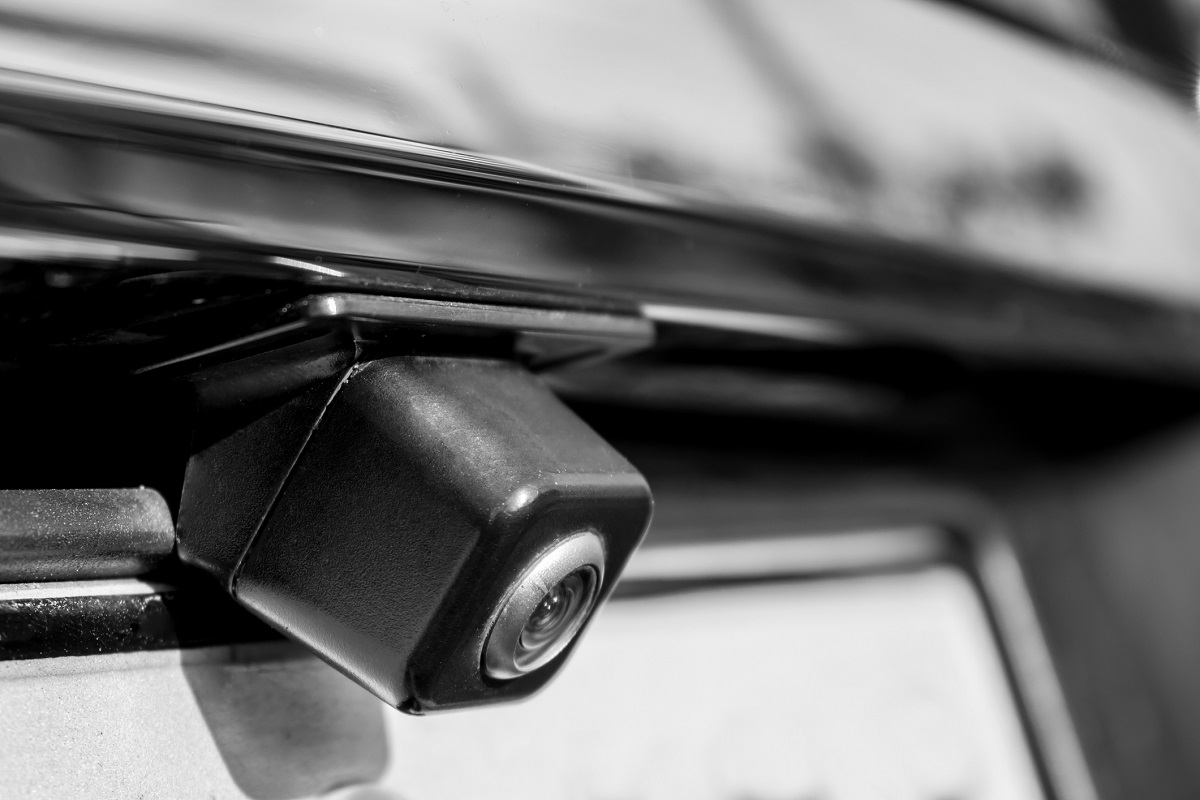
The rear-view camera can be turned on any time to see what’s behind the vehicle. It’s usually bundled with a front-facing or mirror dash cam or rear-view mirror camera and can be wired DIY or with professional help. For longer vehicles, there are wireless versions that solve the difficult wiring involved but are more expensive. These cameras can be mounted high up on any surface for a commanding view, especially for larger vehicles, or flush through a hole in the vehicle body or license plate for a road-level view.
The backup camera differs as it is automatically turned on when the car is put in reverse. Its key advantage is in preventing back over crashes that can result in injury or property damage. Since May 2018, all vehicles manufactured for the US must have this camera. Based on statistics from the US Department of Transportation’s National Highway Traffic Safety Administration, about 50 children are hit by reversing cars every week, with two resulting in fatal injuries. Most victims are between the ages of 12 and 23 months.
The use of backup cameras also makes parking and maneuvering in tight spots easier and safer. Most offer on-screen parking guides, commonly two parallel lines, while others also provide a middle line to help drivers center vehicles in parking slots. There are also backup cameras integrated with sensors that send a warning signal, which may be a light and/or sound, when an object is detected.
In some vehicles, a 360-degree camera system is installed as part of the package or as an option. This consists of four exterior cameras that provide an overhead picture, which is why it’s also called a bird’s eye view system.
For older vehicle models with no built-in car rear-view cameras or backup cameras, there are many choices in the aftermarket, which can be bought separately or as part of a complete set that includes a transmitter and a display.
Here are rear-view and backup or reversing cameras ready for sourcing from verified suppliers.
Company: Shenzhen ATR Industry Co. Ltd
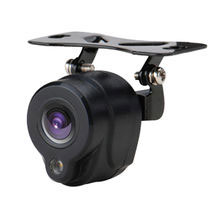
A 12V car rear-view camera, Shenzhen ATR’s model 66032 uses a CMD image sensor and a 90-degree lens. It is compatible with NTSC/PAL, and has effective pixels of 510(horizontal)x492(vertical) and horizontal resolution of 420TVL. This device is IP68-rated. Price is $6.50 per set. A minimum order of 500 sets is required and has a lead time of 25 to 30 days.
Company: Shenzhen Betoptek Electronics Co. Ltd
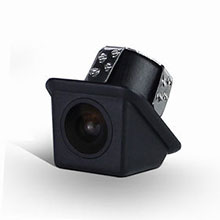
The BRC-520 reversing camera from Shenzhen Betoptek has a CMOS image sensor and a 170-degree lens. Horizontal viewing angle is 90 to 105 degrees. This 12VDC device has 480TVL horizontal resolution, 648(horizontal)x488(vertical) effective pixels, AGC and auto-BLC, 47dB SNR, 63.3dB pixel dynamic range and 0.1 lux/F1.2 minimum illumination. It has parking line on/off, mirror or positive image and NTSC/PAL modes. Water resistance rating is IP68. Price is $4 to $4.20. MOQ is 100 units and lead time 10 to 20 days.
Company: Shenzhen Gofuture Technology Co. Ltd
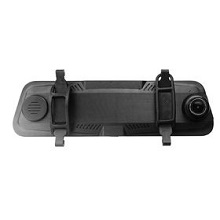
Shenzhen Gofuture’s car rear-view mirror dash cam, the D72+-3051, has a GP6248 night-vision chipset, G-sensor, 9.66in IPS touchscreen, slot for a 4 to 32GB microSD card and speaker. It has a 1080p AHD rear camera. Front and rear camera image resolution is 2MP and interpolated video resolution 1080p. This device has motion detection and parking control functions. It runs on a built-in battery, and includes a car charger and user manual. Price is $34.26 to $38.83. An order of at least 100 units is required. Lead time is 10 to 25 days.
Company: Shanghai Anma Industry Co. Ltd
Model 315015E2534 is an IP67-rated reversing camera from Shanghai Anma with a CMOS image sensor and a 170-degree lens. Resolution is 648x488 pixels and minimum illumination 0 lux. This 12VDC unit has an MOQ of 500 units and lead time of 25 to 30 days.
Company: Shenzhen Starshine Industrial Co. Ltd
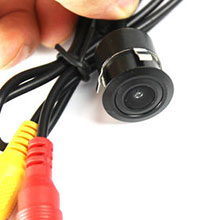
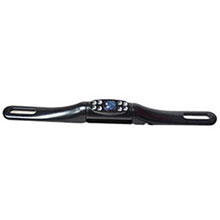
Designed for license plate mounting, the ST-030-8841 reversing camera from Shenzhen Starshine uses a CMOS image sensor sourced from South Korea and has an anti-fog glass cover. It includes eight LEDs and four IR LEDs with less than 20m range. Horizontal and diagonal viewing angles are 140 and 170 degrees. Resolution is 480TVL and minimum effective pixels 510(horizontal)x492(vertical) on NTSC mode and 628x582 on PAL. This IP68-rated unit has an AGC feature. It is bundled with 6m video and 1.5m power cables. Price is $8.70 to $8.90. MOQ is 100 units and lead time three to 10 days.
Company: Stonkam Co. Ltd
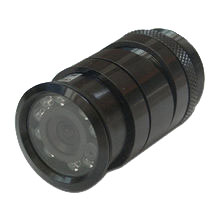
This mini reversing camera from Stonkam features a day/night sensor and has an 8m IR range. Model CW-085 can be fitted with a CMOS image sensor and 120- or 140-degree lens or a CCD version and 120- or 150-degree lens. It is water- and weather-resistant. An order of at least 99 units is required and can be shipped in 15 to 30 days.