Download App
Better Online and Trade Show Sourcing Experiences.Scan the QR code to download.
Learn More
Hot Topics
Cellphone-grade sensors allow the balloons to coordinate and gather data from within tropical storms.
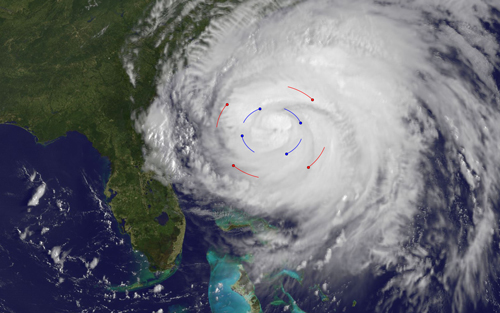
UCSD researchers designed weather balloons that coordinate with each other to get
real-time data from within a tropical storm (Source: University of California, San Diego)
Robotics have already taken over drones in the form of autonomous flying. The next aerial vehicle to conquer is balloons. Researchers at the University of California, San Diego have created a "swarm" of robotic weather balloons capable of coordinating with each other and reporting data through a satellite uplink.
The balloons were designed to help get data on hurricanes. They are flown into a hurricane as it's developing to give forecasters more accurate information about the intensity and location of the storm. The balloons are equipped with several sensors that measure many different data points, something made possible by the fact that these sensors have become much cheaper to manufacture in recent years.
GPS and "cellphone-grade sensors" allow the balloons to report back information on precise location, temperature, pressure, humidity and wind velocity. Researchers believe this could give much better information on the route of the storm, which means better information and more advanced warning for evacuation efforts and other emergency responses.
When the balloons enter the storm, they take a "go with the flow" approach, according to university researchers. The location of the balloons can be adjusted through small vertical movements based on the conditions of the storm measured by the sensors. This helps the balloons get a better distribution to keep collecting data.
These kinds of robotics are different than the kind controlling drones and other autonomous robots. The technology is still impressive, however, and it shows the power of affordable sensor technology when applied in different settings.
More Sourcing News
Read Also

关注 “环球资源外贸” 官方微信,获取实时外贸资讯
iOS & Android
iOS & Android(Mainland China)
Copyright © 2026 Publishers Representatives Limited. All rights reserved.




