Download App
Better Online and Trade Show Sourcing Experiences.Scan the QR code to download.
Learn More
Hot Topics
By Adam Gilbourne
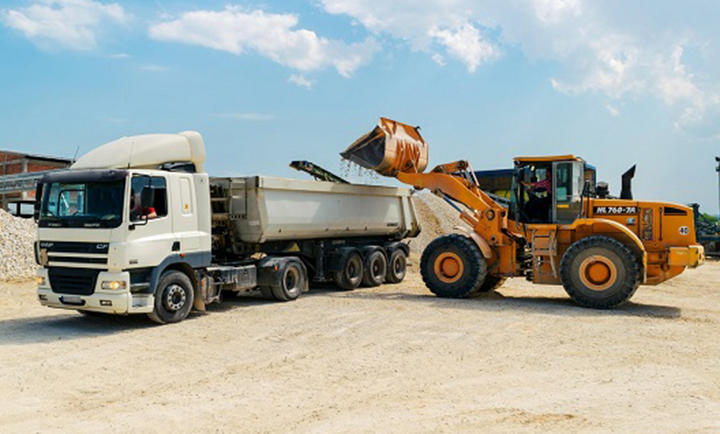
Deciding on whether to ship via sea or air is a crucial decision for importers . We’ve put together this guide to help importers quickly decide the best option based on cost, delivery time and complexity.
The guide covers freight methods, container types and sizing, delivery times and weight calculations.
Sea Freight
For volumes over 1 cbm and weights over 100kg, delivery via sea is definitely your cheapest option. The downside of sea freight is slower delivery times.
There are two options for sea freight, full container loads (FCL) and less than container loads (LCL). FCL containers are filled with your product only. With LCL containers, your product will be consolidated with other importers’ goods from the same port origin and destination.
As a general rule of thumb, if your volumes are over 15 cubic meters (cbm), then it makes sense to ship FCL as the freight costs per unit with FCL are lower than with LCL. If your container load volume is above 10cbm, then consider increasing your order volumes to fill a full container load to reduce freight costs per unit.
There are three sizes for FCL containers: 20 foot, 40 foot and 40 foot high container. The practical container capacity for each size is 28cbm, 56cbm and 68cbm respectively. The weight limit/restriction for each container is a maximum of 28000kg irrespective of container size.
Approximate delivery times from a port in China:
Shipment via air is best for high value – low volume goods (electronics), and for urgent deliveries (samples). When shipping small volumes (less than 1cbm), delivery via air is faster and in most circumstances more affordable than shipping via sea.
Courier is a ‘door to door’ service through companies such as TNT, FedEx, and DHL. These companies will arrange pick up from the factory and handle custom clearance at both the destination and origin ports, along with payment of duty and taxes.
Air freight is similar to shipping an LCL container in that the service is port to port (airport to airport in this instance). A forwarding agent will be required to handle customs clearance and to arrange internal delivery (haulage) to your door.
Delivery through a courier is the simplest method as you don’t need a forwarding agent to handle customs clearance, payment of tax and duty, and internal delivery. Courier services are also typically faster than air freight.
When it comes to pricing, for small chargeable weights (see below for formula of chargeable weights) less than 500kg, courier is more economical.
It’s important to note that we are talking about ‘chargeable weight’, which is the greater of either the actual weight or the volumetric weight of a shipment.
Think of it this way, a 100kg parcel of linen will have a much larger volume (box size) than a 100kg parcel of batteries. It will therefore take up more space on the plane. Freight services account for this differential through the volumetric weight formula.
Volumetric weights for cargo in kgs/cbm are calculated as follows: total volume (LxWxH) x 167kg/cbm
Where 167 kg/cbm is the air shipment volumetric weight constant for courier (it’s 200kg/cbm for air freight).
If you have 10 boxes with the dimensions of 1.2m x 0.4m x 0.6m. The volume is 0.288 cbm x 10 boxes = 2.88 cbm
The volumetric weight (courier) is therefore 2.88 x 167 = 480.96 kg/cbm
*For air freight it’s 2.88 x 200 = 576kg/cbm
As mentioned above, the chargeable weight is the greater of either the actual weight or the volumetric weight.
From the calculations above, the volumetric weight is 480.96 kg/cbm.
If each box weighs 40 kg, then the actual weight is 40kg x 10 boxes = 400 kg.
Therefore in this instance the chargeable weight is the volumetric weight of 480.96 kg/cbm.
*as the weight is above 100kg and the volume is above 100 cbm, the best option in terms of price would be to ship this parcel via sea freight rather than air.
Shipping and logistics is far less complicated than most new importers imagine. It can provide you with a competitive cost advantage over your competitors if you take the time to understand the processes and plan/forecast order quantities over the medium-long term.
Global Sources is a trusted, internationally recognized B2B sourcing platform that has been driving global trade for more than 50 years. The company connects authentic buyers and verified suppliers worldwide with tailored solutions and trusted market intelligence through trade shows, digital platforms and magazines. Visit our website to source the right product for your market and contact verified suppliers:
How to win Q4 as an Amzon FBA seller>>
Sea freight vs. air freight – The ultimate guide>>
Incoterms in Plain English: A Freight Shipping Guide>>
10 Tips for Working With a Freight Forwarder and Getting Better Freight Service>>
Air freight & courier from China – Basics, strategies & issues>>
Adam Gilbourne is the founder of Easy Imex Ltd and helps importers to source product & manage their supply chain in China. He writes advice for importers on the Easy Imex blog. He lives full time in Shanghai, China. You can contact him at adam@easyimex.com.
More Sourcing News
Read Also

关注 “环球资源外贸” 官方微信,获取实时外贸资讯
iOS & Android
iOS & Android(Mainland China)
Copyright © 2026 Publishers Representatives Limited. All rights reserved.




