Download App
Better Online and Trade Show Sourcing Experiences.Scan the QR code to download.
Learn More
Hot Topics
Philips will soon light Los Angeles and San Jose with its smart streetlights.
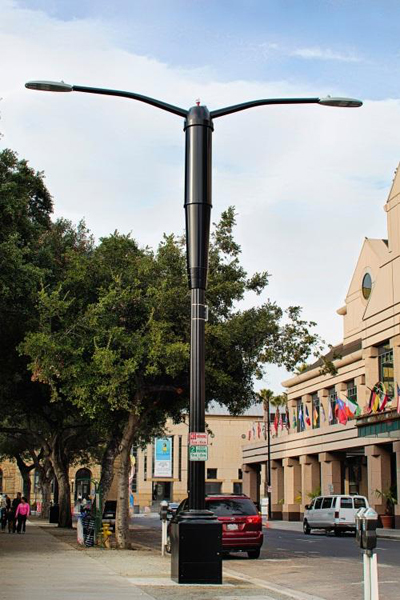
Philips’ new smart streetlights will be equipped with Ericsson LTE base stations, giving the “smart city” concept a big push forward.
SAN JOSE, Calif. — Bill McShane sells smart streetlights. His company, Philips, calls them “the connected city experience.”
It’s a growing business and a signpost pointing to the future of smart cities and the emerging Internet of Things. The novel product is by turns simple, complex, nearly invisible and maybe someday omnipresent.
Smart streetlights are essentially poles packed with LEDs, small cell LTE base stations, an optional control system for the lights and a smart meter to monitor the poles’ power use. So far McShane has about 150 of them being deployed in Los Angeles and San Jose. He believes over the next three years he potentially could sell thousands of them in towns all across America.
The product has multiple customers and vendors. And though it has no road map, it invites many thoughts about its potential. The cellular-only poles arrive at a time when cities are also expanding metro Wi-Fi networks and thinking broadly about future sensor nets of various kinds.
Philips’ LED lighting group came up with the idea for smart streetlights and owns the product. The Dutch company struck a global deal with Ericsson to act as the subcontractor for the LTE base stations inside them. Other companies supply the optional smart meters some cities such as San Jose require.
This article was originally published on EE Times. To read the rest of the article, please click here.
More Sourcing News
Read Also

关注 “环球资源外贸” 官方微信,获取实时外贸资讯
iOS & Android
iOS & Android(Mainland China)
Copyright © 2026 Publishers Representatives Limited. All rights reserved.