




Table of Contents
DTF vs. Sublimation: Key Differences
DTF Printing vs. Sublimation Printing: Which is Better?
DTF (Direct to Film) Printing Case Studies/Examples
Sublimation Printing Case Studies/Examples
FAQs: The Difference Between DTF Printing and Sublimation Printing
DTF printing and sublimation printing are two popular methods of printing that are commonly used in the garment and textile industry. While both methods can produce high-quality prints, there are some key differences between the two that can impact their suitability for different types of projects. In this article, we will explore the differences between DTF printing and sublimation printing, and help you decide which method is best for your needs.
DTF vs. Sublimation: Key Takeaways
Direct-to-Film (DTF) printing and sublimation printing are both popular methods for transferring designs onto various materials, but they differ significantly in their processes, advantages, and limitations. Here are the key takeaways:
Print Size and Production Scale
- DTF Printing: Smaller platens (around 12" x 15") make it ideal for smaller batches and personalized items.
- Sublimation Printing: Larger platens (around 16" x 20") make it optimal for large-scale projects and bulk orders, particularly for garments.
Transfer Process and Print Quality
- DTF Printing: Uses an adhesive and transfer paper, resulting in superior print quality and higher image resolution. Prints are more detailed but may have a slightly raised texture.
- Sublimation Printing: Converts solid ink directly to gas, embedding it into the fabric. This results in long-lasting, vibrant colors that won't crack or peel, but finer details may be lost.
Texture and Feel
- DTF Printing: The adhesive layer creates a slightly raised texture on the fabric.
- Sublimation Printing: The ink-infused approach results in a softer, smoother feel, making the design practically indistinguishable from the fabric.
Material Compatibility
- DTF Printing: Compatible with a wide range of materials, including cotton, polyester blends, leather, wood, metal, and glass.
- Sublimation Printing: Highly effective on polyester fabrics, ceramics, and some metals but limited with materials like cotton.
Color Reproduction
- DTF Printing: Handles a wider spectrum of colors accurately, including both light and dark shades.
- Sublimation Printing: Limited with white ink and performs best on lighter fabric colors for vibrant and accurate color reproduction.
Conclusion
- DTF Printing: Ideal for smaller runs, customized designs, and projects requiring intricate detail and a wide color palette.
- Sublimation Printing: Superior for large-scale production, garment printing, and achieving long-lasting, vibrant prints on suitable fabrics.
By understanding these key differences, you can make an informed decision that aligns with your specific project requirements and desired outcomes.
OEM and private label suppliers best for beginners:
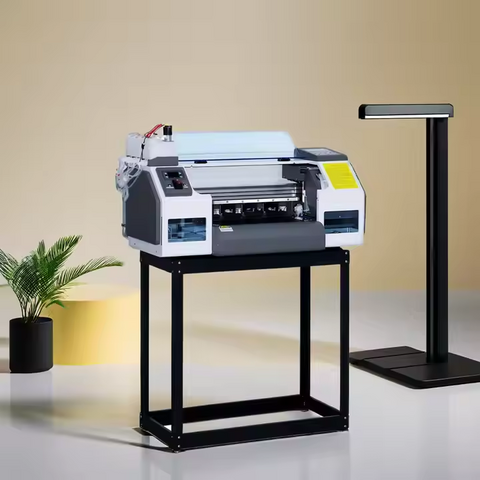
New DTF Printer Double XP600 Printhead A3 Direct To 30cm Film T shirt Printing Machine For All Fabrics
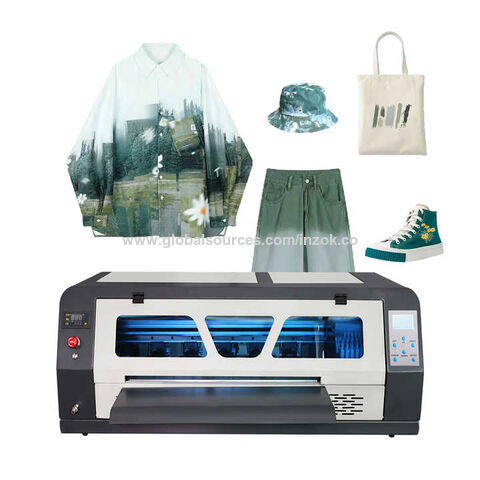
Wholesale Dual Print Head XP600 A3 30Cm 33Cm 50Cm DTF Digital Inkjet Printing Machine Xp600 DTF Printer
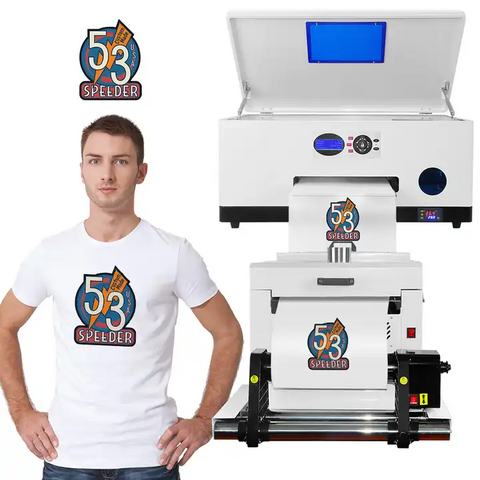
Refinecolor New DTF Printer Double XP600 Print head A3 Direct To 33cm Film T shirt Printing Machine For All Fabrics
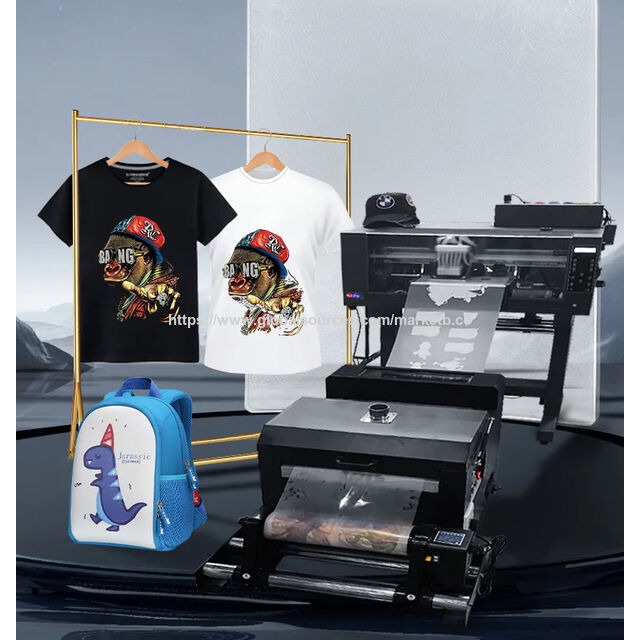
30cm T-Shirt Printing White Ink Printer Heat Transfer Pet Film Dual XP600 A3 Dtf Printer with Powder Shaker
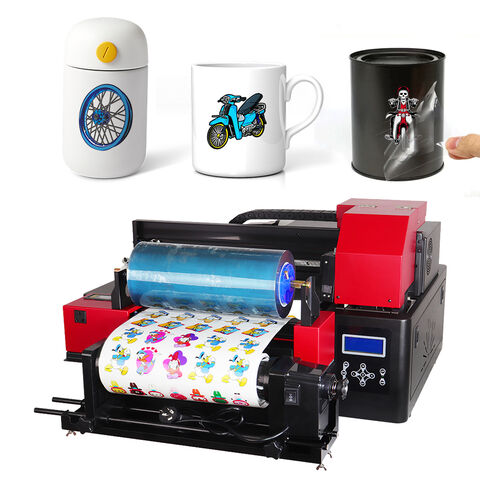
Refinecolor Roll To Roll UV DTF Sticker Printer Dtf Printing Machine
30cm T-Shirt Printing White Ink Printer Heat Transfer Pet Film Dual XP600 A3 Dtf Printer with Powder Shaker
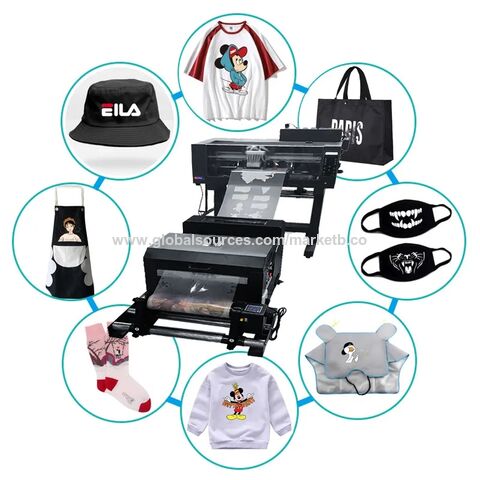
Dtf Printer A3 Pet Film XP600 Dual Head 30cm DIY Custom Heat Transfer DTG T Shirt Printing Machine Digital Pet Film Printer
What is DTF Printing?
Direct-to-Fabric (DTF) printing is a two-step digital printing process that utilizes inkjet technology and heat to create prints on a variety of customized items.
In the first stage, an inkjet printer employs a four-color CMYK (cyan, magenta, yellow, and key) overlay process to print the design onto a PET (polyethylene terephthalate) sheet. The printed design is then secured with an adhesive film and heated to cure the image. Subsequently, a heat press transfers the image onto the surface of the product being printed.
DTF printing is primarily used for small-scale production and is ideal for materials such as cotton, polyester, and nylon. This method produces realistic, photo-quality images that are rich in color and durable, resisting fading over time. Businesses can utilize DTF printing to promote their brands on items like t-shirts, hoodies, sweatshirts, and banners, ensuring vibrant and enduring prints that capture attention.
Pros & Cons of DTF Printing
| Pros of DTF Printing | Cons of DTF Printing |
|---|---|
| High image resolution, allowing for fine details | Requires special adhesive and transfer paper |
| Superior print quality | Can be more expensive due to additional materials |
| Direct ink application to the product | May not be as durable as sublimation over time |
| Versatile on various materials | Can require more complex setup and equipment |
| Vibrant and vivid colors | Potential for adhesive residue if not done correctly |
| No need for pre-treatment of fabrics | Longer process compared to some other methods |
Materials Used in DTF Printing:
Direct to Film (DTF) printing is a versatile digital printing method that involves printing designs onto a special film and then transferring them onto various substrates, primarily textiles. The process uses specific types of materials and inks, which are crucial for achieving high-quality, durable prints. Below are the primary materials and inks used in DTF printing:
- PET Film: The most commonly used film in DTF printing is a Polyethylene Terephthalate (PET) film, which is a type of plastic. This film acts as the carrier for the ink and adhesive powder. It's available in sheets or rolls and comes in different thicknesses, typically around 0.75mm.
- Hot Melt Powder: After printing the design onto the PET film, a hot melt powder (also known as adhesive powder) is applied to the printed side of the film. This powder melts and becomes the adhesive that bonds the ink to the fabric during the heat press process. The powder is usually white and is available in different grades for various fabric types.
Inks Used in DTF Printing:
DTF-Specific Inks: These are specially formulated inks designed for DTF printing. They need to be able to print onto the PET film effectively and then be transferred onto fabric. DTF inks are usually water-based and contain a high concentration of pigments to ensure vibrant and durable prints.
- CMYK Inks: The primary colors used are Cyan, Magenta, Yellow, and Key (Black). These colors are mixed during the printing process to create a wide range of colors on the printed design.
- White Ink: White ink is crucial in DTF printing as it is laid down as a base layer under the CMYK inks when printing on colored or dark textiles. This layer ensures that the colors of the design stand out vividly against the fabric.
Considerations for Materials and Inks:
- Compatibility: It's important to ensure that the inks, powder, and film are compatible with each other and with the printer being used. Using incompatible materials can lead to poor-quality prints or damage to the printer.
- Quality: High-quality inks and materials are crucial for producing durable, vibrant prints. Lower-quality inks may fade quickly or not transfer properly, while low-grade films and powders may not adhere well to fabrics.
- Environmental Impact: Some manufacturers are developing more eco-friendly options for DTF printing materials, including biodegradable films and non-toxic inks, in response to concerns about the environmental impact of traditional materials.
DTF printing's versatility and quality have made it popular for producing detailed, colorful designs on a wide range of textiles, from t-shirts and hoodies to hats and bags. The choice of materials and inks is critical for achieving the desired results in DTF printing projects.
What is Sublimation Printing?
Sublimation printing is a process that involves printing an image onto special paper using a sublimation printer and then transferring the image to another material, typically polyester or a polyester blend. During this process, the ink is heated until it transforms into a gas, which is then absorbed by the fabric.
The result is a sharp, durable image that will not crack or fade over time. Sublimation printing is particularly effective for large-scale production needs. It works well on various types of fabrics, including nylon, acrylic, and polyester, making it a versatile choice for high-quality, long-lasting prints.
Pros & Cons of Sublimation Printing
| Pros of Sublimation Printing | Cons of Sublimation Printing |
|---|---|
| Produces sharp, vibrant, and durable images | Limited to polyester or polyester-blend fabrics |
| Images do not crack, peel, or fade over time | Requires special sublimation paper and ink |
| Ideal for large-scale production | Initial setup costs can be high |
| Allows for full-color, photo-quality prints | Not suitable for dark-colored fabrics |
| Ink becomes part of the fabric, offering a soft feel | Limited to synthetic materials like polyester, nylon, and acrylic |
| High-resolution and detailed prints | Can be less effective on natural fibers like cotton |
Materials Suitable for Sublimation Printing:
Sublimation printing is a versatile and widely used method for transferring designs onto various materials. This process involves converting solid ink into gas without passing through the liquid phase, using heat and pressure. The gas then permeates the material, creating a full-color, durable print. Sublimation printing is most effective on polyester materials or those coated with a polymer. Below are the types of materials and inks used in sublimation printing:
Polyester Fabrics: The most common material for sublimation printing. Polyester fabrics can hold sublimation dyes well, resulting in vibrant and lasting colors. Ideal for apparel, sportswear, flags, and banners.
Polymer-Coated Objects: Sublimation printing can be performed on a variety of hard surfaces as long as they are coated with a special polymer layer that can absorb the dye. These include:
- Mugs
- Plates
- Mouse pads
- Phone cases
- Keychains
- Metal sheets (for photo panels)
- Ceramic tiles
Poly-Blend Fabrics: Fabrics that contain a high percentage of polyester but are blended with other fibers (e.g., cotton) can also be used for sublimation printing. However, the higher the polyester content, the more vivid the print will be. Low-polyester-content fabrics will result in a vintage or faded look.
Specialty Sublimation Materials: Some products are specifically designed for sublimation printing, including:
- Sublimation paper (for transferring the design)
- Printable blanks (items prepared for sublimation)
- Sublimation canvas
- Sublimation puzzles
Inks Used in Sublimation Printing:
Sublimation inks are specially formulated to transition from solid to gas under heat, penetrating the substrate's surface. These inks are:
Water-Based Sublimation Inks: The most commonly used inks in sublimation printing. They contain sublimation dyes suspended in a water-based carrier liquid. When heated, the water evaporates, and the dye turns into gas, which then diffuses into the substrate.
Types of Sublimation Dyes:
Disperse Dyes: These are the specific type of dyes used in sublimation inks, capable of sublimating and bonding with polyester and polymer-coated substrates.
CMYK Dyes: Sublimation printing typically uses the CMYK (Cyan, Magenta, Yellow, and Key/Black) color model for full-color printing.
Eco-Friendly Sublimation Inks: Some manufacturers offer more environmentally friendly options, focusing on reducing harmful chemicals and improving the sustainability of the printing process.
It's important to note that not all inks are compatible with every sublimation printer. Printer manufacturers often produce their own proprietary inks designed to work optimally with their specific models, ensuring the best quality and reliability of the prints.
DTF vs. Sublimation: Key Differences
Direct-to-film (DTF) printing and sublimation printing are popular choices for transferring designs onto various materials. While both methods utilize heat for transfer, they differ significantly in their processes, resulting in distinct advantages and disadvantages. Let's delve deeper into a comprehensive comparison:
Print Size and Production Scale
One of the primary distinctions lies in the print size capacity. DTF printers typically feature smaller platens, averaging 12" x 15", limiting the maximum size of a single print. Conversely, sublimation printers boast larger platens, often around 16" x 20", enabling larger designs or multiple smaller designs in a single run.
This size disparity directly impacts production scale. Sublimation printing emerges as the optimal choice for large-scale projects and bulk orders, particularly for garments. The larger platen size allows for efficient production of numerous items. DTF printing, with its smaller print area, proves more suitable for smaller batches and personalized items.
Transfer Process and Resulting Print Quality
Both DTF and sublimation use heat to transfer designs onto products. However, DTF employs an adhesive, while sublimation bonds ink to fabric molecules.
In DTF printing, the image is transferred using transfer paper, whereas in sublimation printing, the solid ink converts directly to gas without passing through a liquid state. This difference in transfer methods affects both print quality and durability.
Compared to sublimation printing, DTF printing offers superior print quality because the ink is applied directly to the product. DTF also provides higher image resolution, allowing for more detailed prints.
On the other hand, sublimation printing embeds the ink into the fabric, resulting in a subtle print with long-lasting colors that won't crack or peel. This means that repeated washing and wearing won't cause wear, tear, or fading of the image. However, due to the lower resolution in sublimation printing, finer details may be lost in the fabric’s design.
Texture and Feel
The tactile experience of the printed design also varies between the two methods. DTF prints, due to the adhesive layer, tend to have a slightly raised texture, almost like a thin layer applied atop the fabric. This can be perceived as either an addition to the design or a slight drawback depending on the desired outcome.
Sublimation printing, with its ink-infused approach, results in a softer, smoother feel. The design practically becomes indistinguishable from the fabric itself, offering a very natural feel.
Material Compatibility
Both methods demonstrate versatility in terms of compatible materials, yet with some distinctions. DTF printing excels with a broader range, including cotton, polyester blends, leather, wood, metal, and even glass.
Sublimation printing, while highly effective on polyester fabrics, ceramics, and some metals, faces limitations with materials like cotton. The sublimation process requires a material with a suitable polymer structure for the ink to bond effectively.
Color Reproduction
DTF printing generally handles a wider spectrum of colors with accuracy, including both light and dark shades. Sublimation printing, however, encounters limitations with white ink, as it doesn't reproduce effectively. Additionally, lighter fabric colors often yield more vibrant and accurate color reproduction in sublimation printing.
Conclusion
The choice between DTF and sublimation printing hinges on the specific project requirements. DTF printing, with its versatility, intricate detail, and suitability for diverse materials, proves ideal for smaller runs, customized designs, and projects demanding a wide color palette.
Sublimation printing, on the other hand, emerges as the superior choice for large-scale production, garment printing, and achieving long-lasting, vibrant prints on suitable fabrics. By understanding the nuances of each method, one can make an informed decision that aligns with their project goals and desired outcomes.
DTF Printing vs. Sublimation Printing: Which is Better?
| Aspect | DTF Printing | Sublimation Printing | Winner |
|---|---|---|---|
| Definition | A printing technique where designs are printed onto a special film and then transferred onto fabric using heat and pressure. | A method where ink is turned into gas under heat and pressure, bonding with the fabric to alter its color. | - |
| Fabric Compatibility | Works on both light and dark textiles, including cotton, polyester, and blends. ★★★★★ (5) | Primarily for light-colored, polyester-rich fabrics. Limited effectiveness on cotton. ★★★ (3) | DTF Printing |
| Color Vibrancy | High color vibrancy with a wide color gamut. ★★★★ (4) | Extremely vibrant colors, especially on polyester. ★★★★★ (5) | Sublimation Printing |
| Durability | Good washability and durability, but may crack over time with heavy use. ★★★★ (4) | Excellent durability with no cracking or peeling, as the dye becomes part of the fabric. ★★★★★ (5) | Sublimation Printing |
| Feel on Fabric | Leaves a slight hand (feel) on the fabric. ★★★ (3) | No hand; the print cannot be felt as the ink is infused into the fabric. ★★★★★ (5) | Sublimation Printing |
| Environmental Impact | Uses PET films which may not be eco-friendly, but newer, more sustainable options are emerging. ★★★ (3) | Generally considered more eco-friendly as it produces less waste and uses less water. ★★★★ (4) | Sublimation Printing |
| Cost | Variable costs, but generally cost-effective for small to medium runs. ★★★★ (4) | Lower cost in bulk, but can be expensive for small runs due to high setup costs. ★★★ (3) | DTF Printing |
| Setup and Operation | Relatively easy setup and operation. Suitable for small to large scale operations. ★★★★ (4) | Requires specific conditions (high temperature and pressure) and substrates. Best for large runs. ★★★ (3) | DTF Printing |
| Versatility | Can be used on a wider range of materials and products. ★★★★★ (5) | Limited to poly-based materials, which restricts the range of products. ★★★ (3) | DTF Printing |
| Print Quality | High-quality prints with good detail. ★★★★ (4) | Exceptional print quality with superior detail and color depth. ★★★★★ (5) | Sublimation Printing |
| Turnaround Time | Fast production times, suitable for quick turnarounds. ★★★★ (4) | Can be time-consuming, especially for large quantities. ★★★ (3) | DTF Printing |
| Equipment Required | Printer, special DTF inks, powder, and heat press. ★★★★ (4) | Sublimation printer, sublimation inks, heat press, and specific substrates. ★★★ (3) | DTF Printing |
| Initial Investment | Moderate; requires specific printers and consumables, but relatively lower than sublimation for starting. ★★★★ (4) | Higher due to the need for specialized printers, inks, and substrates. ★★★ (3) | DTF Printing |
| Suitability for Small Orders | Highly suitable due to lower setup costs and flexibility. ★★★★★ (5) | Less suitable due to higher setup costs and process complexity. ★★★ (3) | DTF Printing |
| Market Demand | Growing demand for its versatility and ability to print on various fabrics. ★★★★ (4) | High demand in niches requiring high-quality, vibrant prints on polyester. ★★★★ (4) | Tie |
Overall Insights:
- DTF Printing offers greater flexibility across a wider range of fabrics, making it more versatile for various applications. It requires a moderate initial investment and is suitable for businesses that handle a mix of small to medium orders. DTF printing stands out for its fabric compatibility, cost-effectiveness, and lower barriers to entry in terms of equipment and initial investment.
- Sublimation Printing excels in producing high-quality, vibrant, and durable prints, especially on polyester fabrics. It's ideal for specific markets that demand premium print quality, such as sportswear and promotional items. Though it requires a higher initial investment and is more specialized, its environmental benefits and unparalleled print quality on suitable materials make it a preferred choice in its niche.
Choosing between DTF and Sublimation printing depends on the specific needs of your business, including the types of products you offer, your target market, and how you prioritize aspects like fabric compatibility, print quality, and initial investment.
DTF (Direct to Film) Printing Case Studies/Examples
1. Custom T-Shirt Business Expansion
Overview: A small custom apparel business, previously specializing in screen printing and vinyl, expanded its offerings by incorporating DTF printing. This move was aimed at accommodating requests for full-color designs on a broader range of fabric types without the setup costs associated with screen printing.
Implementation: The business invested in a mid-range DTF setup, including a printer, powder shaker, and heat press. They began offering custom designs with no minimum order quantity, targeting small businesses, bands, and local sports teams.
Lessons Learned:
- Flexibility in Order Size: DTF allowed the business to efficiently handle both small and large orders, significantly broadening its market.
- Quality Control is Crucial: Initially, some prints suffered from durability issues. It was learned that precise control over the amount of adhesive powder and curing time was essential for long-lasting prints.
- Market Education: Educating their customer base about the benefits of DTF over traditional methods was necessary to justify the slightly higher cost for some products.
Best Practices:
- Regular maintenance of the DTF printer to prevent clogging and ensure consistent print quality.
- Offering samples to showcase the quality and durability of DTF prints to potential customers.
Sublimation Printing Case Studies/Examples
1. Sportswear Brand's Custom Line
Overview: A sportswear brand known for its vibrant, high-performance clothing launched a custom line allowing teams to design their uniforms. Sublimation printing was chosen for its ability to produce bright, detailed designs that are durable enough to withstand the rigors of sports.
Implementation: The brand set up an online design tool where customers could create their uniforms. Using high-quality sublimation printers and presses, they produced these custom designs on polyester fabric, ensuring each piece maintained the brand's reputation for quality.
Lessons Learned:
- Material Matters: The success of sublimation heavily depends on the fabric quality. High-quality polyester yielded the best color vibrancy and durability.
- Efficiency in Production: Streamlining the design-to-production process was key to handling a high volume of custom orders without sacrificing turnaround time or quality.
Best Practices:
- Investing in top-tier sublimation equipment to ensure consistent quality across all products.
- Implementing a rigorous quality check process to ensure each item meets the brand's standards before shipment.
2. Promotional Products Company
Overview: A company specializing in promotional products diversified its product range by adopting sublimation printing. This allowed them to offer personalized mugs, mouse pads, and coasters with no minimum order quantity.
Implementation: The company invested in several sublimation printers and a variety of heat presses tailored to different products. They also launched an online portal where customers could upload designs to be printed on the products of their choice.
Lessons Learned:
- Customer Service is Key: Providing detailed guidance on design requirements (e.g., resolution and file format) improved customer satisfaction and reduced the number of reprint requests.
- Inventory Management: Keeping a well-organized inventory of blank substrates ready for printing was essential to meet quick turnaround times.
Best Practices:
- Regularly calibrating printers and presses to ensure consistent color accuracy and print quality.
- Creating detailed guides for customers on how to prepare their designs for sublimation printing.
Conclusion
Both DTF and Sublimation printing have shown to be versatile and valuable in different contexts. For businesses considering these technologies, understanding the specific demands of their target market, the inherent characteristics of each printing method, and the importance of quality control is crucial. These case studies underscore the importance of adapting to new technologies, the need for customer education, and the benefits of leveraging the unique advantages of each printing technique to expand product offerings and enter new markets.
FAQs: The Difference Between DTF Printing and Sublimation Printing
What is DTF printing?
DTF printing stands for Direct to Film printing. It is a process where a design is printed on a special film, and then transferred onto a garment using a heat press.
What is sublimation printing?
Sublimation printing is a process where a design is printed on a special paper using sublimation ink, and then transferred onto a garment using heat and pressure. The ink turns into gas and bonds with the fabric, creating a permanent image.
How does DTF printing differ from sublimation printing?
DTF printing uses a different type of transfer medium, which is a special film instead of paper. The image is printed on the film using special ink, and then transferred onto the garment. Sublimation printing uses paper and ink that turn into gas when heated, bonding with the fabric.
Which one is better for cotton fabrics?
DTF printing is better for cotton fabrics, as sublimation ink cannot bond with cotton fibers. DTF ink can bond with both cotton and polyester fibers.
Which one is better for polyester fabrics?
Sublimation printing is better for polyester fabrics, as the ink can bond with the polyester fibers, creating a vibrant and long-lasting image. DTF printing can also be used on polyester fabrics, but sublimation printing is generally preferred.
Does DTF last longer than sublimation?
DTF printing and sublimation printing have different properties that affect the longevity of the prints. DTF printing uses a special film that is printed with ink and then transferred onto the material using a heat press. This process creates a durable print that is resistant to fading and cracking. However, the durability of DTF prints depends on the quality of the film and ink used.
On the other hand, sublimation printing uses dye that is infused into the material through heat and pressure. This process creates a long-lasting print that is resistant to fading, cracking, and peeling. Sublimation prints are also more vibrant and have a softer feel than DTF prints.
In general, both DTF and sublimation prints can last a long time if they are cared for properly. However, sublimation prints may last longer than DTF prints due to the nature of the dye infusion process.
Can you use a DTF printer for sublimation?
No, you cannot use a DTF printer for sublimation printing. DTF printing and sublimation printing are two different methods of printing that require different equipment and ink. DTF printers use special ink that is designed to print onto the film used in the DTF process, while sublimation printers use dye-sublimation ink that is designed to infuse dye into the material being printed on.
If you try to use a DTF printer for sublimation printing, the results will not be satisfactory. The ink used in DTF printing is not suitable for sublimation printing, and the transfer process will not work properly.
What are the disadvantages of DTF printing?
DTF printing has several disadvantages that should be considered before choosing this method of printing. One disadvantage is that it is not suitable for printing on dark-colored materials, as the ink used in DTF printing is not opaque. This limits the range of materials that can be printed on using this method.
Another disadvantage of DTF printing is that it requires specialized equipment and ink, which can be expensive. This can make it difficult for small businesses or individuals to invest in this method of printing.
Additionally, the quality of DTF prints can vary depending on the quality of the film and ink used. Lower-quality materials may result in lower-quality prints that are not as durable or long-lasting.
How long does DTF transfers last?
The longevity of DTF transfers depends on several factors, including the quality of the film and ink used, the type of material being printed on, and how well the transfer is cared for. In general, DTF transfers can last for several washes if they are cared for properly.
To ensure the longevity of DTF transfers, it is important to follow the care instructions provided by the manufacturer. This may include washing the garment inside out in cold water and avoiding bleach or other harsh detergents. With proper care, DTF transfers can last for several years without fading or peeling.
Is a DTF printer the same as a sublimation printer?
No, a DTF (Direct-to-Film) printer is not the same as a sublimation printer. While both types of printers are used for printing on textiles and other materials, they use different methods to transfer ink onto the substrate. Sublimation printing uses heat to transfer dye onto the substrate, while DTF printing uses a special film that is printed on and then transferred onto the substrate using heat and pressure. Additionally, DTF printing can be used on a wider range of materials than sublimation printing, including dark and colored fabrics.
Is DTF printing better than sublimation?
It depends on the specific application and requirements. DTF printing has some advantages over sublimation printing, such as the ability to print on dark and colored fabrics, as well as the ability to print with white ink. DTF printing also tends to be more cost-effective than sublimation printing for small runs or custom designs. However, sublimation printing has its own advantages, such as the ability to produce high-quality, long-lasting prints on a wide range of materials. Sublimation printing is also more environmentally friendly than DTF printing, as it produces less waste and uses less energy.
Can you sublimate with DTF?
No, you cannot sublimate with DTF. As mentioned earlier, DTF printing and sublimation printing use different methods to transfer ink onto the substrate. Sublimation printing requires heat and pressure to transfer dye onto the substrate, while DTF printing uses a special film that is printed on and then transferred onto the substrate using heat and pressure. While both types of printing can produce high-quality prints, they are not interchangeable and require different equipment and processes.
Conclusion
In conclusion, DTF printing and sublimation printing are two popular methods of printing that are commonly used in the garment and textile industry. While both methods can produce high-quality prints, there are some key differences between the two that can impact their suitability for different types of projects.
If you are looking to print onto cotton or other natural fibers, DTF printing may be the better option for you. However, if you are looking to print onto synthetic fabrics or other materials that can withstand high temperatures, sublimation printing may be the better option.
Ultimately, the choice between DTF printing and sublimation printing will depend on your specific needs and preferences. By understanding the differences between these two methods of printing, you can make an informed decision about which one is right for you.
Also Read:

