




A key component in heating or cooling devices and systems, thermostats ensure temperatures are regulated or controlled within preset parameters. Depending on the interface, they use mechanical or electronic sensing. In mechanical or manual switching, the options include bimetal, gas-actuated, reed switch and magnetic reed switch, mercury, and rod and tube types. Electronic or digital sensing, meanwhile, is achieved using thermistors, resistance temperature detectors (RTDs) and thermocouples are the choices.
Mechanical thermostats generally rely on the thermal expansion of parts, or gas as in the case of gas-actuated kinds, to operate. They are found in older vehicles, HVAC systems and home appliances. In vehicles, these thermostats keep the engine temperature at the ideal level, while in HVAC systems, they are used in regulating temperature in boilers, furnaces, electric heaters, central air and space heaters. The appliances that have them are heaters, toasters, ovens, dryers, refrigerators and electric irons.
Unlike their mechanical counterparts, digital thermostats have no moving parts and are often programmable, offering more precise and efficient temperature control. They are available in various forms, with some configured with Wi-Fi connectivity that allows remote control using a smartphone or voice assistant. These thermostats function as a control unit for HVAC systems in homes, and commercial and industrial spaces.
Rising demand
Thermostats have seen wider applications amid an increasing focus on achieving energy efficiency and environmental goals toward sustainability.
With advances in technology, the trend is for digital types, especially because of their programmable and smart capabilities. However, mechanical versions will remain in demand because of reliability, consistency, affordability and applications where precise temperature control is not critical.
As a result, the category has been enjoying steady growth in sales worldwide and this will continue in the coming years. This is driven by increasing demand in the smart home, electric vehicle, industrial robotics and medical sectors and as 5G deployment continues and advances IoT integration.
In a report released by Precedence Research, the global thermostats market was valued at $5.1 billion in 2022, with smart types accounting for the largest share at 35 percent. This will reach $7.08 billion by 2032 and realize a CAGR of 12.9 percent from 2023.
China, said to be the second-largest production base for this category next to the US, offers mechanical and digital thermostats. Its output includes mechanical and digital thermostat components, and actual control units used as part of systems.
Zhong Jin Qi Xin International Consulting made a forecast on China’s market based on its 2019 value, which was $475 million. Its report said that the country would realize $962 million by end-2024 or at more than double the CAGR for the global market during the same period.
Emphasis on digital thermostats
Mechanical thermostats currently dominate production in China, but manufacturers are looking to beef up their selections of digital types to keep up with trends. Companies interviewed by Global Sources said that electronic thermostats will represent more than half of shipments in the next two or three years.
Xiamen Hysen Control Technology Co. Ltd has introduced a smart thermostat, model HY609-G-2135, compatible with Google Home, Amazon Alexa, IFTTT and app control. This CE-approved device, with an HD display and touchscreen, supports seven-day programming and voice control in 17 languages. It helps save on annual heating and cooling costs by up to 20 percent and can be used in homes, hotels, hospitals and offices.
C&Q Technology (Guangzhou) Co. Ltd’s TH-04 is designed for smart home use. It is Wi-Fi-enabled, can be controlled using the Smart Life app and is compatible with Amazon Echo and Google Home. It has a flame-retardant housing and is CE-marked.
Mainstream thermostats from Chinese suppliers have typical specifications of 100 to 250VAC or 48VDC rated voltage, 5, 10 or 16A rated current and -5 to 280 C temperature range. These have product certifications, including UL, CE, TÜV, CQC and RoHS.
Companies can also customize thermostats, orders for which represent between 30 and 50 percent of shipments. They source thermistors, passive components, LCDs and cases from domestic or foreign providers. Their product quotes are expected to remain unchanged in the months ahead due to competition.
Production pool
More than half of the hundreds of manufacturers in China are domestically owned, offering entry-level and midrange thermostats. The leading companies include Changsheng Electric, Star Shuaier, Tianyin Electromechanical, Baozhu Electric Appliance, Tongbao Longhua and Foshan Tianpeng. Joining them are foreign companies, including industry giants Sensata, Emerson and Bourns. Ubukata and Asahi Keiki of Japan also have factories in the country.
Most homegrown suppliers export 20 to 60 percent of their thermostats, mainly to Europe, North America and the Asia-Pacific region. They also send products to South America and the Middle East.
Thermostat factories are found in Hangzhou, Ningbo, Wenzhou, Changzhou, Nanjing, Shenzhen, Dongguan, Zhongshan, Chengdu and Xi’an.
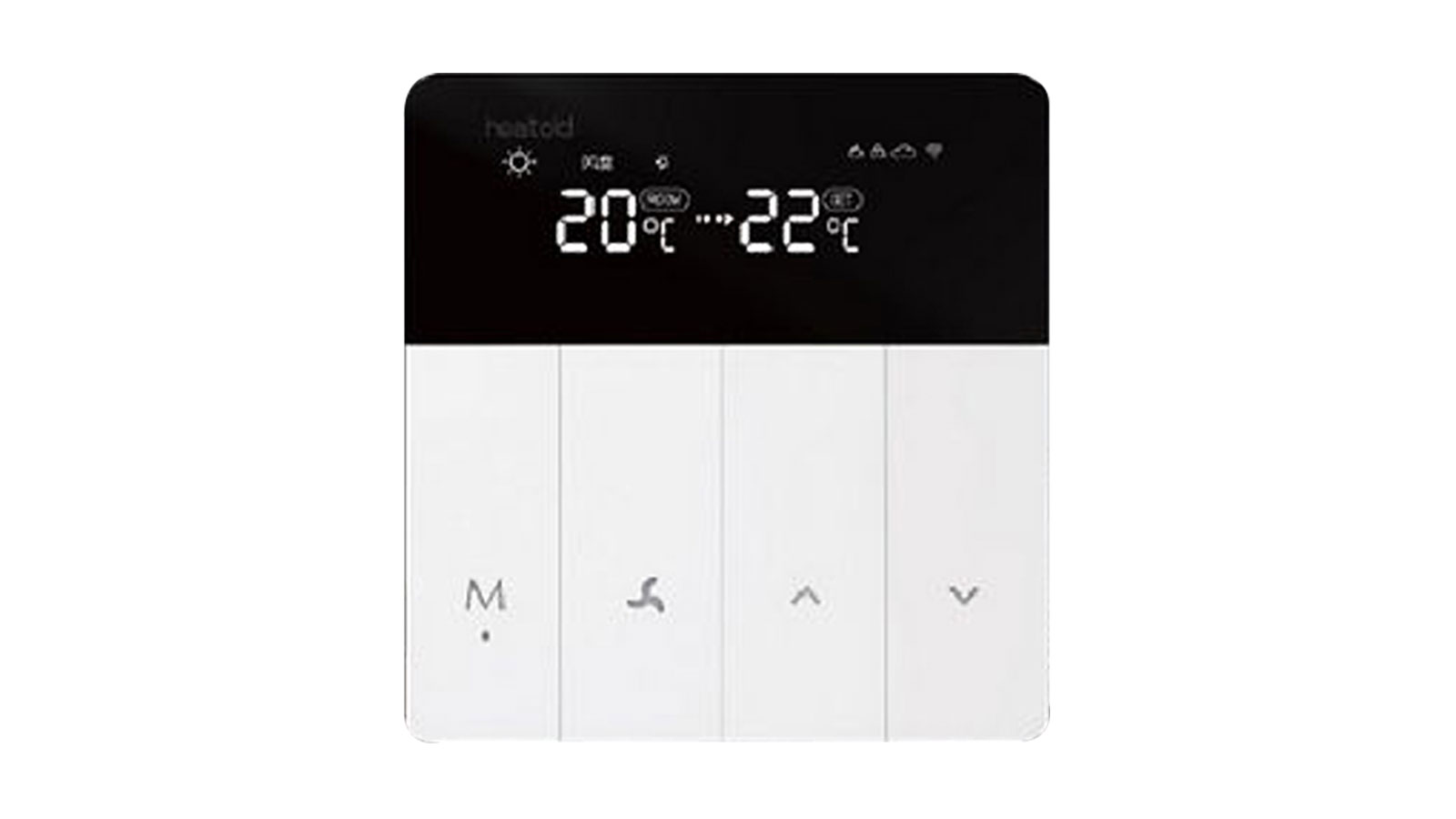
Thermostat, 5 to 35 C temperature setting
Company: C&Q Technology (Guangzhou) Co. Ltd
C&Q offers the TH-01 thermostat with 100 to 240VAC, 50/60Hz rating, 16A current load and less than 1.5W power consumption. It has 5 to 35 C temperature setting and ±1 C accuracy.
MOQ: 1,000 units
Lead time: 15 days
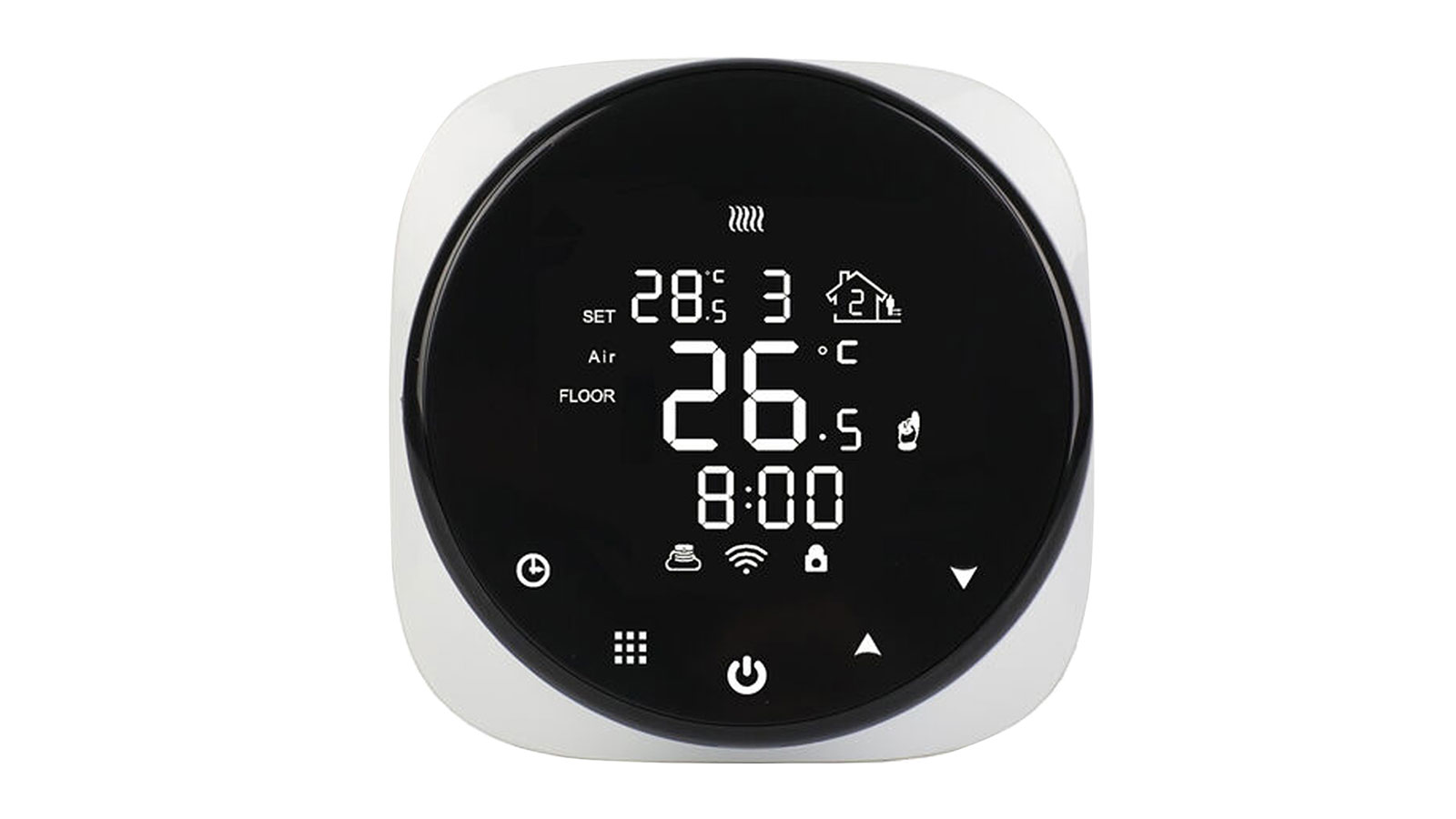
Thermostats with WiFi, app or voice control
Company: Xiamen Hysen Control Technology Co. Ltd
Suitable for electric underfloor and water heating, and water or gas boiler systems, this WiFi-enabled thermostat from Xiamen Hysen, the HY316, is seven-day programmable and can be controlled via an app or voice. It has 90 to 240VAC, 50/60Hz rating.
MOQ: Negotiable
Lead time: 15 days
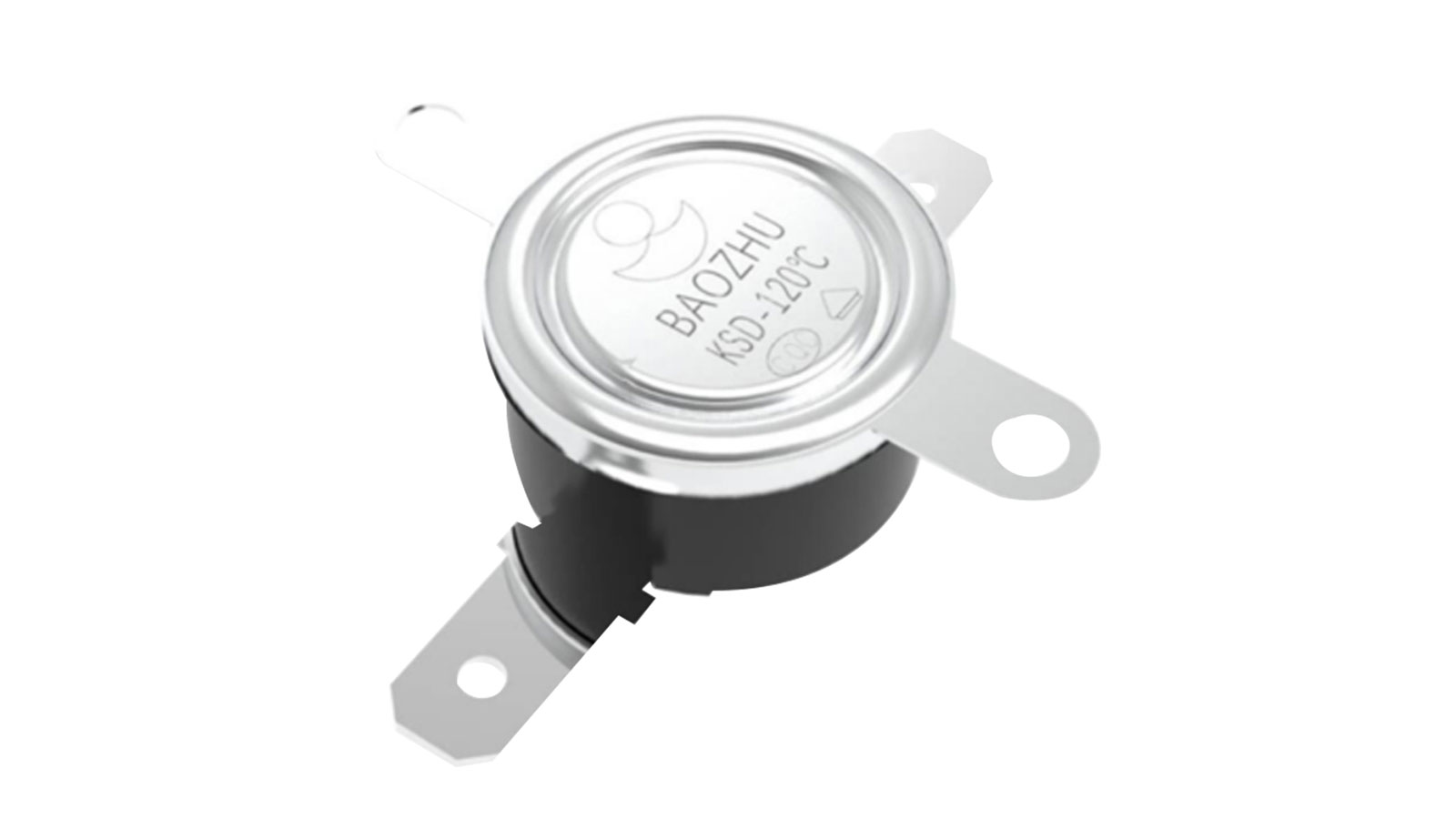
Thermostat with 10,000-cycle life span
Company: Yangzhou Baozhu Electric Appliance Co. Ltd
Yangzhou Baozhu offers the KSD, a thermostat with 250VAC 10A, 250VAC 16A, 48VDC 10A or 48VDC 16A rating, 5 to 280 C operating temperature, ±3, ±5 and ±10 C operating temperature tolerance, ±3, ±10 and ±15 C reset temperature tolerance and 10,000-cycle life span. It meets UL, CB and CQC requirements.
MOQ: 1,000 units
Lead time: 7 days
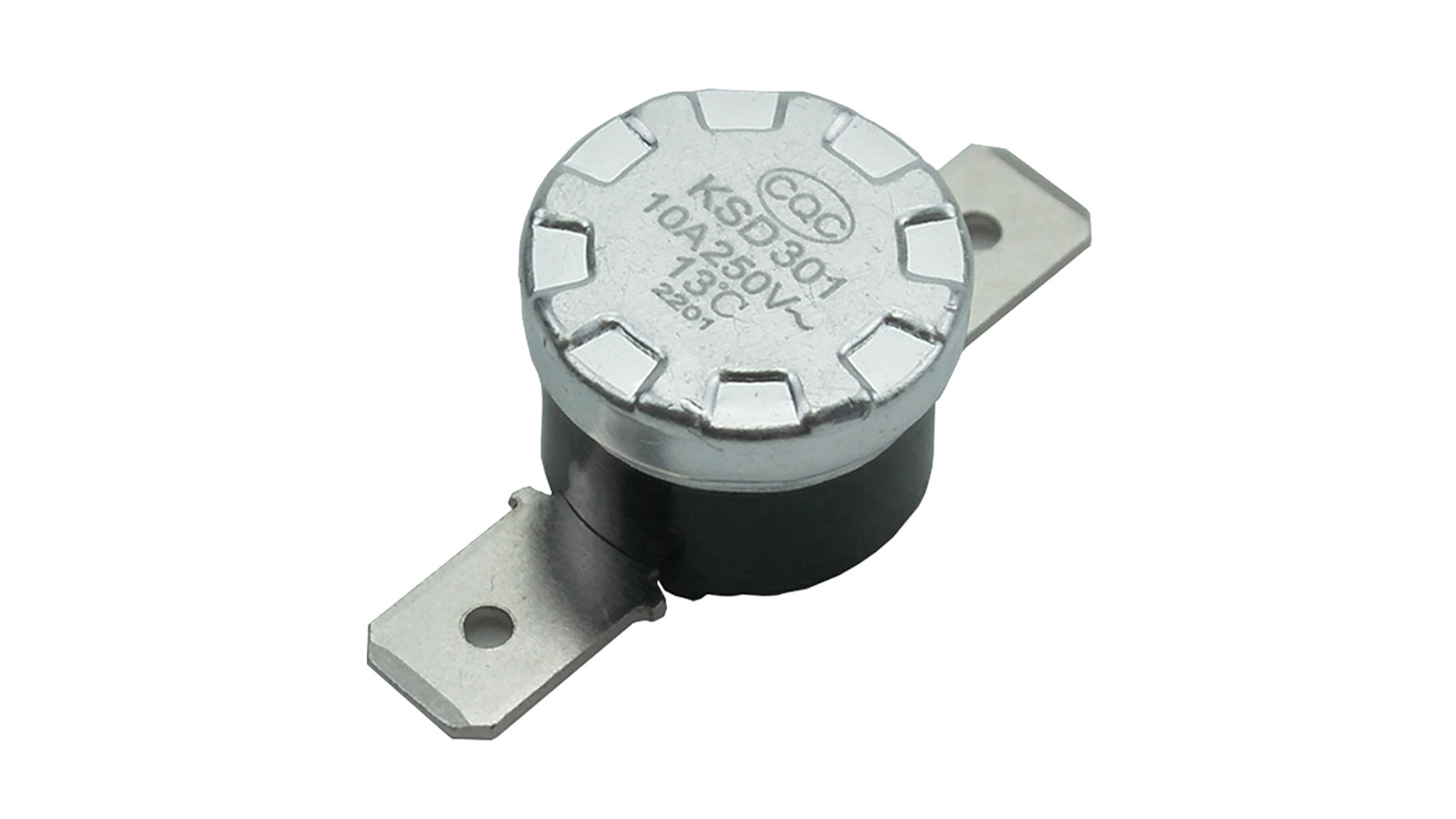
Thermostat, up to 100,000 resistive load cycles
Company: Zhongshan Kingrong Electronics Co. Ltd
The KRE-KSD302#8147 from Zhongshan Kingrong is a thermostat with an automatic or a manual reset setting. It has 5, 10 or 16A rated current, less than 50mohm resistance between terminals and insulation resistance at 500VDC. The resin-coated variant has 180 C maximum operating temperature and the version with a ceramic coating has 220 C. Both have up to 100,000 resistive load cycles. This unit meets UL and CQC requirements.
MOQ: 500 units
Lead time: 25 days

