Download App
Better Online and Trade Show Sourcing Experiences.Scan the QR code to download.
Learn More
Hot Topics
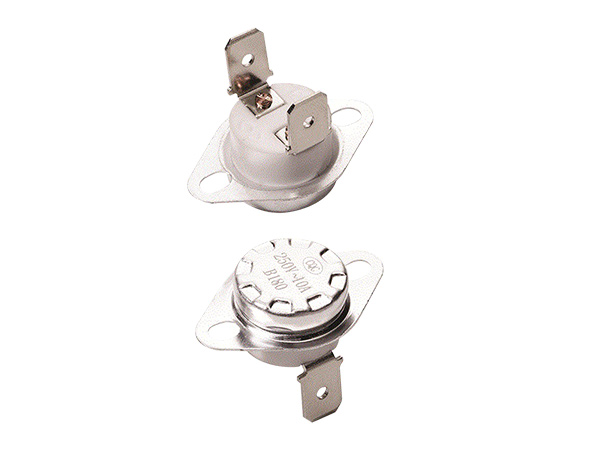
Thermostats are a key component in controlling temperatures in home appliances, electric tools, and in medical, automotive, industrial, aviation and space applications. They can sense or detect changes in the air, liquids and processes such as in manufacturing, and send these readings to systems that use them for monitoring and making desired adjustments. As such, these devices must have high precision, reliability and stability to enable optimum performance of equipment.
Increasing demand for thermostats in smart homes, electric vehicles, robotics, 5G communications and the medical field is expected to bring their global market past the billion-dollar threshold. From $957 million in 2021 and $986 million in 2022, the value will hit $1.002 billion in 2023 and $1.015 billion in 2024, according to Zhongjin Qixin Information, a Chinese market research firm.
This positive outlook is encouraging further investment in China, one of the world’s manufacturing bases for thermostats, to take advantage of this growing sector. Domestically, the category reached $503 million in 2019, accounting for 55.32 percent of the global total, according to Zhongjin Qixin. This share will increase to 62.49 percent based on the projected value of $634 million by 2024.
Thermostats for high-current and -voltage circuits used in new energy applications are on Chinese manufacturers’ R&D agenda, as are product enhancements. Yangzhou Baozhu Electric Appliance Co. Ltd, for instance, has a thermostat with a noncurrent-carrying device for high reliability and stability and a special aging treatment to ensure a life span of 100,000 cycles. This snap-action bimetallic disc unit is compact for easy installation in coffee pots, water dispensers, microwave ovens and soy milk machines.
On the production side, new factories are being built and output levels being raised in anticipation of increased demand. Hangzhou Star Shuier has allotted $176 million to the construction of a manufacturing base in Fuyang district. The facility, with a total area of 80,040sqm, will turn out high-precision thermostats and PV modules and will have an annual production value of $514 million once fully operational in two or three years. XC Electronics (Shenzhen) Corp. Ltd, meanwhile, has added automatic production equipment such as riveting machines.
Thermostats that can be sourced from Chinese manufacturers include bimetal disc action, pressure, liquid expansion, electric and digital types for home appliances, medical, automotive and industrial applications. Bimetal kinds dominate their shipments.
As in most industries in China, customization is widely done, usually in aspects relating to reset and operating temperatures. Typical products have a rated voltage of 250VAC or 48VDC, rated current of 5 to 16A, maximum operating temperature of 280 C and minimum life span of 10,000 cycles. They are made in compliance with national and international standards such as GB 14536.10-2008, CE, RoHS, TÜV and UL.
Most thermostats used in household appliances come from Chinese manufacturers, according to suppliers interviewed by Global Sources.
All materials and components used in the production of thermostats come from domestic providers. The costs have been generally stable in the recent past, keeping product prices unchanged. However, due to competition, some companies will continue to offer lower quotes to win more orders.
Suppliers from the US, Germany, Japan and South Korea dominate the thermostat category. Some have factories in China, and they include Sensata, Emerson, Bourns and Asahi Keiki.
Most Chinese enterprises are small and midsize operations. Changsheng Electric, Hangzhou Star Shuaier, Tianyin Electromechanical, Yangzhou Baozhu Electric Appliance and Foshan Tongbao are the bigger companies. The first two ranked second and third to Sensata in terms of market share in 2019, according to Zhongjin Qixin.
More than half of the factories are in Jiangsu and Zhejiang, specifically in Suzhou, Changzhou, Changshu, Ningbo and Yueqing. The rest are found in Guangdong, spread over Shenzhen, Dongguan, Foshan and Zhongshan.
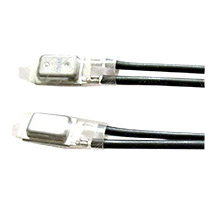
Company: Jiangyin Precision Electrical Equipment Co. Ltd
Jiangyin Precision’s thermostat, the 17AMJ with PTC, has 250VAC 10A, 120VAC 25A or 16VDC 22A rating, 45 to 180 C action temperature and ±5, 9 or 10 C tolerance on open temperature. It meets UL, VDE and RoHS requirements.
MOQ: Negotiable
Lead time: 5 days
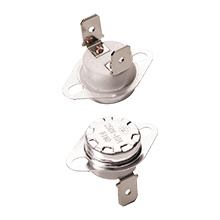
Company: XC Electronics (Shenzhen) Corp. Ltd
XC markets the KDS301, a thermostat with 250VAC, 50/60Hz, 10A load resistance in the VDE, CQC, UL and TÜV standards or 235VAC, 15A, 50/60Hz in UL. It has ≤50mohm contact and more than 100Mohm isolation resistance. The operating temperature is 0 to 210 C with ±2 to 5 percent tolerance and the difference between reset and operating temperatures 3 to 100 C. Durability is 100,000 cycles in the VDE and UL standards or 10,000 cycles in CQC and TÜV.
MOQ: 2,000 units
Lead time: 15 days
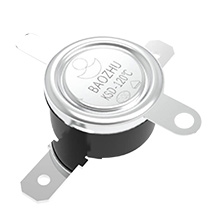
Company: Yangzhou Baozhu Electric Appliance Co. Ltd
Suitable for use in dispensers, water heaters, toasters, dishwashers, microwave ovens, coffee makers, refrigerators and disinfection cabinets, Yangzhou Baozhu’s KSD thermostat has 250VAC 10A, 250VAC 15A, 48VDC 10A or 48VDC 16A rating. It operates in -5 to 280 C, has a life span of 10,000 cycles, and meets CQC, UL and CB requirements.
MOQ: 1,000 units
Lead time: 7 days
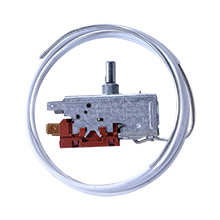
Company: ZJTEX Electric Group Co. Ltd
Model ZJ-KDS thermostat from ZJTEX has -40 to 40 C temperature range, 25 C maximum adjustable temperature, 3 to 7 C defrost reset temperature range and 5 to 35 C temperature differential. It meets CQC, UL and VDE requirements.
MOQ: 3,000 units
Lead time: 30 days
More Sourcing News
Read Also

关注 “环球资源外贸” 官方微信,获取实时外贸资讯
iOS & Android
iOS & Android(Mainland China)
Copyright © 2026 Publishers Representatives Limited. All rights reserved.




