




Table of Contents
What is a Request for Information (RFI)?
Importance of RFIs in business decision-making
Differences among RFI, RFP, and RFQ
Scenarios that necessitate an RFI
How RFIs can streamline project planning and procurement
RFI excellence: Leveraging Global Sources for superior procurement outcomes
What is a Request for Information (RFI)?
A Request for Information (RFI) is a business inquiry document used to gather information from vendors or suppliers to inform future purchases or projects. It is a standard practice in various industries for companies that are contemplating the procurement of goods or services but require more details before they can proceed.
An RFI is typically the first step in the procurement process, often issued before more detailed documents such as a Request for Proposal (RFP) or Request for Quotation (RFQ). Its primary aim is not to make an immediate purchase but to understand what products, services, and suppliers are available in the market. This information aids in making well-informed decisions regarding potential investments or partnerships. The document usually outlines the information needed from the suppliers, which might include company background, service offerings, compliance with certain requirements, or the supplier's methodologies. It's a non-committal inquiry that does not oblige the company to pursue further action with the responding parties. Likewise, suppliers are not bound by their responses to an RFI; it's a chance for them to present their capabilities without the promise of a contract.
RFIs are advantageous for both requesting organizations and suppliers. For organizations, they offer valuable insights into market capabilities, enabling businesses to identify suitable suppliers who align with their specific requirements. They also serve as a crucial foundation for refining subsequent requests for proposals (RFPs) or quotations (RFQs), ensuring that these requests are targeted and precise. For suppliers, RFIs offer an opportunity to be included in a buyer’s option for future procurement. It also allows them to emphasize their strengths and what makes them stand out from competitors.
An RFI is essentially a market research tool used for initial supplier engagement. It allows organizations to gather information to shape their strategy and procurement processes with minimal risk. It also gives suppliers a chance to position themselves for future opportunities.

Importance of RFIs in business decision-making
RFI is an essential tool in business decision-making, used as a formal process to gather valuable data from vendors, suppliers, or contractors. It's a precursor to the procurement of services or goods, acting as a non-binding inquiry to collect detailed information that can influence strategic decisions.
The importance of RFIs in business decision-making cannot be overstated. They serve several vital functions:
- Clarification: RFIs help businesses clarify the scope and capabilities of potential partners or solutions. They can pinpoint which vendors can meet specific requirements and under what terms, ensuring that the subsequent stages of procurement or partnership discussions are based on accurate information.
- Market Research: By issuing RFIs, companies can conduct thorough market research. This research is invaluable for understanding current market trends, available technologies, and potential innovations that could impact long-term strategic planning.
- Risk Mitigation: Understanding the landscape and potential partners' capabilities helps mitigate risks associated with investments and long-term commitments. RFIs can reveal red flags or areas where vendors may not meet expectations, allowing for a more informed and cautious approach.
- Cost Efficiency: Using RFIs, businesses can compare prices from various vendors, promoting cost-effective decisions. This comparison encourages supplier competition and enhances negotiation power, ultimately driving down costs.
- Alignment with Objectives: RFIs ensure that any final decision aligns with the company's strategic objectives. By laying out the company's needs clearly, responses can be evaluated based on how well they meet these targeted goals.
- Time Management: They streamline the decision-making process by eliminating unsuitable candidates early on. This saves time by focusing attention on viable options rather than evaluating every potential vendor.
- Building Relationships: The RFI process can initiate relationships with vendors, laying the groundwork for future collaboration. It's an opportunity for businesses to communicate their values and objectives, attracting partners who share similar principles.
- Legal and Compliance: RFIs help in understanding how well vendors comply with relevant laws and regulations. This is crucial in industries where compliance cannot be compromised, such as finance, healthcare, and government contracting.
- Innovation and Improvement: Vendors often use RFIs as an opportunity to propose innovative solutions that a business might not have considered. This can lead to improvements in processes, products, or services.
- Documentation and Audit Trail: The RFI process provides a documented trail of due diligence performed before making a decision. This documentation can be critical for justifying decisions to stakeholders or during audits.
In summary, RFIs are not just routine paperwork in procurement; they are a strategic tool. They help businesses make informed decisions, reduce risks, and gain more value from their partnerships and purchases. By using the information from RFIs, companies can better understand complex markets, leading to more successful outcomes and sustainable growth.
RFI best practices
In the realm of business procurement and project management, the Request for Information (RFI) is a vital instrument for gathering essential data from potential suppliers and partners. Crafting an RFI that elicits informative and actionable responses is an art that requires adherence to best practices. Here’s a guide to RFI best practices to ensure that your inquiries yield the most valuable insights.
1. Define clear objectives
Before creating an RFI, it's important to know your objectives. Whether you need market insights, want to evaluate supplier capabilities, or explore product options, your RFI should be designed to achieve these specific goals.
2. Keep it concise and focused
A well-structured RFI is succinct yet comprehensive. Avoid overwhelming recipients with unnecessary details, but ensure you include all critical questions that will inform your decision-making process. Be direct in your queries to make it easier for respondents to provide the information you need.
3. Use standardized templates
Consistency is key in RFI creation. Using a standardized template ensures that all RFIs sent out adhere to a certain format, making it easier to compare responses. It also speeds up the RFI creation process and helps to prevent important details from being overlooked.
4. Segment your questions
Organize your questions into logical sections and categories. This not only helps the respondent understand what is being asked but also aids in the analysis of the responses later. Segmentation can be based on topics such as company information, product details, pricing, and delivery.
5. Be specific
Vague questions lead to vague answers. Be as specific as possible with your questions to receive precise information. If there are industry-specific details or technical specifications you need, don’t shy away from including them.
6. Allow for adequate response time
Timing is everything. Provide a reasonable timeframe for companies to respond to your RFI. This shows respect for the time and effort required to gather and provide the information you’re requesting and increases the likelihood of receiving comprehensive responses.
7. Leverage technology
Utilize RFI management software or platforms to streamline the process. These tools can help track responses, send reminders, and compile data for analysis. They also often provide analytics that can offer insights into the RFI process itself.
8. Maintain professionalism and courtesy
The tone of your RFI should be professional and courteous. Remember that an RFI is not only a data-gathering tool but also a touchpoint that can influence a potential supplier’s perception of your company.
9. Follow up
After sending out an RFI, be proactive in following up with recipients. This can clarify any doubts, prompt delayed responses, and demonstrate your genuine interest in the supplier’s offerings.
10. Review and analyze responses systematically
Once responses are received, have a systematic approach for reviewing and analyzing them. This could involve scoring responses based on predefined criteria or categorizing them for easier comparison.
11. Provide feedback
If possible, provide feedback to respondents, especially if you will not be moving forward with them. This can help maintain a positive relationship for future opportunities and encourages suppliers to participate in future RFIs.
12. Continuously improve
View each RFI as a chance to learn. Evaluate its successes and shortcomings, and apply these insights to improve future RFIs. By following these best practices, your RFIs will be powerful tools that deliver clarity, foster good supplier relationships, and ultimately support informed business decisions in your procurement process.
How to write an RFI template
Creating an effective Request for Information (RFI) template is a critical task in the procurement process. An RFI is a document used to solicit information from potential suppliers and vendors, helping to understand their capabilities and offerings. Here is how to write an RFI template that is clear, structured, and capable of eliciting the necessary information from respondents.
1. Begin with a brief introduction
Your RFI should start with an introduction that provides context. This section should include:
- The purpose of the RFI
- An overview of your organization
- A brief description of the project or need
- The importance of the respondent's information
2. Define your objectives
Clearly determine what you want to achieve—whether it's understanding market trends, evaluating potential suppliers, or comparing product options. Be specific in your objectives to ensure that your questions are targeted and relevant. Focus on the most critical aspects that will impact your decisions, such as cost and quality, and ensure that these objectives align with your broader business strategy.
3. Provide submission guidelines
Detail how and when you want the RFI to be submitted. Include:
- Submission deadline
- Preferred format (e.g., PDF, Word document)
- Contact information for questions
- Any specific instructions on how to respond
4. Include a detailed questionnaire
This is the core of your RFI. Structure your questions to gather comprehensive information. Consider including sections such as:
- Company information: Ask for a company profile, history, and any relevant experience.
- Product or service details: Ask for comprehensive details about the products or services, including their features, benefits, and what sets them apart from others.
- Technical capabilities: Inquire about the supplier's technological capabilities, infrastructure, and compliance with industry standards.
- Pricing structure: While an RFI is not a request for a quote, asking about pricing models can be helpful for budgetary considerations.
- References and case studies: Request examples of past work or case studies that demonstrate the supplier’s expertise and reliability.
5. Encourage additional information
Invite respondents to provide any additional information they believe is relevant. This can include innovations, strategic initiatives, or other value-added propositions.
6. Attach any relevant documents
If there are any documents that can help suppliers understand your needs better, such as project plans or specifications, attach them to the RFI.
7. Conclude with next steps
Outline what will happen after the RFI process is completed. This may include timelines for review of the responses, follow-up meetings, or subsequent requests for proposals (RFPs).
RFI template example
Introduction
[Your Company Name] is seeking information from qualified suppliers for [project/need]. This RFI aims to understand the offerings and capabilities of potential partners in [specific field or industry].
Objectives
We aim to:
- [Objective 1]
- [Objective 2]
- [Etc.]
Submission guidelines
Please submit your response by [date] in [format] to [contact information]. Responses received after this deadline will not be considered.
Questionnaire
Company Information
- Provide a brief overview of your company.
- What is your company’s history in providing [specific product/service]?
Product/Service Details
- Describe your product/service offerings related to [specific need].
- What distinguishes your product/service from competitors?
Technical Capabilities
- Detail your technological infrastructure relevant to [specific need].
- Describe how you comply with [relevant industry standards].
Pricing Structure
- Outline your pricing model and any factors that could affect pricing.
References and Case Studies
- Provide case studies or examples of previous work similar to our requirements.
Additional Information
Please include any other information that might assist us in our decision-making process.
Conclusion
After reviewing all RFI submissions, we will shortlist suppliers for further consideration and may request additional information or a formal proposal.
By following these steps, you can create an RFI template that is clear, comprehensive, and designed to gather all the necessary information for informed decision-making in the procurement process.
Differences among RFI, RFP, and RFQ
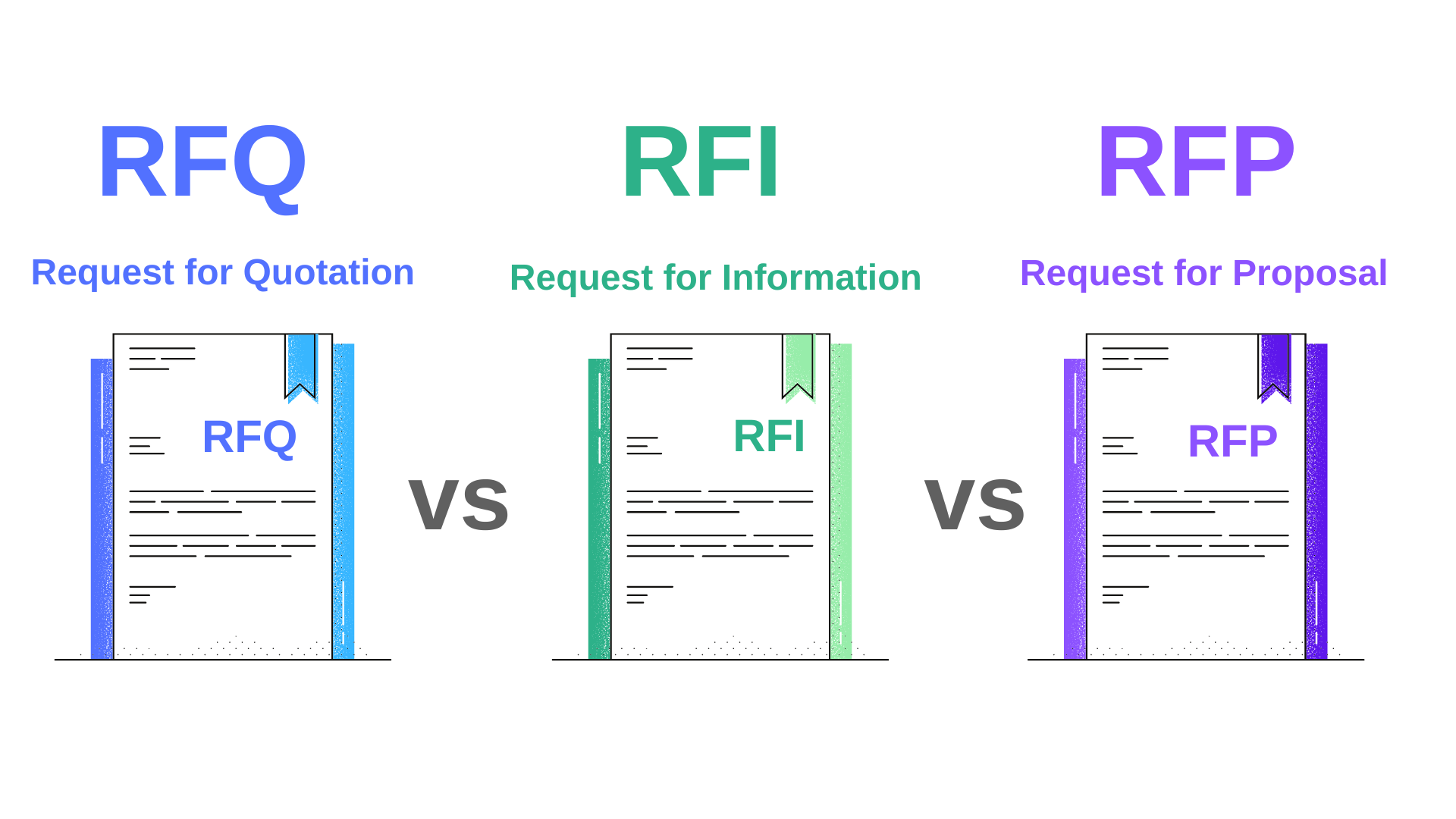
When starting a new project or looking to procure services or source products, sourcing professionals often use a variety of documents to gather information, outline requirements, and solicit bids from potential suppliers or partners. Three common documents used in this process are Requests for Information (RFI), Requests for Proposal (RFP), and Requests for Quotation (RFQ). Each serves a distinct purpose in the sourcing process and understanding the differences between them is crucial for both buyers and suppliers to manage their roles effectively.
Comparing RFI with Request for Proposal (RFP) and Request for Quotation (RFQ)
- Request for Information (RFI) is typically the first step in the procurement process. It helps companies gather general information about products, services, or suppliers to explore potential solutions or partners. It doesn’t usually lead to an immediate purchase.
- Request for Proposal (RFP) is more detailed and is used when specific project requirements are known but multiple approaches are considered. It requests detailed proposals from suppliers, including solutions, timelines, costs, and other relevant project details.
- Request for Quotation (RFQ) is used when the requirements are very clear, specific, and not likely to change, such as for bulk purchases. It seeks detailed pricing for a specific quantity of goods or services.
Situational uses for each document type
RFI might be used when:
- A business is exploring a new market or technology and needs more information.
- The organization wants to understand the capability of suppliers before committing to a formal bidding process.
- There is a need to gather information to refine strategies or requirements for a future RFP or RFQ.
RFP might be used when:
- The project is complex, and the organization is open to considering various methods or solutions.
- The company requires creative solutions or ideas that are not available off-the-shelf.
- There is a need to evaluate the prospective supplier's approach to delivering a solution, including their methodology, qualifications, and experience.
RFQ might be used when:
- The goods or services required are standardized and commoditized.
- The primary concern is the cost of the goods or services.
- The organization knows exactly what it needs in terms of specifications and quantities.
Decision-making based on responses
Decision-making after receiving responses varies based on the document type:
- RFI responses are typically used to shortlist potential suppliers who will be invited to participate in a subsequent RFP or RFQ process. Decisions at this stage are more about understanding capabilities and fit rather than selecting a specific proposal.
- RFP responses require a thorough evaluation as they include comprehensive proposals detailing how each supplier would meet the project's needs. Decisions are based on criteria such as strategy, cost, feasibility, supplier experience, and innovation.
- RFQ responses are often evaluated primarily on price, although quality and availability can also be important factors. The decision typically involves selecting the lowest bid that meets the specification requirements.
Chart: Differences Between RFI, RFP, and RFQ
| Document Type | Purpose | Detail Level | Decision Criteria |
|---|---|---|---|
| RFI | Information gathering | Low | Supplier capabilities |
| RFP | Soliciting proposals | High | Solution approach, cost, supplier experience |
| RFQ | Obtaining quotes | Very high | Price, compliance with specifications |
Understanding these documents and their appropriate use can significantly impact the efficiency and outcome of the procurement process. Organizations should carefully consider which document type best suits their needs at various stages of a project or purchase. Suppliers, on the other hand, must be adept at responding appropriately to each document type to improve their chances of winning contracts.
The RFI process
When organizations look to procure services or products, the Request for Information (RFI) process is a valuable step for gathering crucial information from potential suppliers. This process can clarify the project scope, identify potential vendors, and set the stage for future Requests for Proposal (RFPs) or Requests for Quotation (RFQs). Below is an introduction to the RFI process, outlining steps to prepare an RFI, tips for drafting effective questions, and strategies for evaluating responses.
Steps to prepare an RFI
- Define the Objective: Clearly articulate what you hope to achieve with the RFI. This could range from understanding market capabilities to seeking innovative solutions or partners.
- Gather Internal Requirements: Consult with stakeholders within your organization to compile a list of requirements, preferences, and constraints related to the product or service you are exploring.
- Research Potential Respondents: Identify potential vendors or suppliers who can provide the information you need. This may involve market research and preliminary discussions.
- Develop a Timeline: Establish a reasonable timeline for the RFI process, including deadlines for submission, review periods, and follow-up actions.
- Create an RFI Template: Develop a standardized form or document that outlines the information you are seeking. This typically includes an introduction, instructions for respondents, and the questions or information requests.
- Review and Approve: Before distribution, have key stakeholders review the RFI document to ensure it aligns with the project goals and requirements.
Tips for drafting effective RFI questions
- Be Specific and clear: Avoid ambiguity in your questions. Clear and concise questions will yield more useful responses.
- Balance Open-Ended and Closed Questions: While open-ended questions can elicit comprehensive information, closed questions can be easier to analyze and compare across respondents.
- Focus on Your Needs: Tailor questions to gather information that is directly relevant to your project's requirements and objectives.
- Encourage Innovation: Frame some questions in a way that encourages respondents to provide creative or innovative solutions that you may not have considered.
- Request Examples: Ask respondents to provide case studies or examples of previous work that demonstrate their capabilities.
- Consider Future Needs: Include questions that explore the respondent's capacity to scale or adapt to future changes in your industry.
How to evaluate responses to an RFI
- Establish evaluation criteria: Before reviewing responses, define what success looks like. Criteria may include the respondent's experience, capabilities, innovation potential, cost structures, and cultural fit.
- Create a review committee: Assemble a team with diverse expertise to evaluate RFI responses. This ensures a balanced assessment from different perspectives within your organization.
- First pass review: Conduct an initial review to shortlist responses that meet basic requirements and merit further consideration.
- In-depth analysis: Perform a thorough analysis of each shortlisted response, comparing them against your evaluation criteria.
- Clarification meetings: Schedule meetings with potential suppliers to clarify any uncertainties or gaps in their responses.
- Score responses: Use a scoring system based on your criteria to rank the responses. This quantitative approach can assist in making objective decisions.
- Reference checks: Where possible, conduct reference checks on the shortlisted respondents to validate their claims and assess their reputation.
- Document findings: Keep detailed records of your evaluations and decisions to support transparency and inform future procurement activities.
- Feedback to respondents: Provide feedback to respondents, especially those who were not selected. This can help maintain good relationships and provide them with insights for future RFIs.
- Reflect on the process: After completing the RFI process, reflect on what worked well and what could be improved for next time.
The RFI process is not just a preliminary step in procurement; it's a strategic tool that can shape the outcome of a project by informing decision-makers with detailed knowledge about what's available in the market. By carefully preparing RFIs, asking pertinent questions, and methodically evaluating responses, organizations can make well-informed decisions that lead to successful partnerships and project outcomes.
Scenarios that necessitate an RFI
Understanding the scenarios that necessitate an RFI is crucial for sourcing professionals, manufacturers, suppliers, B2B buyers, and wholesalers. An RFI, or Request for Information, serves as a valuable tool in various situations, such as when exploring new suppliers, evaluating market options, or seeking detailed insights into potential products and services. By identifying these scenarios, stakeholders can effectively use RFIs to gather essential information, assess capabilities, and make informed decisions that drive successful partnerships and procurement strategies. Here’s an overview of when and why to use an RFI:
- Unclear requirements: When the project scope is not fully defined, an RFI can help clarify specifications and understand what solutions are available.
- Complex projects: For projects that involve new or complex technology, an RFI can provide insights into the capabilities and approaches of potential vendors.
- Market research: When entering a new market or dealing with unfamiliar products or services, an RFI can help gauge the market landscape.
- Vendor pre-qualification: Before issuing a Request for Proposal (RFP), an RFI can be used to identify and qualify potential vendors.
- Cost estimation: To get a ballpark figure on potential costs, an RFI can provide preliminary pricing information.
- Regulatory compliance: If there are stringent regulations or compliance issues, an RFI can clarify how vendors would address these requirements.
Benefits of issuing an RFI
- Enhanced decision-making: By obtaining detailed information upfront, decision-makers can make more informed choices.
- Risk mitigation: An RFI can uncover potential issues or risks early in the project planning process.
- Cost savings: Understanding the market and available options can lead to more cost-effective solutions and prevent costly changes later.
- Efficient procurement: The information gathered can streamline the procurement process by ensuring that subsequent RFQs or RFPs are more targeted and precise.
- Innovation encouragement: Vendors may propose innovative solutions that were not initially considered by the project team.
- Stakeholder engagement: An RFI process can involve various stakeholders, ensuring their needs and concerns are addressed early on.
How RFIs can streamline project planning and procurement
RFIs play a vital role in streamlining project planning and procurement by offering early insights and detailed information from potential vendors. Here are some of the key ways they enhance the process:
- Refining project details: RFIs help clarify project requirements by gathering input from potential vendors, leading to more precise planning.
- Finding the right suppliers: RFIs identify suppliers who are interested and capable of meeting your project needs.
- Comparing options: The information from RFIs makes it easier to compare vendors and solutions side-by-side.
- Speeding up projects: With clearer details, projects can advance more quickly as uncertainties are addressed earlier.
- Starting relationships: The RFI process initiates contact with potential suppliers, setting the stage for future deals and collaborations.
- Guiding strategy: Insights from RFIs aid in shaping strategies that align with market capabilities and trends.
In summary, an RFI is more than a formality; it's a strategic tool that enhances project outcomes. It helps in making informed decisions by providing essential information, thus improving project planning and procurement. Whether exploring new technologies, assessing market options, or clarifying project needs, an RFI is key to a successful procurement process.
RFI excellence: Leveraging Global Sources for superior procurement outcomes
In the complex landscape of global procurement, the Request for Information (RFI) is a crucial step that can significantly impact a company’s success. It serves as a critical element in setting the stage for effective procurement or potentially causing misalignment. As businesses navigate the global market, utilizing comprehensive resources like Global Sources becomes essential. Global Sources stands as a titan in the B2B marketplace, linking businesses with reliable suppliers and manufacturers across the globe. By tapping into Global Sources, businesses gain access to a vast network of vetted suppliers, cutting-edge products, and market insights that are pivotal for making informed decisions. This platform not only streamlines the procurement process but also ensures that organizations can secure high-quality goods and services at competitive prices. With its comprehensive resources and advanced tools, Global Sources enables businesses to optimize their supply chains, mitigate risks, and achieve exceptional procurement results that drive growth and innovation.
Integrating RFIs with Global Sources
By integrating Global Sources with a meticulously designed RFI process, businesses can achieve the following:
- Access a vast supplier network: Global Sources offers access to a wide array of international suppliers, making it easier for companies to find partners that meet their specific requirements.
- Enhance market intelligence: The platform provides insights into industry trends and developments, which can inform the RFI process and ensure that queries are as relevant and comprehensive as possible.
- Streamline supplier evaluation: With detailed information on suppliers' capabilities, certifications, and product quality available through Global Sources, businesses can more effectively assess responses to RFIs.
- Improve communication: The platform's tools facilitate direct communication with suppliers, allowing for clear and efficient information exchange during the RFI process.
The art of crafting an effective RFI
To achieve RFI excellence, companies must approach the process with precision and strategic intent:
- Clarity in objectives: Clearly define what information is needed and why it is important for the business's procurement strategy.
- Targeted questions: Ask specific questions that elicit detailed responses, providing valuable insights into suppliers' abilities and products.
- Structured format: Use a consistent format for RFIs to simplify comparison between different suppliers' responses.
- Timely follow-up: Establish a timeline for responses and adhere to it, ensuring that the procurement process stays on track.
RFI excellence is not just about asking the right questions; it's about integrating those questions within a broader procurement ecosystem that includes resources like Global Sources. By doing so, companies can ensure they are not only sourcing from the best but also doing it in a way that is informed, efficient, and aligned with global best practices. As the procurement landscape continues to evolve, those who master the art of leveraging such platforms in their RFI process will likely lead the dance in global sourcing, achieving superior procurement outcomes that are harmonious with their strategic business objectives.
Conclusion
In conclusion, the RFI process, when expertly executed and coupled with the powerful platform of Global Sources, can significantly elevate a company's procurement strategy. The synergy between detailed, strategic RFIs and the extensive network and resources of Global Sources can lead to unparalleled procurement outcomes.
A meticulously designed RFI not only filters through the noise of the global market but also pinpoints the suppliers who align with a company's quality standards and business ethos. It is a tool that, when used effectively, can save time, reduce costs, and mitigate the risks associated with international sourcing.
Global Sources acts as a catalyst in this process, offering a robust foundation for businesses to launch their inquiries and gather comprehensive data. With its extensive database and user-friendly interface, Global Sources streamlines the connection between buyers and reputable suppliers worldwide. It allows companies to adeptly handle the challenges of global trade, ensuring they have the critical insights required to make sound decisions. As businesses plan for the future, the role of technology in procurement becomes increasingly critical. Integrating RFIs with digital tools like Global Sources marks a significant evolution in global sourcing practices, reflecting a shift from traditional methods to a more advanced approach. Embracing this integration helps companies stay competitive, adapt to market changes quickly, and gain a strategic edge. Achieving excellence in RFIs is not merely an operational goal but a strategic necessity in today’s interconnected environment. Utilizing Global Sources for enhanced procurement results exemplifies how merging traditional expertise with cutting-edge technology can drive success in the global market.

