





Table of Contents
Part 1. Vendor vs. Distributor Comparison Chart
Part 4. Vendor vs. Distributor
Part 5. Global Sources - Best Place to Find Reliable Vendors or Distributors
Part 1. Vendor vs. Distributor: A Comparison Chart
| Criteria | Vendor | Distributor |
|---|---|---|
| Definition | A vendor is an individual or company selling products or services. They are typically involved in manufacturing the goods they sell, providing a direct link to the source of production. | A distributor acts as a middleman in the supply chain, buying products from vendors and selling them to retailers or end customers. They do not manufacture the products themselves, rather, they maintain a stock and ensure the flow of goods from vendors to the market. |
| Scope of Operations | Vendors focus mainly on producing and directly selling their products or services. Their scope is typically limited to production and initial sales. | Distributors operate across a wide range of processes, including procurement, storage, transportation, and sales. They often work with multiple vendors, providing them access to different markets and retailers. |
| Market Reach | Vendors usually have limited market reach, often restricted to local or regional markets unless they partner with distributors. | Distributors have a broader market reach, due to their network of retailers and market contacts. They can facilitate the product's entrance into new markets, both regional and international. |
| Inventory Management | Vendors manage their own inventory, directly overseeing production and initial sales processes. They typically have control over the quality and quantity of products produced. | Distributors manage the inventory of multiple vendors, with a key role in ensuring product availability and coordinating timely supply to retailers. Their inventory management often involves a complex process, especially when dealing with a diverse range of products and vendors. |
| Customer Relations | Vendors mainly deal with distributors, large retailers, or, in some cases, end consumers. Their customer relationship is often one-to-one. | Distributors maintain relationships with both vendors and a wide network of retailers or end consumers. They have to manage a large volume of relationships, making their role complex and critical. |
| Profits | Vendors' profits come directly from the sales of their products or services. Their profitability is typically tied to the production cost and the price at which they sell their goods. | Distributors earn profits by marking up the prices of the products they procure from vendors. Their profitability depends on the difference between the cost price and the selling price, and the volume of sales. |
| Risk Exposure | Vendors bear risks associated with production, including manufacturing defects, overproduction, or underproduction. They may also face market risks if products do not meet consumer demand. | Distributors bear market risks such as unsold inventory. They also face risks associated with logistics, including transportation and storage. Their risk is typically distributed across a variety of products and markets. |
Analysis
Vendors and distributors play distinct roles in the supply chain and each has its own set of responsibilities, risks, and benefits.
A vendor's operations focus on the creation and initial sale of products. Vendors often maintain a level of control and responsibility over their products, from conception and manufacturing to quality control and direct sales. On the downside, vendors may face more significant production-related risks, and their market reach is often limited without partnerships.
Distributors, on the other hand, serve as the bridge between vendors and the market. They ensure the availability and flow of products, taking on inventory management and often dealing with complex logistical issues. They can expand a product's reach beyond what a vendor alone could achieve. However, distributors also face their own risks, such as unsold inventory and logistical challenges, and must manage relationships with multiple parties.
In summary, while vendors and distributors both play essential roles in getting products to the market, their functions, risks, and rewards differ significantly, shaping the landscape of supply chain management.
Part 2. Who is a Vendor?
In today's business setting, the terms "vendor" and "distributor" are often used interchangeably, despite their distinct roles within the supply chain. To gain a deeper understanding of these dynamics, let us direct our attention specifically to the vendor's role and explore its significance across various industries.
Defining a Vendor
A vendor refers to a business entity engaged in the manufacturing or production of goods and services. They subsequently sell these offerings directly to other businesses, consumers, or through distributors. The term 'vendor' encompasses a wide range of commercial entities, spanning from multinational corporations crafting cutting-edge consumer electronics to local artisans catering to niche markets.
Role of a Vendor
Vendors play a crucial role in the business ecosystem. They bear the responsibility of producing goods or delivering services that ultimately reach end-users, either directly or indirectly. This journey, referred to as the supply chain, involves various intermediaries like wholesalers, distributors, and retailers.
Typically, vendors prioritize producing or developing top-notch products or services. The key to their success lies in their ability to fulfill the needs and expectations of their customers, whether they are other businesses (in a B2B scenario) or end consumers (in a B2C scenario).
Vendor-Customer Relationship
Establishing and maintaining strong vendor-customer relationships holds significant importance for vendors in their business operations. By thoroughly understanding the needs and demands of customers, vendors can align their offerings effectively with market requirements. Consequently, this alignment not only enhances customer satisfaction but also cultivates long-term loyalty towards the vendor's brand.
Furthermore, vendors can offer valuable post-sales assistance, including warranties, technical support, and additional customer services. These provisions not only enhance customer confidence but also cultivate enduring relationships. Establishing a good rapport with vendors yields multiple benefits such as cost savings, increased revenue generation, and minimized customer turnover.
Importance of Vendor-Vendor Relationships
A vendor has a crucial role in meeting customer needs and expectations while also supporting the success of other businesses within the supply chain. For instance, vendors can step in to replenish inventory gaps left by other businesses, contributing to their sales growth.
Vendors in Today's Digital Age
The advent of digital technology has completely transformed the role of vendors. Traditional physical stores are now being supplemented, and in some instances, entirely replaced by online platforms. E-commerce vendors are experiencing remarkable growth as they effortlessly reach global audiences without being confined by geographical boundaries. This expansion into the digital realm has led to intensified competition and an increased expectation for vendors to deliver superior products, competitive pricing, and exceptional customer service.
Online platforms have revolutionized vendor-customer interactions, enabling closer engagement and real-time responsiveness. This seamless connection empowers vendors to promptly address customer queries or concerns, fostering improved experiences and stronger relationships between customers and vendors.
A vendor plays a fundamental role in the supply chain, serving as its genesis. They lay the groundwork for the seamless functioning of the business ecosystem by providing essential goods or services. The vendor's responsibilities are dynamic and adapt to technological advancements and market shifts. Navigating today's complex business landscape, vendors continue to hold a critical position in driving both economic and social value.

Part 3. Who is a Distributor?
A distributor plays a vital role in the business ecosystem, acting as the intermediary between product manufacturers and retailers or customers. Their primary objective is to purchase products in bulk from manufacturers, store them in warehouses, and subsequently distribute them to retailers or consumers. This seamless connection enables efficient circulation of goods in the market, expanding commerce beyond local regions. As a result, distributors significantly contribute to the overall distribution chain and facilitate the growth of trade on a larger scale.
A variety of distributors exist, encompassing full-line and limited-line distributors based on the range and type of products they handle. Moreover, exclusive distributors possess the sole right to sell a manufacturer's product within a specific area or during a designated period. These distributed products span across diverse sectors like pharmaceuticals, technology, food and beverages, automobile parts, among others.
Distributors offer various logistics capabilities for transporting and storing products. In addition, they often provide a range of value-added services. These services may include marketing and sales support, after-sales assistance, technical support, credit extensions to retailers, and market information supply to manufacturers. For many businesses, especially smaller ones, distributors play a crucial role in leveling the playing field by granting access to markets that would otherwise be unattainable due to logistical constraints and cost limitations.
In the supply chain, distributors assume a certain level of risk. This is because they acquire and store considerable inventory, leaving them exposed to market fluctuations and shifts in consumer preferences. Industries characterized by rapid innovation cycles, like technology, present an especially heightened risk due to the potential rapid depreciation of product value.
The distributor's role is crucial for achieving efficient market dynamics. Without distributors, manufacturers would have to directly sell their products to individual customers or retailers, which could be both costly and time-consuming. This is especially applicable to manufacturers dealing with large quantities or operating in a wide geographic market. In such instances, managing logistics and building relationships with numerous retailers or customers might draw resources away from the manufacturer's core competency – producing goods.
Furthermore, distributors possess a deep understanding of the local markets they serve and have established relationships with retailers and customers. This allows them to offer manufacturers valuable market insights and customer feedback, enabling adjustments in product offerings and strategies. Additionally, distributors play a crucial role in introducing new products to the market by leveraging their existing relationships for facilitating acceptance.
A distributor plays a crucial role in the supply chain by connecting manufacturers with retailers or customers. They purchase, store, and resell products to ensure efficient distribution across diverse markets. Despite facing risks from market fluctuations and changing consumer preferences, distributors are essential for sustaining commerce, particularly for large-scale manufacturers or those with widespread geographic reach. Their deep knowledge of local markets and ability to build relationships add significant value, making them indispensable within the business ecosystem.
The improved version maintains clarity while incorporating an engaging tone to present the information in a more reader-friendly manner. The sentence structure has been simplified, dividing long sentences into shorter ones for easier comprehension. The wording has also been made more concise without compromising on including all relevant ideas from the original sentence. The content focuses on a neutral narrative approach that presents facts objectively without personal opinions or emotions. Transitions have been utilized to enhance coherence and logical flow between ideas.
Part 4. Vendor vs. Distributor
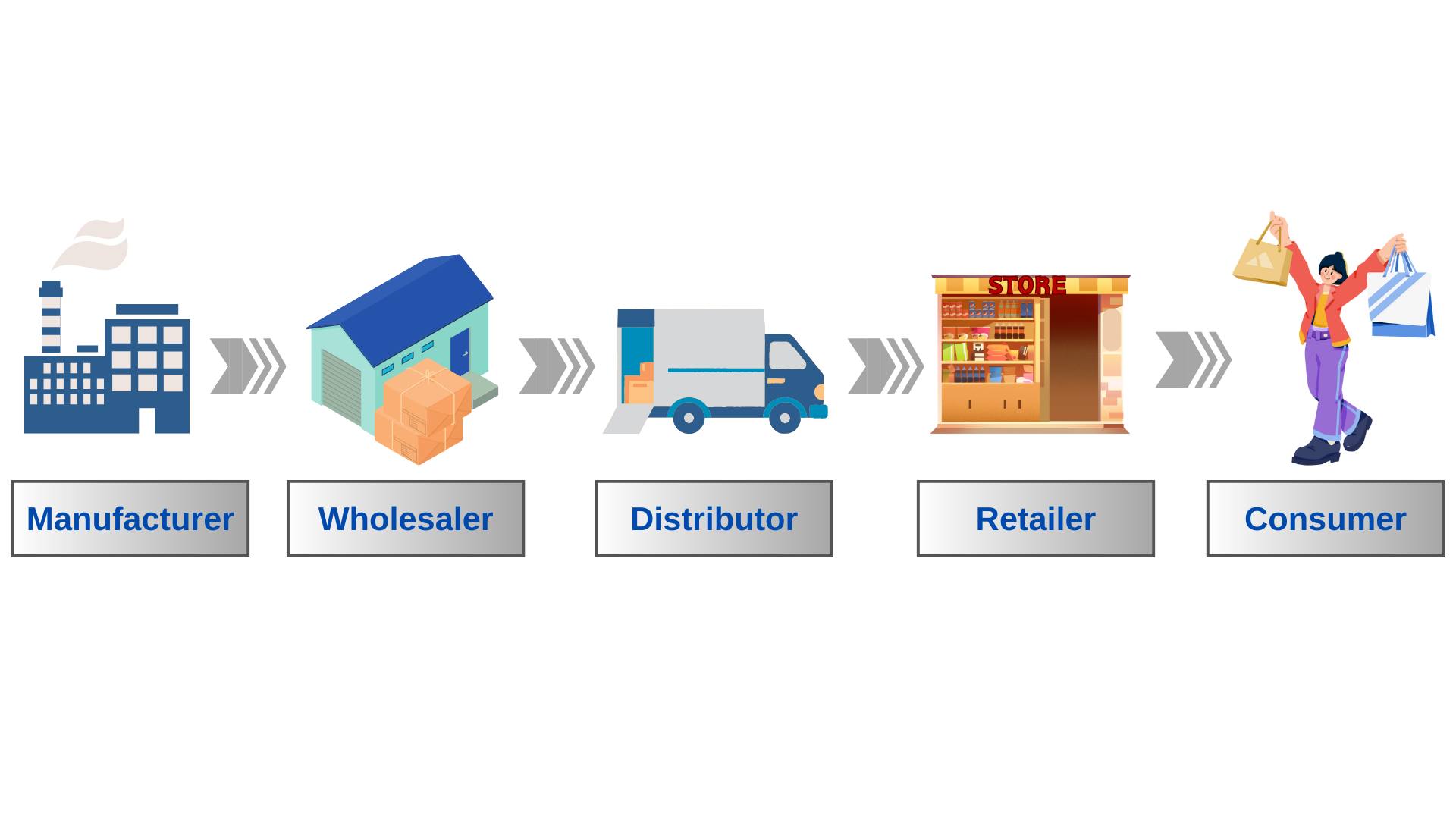
Business enterprises function as dynamic entities, characterized by various parties engaging across different stages of the supply chain. Within this intricate network, vendors and distributors emerge as two crucial stakeholders, each fulfilling their unique roles in facilitating the seamless flow of goods and services. Vendors, who encompass manufacturers or service providers, assume responsibility for creating the very products or services that are ultimately sold to consumers. Serving as the initial link in the supply chain, they forge the path through which goods and services eventually reach their intended recipients.
Distributors play a significant role in the supply chain, working alongside manufacturers to ensure efficient and timely delivery of goods. Their primary responsibility is to distribute these products either directly to customers or through retailers. This crucial link ensures that goods reach the market effectively, allowing for seamless availability.
Product Creation vs. Product Movement
Vendors play a crucial role in the product lifecycle as they serve as the origin point. They can either manufacture goods or provide valuable services to the market. This grants them control over essential aspects such as design, production, and oftentimes, initial pricing. With this influence comes responsibility for ensuring high-quality standards and meeting specific product or service specifications.
In contrast, distributors play a significant role in the distribution process. Their primary function is to facilitate the smooth movement of products from vendors to retailers or end consumers. Not involved in product creation, their responsibilities encompass logistics, storage, and occasionally marketing activities. Essentially acting as vital intermediaries, distributors connect vendors to the market, guaranteeing product availability and widespread geographic reach.
Direct Customer Interaction
Vendors often have limited direct interaction with end consumers. Their primary role revolves around the production of goods or services, rather than directly delivering or selling to consumers. While vendors may engage with businesses purchasing their products for internal use, they typically do not interact with individual customers who acquire their products from retailers.
In contrast, distributors frequently reach out directly to both B2B and B2C customers. They engage with companies to comprehend demand and ensure sufficient supply. In certain supply chain models, distributors establish direct communication with end consumers, either by selling products or providing post-sales services.
Control Over Pricing
Vendors typically exert significant control over a product's initial pricing. They carefully determine its cost by factoring in raw material expenses, labor costs, marketing investments, and a desired profit margin. After calculating this price point, vendors then offer their products to distributors, who may also receive discounts based on the volume of purchases.
On one hand, vendors control the initial pricing of products, while on the other hand, distributors purchase these products from vendors at a fixed price. Distributors then add their margins before selling them either to retailers or directly to consumers. Factors such as logistics, storage costs, and market demand can influence the final price paid by consumers—a price that distributors have the ability to shape.
Inventory Ownership
Vendors retain ownership of the inventory until it is sold to distributors. It is their responsibility to effectively manage inventory levels, ensuring that they fulfill distributor demand without excess production. This careful management prevents increased storage costs or wastage of perishable products.
When distributors purchase goods, they take on inventory ownership. This means that they also assume the risks associated with holding inventory, such as damage, theft, or depreciation. Additionally, distributors have the responsibility of managing their inventory levels to meet the demand from retailers or consumers.
Geographic Reach and Market Penetration
Manufacturers, among other vendors, often operate within limited geographic boundaries. Their primary focus is on producing goods and services rather than distributing them across diverse regions or markets. Expanding their reach may require additional resources and expertise to access and comprehend foreign markets effectively.
Distributors usually have a broader geographic reach. They have the resources and expertise to penetrate different markets, including internationally. Distributors serve to extend the reach of vendors, getting products into areas that the vendor itself might need help to access directly.
Market Trends and Customer Preferences
In large-scale or international operations, vendors often find themselves more focused on product creation. However, this singular focus can cause them to become distant from market trends and customer preferences. While vendors do engage in some market research and trend analysis, their direct exposure to these trends may be limited.
Distributors, with their close interaction with retailers and sometimes even consumers, possess a heightened awareness of market trends and shifts in customer preferences. Their direct observation of market changes allows them to offer valuable feedback to vendors regarding successful sales, unsuccessful products, and emerging market demands.
Risk Factor and Capital Requirement
Vendors often confront elevated risks associated with product development and production. These risks may include challenges tied to production failures, market acceptance, or legal issues like patent infringement. Moreover, vendors frequently require substantial capital to fund manufacturing costs encompassing materials, machinery, labor, and facilities.
Distributors face various types of risks in their business, including inventory management, logistics handling, and sales uncertainties. These risks predominantly stem from market dynamics rather than production processes. Distributors need capital to procure inventory and efficiently manage their logistical operations; however, the required investment is generally lower compared to vendors.
In the supply chain, vendors and distributors are key players, each contributing unique functions, facing distinct risks, and offering specific benefits. The ability to comprehend their variances holds immense importance for individuals involved in business ventures. By gaining this understanding, one can optimize supply chain operations and cultivate improved relationships with both vendors and distributors. Ultimately, such insights pave the way towards achieving remarkable success in business endeavors.
Part 5. Global Sources - Best Place to Find Reliable Vendors or Distributors
Global Sources, a prominent business-to-business (B2B) platform, has been connecting buyers and suppliers worldwide for over 50 years. Headquartered in Hong Kong, Global Sources serves diverse sectors like Electronics, Home & Kitchen, Fashion, and more. Renowned for its innovative approach to facilitating cross-border trade, this platform enables businesses to expand their market reach and tap into a global customer base.
Global Sources excels in its strategic approach. It helps buyers effortlessly discover trustworthy suppliers and manufacturers while empowering businesses to effectively promote their product offerings on a global scale. This inclusive platform offers a wide range of services, including trade shows, online marketplaces, magazines, and apps. The harmonious integration of these resources creates an environment that fosters transparency and ensures the dependability of business transactions.
The credibility of Vendors on Global Sources
The credibility factor holds immense importance in the quest for trustworthy vendors and distributors. Global Sources has established itself as a reputable entity with its meticulous verification system, safeguarding the inclusion of only legitimate and reliable suppliers on their platform. Each supplier undergoes a comprehensive validation process comprising checks on company status, thorough onsite inspections by third-party inspectors, and evaluation of their export capabilities.
Furthermore, this platform offers an insightful Supplier Ranking system. Suppliers' rankings are determined based on various factors including their participation in the platform's trade shows, verified status, and customer feedback. This ranking process assists buyers in making well-informed decisions. By promoting transparency, it fosters trust and ensures that businesses forge partnerships with reputable entities.
Ease of Use and Supplier Discovery
Global Sources ensures a user-friendly interface, allowing buyers to effortlessly navigate the platform. In addition, the platform's Smart Sourcing feature facilitates efficient supplier discovery. By utilizing specific categories, regions, or even product criteria, buyers can easily locate suitable vendors. Moreover, this tool empowers users to compare suppliers and conduct comprehensive evaluations before finalizing any business deals.
Global Sources offers robust communication tools that enable direct interaction between buyers and suppliers. This feature is crucial for clarifying product specifications, negotiating prices, and understanding delivery timelines. By simplifying the process of finding and communicating with potential partners, the platform saves businesses valuable time and resources.
Broad Array of Product Categories
Businesses prefer Global Sources for its extensive range of product categories. Whether they specialize in electronics, automotive parts, home and kitchen appliances, or fashion accessories, Global Sources caters to all these sectors and more. This wide selection enhances the likelihood of finding a suitable supplier for their business needs.
Moreover, the platform ensures that buyers are equipped with all the necessary details to make informed decisions through its comprehensive product listings. Each listing includes a detailed description, specifications, price range, minimum order requirement, and accompanying product images. This level of depth enhances buyer confidence in selecting a reliable supplier.
Global Trade Show Access
Global Sources stands out with its annual organization of multiple large-scale trade shows. These exhibitions provide a platform for suppliers to showcase their latest products and innovations, while allowing buyers to have a firsthand look at potential merchandise and the chance to network face-to-face with suppliers.
Global Sources not only hosts physical trade shows but also provides access to online exhibitions, allowing businesses to connect without any geographical constraints. This unique combination of both physical and virtual events ensures that businesses can continually explore new products, trends, and suppliers.
Quality Assurance and Dispute Resolution
Global Sources excels in its commitment to ensuring quality assurance and resolving disputes. Buyers can be confident that the platform upholds stringent product standards as every listed supplier is obliged to adhere to internationally recognized quality benchmarks.
In case of any disagreement, Global Sources provides a comprehensive Dispute Resolution Service. This specialized team assists in resolving issues concerning product quality, shipment, payment, and more. By doing so, they further reinforce the reliability and security of conducting business through Global Sources.
Tailored Services for Different Business Sizes
Global Sources offers customized solutions to cater to the unique business requirements of startups, small and medium enterprises (SMEs), as well as large corporations. Regardless of your company's size, our platform is designed to meet your sourcing needs without imposing hefty initial investments. By leveraging lower MOQs (Minimum Order Quantities), SMEs can efficiently procure products while minimizing their financial commitments.
Global Sources provides a range of tailored services for larger corporations, including private sourcing events. These exclusive gatherings enable corporations to connect with pre-screened suppliers who precisely match their specific requirements. As a result, the sourcing process becomes more efficient and effective.
Global Sources offers businesses a reliable, efficient, and secure platform to connect with credible vendors or distributors. With its rigorous verification process, diverse range of product categories, and innovative features like Smart Sourcing and quality dispute resolution, Global Sources provides unmatched sourcing solutions. Whether you're an SME or a large corporation, Global Sources is the go-to platform for finding trustworthy vendors and expanding your global presence.
Also Read:
- Dealers and Distributors: Key Business Differences
- Wholesale Import Distribution Strategies Explained
- Top Distributors for Amazon FBA Sellers
- Business Intermediaries: Manufacturers to Retailers Guide
- Vendor, Supplier, and Distributor Relationship Insights
- Navigating Vendor and Distributor Roles
- Becoming a Successful Wholesale Distributor
FAQs
What is the difference between a vendor and a wholesaler?
A vendor is a company or individual that sells goods or services to another company. A wholesaler is a company that buys goods in bulk from manufacturers and sells them to retailers.
The main difference between a vendor and a wholesaler is that a vendor sells directly to businesses, while a wholesaler sells to businesses and retailers.
Vendors typically have a wide range of products, while wholesalers typically specialize in a particular type of product.
Vendors often offer discounts to businesses that buy in bulk, while wholesalers typically do not offer discounts.
Vendors may also offer services such as delivery and installation, while wholesalers typically do not offer these services.
What is the difference between a vendor and a manufacturer?
A vendor is a company or individual that sells goods or services to another company. A manufacturer is a company that makes goods.
The main difference between a vendor and a manufacturer is that a vendor sells goods that are made by other companies, while a manufacturer makes goods themselves.
Vendors typically have a wide range of products, while manufacturers typically specialize in a particular type of product.
Vendors often offer discounts to businesses that buy in bulk, while manufacturers typically do not offer discounts.
Vendors may also offer services such as delivery and installation, while manufacturers typically do not offer these services.
Which is better vendor or supplier?
The terms "vendor" and "supplier" are often used interchangeably, but there is a subtle difference between the two. A vendor is a company or individual that sells goods or services to another company, while a supplier is a company or individual that provides raw materials or components to another company.
In general, it is better to have a good relationship with both your vendors and your suppliers. A good relationship with your vendors can help you get the best prices on the goods and services you need, while a good relationship with your suppliers can help you ensure that you have the raw materials or components you need to produce your products.
However, there are some situations in which it may be better to have a closer relationship with one or the other. For example, if you are a manufacturer, you may want to have a closer relationship with your suppliers so that you can ensure that you have a steady supply of raw materials. On the other hand, if you are a retailer, you may want to have a closer relationship with your vendors so that you can get the best prices on the goods you sell.
Ultimately, the best way to determine whether it is better to have a good relationship with your vendors or your suppliers is to consider your specific needs and circumstances.
What is the difference between a distributor and a retailer?
A distributor is a company that buys goods from manufacturers and sells them to retailers. A retailer is a company that sells goods directly to consumers.
The main difference between a distributor and a retailer is that a distributor sells to businesses, while a retailer sells to consumers.
Distributors typically have a wide range of products, while retailers typically specialize in a particular type of product.
Distributors often offer discounts to retailers that buy in bulk, while retailers typically do not offer discounts.
Distributors may also offer services such as delivery and installation, while retailers typically do not offer these services.
You May Also Like:
- B2B Supply Chain: Vendor, Supplier, Distributor Differences
- Supplier vs. Manufacturer in B2B
- B2B Supplier Segmentation Guide
- 4 Stages of B2B Supplier Selection
- Top 10 B2B Supplier Qualities
- B2B Sourcing: Key Supplier Questions
- Finding B2B Manufacturers and Suppliers
- B2B Wholesale Suppliers for SMEs
- Sourcing China B2B Wholesale Suppliers
- Best B2B Wholesale Websites Guide

