
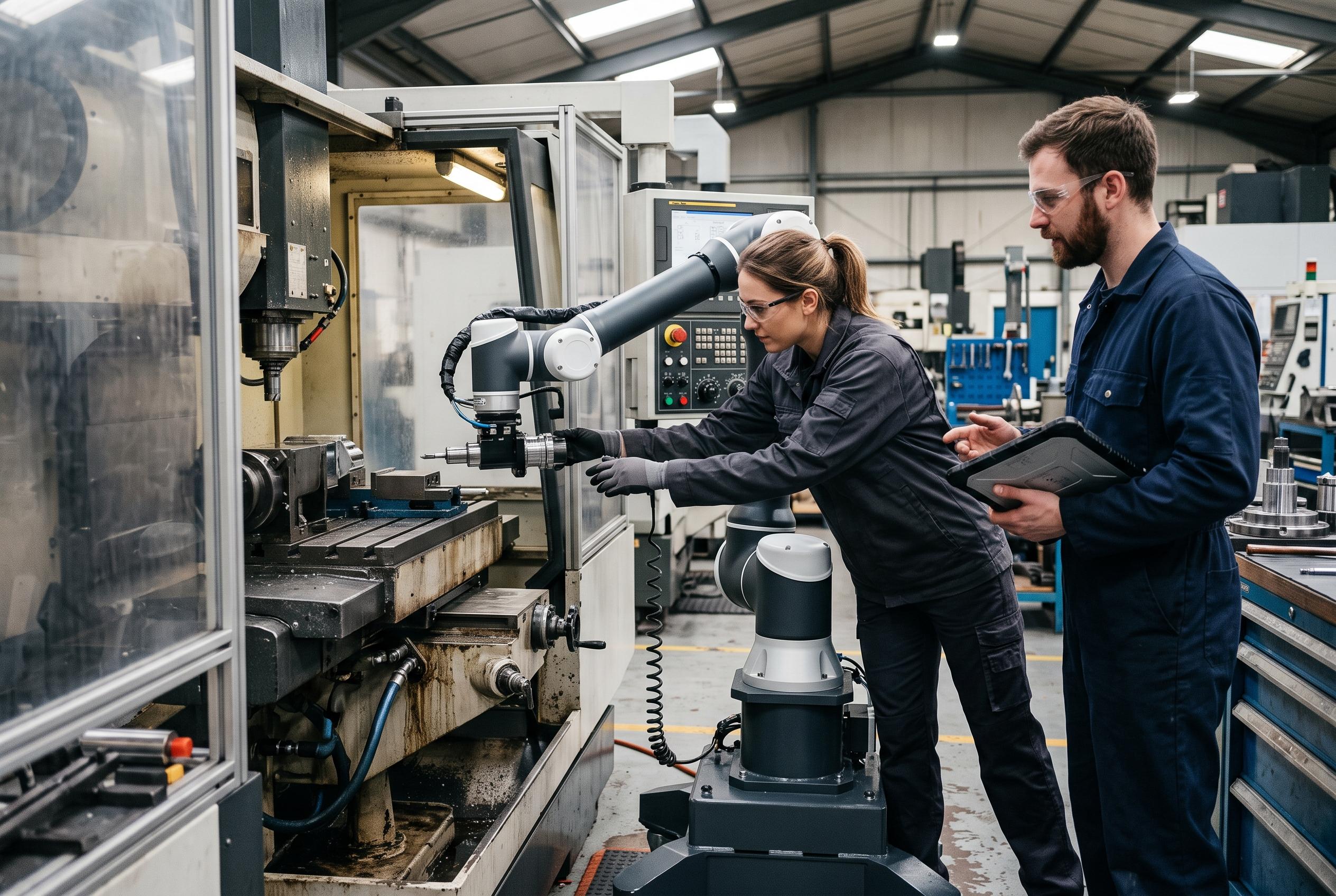
Manufacturers in Japan are moving closer to autonomous production as ABEJA and Yamazaki Mazak begin a joint effort to bring physical AI into machining environments. The partnership matters because it aims to turn shop-floor data, expert know-how, and robot learning into practical tools for faster planning, flexible scheduling, and lower operating costs.
A factory partnership with a practical ambition
The most important detail is that this isn't just another artificial intelligence demonstration. ABEJA and Yamazaki Mazak want to apply AI inside real manufacturing operations, where a missed decision can affect deadlines, machinery, materials, and customer orders.
Their collaboration combines ABEJA's enterprise AI platform with Yamazaki Mazak's experience in machine tools and production systems. The companies will focus on making physical AI useful in day-to-day factory work, not merely impressive in a presentation.
That distinction matters. Manufacturing floors are noisy, time-sensitive places, and software has to fit around people, machines, inventory, and unexpected changes. A sleek algorithm is only valuable if it can survive that messy reality.
AI agents will tackle the hardest planning tasks
One development area is an AI agent that can propose how a component should be machined. That includes the sequence of operations, the machining method, and cutting conditions, all of which traditionally depend heavily on experienced engineers.
The companies say the system should help turn personal expertise into knowledge that can be shared more widely. That could make training easier and help standardise decisions across teams, while potentially shortening the time needed to prepare a job.
A second AI agent will address production scheduling. It is expected to consider machine availability, production plans, material inventory, and operational knowledge when suggesting an updated schedule. This is particularly relevant to factories handling many product types in smaller quantities, where one urgent order or missing part can quickly disrupt the day.
Why human-in-the-loop design matters
ABEJA says its platform is built around a human-in-the-loop approach. In plain English, people remain involved in checking, correcting, and improving the system as it works.
That approach is reassuring for high-stakes manufacturing. A machine can spot patterns quickly, but an experienced operator may understand a constraint that isn't obvious in the data, such as a supplier quirk, a maintenance concern, or a customer's unusual tolerance requirement.
The AI should therefore be viewed less as a replacement foreman and more as a fast, tireless planning assistant. Industry commentary from VOIX and Bizaidea has also highlighted the partnership's connection to persistent manufacturing challenges, including labour shortages and the transfer of specialist skills.
Robot learning could connect software with the shop floor
The third part of the programme is a learning environment for robots, transport equipment, and other automated systems. The proposed setup is designed to link operational data gathering with AI training, evaluation, and testing on physical equipment.
That end-to-end connection is important. Robots don't become dependable simply because a model performs well in a simulation. They need to deal with real positioning, changing loads, machine layouts, and the small surprises that make factory automation such a demanding field.
Yamazaki Mazak's smart-factory work shows the wider direction of travel: machinery, automation, and digital tools are increasingly being treated as one connected production system. The new partnership could add a more adaptive layer, allowing systems to improve from operating data and local know-how.
The bigger issue is Japan's manufacturing skills gap
Japan's manufacturing sector faces a familiar tension. Demand is growing in areas such as aerospace, semiconductors, and electric vehicles, yet many factories still rely on a limited pool of experienced workers for process planning, setup, and scheduling.
This is where physical AI may prove more useful than a chatbot sitting on the sidelines. The technology is being aimed at decisions that lead directly to action, including how machines should be used and how production should change when conditions shift.
Still, adoption won't be automatic. Factories will need clean data, clear safety controls, reliable connectivity, and staff who understand how to challenge an AI recommendation. The strongest systems will likely be the ones that make workers more capable, rather than forcing them to trust a black box.
What happens next for AI-powered machining?
ABEJA and Yamazaki Mazak plan to keep adapting their systems to the different production environments of customer companies. Longer term, the partners expect the resulting AI agents to be integrated with Yamazaki Mazak machine tools and related automation equipment.
That ambition gives the project a clear commercial test: can it improve equipment utilisation, shorten planning cycles, reduce costs, and keep production stable when orders or materials change?
The answer won't arrive overnight, but the direction is significant. As Mazak's technology resources and ABEJA's platform approach come together, physical AI is being framed not as futuristic theatre, but as another tool for making factories more flexible and resilient.
A smarter factory may still need a human touch, but it could give that human a much better view of the whole operation.
Disclaimer: This article may have been created with AI assistance and reviewed by our editorial team. It is provided for general informational purposes only. Readers should verify information independently before relying on this content.
