
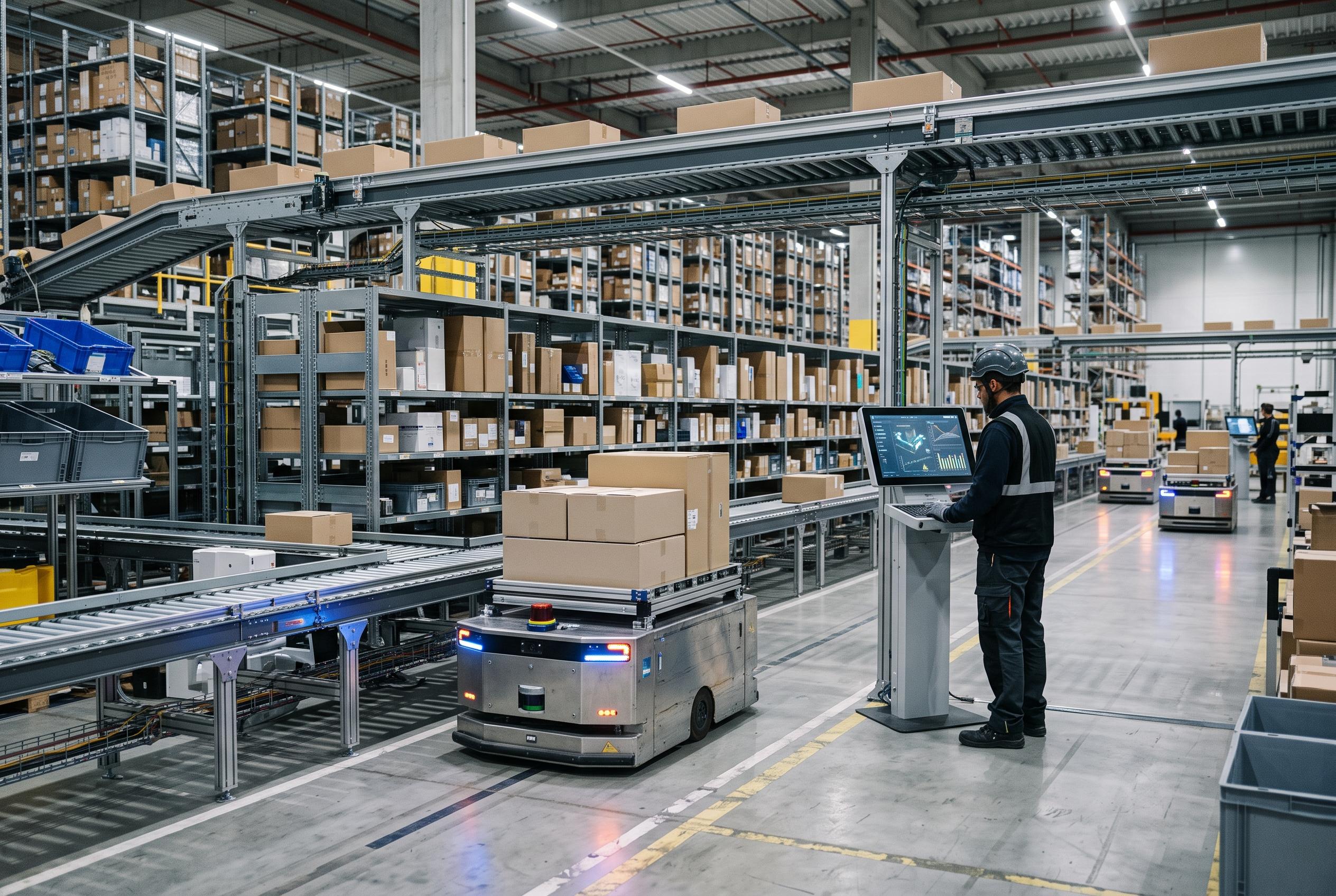
AI in supply chain is turning to make sense of volatile demand, sprawling delivery options, and mountains of data. The technology promises faster forecasts and sharper decisions, but experts say its real value depends on clean information, careful implementation, and people who can challenge the machine when conditions change.
AI Has Arrived at a Difficult Moment
Supply chain planners are being asked to do more with less certainty. Customers expect products to be available, delivery choices to be flexible, and service to remain smooth even when transportation, labour, or supplier conditions shift without warning.
That makes AI in supply chain planning especially appealing. As SupplyChainBrain explains, modern systems can sift through huge volumes of information, identify relationships, and support decisions that would take people considerably longer to calculate. The attraction is obvious: less spreadsheet wrangling, more time spent deciding what to do next.
But speed isn't the same as wisdom. AI can be remarkably good at finding patterns, yet it doesn't automatically understand why a promotion failed, why a supplier is suddenly unreliable, or why a customer relationship matters beyond the numbers.
What AI Can Do for Forecasting and Inventory
The most immediate opportunities sit around demand forecasting, replenishment, inventory positioning, and scenario planning. AI tools can compare historical sales with pricing, promotions, seasonality, weather, regional behaviour, and other signals to help planners build a more responsive view of demand.
That can be useful when conditions are changing quickly. Instead of relying on a single forecast, teams may be able to test several possibilities, such as a sudden sales spike, a delayed shipment, or a shift in customer preferences. Industry analysis from Supply Chain Lens and N-iX highlights this broader promise for generative AI, particularly its ability to make complex information easier to query and interpret.
Still, the results are only as reliable as the material going in. If inventory records are stale or sales data sits in disconnected systems, an elegant recommendation may have a very shaky foundation. A polished dashboard can't make missing information magically appear, unfortunately.
Why Planning and Execution Must Stay Connected
A forecast is only the beginning of the journey. The recommendation still has to reach procurement, warehouse, transport, and customer-service teams, where real-world constraints can quickly reshape the plan.
That handoff is a common weak spot. Supply Chain Management Review reports that AI projects can struggle when planning insights don't translate cleanly into operational action. A system might suggest moving stock to a different facility, for instance, without knowing that the site is already short-staffed or that transportation capacity is unavailable.
The practical lesson is simple: don't judge an AI project only by forecast accuracy. Measure whether it improves availability, reduces excess stock, shortens response times, or helps teams recover from disruption. The quiet, unglamorous links between departments often decide whether the technology earns its keep.
The Mistakes Manufacturers Should Avoid
Manufacturers can get into trouble by treating AI as a plug-in rather than a change to the way work gets done. New Equipment's reporting points to familiar pitfalls, including weak data governance, unclear objectives, and insufficient attention to the people expected to use the system.
Another risk is chasing a flashy technology without defining the business problem first. A company might launch a broad generative AI programme when the more useful starting point is a smaller task, such as improving exception alerts or helping planners compare supply scenarios.
Experts cited by B2wise also warn that generative AI has limits. It can produce plausible language without guaranteeing accurate reasoning, and it may struggle with rare events that have little historical precedent. Human review isn't a temporary inconvenience here; it's part of responsible design.
Humans Still Make the Hard Calls
The most convincing vision of AI isn't a warehouse full of robots replacing every planner. It's a planning team with better tools, quicker access to evidence, and more room to focus on judgement.
Nicholas Wegman of Zebra Technologies, speaking with SupplyChainBrain, addresses that balance directly. AI can support decisions by exposing patterns and modelling possibilities, but people remain responsible for context, trade-offs, relationships, and consequences. A planner may understand that a seemingly inefficient choice protects a key customer or avoids a supplier dispute, details a model may not see.
That human layer may become more important as systems grow more capable. The best operations will likely pair automated analysis with clear approval rules, transparent explanations, and regular checks for errors or bias. In other words, AI can help steer the ship, but someone still needs to look out the window.
A Practical Way to Begin With AI
Companies considering AI in supply chain planning should begin with one defined problem and a measurable target. Improving forecast accuracy for a particular product group, reducing stockouts in one region, or speeding up responses to exceptions can create a useful test without overwhelming the organisation.
Next, map the data and the decision process. Identify who owns the information, who acts on the recommendation, and what happens when the model is wrong. That groundwork may sound less exciting than a product demonstration, but it's where much of the eventual value is created.
The outlook is promising, but not magical. AI is likely to become a valuable planning partner, especially as supply chains grow more complex, while human expertise will remain the safeguard that keeps automation grounded in reality.
Disclaimer: This article may have been created with AI assistance and reviewed by our editorial team. It is provided for general informational purposes only. Readers should verify information independently before relying on this content.
