
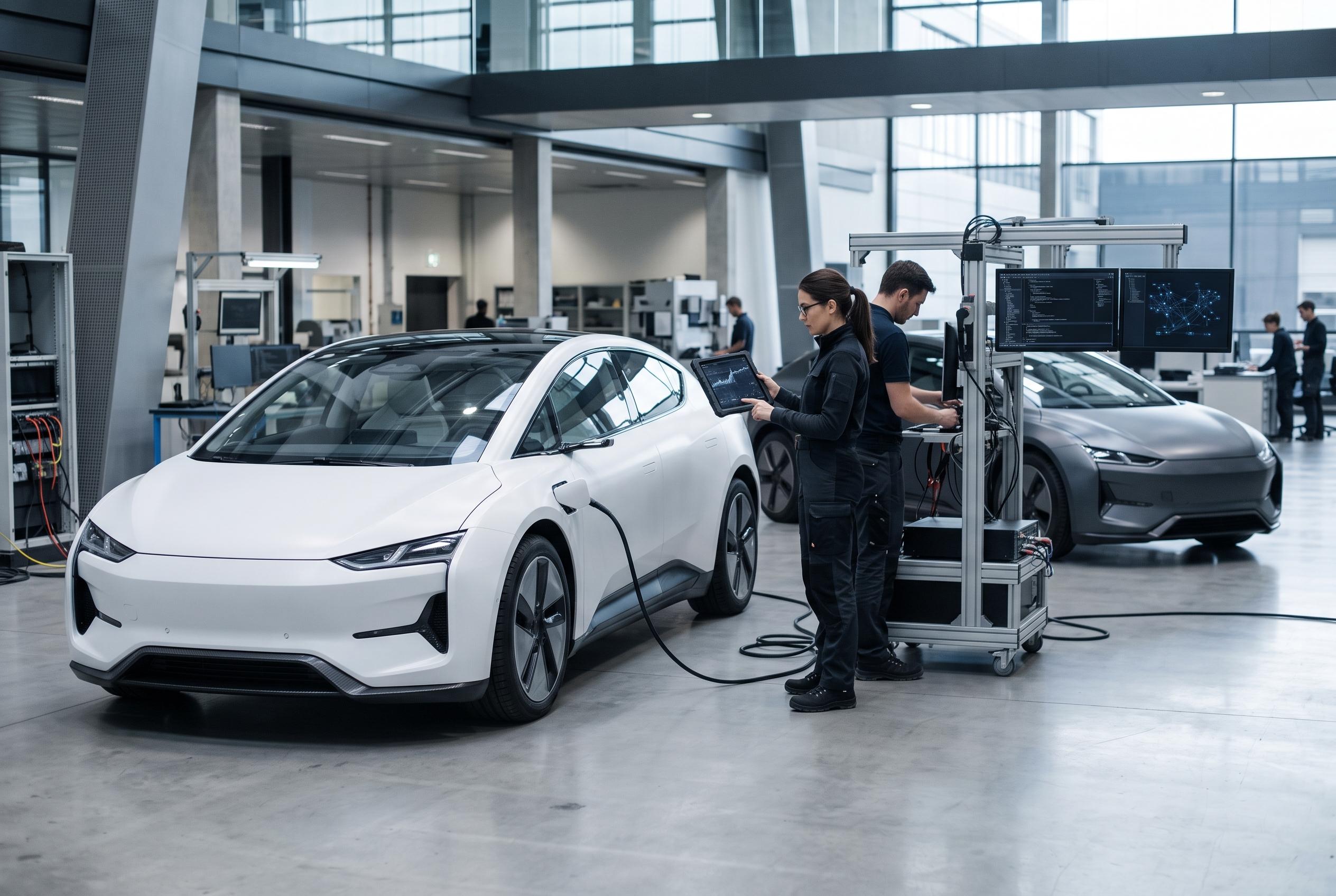
Automakers and suppliers are looking for faster ways to build software-defined vehicles, and a new Elektrobit and Microchip collaboration is aimed squarely at that pressure. By pairing Microchip automotive platforms with Elektrobit AUTOSAR software and tools, the companies say development teams can reduce integration work, move toward production sooner, and focus more energy on features drivers actually notice.
Software development is becoming the automotive bottleneck
Modern vehicles increasingly behave like connected computers on wheels, but the path from hardware selection to dependable vehicle software can still be slow and complicated. Engineers must bring together processors, operating systems, communication layers, safety requirements, and application code, often across several suppliers.
That is where this Elektrobit and Microchip AUTOSAR collaboration comes in. The companies are offering pre-integrated AUTOSAR Microcontroller Abstraction Layer software based on the EB tresos portfolio, giving development teams a more prepared starting point instead of asking them to assemble every foundational layer from scratch.
The appeal is practical rather than flashy. A smoother software setup can help teams spend less time wrestling with basic integration and more time building functions that distinguish one vehicle from another.
What the Elektrobit and Microchip partnership provides
AUTOSAR helps standardize software architecture across automotive systems, making it easier for different components and suppliers to work together. The joint offering combines Microchip’s automotive hardware platforms with Elektrobit’s software, tooling, and automation capabilities.
Microchip said the arrangement is intended to help customers move from platform evaluation toward production deployment more efficiently. Industry coverage from PR Newswire also highlighted the role of pre-integrated solutions in shortening development cycles for next-generation automotive platforms.
For suppliers, that could mean a cleaner handoff between hardware and software teams. For automakers, it may reduce the number of early-stage integration surprises, which are rarely dramatic in a press release but can become expensive and frustrating inside a real vehicle program.
Automation could make AUTOSAR work more repeatable
Elektrobit is also bringing an automation-first approach to the collaboration. Its integration-as-code method turns repeatable Classic AUTOSAR integration work into reusable, executable logic, rather than treating each project as an entirely fresh configuration exercise.
That matters when manufacturers need to support several vehicle lines, regional variants, or increasingly complex electronic architectures. Reusable workflows can help teams scale their work without simply adding more manual effort, according to company materials reported by Microchip and Elektrobit.
The longer-term ambition is even more interesting. By structuring integration work in a way that machines can repeat and understand, the approach creates a foundation for future AI-assisted configuration and development. That doesn't mean software engineers disappear; it means they may spend less time on repetitive setup and more time on judgement-heavy engineering.
Why SAMA5 support is an important first step
The companies say Elektrobit has enabled EB tresos AutoCore OS and EB tresos AutoCore Generic modules on Microchip’s SAMA5 series of microprocessors. The availability of these modules gives customers an immediate path to begin working with the combined solution.
Additional Microchip platforms are expected to receive support as the collaboration develops. That staged rollout is sensible because automotive software programs rarely change platforms overnight. Teams need proven compatibility, documentation, testing, and confidence that a solution can survive the long road from evaluation to production.
For developers comparing AUTOSAR solutions, the practical questions are straightforward: Which processor families are supported now? How complete is the integration? What tools are included? And how much of the workflow can be automated without creating a new layer of complexity? Those details will matter as much as the partnership announcement itself.
Asia’s two-wheeler market is a telling target
Initial market activity will focus on high-growth automotive segments in Asia, including the rapidly evolving two-wheeler sector. That is a notable choice, since motorcycles and scooters are becoming increasingly connected while manufacturers still face intense pressure on cost, reliability, and development speed.
A software foundation that reduces integration effort could be especially useful in markets where manufacturers need to support multiple product tiers and move quickly between model updates. Coverage from MarketScreener and 6ix also pointed to the collaboration’s broader relevance across Asia and North America.
The partnership won't, by itself, solve every challenge facing software-defined vehicles. But it reflects a clear industry shift: standardized foundations, ready-to-use hardware support, and automation are becoming central to how automotive software gets built. For engineers, that could mean a quieter start to development, which is often exactly what a complicated vehicle program needs.
A stronger software foundation could help automakers move faster without making the road to production bumpier.
Disclaimer: This article may have been created with AI assistance and reviewed by our editorial team. It is provided for general informational purposes only. Readers should verify information independently before relying on this content.
