
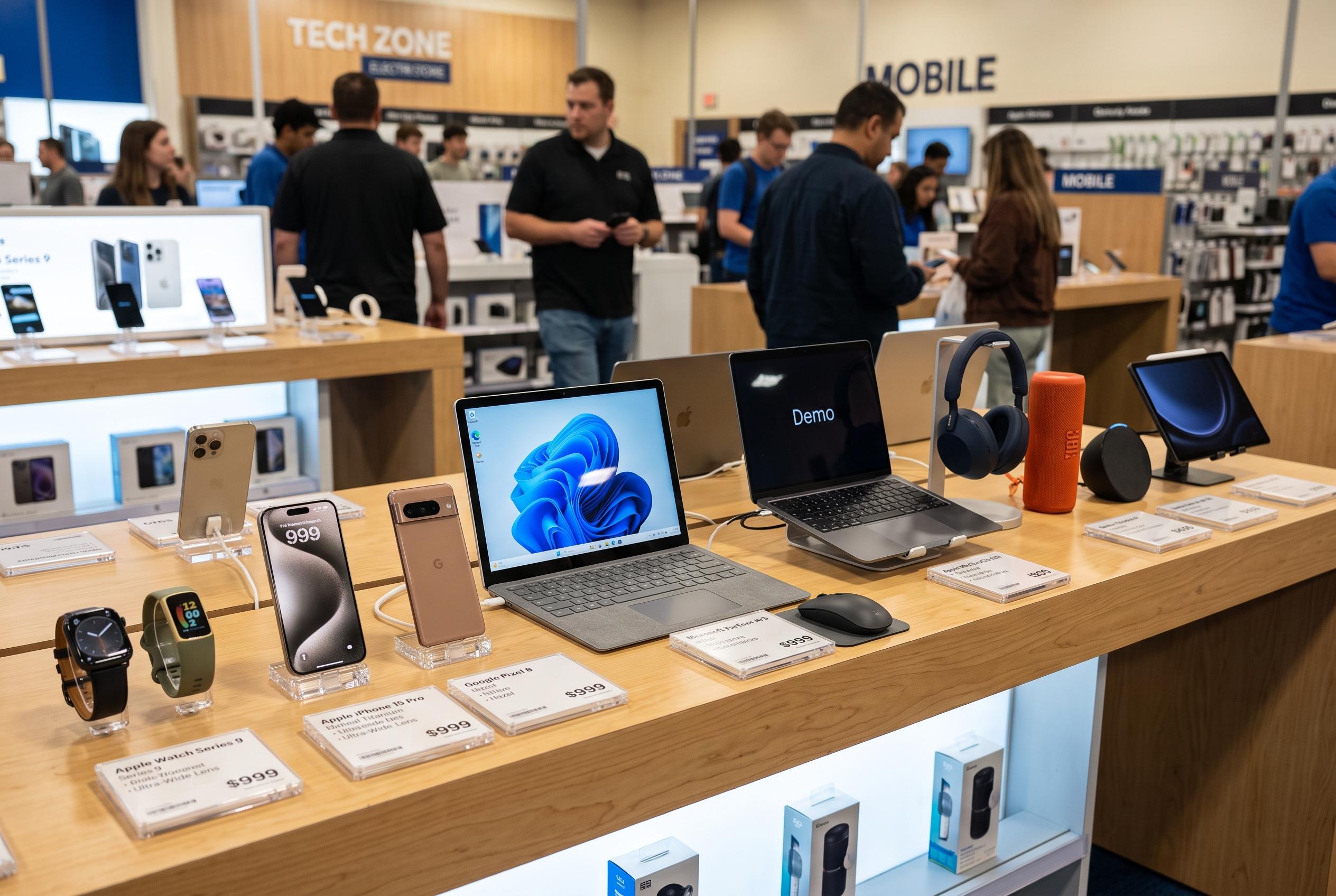
JB Hi-Fi stocks took a big hit on Monday after the retailer issued a warning that an AI-driven frenzy for chips and memory is causing disruptions in consumer electronics supply. It's pushing up wholesale prices and making things more complex. The warning came amidst what were otherwise strong annual results, but it also highlighted how quickly this AI-fueled sourcing environment is spilling over beyond just data centers and into our everyday devices, mobile, electronics, and lifestyle goods alike.
The company announced record annual sales of $11.1 billion and a 6% increase in net profit, reaching around $490 million. Yet, despite these
numbers, they flagged that momentum slowed down toward the end of the year. It’s partly because stock in tech categories became harder to find and more costly to replace. Investors weren’t thrilled, they quickly sent the stock plunging almost 12% in morning trading.
And honestly, this pressure isn’t isolated to JB Hi-Fi. It seems to be part of a broader challenge across the whole electronics supply chain, mostly because AI demand is grabbing a larger slice of the world’s memory output. Their comments fit with what industry analysts keep warning about: supply conditions are tightening, and that’s happening just as consumers continue heavily relying on laptops, smartphones, gaming gear, and other connected devices for work and fun.
One of the biggest issues is that AI is pulling more of the planet’s high-bandwidth memory, mainly used in data centers, away from normal consumer products. That shift leaves less capacity for standard DRAM and NAND parts, which are still crucial for our gadgets. So, in simple
terms, retailers and manufacturers are dealing not only with rising prices but also with more unknowns , like delays, supply issues, and planning headaches for promotions.
They said things got really noticeable in the last quarter, when supplier price hikes and shortages started to hit laptops, smartphones, and gaming gear. For a retailer whose business depends on quick stock turnover and sharp prices, this mix of tighter supply and higher replacement costs can really threaten both sales strategies and profit margins. And it changes how people shop, too, because now they’re more likely to wait for big discount events, especially when prices keep climbing.
During an investor call, JB Hi-Fi’s CEO Nick Wells mentioned some brands had bumped prices by up to 50%, and manufacturers are offering fewer promotions than before. That leaves retailers with fewer options to keep demand high while staying profitable. It’s also making it obvious on the sales floor , product availability and shelf prices can shift faster than some customers might expect.
Moreover, they noticed that customers are now holding off spending until major sales like Black Friday, Boxing Day, or end-of-financial-year sales. This shift is a big deal because it concentrates demand into specific periods, instead of spreading out purchases over the year. That can make logistics and managing inventory more complicated because stock needs to be timed with these seasonal spikes.
This squeeze on both prices and supply is already denting margins. In the second half, gross margin fell to about 21.93%, down by 25 basis points, as JB Hi-Fi cut prices to protect sales volume.
All of this, honestly, makes the AI boom less of a purely tech sector story. It’s now directly impacting the consumer electronics market, things like mobile phones and lifestyle gadgets, affecting availability, prices, and when discounts happen. That’s a pretty important shift, considering how frequently many households buy these products.
The Global Electronics Association pointed out back in April that AI demand is gobbling up more of the world’s memory output, especially high-bandwidth memory used in data centers, leaving less for regular DRAM and NAND supplies. That explains why JB Hi-Fi is running into more
stock shortages and higher costs, when component supply gets tight upstream, it trickles down to shelves sooner or later.
S&P Global echoed similar sentiments, saying that the growth in AI is straining memory supply, power infrastructure, and specialty materials. They expect these bottlenecks to last at least another 18 months, because foundries remain busy.
For buyers and suppliers, that means planning is more complicated than ever. Retailers need to balance maintaining enough stock without paying a fortune to replace it. Meanwhile, suppliers might have less wiggle room to support promotions or absorb increased costs. And logistics, well, it’s becoming just as crucial as pricing, because late deliveries or expensive inventory can cut into sales even if demand is still healthy.
Analysts over at MST Marquee are already predicting a slower sales environment this year, with the upcoming December quarter likely to be the weakest if supply issues and cautious consumer spending keep up. Basically, when people expect prices to stay high or limited stock, they
tend to delay buying until the big sales, which can slow down the regular quarters between those major events.
And this whole situation also reveals something broader about how consumers buy electronics nowadays. It’s not just a one-and-done purchase anymore. Laptops, PCs, smartphones, gaming gear, they’re part of ongoing upgrade cycles for work, entertainment, or mobile connectivity. It makes these categories especially sensitive to price hikes because most people can put off buying until they snag a discount, without sacrificing their daily routines.
In response, JB Hi-Fi plans to lean even more heavily on promotions and focused value offers to offset the squeeze. They’re encouraging shoppers to consider cheaper models as prices rise, something familiar in retail, but tougher to pull off when wholesale costs are climbing fast and manufacturers are less supportive with discounts. Basically, relying more on consumers’ willingness to trade down rather than on big price cuts supported by suppliers.
All of this hints that the retail scene in the AI supply shock might be entering a new phase. Initially, the buzz was about chips and memory going into huge AI infrastructure projects. Now, the ripple effects are hitting consumer electronics, changing shopping behaviors, shelf prices, and profit margins in just a matter of months.
For investors, the Monday drop in shares was a reminder that record sales don’t always mean better sentiment right away, especially when pricing pressures are building underneath. Revenue can grow while margins shrink, particularly when retailers have to cut prices to keep sales up while costs of replacement go higher. It’s basically a balancing act, one that’s shaping the outlook for electronics retailers in a pretty strained supply environment.
The story also underscores how dependent and interconnected the global electronics industry really is. AI demand, memory supply, foundries, and promotional activity, what might seem like separate issues, are now all affecting the same outcomes: product availability, customer buying timing, and profits. Interestingly enough, JB Hi-Fi’s current struggles aren’t just company-specific, they’re a sign that the consumer electronics market, in general, is feeling the heat from the AI expansion.
For shoppers, the key takeaway is that price gaps across categories may stay uneven. Some products might stay readily available, while others are harder to find or more expensive to replace. That could push more people to be cautious buyers, especially for higher-priced mobile and electronics gadgets. Retailers, on the other hand, face the challenge of maintaining foot traffic and sales without relying heavily on promos that perhaps they used to count on.
All in all, the main message is pretty clear: AI isn’t just reshaping digital infrastructure , it’s now rewriting the economics of everyday consumer gadgets, from entry-level laptops to high-end smartphones and gaming consoles. As shortages, price hikes, and logistical hurdles roll on, the retail response is likely to revolve more around value and timing, rather than just pushing for demand wherever possible.
Takeaways
- AI demand is tightening memory supply across the electronics industry.
- Consumer devices like laptops, smartphones, and gaming gear are feeling the impact.
- Higher wholesale costs are forcing retailers to rely more on promotions and trade-down offers.
- Logistics and inventory timing are becoming more important as shoppers wait for major sales events.
- For consumers, prices may stay uneven and stock availability may remain unpredictable.
Sources
- https://www.brisbanetimes.com.au/technology/jb-hi-fi-shares-plunge-as-it-warns-of-ai-driven-tech-squeeze-20260817-p60oxm.html?ref=rss&utm_medium=rss&utm_source=rss_feed
- https://www.globenewswire.com/news-release/2026/04/13/3272812/0/en/industry-wide-memory-constraints-grow-as-ai-driven-supply-shift-reshapes-market.html
- https://www.spglobal.com/market-intelligence/en/news-insights/research/2026/07/behind-ai-boom-electronics-supply-side-constraints
- https://www.spglobal.com/market-intelligence/en/news-insights/research/2026/03/electronics-supply-chain-outlook
- https://www.manufacturing.net/artificial-intelligence/article/22964771/ai-demand-increasing-costs-lead-times-for-manufacturers-across-electronics-industry
- https://www.business-standard.com/amp/technology/tech-news/why-ai-data-centre-boom-is-leaving-consumer-electronics-short-of-chips-126050600331_1.html
- https://www.emsnow.com/ai-buildout-reshapes-the-electronics-supply-chain-hyperscaler-capex-crowds-out-standard-production/
