
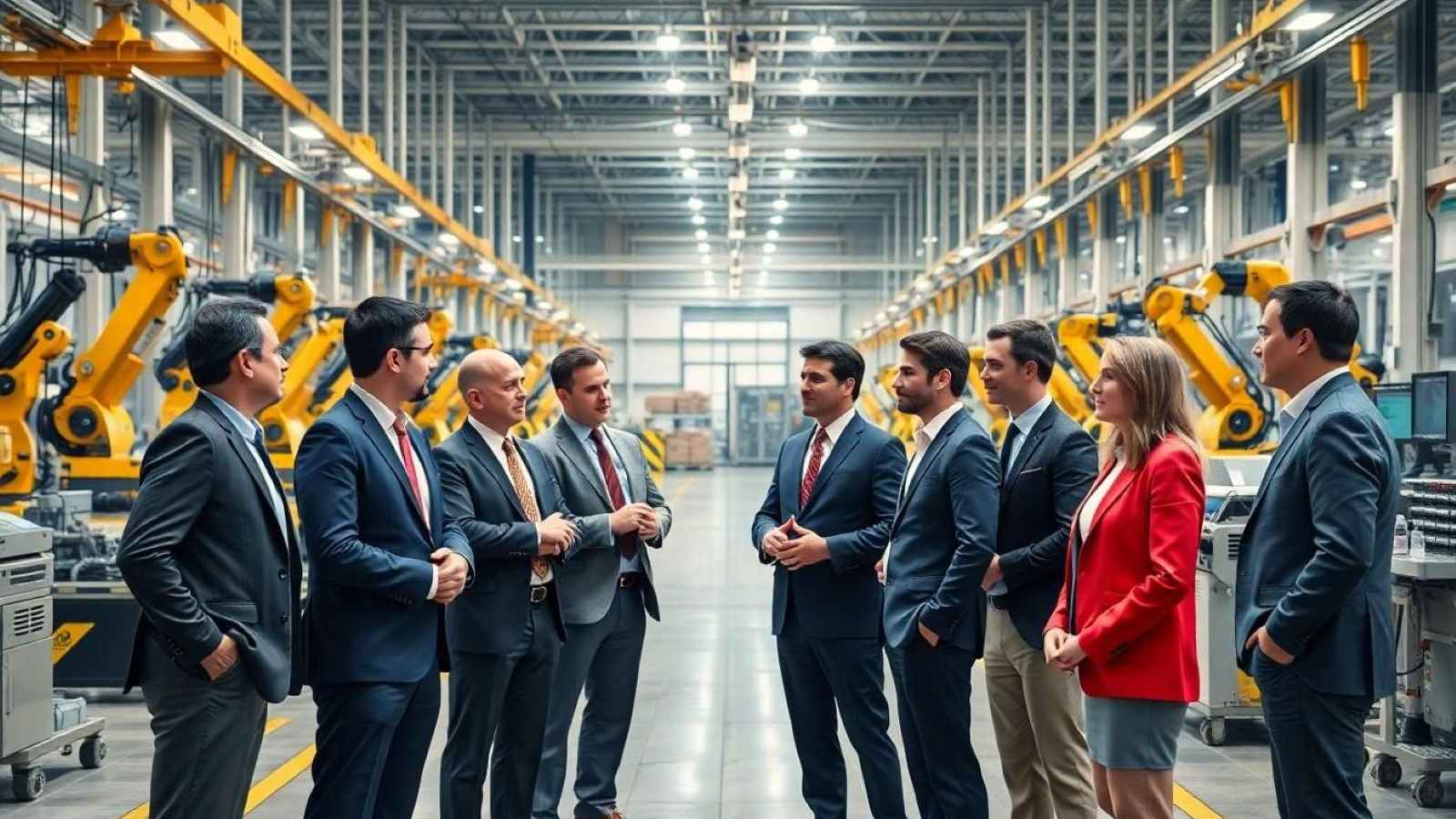
Elon Musk, through Tesla and SpaceX, plans to build a massive semiconductor factory in Texas called Terafab, covering about 9.3 million square meters.The plant will be used to produce chips and memory, as well as packaging and testing operations, all in one facility, in a move aimed
at improving integration in the production chain and reducing reliance on outside chip suppliers.
The initial investment in the project is estimated at more than $16.8 billion, with the total cost expected to reach about $120 billion when completed, while the project is expected to create about 3,000 jobs.
Terafab Texas is set to become one of the largest industrial facilities in the world, with plans indicating that its size will far exceed that of Chengdu’s New Century Global Center, one of the world’s largest buildings.
Musk wrote on X in response to the project: “It will be awesome,” adding that his companies are preparing to begin building a huge chip project that brings logic, memory, and advanced packaging together under one roof.
The factory aims to reach production capacity that supports more than 1 terawatt of compute power annually, providing the chips needed for
Tesla vehicles, Optimus robots, and SpaceX’s computing and space infrastructure.
The project is part of Musk’s plans to meet surging demand for computing power, especially amid the rapid expansion of artificial intelligence applications. Tesla and SpaceX expect their combined future demand for compute power to exceed the terawatt mark.
According to the Terafab website, the project’s future production capacity is tied to ambitious plans that include operating up to 1 million Tesla Optimus robots, launching millions of tons of cargo into space annually, and producing more than 1 terawatt of solar energy.
SpaceX is not seeking to fund the project entirely from its own resources, as Terafab has submitted eight requests for tax incentives from two local school districts under Texas’s JETI program.
Through these requests, the company is seeking school property tax benefits for 10 years for each phase of the project, warning that without these incentives, the return on investment could fall below the required level and could push the project to another state, such as Arizona.
As part of support for the project, Texas awarded SpaceX a $30 million grant from the Texas Enterprise Fund. The company is headquartered in the state, alongside launch and manufacturing facilities at Starbase.
The Texas governor said the state is where big ideas become even bigger projects, describing Terafab as a unique facility that would speed up chip production and create thousands of jobs.
The project reflects a growing trend among technology and industrial companies to secure stable semiconductor supplies, amid rising chip demand driven by the AI boom and the concentration of much of the chip industry in a limited number of Asian regions and companies, led by
Taiwan’s TSMC.
Semiconductors are a key component in the development of artificial intelligence, self-driving cars, and robots, making independent production capacity a strategic factor for major technology companies.
Musk’s bet is not limited to increasing chip production, but also extends to building a more integrated supply chain that gives his companies greater control over production costs and supplies, while reducing the risks of chip shortages and disruptions that have become some of the biggest challenges facing the global technology sector.
If the announced plans are realized, Terafab will not merely be a new factory within the Tesla and SpaceX ecosystem, but could become one of
the largest industrial projects directly tied to the computing and AI infrastructure that Musk’s companies are betting on in the years ahead.
Takeaways
- Terafab is positioned as a major step in semiconductor sourcing, with a focus on bringing chips, memory, packaging, and testing into one integrated facility.
- The project reflects how electronics supply chains are becoming more strategic as AI, mobile computing, robotics, and space systems increase
demand for advanced chips. - Texas is being presented as a key logistics and manufacturing hub for large-scale industrial investment, especially when companies want
tighter control over production and distribution. - The scale of the plan suggests that Musk is thinking beyond one product line and toward a broader industrial ecosystem that supports
Tesla, SpaceX, and future automation goals. - The incentives discussion shows how large projects often depend on local policy support, tax benefits, and long-term investment confidence.
- For the wider market, Terafab highlights a growing effort among companies to reduce dependence on outside suppliers and build more
resilient chip capacity.
FAQs
Why is Terafab significant?
Because it combines multiple parts of the semiconductor process in one place, which could improve efficiency, reduce dependency on outside
sourcing, and strengthen supply continuity for Tesla and SpaceX.
Why is Texas attractive for a project like this?
Texas offers industrial space, a strong business environment, existing aerospace and manufacturing activity, and state support for large projects. That can matter a lot for logistics and long-term production planning.
How does this connect to AI?
AI systems require large amounts of compute power, and compute power depends on chips. A facility like Terafab would support the electronics
infrastructure needed for AI growth.
What does this mean for Tesla and SpaceX?
It suggests both companies want more direct control over the chips they rely on for vehicles, robots, and space-related systems, reducing supply
risk and improving internal coordination.
Could this affect the broader semiconductor industry?
Potentially, yes. A project of this size could influence sourcing strategies, regional manufacturing competition, and how other companies think about supply chain resilience.
What should observers watch next?
Key areas include financing, permitting, incentive approvals, construction timelines, and whether the project keeps its stated scale and integrated production model.
If Terafab moves forward as described, it could become a landmark not just in manufacturing, but in how major technology companies think
about ownership, sourcing, and control across the electronics supply chain.
Sources
- https://www.akhbarona.com/technology/430790.html
- https://www.tomshardware.com/tech-industry/semiconductors/terafab-starts-to-take-shape-100-million-square-feet-of-manufacturing-space-and-usd16-8b-initial-capital-investment
- https://www.techradar.com/pro/spacex-is-spending-usd16-8-billion-on-a-texas-chip-fab-that-musk-says-will-be-50-times-the-size-of-the-pentagon
- https://www.tomshardware.com/tech-industry/semiconductors/musks-terafab-projected-to-be-larger-than-the-pentagon-apple-park-mall-of-america-and-giga-texas-combined-all-in-one-chip-manufacturing-facility-visualized-to-show-the-projects-massive-footprint
- https://techcrunch.com/2026/05/06/spacex-may-spend-up-to-119-billion-on-terafab-chip-factory-in-texas/
- https://www.datacenterdynamics.com/en/news/elon-musk-announces-terafab-20bn-factory-will-make-chips-for-spacex-orbital-data-centers-and-tesla-vehicles/
