
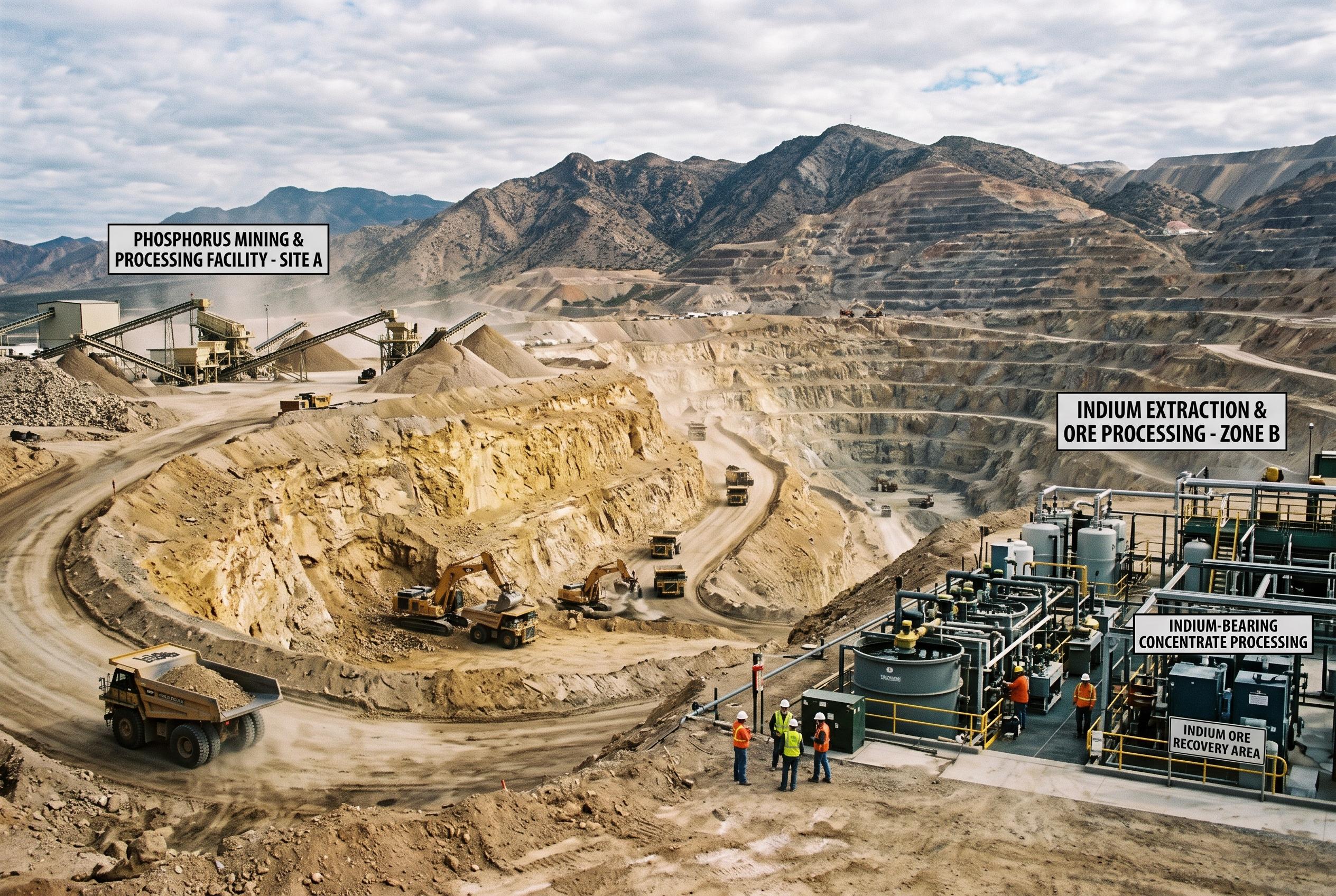
- Increasing demand for indium phosphide (InP) driven by AI and co-packaged optics (CPO).
- Major Chinese control over raw materials and export restrictions tighten supply worldwide.
- Industry leaders warn of shortages comparable to memory chip scarcity, impacting product launches.
Indium Phosphide's Shift from Niche Material to Critical AI Backbone
The rapid expansion of AI has shifted how people think about the hardware that powers modern computing. What used to be considered specialized, or something mainly for the semiconductor industry, now is getting serious attention from investors, manufacturers and tech buyers alike. That material is indium phosphide, a chemical compound made by combining indium and phosphorus. With the increasing focus on co-packaged optics (CPO), it’s become a much more vital part of high-speed data center networking.
According to Reuters, over half of the optical chips used in fast communication modules and CPO systems depend on indium phosphide. That’s a big deal because the ongoing AI buildout is not just boosting demand for computing power; it’s also ramping up the pressure on the networking components that transfer data between chips, servers and systems inside data centers. Basically, the AI boom is creating ripple effects that go well beyond just processors and memory. It’s also reshaping sourcing strategies across the entire electronics supply chain, especially for materials once considered somewhat niche.
That means the market is tightening up, leaving little wiggle room to meet sudden spikes in demand. As AI infrastructure grows, so does the need for faster data transfer, which in turn relies heavily on the optical chip ecosystem. Since InP plays a key role in a large chunk of those chips, any shortages in the raw material can ripple all the way through the supply chain, from raw input refining to wafer production, right up to finished optical modules. And the pressure is not isolated to just one stage, it spans from early sourcing all the way to the delivery of components for advanced mobile devices and data centers reliant on high-speed connectivity.
Supply Crunch at the Top-tier Suppliers
The strain is already noticeable among the major players. Alan Lowe, CEO of Lumentum, recently said that indium phosphide is scarcer than memory chips, which highlights how tough the supply situation has become. Reuters reports that industry estimates show Lumentum and Coherent together control over 80 percent of the high-end InP optical chip market. So, with such a large stake held at the top, any imbalance or disruption in supply could cause ripple effects throughout.
Despite the dominance of these big suppliers, customers are still dealing with shortages. Reuters highlights firms like Nvidia experiencing constraints, even though indium phosphide is crucial for high-speed communication systems. That suggests that the problem is not just isolated manufacturing delays. Rather, it’s more of a broader mismatch, with the supply chain not keeping pace with soaring demand.
This issue is especially critical in AI networking, where speed and efficiency really matter. Advanced data centers rely on optics to handle increasing workloads, and CPO has become a key focus because it brings optical components closer and more integrated with electronics. But when the raw material becomes hard to get, it slows down all the innovation sprint. Sourcing problems can delay product launches, make inventory planning trickier, and complicate logistics for both producers and buyers trying to secure steady supplies.
China’s Critical Role in the Supply Chain
When it comes to the InP supply chain, China has become the decisive choke point. Reuters pointed out that this chain relies on three main steps: raw indium smelting, refining and wafer production. And China plays a dominant role in all three.
The country holds over 70 percent of known indium reserves, produces more than half of the primary indium output and accounts for roughly 70 to 80 percent of refined indium, according to Reuters. Even the highest purity materials still depend heavily on Chinese feedstock. Essentially, the entire supply chain is not just globally connected, it's structured around Chinese inputs and processing capacity. When reliability and traceability are critical, this dependency has become a major strategic concern.
The wafer segment also reflects this dependence. Reuters noted that AXT’s operations in Beijing mean exports have to go through Chinese licensing and export controls, adding yet another layer of complexity in an already tight market. Even companies with production capability are still subject to regulatory constraints and approvals. So, capacity alone doesn’t guarantee access. Permits, feedstock supply and regulatory hurdles all factor into how quickly the supply chain can respond.
This creates real operational hurdles for electronics manufacturers. Optical chips are not just commodities; they’re crucial parts of systems moving large amounts of data. Any delays in sourcing material can throw off production schedules, disrupt shipment plans and threaten customer commitments. The logistical impact goes beyond just the chip market, it can hold up AI infrastructure deployments, complicate hardware schedules and slow down broader technological progress.
Export Controls Contribute to the Bottleneck
Beijing’s export controls have only made the situation worse. Reuters reports that China added indium phosphide and related products to export restrictions back in February 2025, giving out only limited permits, and then expanded controls this year to include upstream indium materials. These policy shifts have really tightened the supply environment.
Other outlets like KuCoin, Prism News, StreetBrief, Borecraft and Global Banking and Finance have all seen the same pattern: delays in permits are disrupting the supply chain for AI optics, slowing shipments for companies like AXT, Coherent and Lumentum, and causing shortages even where wafer capacity exists. It’s important to understand that the issue is not just manufacturing, it’s whether raw inputs and permits can move through the pipeline swiftly enough to meet rising demand.
In essence, this situation reveals how closely policy decisions and production are linked. Export restrictions can have immediate downstream impacts, and buyers often have little leeway to switch to alternative sources. When the material is part of a vital electronics supply chain, these restrictions ripple through procurement, manufacturing and deployment. For AI, mobile infrastructure and fast-growing tech sectors, the challenges are not only technological but also logistical.
Reuters also notes that even where capacity exists, the market remains short, a crucial distinction. Having facilities and technical know-how is not enough if raw inputs or permits get held up. Particularly in a specialized segment like indium phosphide, where supply relationships are limited and testing cycles lengthy, the supply shortages persist.
Chinese Producers Gain, But Expansion Takes Time
The supply squeeze is not hitting all players equally, though. Reuters says Chinese manufacturers are benefiting from the tightness, with Yunnan Germanium seeing higher revenue domestically and soaring profit expectations. When supply tightens, those with ready access to feedstock and local channels tend to have an edge as global buyers scramble for material.
However, expanding capacity is not quick or easy. Validation cycles and capacity ramp-ups are still major bottlenecks for anyone trying to meet the surging AI demand. Adding new capacity in the semiconductor and optics sectors is not just flipping a switch. New products have to be qualified, approved and manufacturing processes proven reliable, a process that can take months or even years. This means the leap from market opportunity to actual output is slower than many might hope.
That’s why indium phosphide is such a hot topic right now. It touches on sourcing, electronics and AI infrastructure, and its availability now has strategic implications. Buyers want dependable supply, manufacturers seek stable logistics and investors are eager to understand where bottlenecks may ease or worsen. Still, the market continues to be characterized by tight supply, heavy dependence on a handful of upstream sources and a concentrated supply chain.
Why Indium Phosphide Matters More Than Ever
While indium phosphide used to be a niche topic in tech circles, the rise of AI and the push toward CPO has changed that. According to Reuters, more than half of the optical chips in high-speed communication modules and CPO systems depend on it, meaning it’s now central to modern digital infrastructure.
And here’s the catch: AI systems are only as powerful as the networks that support them. No matter how fast the processors get, bottlenecks in data movement can still slow everything down. That’s why optical networking and the materials behind it, like indium phosphide, are now front and center.
It’s a good reminder that technological shifts often reveal underground dependencies. A boom in AI compute capability exposes bottlenecks in other domains, like advanced optics. Those bottlenecks then influence sourcing strategies, procurement planning and even industrial logistics. Companies that previously regarded material supply as a background issue might now see it as an immediate business risk.
For the market, the message is pretty clear: demand is quite high, supply remains tight, and China plays a central role in the chain. Until things like validation processes, expanded capacity and export policies improve, the indium phosphide market will probably stay under pressure. That means shortages could continue to slow down the pace at which AI tech and related electronics ramp up.
Key Takeaways
- - Indium phosphide has become a strategic material in AI networking and CPO systems.
- - More than half of the optical chips used in high-speed modules and systems depend on it, per Reuters.
- - Lumentum’s CEO Alan Lowe mentions indium phosphide is more scarce than memory chips.
- - China controls most of the supply chain, from raw ore to refined material and licensing.
- - Export restrictions and permit delays are tightening logistics, slowing shipments.
- - Even existing capacity is hampered by validation cycles and expansion hurdles.
Frequently Asked Questions
Why is indium phosphide suddenly so important? Because AI data centers need faster optical networking, and indium phosphide is a key material in many high-speed optical chips.
What is the main supply risk? The biggest risk is concentration: raw materials, refining and wafer production are heavily dependent on China.
Can manufacturers quickly switch to alternatives? Not easily. Validation cycles, technical requirements and existing supply relationships make switching slow.
What does this mean for electronics and mobile supply chains? It can delay component sourcing, disrupt logistics and create pressure on production schedules for connected devices and infrastructure.
Disclaimer: This article may have been created with AI assistance and reviewed by our editorial team. It is provided for general informational purposes only. Readers should verify information independently before relying on this content.
Sourced from: [1] EC Taiwan article [2] KuCoin News [3] Prism News [4] StreetBrief [5] Borecraft [6] Global Banking & Finance [7] Index VN
Note: This piece was generated with some AI assistance and is meant for informational purposes. Always verify details independently before making decisions based on it.
