
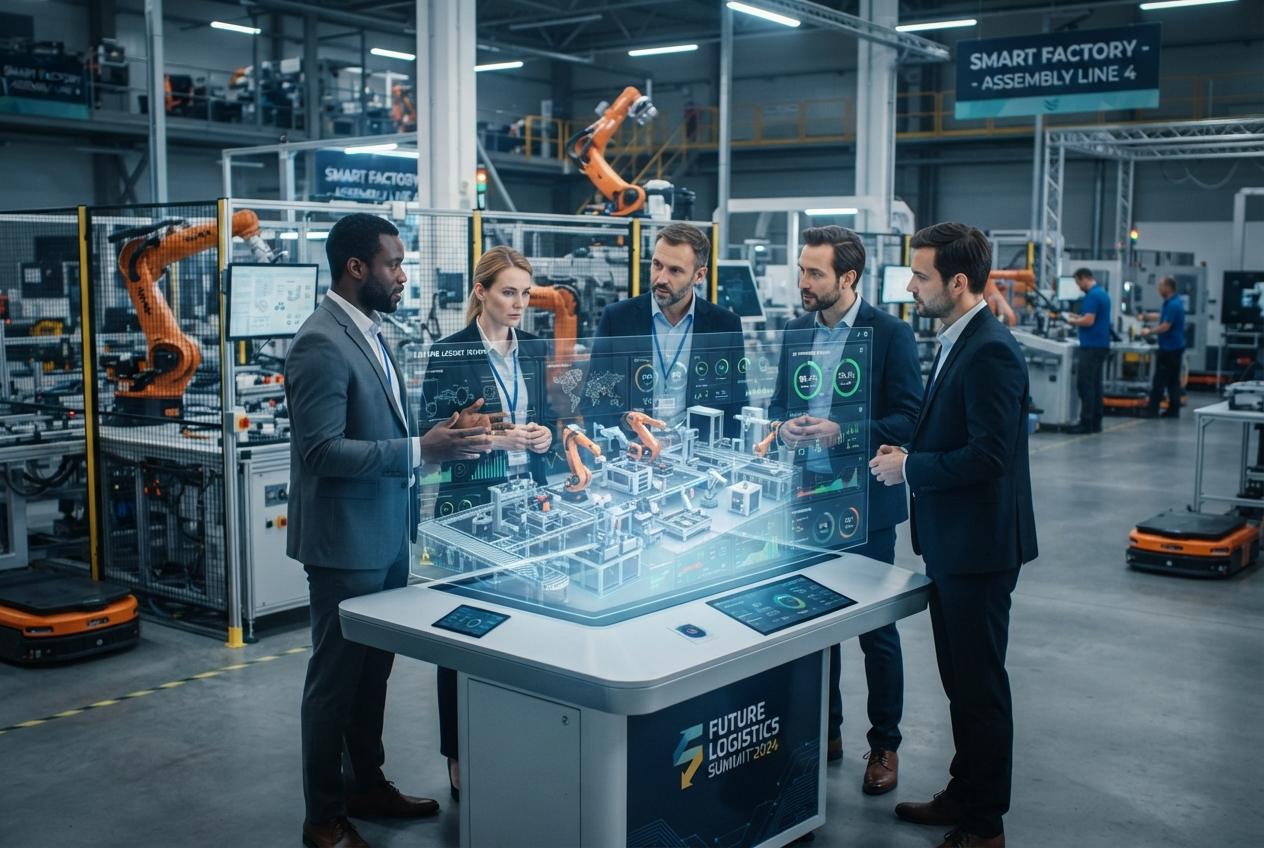
- Manufacturing is evolving into a connected system leveraging sensors, AI and digital twins
- Digital twins enable testing and optimization before real-world implementation
- AI, edge computing and industrial IoT enhance responsiveness and human-machine collaboration
Manufacturing's push toward automation is increasingly about much more than just robots moving parts from here to there. The industry is definitely shifting toward integrated production systems, think sensors, software, artificial intelligence and digital models, all working together. This setup helps factories respond faster, operate more efficiently and make smarter decisions on the fly. The trend is especially crucial for suppliers and buyers trying to handle labor shortages, tighter quality standards and demand that can be all over the place.
That broader take on automation is also reflected in academic research on digital twins. These are essentially virtual copies of physical assets, designed to boost monitoring, maintenance and resource usage, while also reducing waste and costs. In practice, this means a plant can test process tweaks in a digital environment before making changes on the actual line, which cuts down on disruptions and allows teams to identify bottlenecks earlier. Honestly, it seems like a pretty smart way to improve overall operations.
Artificial intelligence is now playing a key role as the analytical layer that makes these systems genuinely useful. Both research and industry experts point to AI and machine learning as tools for spotting anomalies, fine-tuning process settings and supporting predictive maintenance. For manufacturers, that could mean fewer unexpected shutdowns, higher throughput and more consistent product quality.
This shift is also transforming how industrial data flows through manufacturing environments. According to a recent survey about cloud, edge and end architectures in smart factories, real-time decision-making relies on blending sensing, communication, computing and control, more than just depending on cloud systems alone. Edge computing is especially important where timing really matters, letting machines or entire lines respond instantly without waiting on distant servers. It’s like giving factories a nervous system that’s quicker and more responsive.
Industrial IoT remains the backbone of this new model. Connected sensors can monitor vibration, temperature, pressure, energy consumption, tool wear and even the overall health of equipment. All of this data feeds dashboards that let managers keep an eye on performance remotely. As Forbes recently pointed out when discussing IIoT, AI and edge computing, companies like Bosch and Siemens are already leveraging these technologies to boost efficiency and sustainability through faster, data-driven decisions. It’s impressive how much smarter factories are becoming.
All of this leads to a more collaborative version of automation, not just replacing workers, but augmenting them. AI-driven vision systems, autonomous mobile robots, cobots, augmented reality tools and connected maintenance platforms are broadening what manufacturing plants can automate, while still needing human oversight. For sourcing, production, and logistics teams, the real edge comes from building flexible operations, ones that aren’t just automated but also adaptable. It’s a pretty interesting shift, don’t you think?
Takeaways
- - Automation is becoming a systems-level strategy, not just a robotics upgrade.
- - Digital twins help teams test changes before they hit the shop floor, which can reduce downtime and waste.
- - AI adds the decision-making layer that makes smart factories more responsive.
- - Edge computing matters when speed is critical in production and logistics.
- - Industrial IoT provides the data foundation for monitoring, prediction, and continuous improvement.
- - The biggest opportunity may be in augmenting people, not simply replacing them.
Disclaimer: This article may have been created with AI assistance and reviewed by our editorial team. It is provided for general informational purposes only. Readers should verify information independently before relying on this content.
