
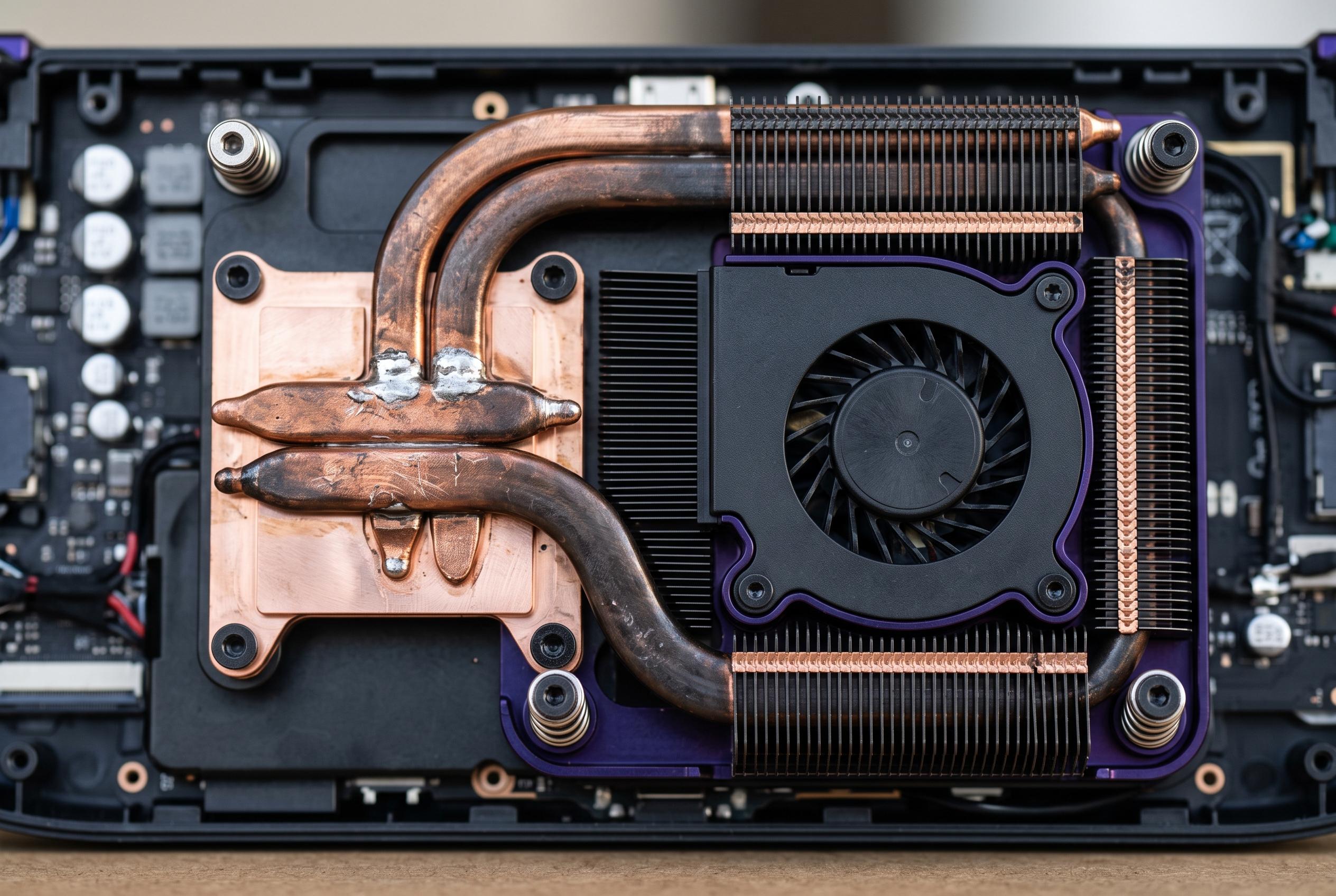
AMD says FSR 4 will expand beyond desktop graphics cards, bringing faster, sharper-looking games to APUs, gaming laptops, and handhelds by the end of 2026. The move could reshape portable PC gaming, although Steam Deck owners shouldn't assume their current hardware is included just yet.
FSR 4 Is Moving Into Smaller Gaming PCs
AMD's FidelityFX Super Resolution 4 is preparing to leave the desktop graphics card aisle. According to The Elec's reporting, AMD computing and graphics chief Jack Huynh said the machine-learning upscaling technology is planned for APUs, gaming laptops, and handheld devices by the end of 2026.
That matters because portable gaming PCs often make tough compromises. Their integrated graphics share power and memory with the processor, so every frame counts. A cleaner image at a similar performance level could make games feel less like they're being squeezed through a small window.
Existing APUs Will Get a Lighter Version
AMD's approach won't be identical across every device. Existing APUs are expected to receive a streamlined version of FSR 4, built around the limits of integrated graphics rather than the heavier demands of desktop GPUs.
The goal is a sensible one: improve clarity without adding enough processing work to spoil responsiveness. TechSpot and Windows Central both reported that AMD is targeting image quality and low latency, which should matter especially on handhelds where a sluggish image can make controls feel immediately less pleasant.
New Chips Could Support FSR 4 Natively
Future AMD APUs are expected to be designed with native FSR 4 support in mind. The company hasn't revealed the specific processors yet, but the distinction suggests that upcoming laptops and handhelds could handle the technology more efficiently than current systems.
That could give manufacturers another selling point alongside battery life, screen refresh rates, and raw graphics performance. For shoppers comparing the best gaming handhelds for high-quality portable play, native support may eventually become as relevant as the number of CPU cores or the size of the display.
What Does This Mean for the Steam Deck?
This is where the announcement needs a little fine print. The Steam Deck uses RDNA 2 graphics, and AMD's official desktop roadmap had already pointed to RDNA 2 FSR 4 support in 2027. The new comments don't appear to bring that date forward.
Valve has discussed FSR 4 in relation to the Steam Machine, but it hasn't promised the feature for the current Steam Deck. So while the technology is heading toward handheld gaming broadly, owners of Valve's existing device shouldn't expect a sudden software update to unlock it.
That separation is important. "Handheld support" doesn't automatically mean every popular handheld will qualify. Hardware architecture, memory bandwidth, driver support, and processing overhead will all decide which machines benefit.
A Useful Upgrade Signal for Portable PC Gaming
FSR 4 could become particularly valuable as handheld screens become sharper and games grow more demanding. Upscaling lets a device render internally at a lower resolution, then reconstruct a more detailed final image. When it works well, the result feels like a free performance boost, even if the underlying hardware is working hard behind the scenes.
Still, the rollout is a 2026 story rather than an immediate buying reason. Current shoppers should judge a handheld by its existing games, battery performance, ergonomics, and display instead of treating future FSR 4 compatibility as guaranteed. For now, the promise is exciting, but the small print is doing plenty of work.
Portable gaming is about to get sharper, but patience may be the real upgrade.
Disclaimer: This article may have been created with AI assistance and reviewed by our editorial team. It is provided for general informational purposes only. Readers should verify information independently before relying on this content.
