
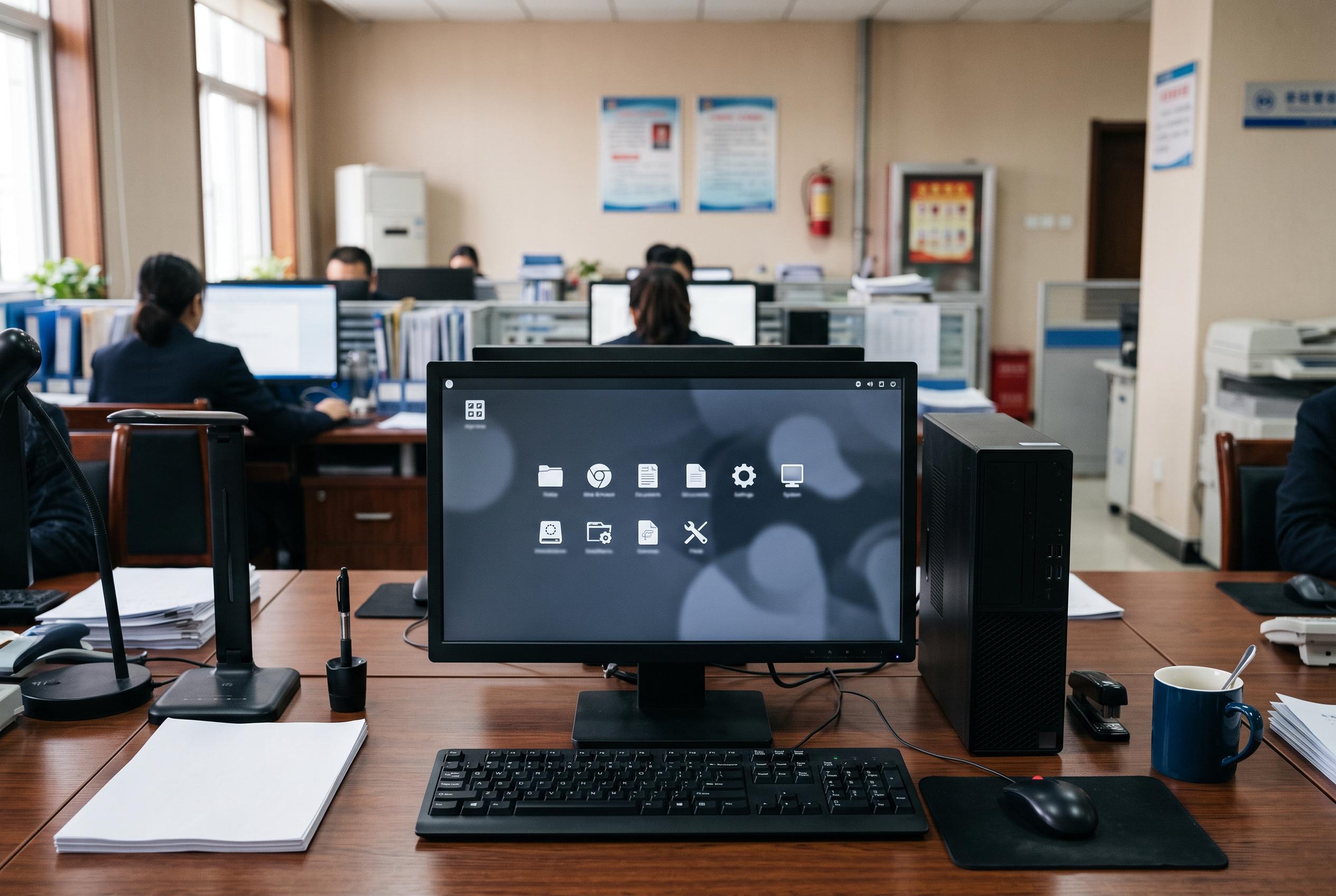
- China moves up timetable to replace customized Windows 10 with domestic alternatives
- Linux-based systems like KylinOS and UOS poised to benefit from the transition
- Complex migration logistics point to a gradual and strategic shift in government technology sourcing
China has recently directed some government-affiliated organizations to remove a specific, customized version of Windows 10 and to accelerate their move toward domestic alternatives, faster than originally planned, according to reports from Bloomberg, TechRadar, TechSpot, and Tom's Hardware. This particular edition was developed by C&M Information Technologies, a joint venture associated with both Microsoft and China Electronics Technology Group. It essentially reflects Beijing’s long-standing effort to reduce reliance on foreign software in sensitive government sectors.
The version they’re now phasing out was tailored specifically to meet Chinese government requirements , including local activation and update procedures, the removal of consumer-oriented features, and compatibility with local cryptographic standards. Outlets reporting in the style of Reuters indicated that initially, this retirement was scheduled for February 2027. However, the latest instructions seem to push that timeline forward, with officials citing concerns over data security, though they didn’t publicly specify any particular vulnerability.
The probable replacements are Chinese Linux-based systems such as KylinOS and UOS, both of which are already tailored for government use. The narrowing of options here hasn't gone unnoticed in the market, either. Linux Magazine, for example, reported that shares in Kylin Software and Tongxin Software Technology saw a bump after the news broke , suggesting that local vendors might stand to benefit from this shift.
That said, the change isn’t exactly a straightforward swap. The transition will be phased in gradually, and it's unlikely to occur across the entire government infrastructure all at once. It’ll probably be limited to certain agencies or departments. Some of the practical challenges involved include ensuring hardware compatibility, testing drivers, converting file formats, and providing staff training. These hurdles are part of why large-scale OS migrations tend to take many years, regardless of the political will to push them through quickly.
Microsoft has reassured that, so far, there haven’t been any security breaches affecting the customized OS, and they say they’re still providing regular updates. Still, the overall message is clear: China is pushing hard for increased technological independence, especially in the government space. This means moving away from a Microsoft-controlled desktop environment towards software that is developed and maintained domestically.
Takeaways
- - This move is less about a single software change and more about a broader sourcing strategy for government technology.
- - Domestic operating systems can reduce dependence on foreign vendors, but migration logistics are still complex.
- - Hardware support, driver compatibility, and staff training are often the biggest obstacles in large-scale electronics and software transitions.
- - Policy decisions like this can reshape local technology markets and influence future investment in domestic platforms.
- - For organizations watching the shift, the key question is not just what replaces Windows 10, but how quickly the replacement can be deployed reliably.
FAQ
Why is this happening now? The reports suggest China wants to accelerate its move toward domestic software for security and independence reasons.
What systems are likely to replace the Windows 10 edition? Linux-based government systems such as KylinOS and UOS are the most likely candidates.
Is this a simple switch? No. Large migrations usually require careful logistics, testing, and training before they can scale.
Does this affect all users in China? No. The reporting is focused on certain government-affiliated organizations, not general consumer devices.
Why does this matter beyond government IT? Because shifts in government sourcing can influence broader electronics ecosystems, software adoption, and domestic industry growth.
Disclaimer: This article may have been created with AI assistance and reviewed by our editorial team. It is provided for general informational purposes only. Readers should verify information independently before relying on this content.
Sources references: - The headline inspiration was pulled from: [1] - Paragraph 1: [2], [3], [4], [7] - Paragraph 2: [1], [2], [3], [4] - Paragraph 3: [1], [2], [3] - Paragraph 4: [1], [2], [3] - Paragraph 5: [2], [4], [5], [6]
