
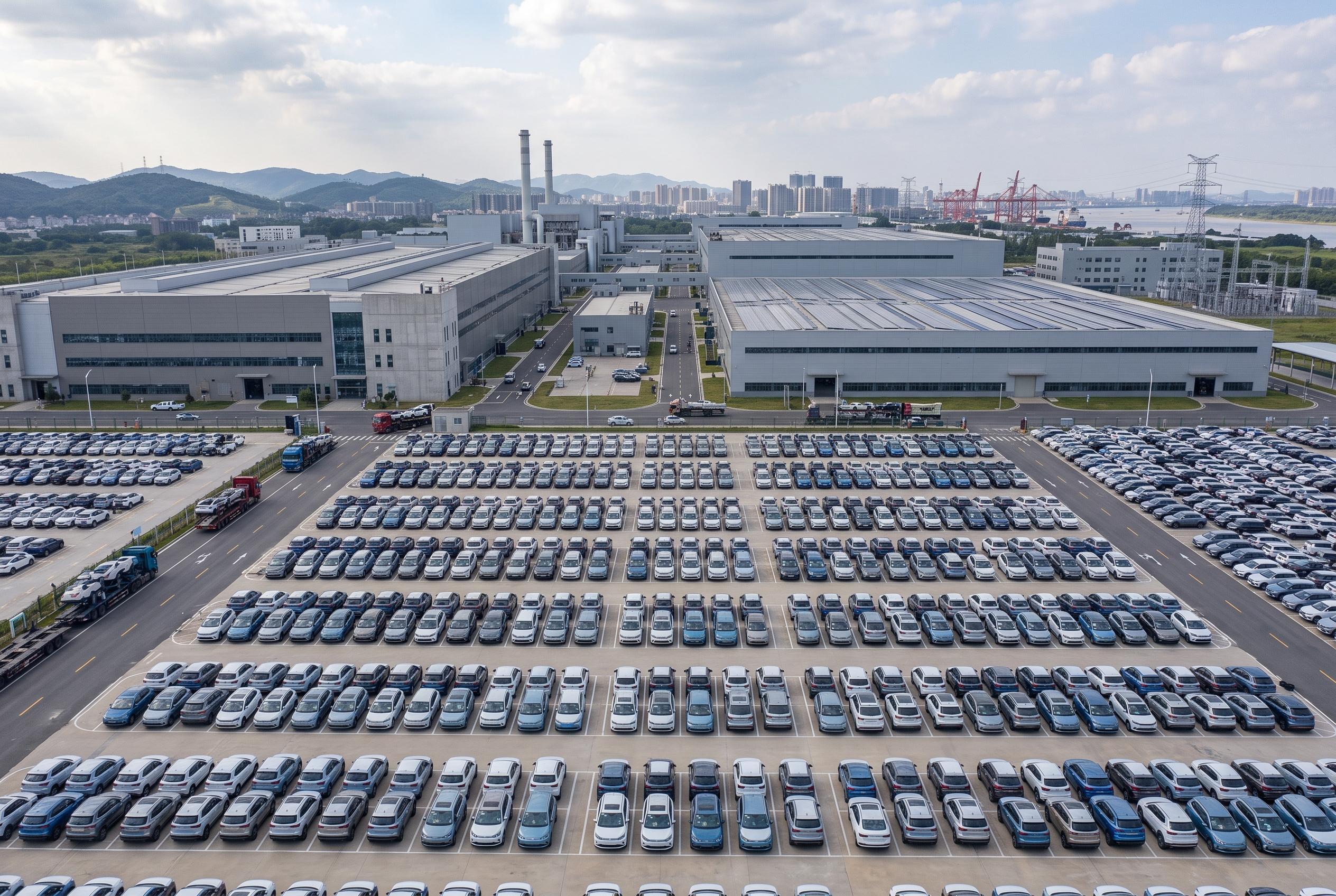
- China’s export growth now focuses on advanced sectors like EVs and industrial machinery
- The surge threatens global manufacturing ecosystems and supply chain resilience
- Control of rare earth minerals underscores China’s strategic influence in global tech and defense
China Shock 2.0: How China's Export Surge is Reshaping the Global Economy
China’s recent explosion in exports is fundamentally altering the global economic landscape , and it’s doing so on a scale and in sectors far beyond the historical narrative of inexpensive consumer goods flooding markets. As one expert described in a recent New York Times video discussion, this phenomenon can be termed “China shock 2.0,” a phrase capturing the shift from the earlier phase dominated by low-cost manufacturing to a more advanced industrial and technological wave. This isn't just an incremental change; it reflects China's strategic climb up the value chain, encompassing electric vehicles (EVs), advanced batteries, high-end industrial machinery, and other sophisticated manufactured products. The Federal Reserve has identified this development as not merely a temporary spike but a sustained increase in China's export capabilities since roughly 2018, underscoring the country’s growing dominance in sectors that are vital to the future of global manufacturing and trade. [^1]
Beyond Cheap Goods: The Deep Ripple Effects of China’s Export Expansion
The significance of this export surge extends far beyond consumers enjoying lower prices. When China floods global markets with technologically advanced products that were formerly made domestically in other countries, it triggers profound disruptions within local economies. Entire industrial ecosystems, built around multi-year supply chains and networks of suppliers, can be hollowed out. Suppliers may face severe financial stress or be forced out of business, and entire regions heavily dependent on manufacturing jobs and investment can experience long-term economic vulnerability.
During the initial “China shock” in the early 2000s, the primary impact was largely confined to labor-intensive manufacturing sectors such as textiles and basic electronics assembly. However, the current wave targets more capital-intensive and knowledge-driven industries that are central to economic innovation and growth worldwide. According to analysis by the Federal Reserve, the ongoing export increase not only dwarfs the previous wave in scale but is also distinguished by the nature of goods involved , with China exporting more sophisticated, high-technology industrial products capable of shaping entire industries and value chains. [^2]
A Dual Dynamic: Export Boom Coupled with Reduced Imports
What compounds the challenge for global trade and industry is that China is not just growing its exports , it is simultaneously reducing reliance on imports to maintain its economic momentum. This dual dynamic grants Beijing increasing autonomy over trade routes, access to critical goods, and control over supply chain logistics. The ability to export aggressively while limiting imports strengthens China’s leverage, reducing the effectiveness of external economic pressures such as tariffs or trade restrictions.
An especially critical impact is felt in sectors like automotive manufacturing, battery production, heavy equipment, and green energy technologies, where China’s integrated industrial strategies and resource controls raise the bar for global competitiveness. Researchers and policymakers are concerned that China’s rapid dominance in these complex manufacturing fields could lead to the permanent erosion of existing industrial capacities in other nations , capacities that might be extremely challenging or costly to rebuild amid volatile geopolitical and supply chain environments. The high speed at which supply chains can be dismantled or relocated adds urgency to these fears. [^2], [^6]
The Strategic Leverage of Rare Earth Minerals and Critical Supply Chains
China’s dominance extends beyond finished goods to the raw materials essential for modern manufacturing, most notably its near-monopoly on rare earth elements (REEs) and their refining processes. These 17 elements are critical inputs for technologies ranging from permanent magnets in electric motors to advanced electronics and defense systems. For over two decades, China’s grip on rare earth mining and processing has allowed it to exert disproportionate influence on global high-tech supply chains.
This control is a potent geopolitical tool. Beijing has demonstrated a willingness to use export restrictions on rare earths as leverage during diplomatic disputes, underlining the strategic weight these materials carry. Research initiatives from institutions like the Royal United Services Institute (RUSI) and the Atlantic Council emphasize that China’s dominance over this supply chain extends beyond economics into realms of national security and global power dynamics. The challenge for Western manufacturers and governments revolves around decoupling or at least diversifying supply sources before the next supply shock targets critical industries , a task complicated by the scarcity of reliable alternative suppliers and the investment needed to develop complex refining capabilities outside China. [^3], [^4], [^5], [^7]
Key Insights and Frequently Asked Questions
Key Takeaways
- - China’s export surge now encompasses advanced, high-value industries including electronics, electric vehicles, batteries, and industrial machinery , far beyond low-cost consumer goods.
- - The most critical challenge is the long-term erosion of local manufacturing ecosystems and sourcing networks in other countries, threatening industrial resilience and economic stability.
- - Supply chain resilience has taken center stage, with companies and governments reassessing logistics, sourcing, and production patterns to mitigate risks from supply disruptions.
- - Control of rare earth elements and critical minerals remains a strategic vulnerability globally, influencing everything from consumer electronics to defense technologies and renewable energy infrastructure.
- - In response, diversification of supply chains and regionalized manufacturing is increasingly viewed not as optional but essential for economic and geopolitical security.
Frequently Asked Questions
What does “China shock 2.0” mean? It describes the latest phase in China’s trade expansion characterized by a rapid rise in exports of high-tech, industrial, and capital-intensive goods rather than just low-cost, labor-intensive products.
Why are electronics and battery industries so often highlighted? These sectors rely heavily on complex supply chains, specialized materials such as rare earth minerals, and advanced manufacturing processes, making them exceptionally vulnerable to shifts in China's export dominance.
Is this only a concern for manufacturers? No. The impact cascades to consumers, retailers, technology sectors, and emerging industries like electric mobility and clean energy, who all depend on stable and diversified supply chains.
What strategies can companies adopt? Businesses are increasingly exploring diversified sourcing, establishing regional production hubs, enhancing inventory controls, and investing in alternative supply chain routes to reduce reliance on any single country.
Why are rare earth minerals so crucial? These minerals are vital for producing magnets, batteries, electronics, and defense components. China’s control over these inputs situates it as a key power player in both economics and international geopolitics.
Disclaimer: This article was created with AI assistance and reviewed by a dedicated editorial team to ensure accuracy and clarity. Readers are encouraged to independently verify details and consult multiple sources before drawing conclusions.
References
- - New York Times: What is “China Shock 2.0”?
- - Federal Reserve - China Shock 2.0 report
- - RUSI Research on China and Rare Earth Supply Chains
- - Atlantic Council - China’s Strategy for Rare Earths Dominance
- - Fortune - China’s Dominance in US Rare Earth Processing
- - National Bureau of Asian Research - China’s Control of Rare Earth Metals
- - Centre for International Strategic Economic Studies - China’s Dominance in Critical Mineral Supply Chains
