
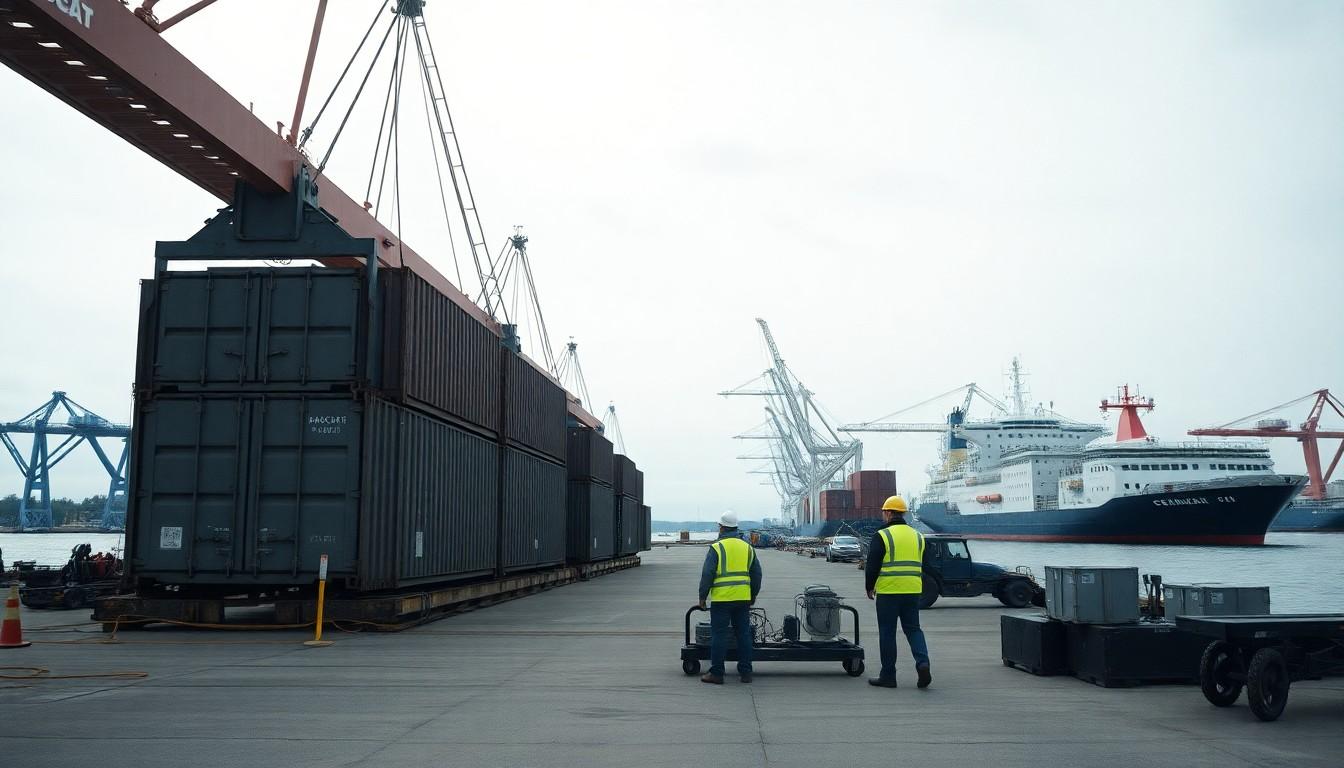
As supply chains for vital minerals become increasingly concentrated and geopolitical concerns grow, nations are exploring new sources and strategies, including seabed extraction, to secure the energy transition and manufacturing resilience.
The race to secure critical minerals is moving from a policy debate to a strategic industrial priority, with the International Energy Agency warning that supply chains for copper, lithium, nickel, cobalt, graphite and rare earths remain dangerously concentrated. In its 2026 Global Critical Minerals Outlook, the agency said the top three producing countries account for nearly 90% of output for those key materials, while China retains a dominant position in refining and processing across almost all of the 20 minerals it tracks. The IEA has argued that this level of concentration leaves global manufacturing far more exposed to disruption than many governments had assumed.
That concern has sharpened as export controls and industrial policy have turned mineral trade into a tool of state power. The IEA said in a separate analysis that the average share of the top refined supplier for key minerals reached 70% in 2025, up from 68% in 2020, underscoring how bottlenecks in processing now matter as much as access to ore. Chinese restrictions on heavy rare earths and battery-grade graphite have reinforced the sense among policymakers in Europe, North America and Asia that outright decoupling is unrealistic, even if diversification is becoming urgent.
Governments are responding with a mix of subsidies, permitting changes and strategic partnerships. The United States is channeling more than $10 billion into critical mineral projects through defense and export-finance tools, according to the article’s summary of current policy efforts, while Sweden has moved to treat domestic mining as a national security issue, speeding reviews for projects tied to iron ore, rare earths and battery metals. Elsewhere, Lynas Rare Earths has reached a $29 million supply and processing deal with South Korean partners, reflecting a broader push to build non-Chinese industrial routes for permanent magnets and other downstream products.
Japan has pushed this search for resilience into even more unusual territory. According to AP, researchers and engineers have recovered rare-earth-rich sediment from deep water near Minamitorishima Island, in what the outlet described as the first such extraction from nearly 6,000 meters below the surface. The material is considered promising because it contains elements such as dysprosium, terbium and yttrium, which are essential for electric vehicle motors and defense electronics. While commercial production remains a distant prospect, the test underscores how seriously resource-poor countries are now treating seabed deposits as a strategic hedge.
The broader conclusion from the IEA and industry developments is that the mineral economy is no longer being organized around the lowest-cost supplier alone. Instead, investors and manufacturers are increasingly pricing in geopolitical risk, downstream refining capacity and the political stability of host countries. The result is a shift toward more fragmented but more resilient supply networks, as governments and companies try to protect the energy transition from the next trade shock.
Source Reference Map
Inspired by headline at: [1]
Sources by paragraph: - Paragraph 1: [2], [4] - Paragraph 2: [3], [2] - Paragraph 3: [1], [3] - Paragraph 4: [6], [5] - Paragraph 5: [2], [3]
