
- Businesses are moving away from generic logistics tools in favor of tailored solutions
- Integration of systems and real-time visibility are essential for modern operations
- AI is increasingly embedded in workflows to enhance efficiency and predictability
Logistics operators face increasing requirements to make faster decisions, process more data, and minimize delays. As businesses expand their networks through additional warehouses, carriers, sales channels, telematics feeds, ERP connections, and customer portals, generic software may not support every operational requirement. TechBullion's article argues that software selection involves assessing how well a platform aligns with a logistics company's operational processes, in addition to its available features.
This is contributing to interest in alternatives to standardized systems. Industry commentary from BMCoder identifies requirements such as real-time visibility, faster delivery commitments, and streamlined operations as factors affecting logistics technology needs. EU Business News also reports that logistics teams may continue using spreadsheets, duplicate data entry, and manual checks when off-the-shelf software does not accommodate specific workflows.
Custom systems can be used where operational requirements are highly specific. In transportation, carrier selection can involve service levels, lane history, customer requirements, transit times, and equipment availability in addition to price. In warehousing, software can support processes including receiving, putaway, picking, and cycle counting. For fleet operations, Ticomix describes custom software applications covering dispatching, compliance, predictive maintenance, and integration with legacy systems.
Integration is also an important consideration. Logistics operations commonly involve ERP, WMS, accounting platforms, carrier portals, GPS systems, EDI, and customer-facing applications. When these systems do not exchange information effectively, employees may need to transfer shipment information manually, reconcile invoices, and update statuses across platforms. These processes can increase administrative work and create additional opportunities for data discrepancies.
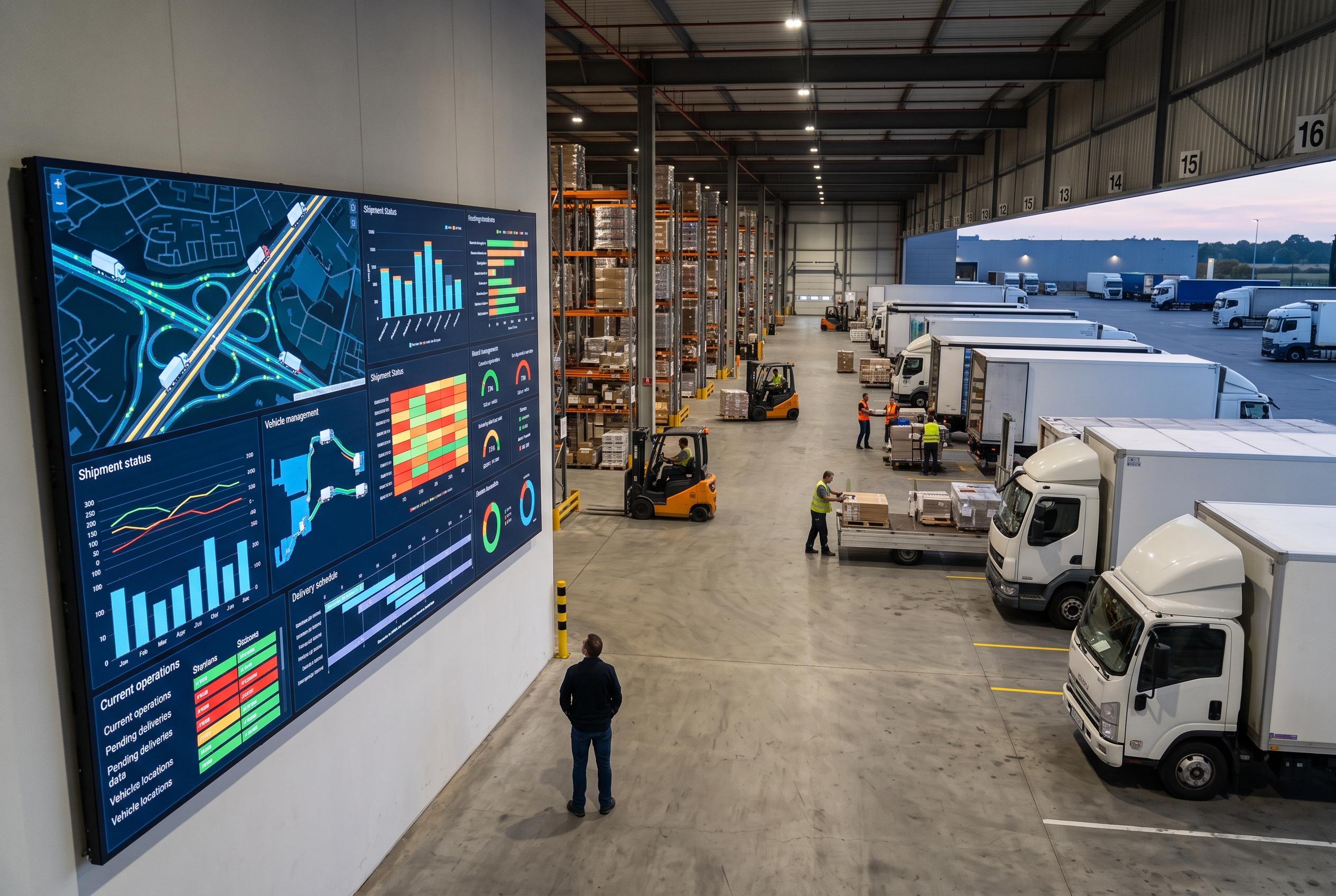
Shipment visibility is another core requirement. Customers may require information about shipment locations, estimated arrival times, delays, and delivery completion. Data can originate from telematics systems, APIs, IoT sensors, warehouse platforms, and driver applications. Integrating these sources can provide a consolidated view of shipment activity across the logistics process.
Artificial intelligence is also being incorporated into logistics software. The TechBullion article identifies predictive ETAs, route optimization, anomaly detection, carrier analysis, and demand forecasting as applications. Ticomix also describes AI-assisted dispatching and predictive maintenance, while warehouse technology coverage from TechRadar describes the development of adaptable, data-driven systems capable of responding to operational information in real time.
Custom software can become a consideration when businesses outgrow manual workarounds, encounter increasing licensing costs as operations expand, or require capabilities that are not prioritized by standard software providers. Ticomix's coverage of Fournier Trucking's modernization effort describes the operational challenges associated with maintaining outdated software that no longer supports business requirements. In these situations, custom development can address specific operational and integration requirements.
For logistics, sourcing, and manufacturing businesses, software performance can be evaluated through factors such as reduced manual work, data accuracy, integration capabilities, and scalability. Where these requirements cannot be adequately addressed by standard platforms, custom software can provide an alternative approach to managing operational processes and technology infrastructure.
Takeaways
- - Custom software is not just a tech upgrade. In logistics, it can directly affect delivery speed, shipment accuracy, warehouse efficiency, and customer satisfaction.
- - Integration matters as much as features. A platform that connects ERP, WMS, telematics, EDI, and customer portals can reduce manual work and improve decision-making.
- - Visibility is now a baseline expectation. Real-time tracking, ETA updates, and exception alerts are becoming core requirements in modern logistics operations.
- - AI is most useful when tied to daily workflows. Predictive ETAs, route optimization, and anomaly detection deliver more value when they are part of routine operations, not just standalone tools.
- - Outgrowing generic tools is a signal, not a failure. If spreadsheets, manual checks, and patchwork systems are slowing the business down, it may be time to explore a custom approach.
In a market where logistics teams are expected to move faster, communicate better, and keep costs under control, the software stack can either help or hold everything back. The broader lesson is simple: technology should support the business model, not force the business to adapt to rigid software limits. Whether the focus is sourcing, electronics distribution, mobile field operations, or large-scale freight logistics, the same principle applies , the right system is the one that fits how people actually work.
Disclaimer: This article may have been created with AI assistance and reviewed by our editorial team. It is provided for general informational purposes only. Readers should verify information independently before relying on this content.
