
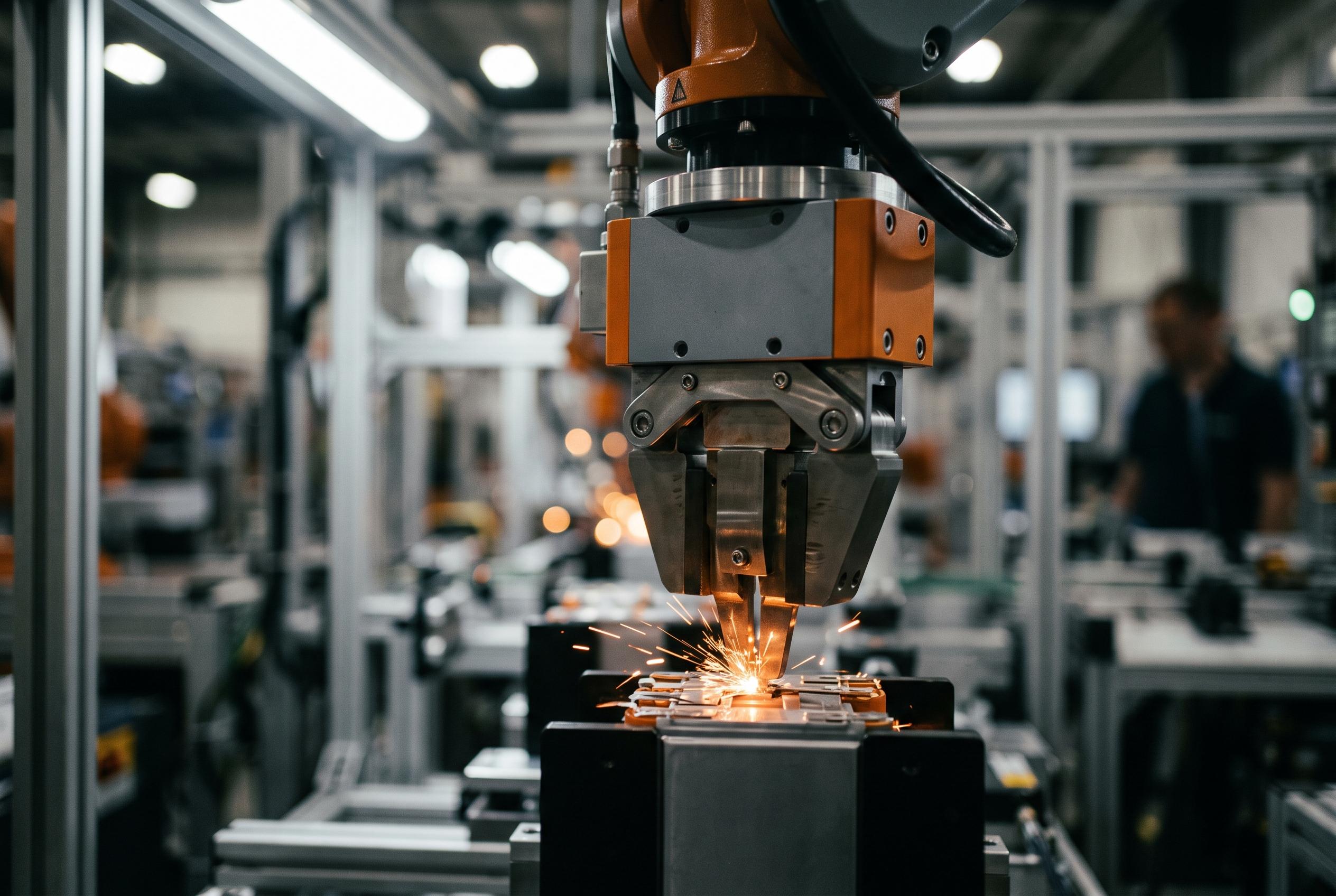
Manufacturers, financiers, and public agencies are joining forces in Michigan to help promising suppliers move from clever prototypes to dependable production. The new Michigan LIFT initiative puts Ford at the center of that effort, pairing industrial demand with capital, testing facilities, workforce support, and commercial expertise to rebuild critical supply chains closer to home.
Essential Takeaways
- - Ford’s potential commitment: The automaker aims to award up to $1 billion in business through qualifying Michigan LIFT opportunities.
- - Financing with scale: JPMorganChase plans to make up to $1 billion in debt capital available to participating suppliers, subject to approval.
- - Priority industries: Focus areas include robotics, batteries, semiconductors, critical minerals, advanced mobility, aerospace, and life sciences manufacturing.
- - A real-world proving ground: Michigan Central will offer facilities and expertise designed to help companies progress from prototype to production.
- - Open to broader industry: Industrial buyers and innovative suppliers don't have to be based in Michigan to participate.
Michigan LIFT starts with a practical problem
The most interesting part of Michigan LIFT isn't the size of the headline figures. It's the attempt to solve a familiar manufacturing headache: promising technology often struggles to find a customer, funding, factory space, and skilled workers at the same time.
The initiative starts with "Open Calls", or specific challenges identified by industrial buyers. Suppliers can then submit solutions through the Michigan LIFT platform, with potential matches moving on to evaluation, financing, public support, and commercialization assistance. JPMorganChase described the model as a way to connect demand and capital more effectively, according to its launch announcement.
That sequence matters. A startup might have an impressive automation system, for example, but still need a major buyer willing to test it and a lender comfortable supporting its expansion. Michigan LIFT is designed to bring those pieces together instead of leaving companies to navigate them separately.
Ford brings serious buying power
Ford is serving as the anchor industrial buyer, and the company says it aspires to award as much as $1 billion in business to innovative suppliers through opportunities advanced by the platform. That's a substantial signal to smaller manufacturers that their work could lead to a commercial relationship, not just another pitch meeting.
The automaker's involvement also gives the project a clear connection to automotive supply chains. Ford has framed the effort around solving real production challenges faster and strengthening the domestic industrial base, while Michigan officials see it as a route to investment and well-paid jobs.
Still, the figure is an ambition rather than a guaranteed order book. Suppliers will have to meet Ford's normal technical, sourcing, quality, and commercial requirements. In other words, Michigan LIFT may open the door, but companies will still need to prove they can deliver at automotive scale.
Which technologies are in focus?
The initial agenda is broad but closely tied to areas where supply security has become a national concern. Robotics and advanced factory automation sit alongside batteries, semiconductors, nuclear-related energy, and energy storage.
The list also includes advanced mobility, aerospace, propulsion, critical components, and the mining, processing, and recovery of critical minerals. Life sciences manufacturing is part of the brief too, covering pharmaceutical inputs, sterile injectables, medical isotopes, and precision medical devices.
For companies looking for the best long-tail opportunity in Michigan manufacturing, the practical lesson is simple: a solution should be linked to a clear production bottleneck. A clever product with no obvious industrial customer may struggle, while a less flashy technology that cuts downtime, reduces imports, or improves factory resilience could attract faster attention.
Michigan Central offers a bridge to production
Michigan Central is expected to provide the physical environment for testing and scaling, using its 30-acre innovation district as a place where companies can refine systems before committing to full production. That hands-on step is crucial because industrial technology often behaves differently on a factory floor than it does in a demonstration.
Newlab is set to add commercialization support and up to $20 million in in-kind assistance. Its role is to help translate industrial demand into viable growth opportunities, while the Michigan Economic Development Corporation can bring state economic-development tools and resources into the process.
There’s a welcome dose of realism here. Moving from prototype to production is rarely glamorous: it involves repeatability, maintenance, certification, worker training, and supply planning. A functioning test environment can reveal those unglamorous details early, when they're still affordable to fix.
The bigger bet is a connected ecosystem
JPMorganChase aims to provide up to $1 billion in debt capital to participating suppliers through its broader Security and Resiliency Initiative. Michigan Central, Newlab, and the MEDC also hope to attract 10 to 20 additional industrial buyers, representing more than $1 billion in annual demand commitments by 2036.
That longer timeline suggests Michigan LIFT is intended to become more than a one-off supplier program. The ambition is to create a repeatable marketplace where manufacturers post meaningful needs, suppliers offer workable answers, and financing follows credible commercial demand.
For Michigan, the appeal is obvious: more production, stronger local capabilities, and a deeper pool of skilled jobs. For suppliers, the opportunity is equally clear, although the process won't be effortless. The companies most likely to benefit will be those that can show a working solution, a realistic scale-up plan, and a customer problem worth solving.
The initiative grew from a Detroit resilience summit where business, government, and financial leaders discussed the obstacles keeping promising technologies from reaching industrial scale. That origin gives Michigan LIFT a grounded starting point. The test now is whether collaboration can become contracts, factory output, and lasting supply-chain resilience.
It's a sizeable experiment in turning industrial ideas into products people can actually build.
Disclaimer: This article may have been created with AI assistance and reviewed by our editorial team. It is provided for general informational purposes only. Readers should verify information independently before relying on this content.
