
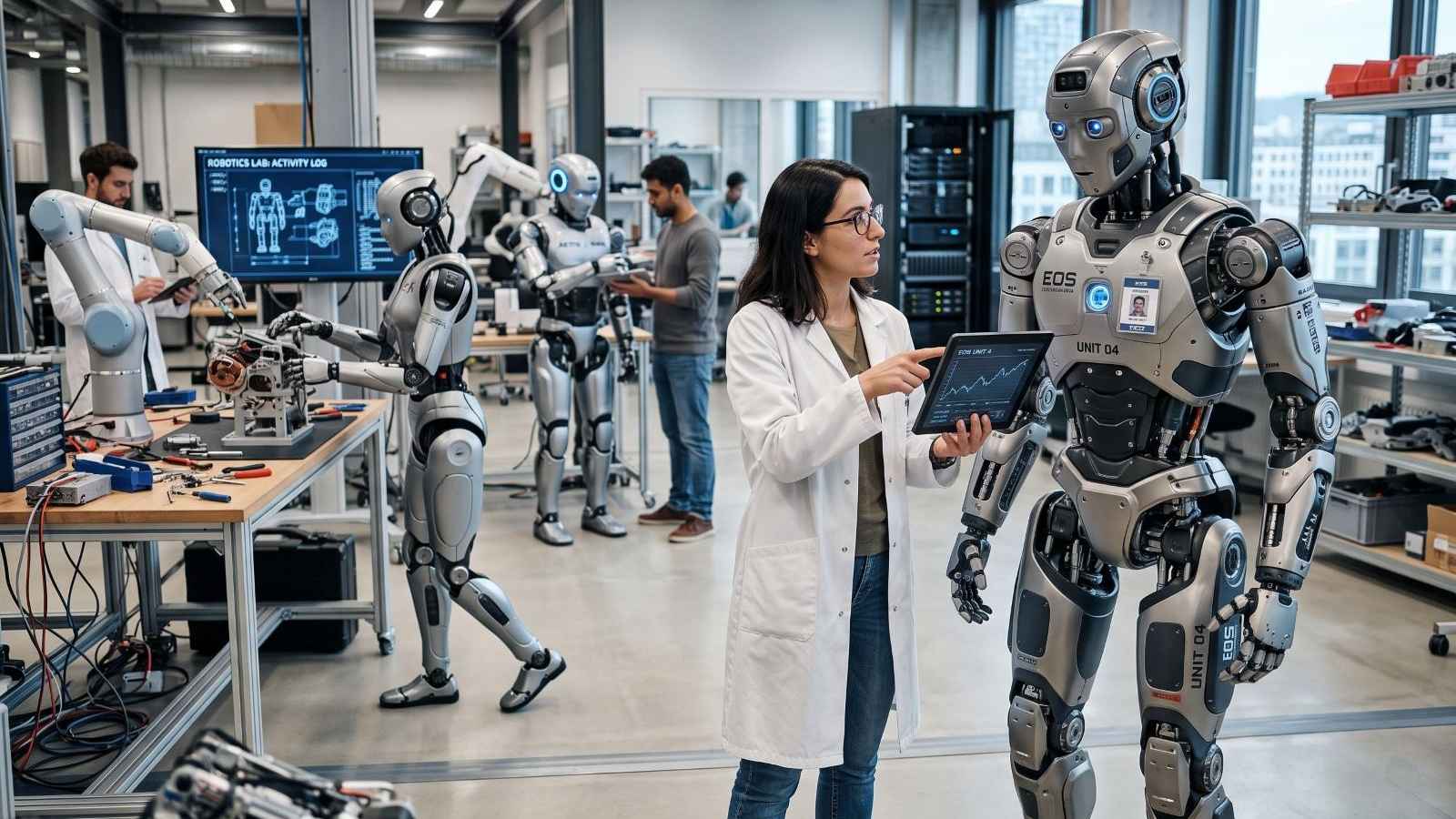
Humanoid robots are starting to turn heads on factory floors, but it’s probably not because manufacturers see them as just some novelty or a fancy gadget. As the main story in Quality Magazine points out, whether these machines get widely adopted hinges on something pretty basic, can they produce consistent results, operate reliably over long periods, and do all that safely during extended manufacturing runs? That’s really what industrial buyers care about, not whether a robot can just mimic human motions. It’s more about whether these machines can handle the rigors of shift work, pass quality checks, and meet production goals day in and day out.
That’s a pretty tough standard, especially since humanoids are still more complex than machines designed for specific tasks. ZEISS, for example, has emphasized how critical quality control is in humanoid manufacturing, considering factors like structural strength, how well actuators perform, sensor integration, and correcting models, all of which impact how well the system functions once it leaves the lab environment. Automation World has also pointed out a potential snag: the human-like design can introduce reliability and stability issues that tend to be less problematic with specialized robots. This is especially true in environments where safety standards demand clear, verifiable proof of predictable behavior.
Still, the idea of using humanoids in manufacturing isn’t just some pipe dream. Advocates argue that their real advantage lies in their versatility. These robots could seamlessly move through facilities built for human workers, support tasks like machine tending, help with assembly, assist in moving materials, or even conduct inspections, pretty much without needing a whole lot of retooling. NeuralWired reports that some manufacturing leaders are focusing on how well these robots integrate with systems like MES, ERP, and WMS, along with maintaining high uptime and safety standards, factors they see as true tests of their readiness. In well-structured factories, where everything is tightly managed, they suggest uptime could climb to 80-90% if robots are integrated and managed properly.
What makes humanoids especially appealing is their potential to address multiple ongoing workplace and quality issues at once. For instance, AI-based vision and mobile sensors could boost traceability and spot defects more reliably, while stable robotic movements might cut down on errors in repetitive tasks. Safety rules have long required barriers, light curtains, presence sensors, and other safety gear to keep workers protected from robots. Meanwhile, the CDC has pointed out risks like injuries from struck-by incidents, as well as the stress or distrust that can build around automation. So, for manufacturers dealing with labor shortages, the real promise of humanoids isn’t just about the wow factor. It’s whether they can genuinely improve quality and efficiency without adding new safety concerns.
The sourcing angle matters here, too. Humanoid robots are not just another line item on a capital budget; they sit at the intersection of sourcing strategy, electronics supply chains, logistics planning, and long-term service support. If a manufacturer is evaluating a humanoid platform, the question is not only what the robot can do, but where its key components come from, how dependable those suppliers are, and how easily replacement parts can move through the logistics network when downtime becomes expensive. In that sense, the purchasing decision resembles a broader industrial sourcing challenge: it is about balancing performance, availability, integration, and lifecycle support.
That lifecycle support is especially important because the factory floor is rarely static. A production line may change product mix, shift volumes, or add new inspection steps as customer demand evolves. Humanoid robots may appeal to plants that want more flexibility than a fixed-function machine can provide, but flexibility creates its own management burden. The robot must fit into existing workflows, accept software updates without disrupting production, and remain compatible with upstream and downstream systems. In a modern operation, that means working with digital quality records, mobile inspection tools, connected dashboards, and warehouse logistics platforms that track parts, tools, and finished goods in real time.
For electronics manufacturers, this conversation is even more relevant. Electronics production often involves delicate parts, precise motions, controlled handling, and frequent traceability requirements. A humanoid robot that can move across different workstations, assist with repetitive handling, or support visual inspection may be attractive in settings where small errors can create major scrap or rework costs. At the same time, electronics environments tend to be unforgiving when it comes to contamination, static control, and process consistency. That means any humanoid robot entering such an environment must prove it can support quality, not just mobility.
There is also a broader lifestyle and workplace dimension to consider. Workers do not experience automation as a spreadsheet abstraction; they experience it as a change in pace, responsibility, and daily routines. A robot that reduces physically demanding tasks may improve comfort and reduce strain, but it can also raise concerns about trust, training, and role clarity. If plant teams are expected to supervise, maintain, or collaborate with humanoids, then the success of adoption will depend on whether the technology feels like a practical tool rather than an unpredictable replacement. Clear training, transparent safety protocols, and well-defined use cases can make the difference between acceptance and resistance.
Logistics is another area where humanoids could matter. Plants do not operate in isolation, and internal material movement is often a hidden source of inefficiency. If a humanoid can transport components between stations, assist with picking, or help stage materials for assembly, it
could reduce bottlenecks that slow production. But logistics tasks require consistency. A robot that walks across a floor, carries objects,
or navigates around people must do so safely and predictably. That is why the discussion keeps returning to reliability, uptime, and measurable performance. In industrial settings, impressive demos do not matter nearly as much as repeatable execution.
The key challenge is that humanoids combine the complexity of robotics, AI, motion control, vision systems, and industrial software into one platform. That means a fault in one area can affect the entire system. A sensor issue can interrupt navigation, a software calibration problem can affect quality checks, and a mechanical issue can reduce operating time. This is where quality assurance becomes central. Manufacturers are unlikely to accept a robot simply because it can imitate human posture or movement. They will want evidence that it can sustain production, maintain tolerances, and remain safe across long operating windows. In practice, that means testing, monitoring, and continuous improvement will matter as much as the robot’s initial capabilities.
There is a reason so many discussions about humanoids end up sounding less like science fiction and more like industrial readiness assessments. The industry is trying to answer a simple question with complicated consequences: can a humanoid robot deliver real value without creating new risk? That question touches sourcing, electronics, logistics, maintenance, software integration, worker experience, and
quality management all at once. If the answer becomes yes, adoption could spread beyond pilot programs and into everyday production. If the
answer remains uncertain, humanoids may stay impressive but limited.
For now, the most realistic outlook is measured optimism. Humanoid robots are not poised to replace every machine on the floor, and they do
not need to. Their value may come from filling gaps that traditional automation cannot easily address, changing environments, mixed tasks,
and spaces designed around human movement. If manufacturers evaluate them with clear expectations and disciplined sourcing and support plans, they may become a useful addition to the industrial toolkit. If not, they risk becoming another technology that looks better in a demo than
in a real shift schedule.
Takeaways / FAQ
What is the main barrier to humanoid robot adoption?
Reliability, safety, and repeatable performance in real factory conditions.
Where could humanoids add the most value?
Machine tending, assembly support, material movement, inspection, and other flexible tasks.
Why does quality control matter so much?
Because industrial buyers need proof that the robot can work consistently over time without creating defects or safety issues.
What should manufacturers evaluate first?
Integration with existing systems, uptime expectations, sourcing support, and safety readiness.
Bottom line: humanoid robots are promising, but their success will depend on whether they can deliver dependable manufacturing performance, not just human-like movement.
Sources
- Paragraph 1: [2]
- Paragraph 2: [2], [4]
- Paragraph 3: [3], [7]
- Paragraph 4: [5], [6], [1]
- https://www.qualitymag.com/articles/99840-four-ways-humanoid-robots-could-improve-manufacturing-quality
- https://www.zeiss.com/metrology/us/industries/machinery/humanoid-robots.html
- https://neuralwired.com/2026/03/20/humanoid-robots-manufacturing-2026-readiness/
- https://www.automationworld.com/factory/robotics/article/55358721/why-humanoid-robots-may-be-the-wrong-bet-for-industrial-automation
- https://www.osha.gov/otm/section-4-safety-hazards/chapter-4
- https://www.cdc.gov/niosh/robotics/index.html
- https://www.humanoidhub.ai/solutions/manufacturing
