
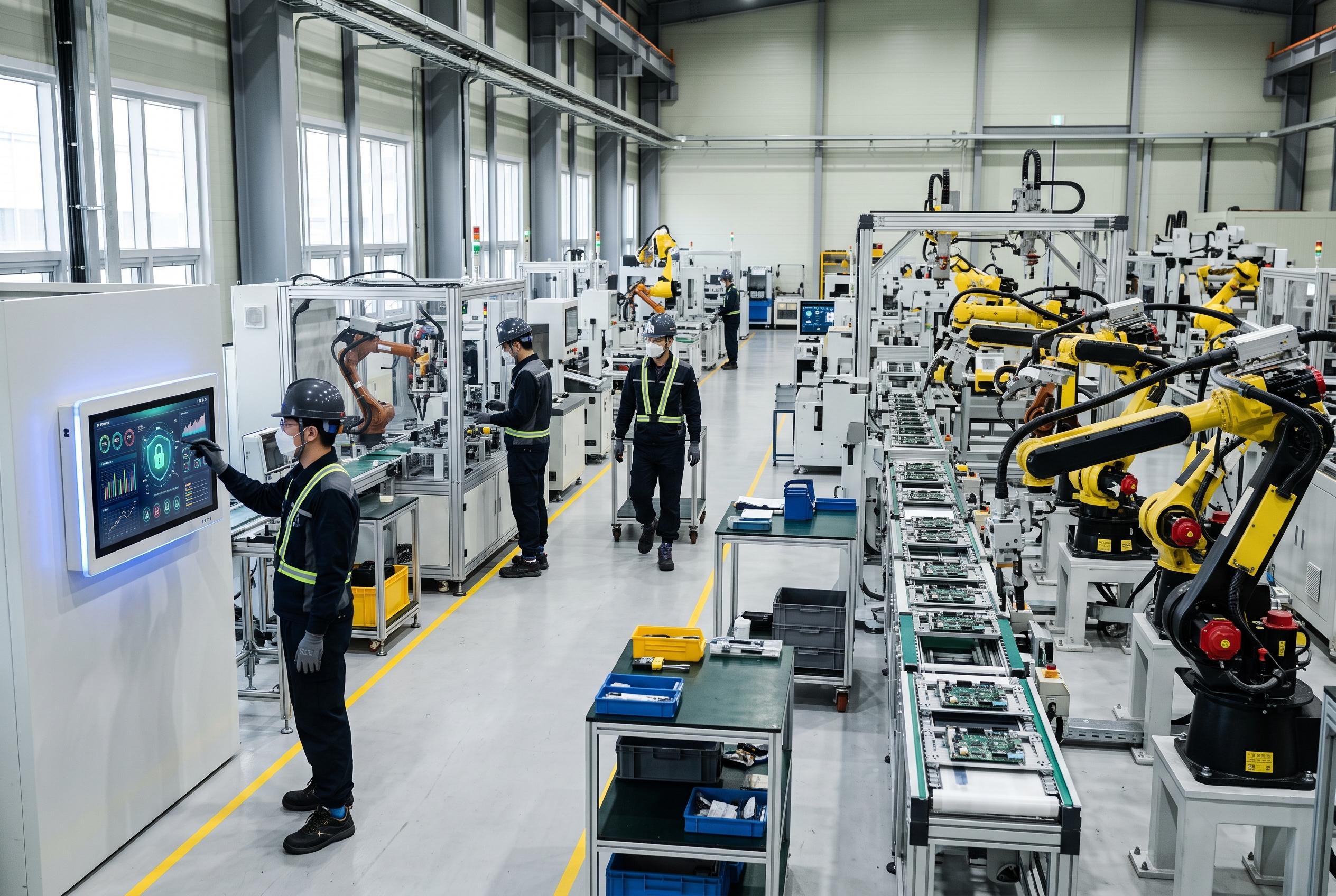
Manufacturers are moving toward a future where robots and AI systems must prove who they are before acting. RaonSecure is leading a South Korean government-backed project to build real-time identity and permission checks for physical AI, with smart factories first in line and logistics, healthcare, and defense likely to follow.
Robots may soon need credentials before they act
A robot on a factory floor doesn't just process information. It moves equipment, handles materials, and can create real-world danger if a command goes wrong. RaonSecure's project is designed to give those machines a verifiable digital identity, so they can be checked before and during operation.
The company is extending decentralized identity technology into physical AI. That approach could let a robot demonstrate its identity, confirm its authority, and record what it has done, rather than simply accepting every instruction that reaches it.
It's a practical response to an uncomfortable reality: an AI system can be highly capable and still be unsafe when its access controls are vague.
Real-time permissions could stop risky commands
The proposed framework is intended to manage more than a machine's name or login credentials. It would also cover permissions, delegated authority, and activity records, creating a clearer chain of responsibility around automated decisions.
If a command falls outside a robot's approved role, the system could stop it during execution. That matters in autonomous manufacturing, where a compromised account, altered instruction, or software malfunction might otherwise move quickly from a digital problem to a physical accident.
According to RaonSecure's company information, its wider identity and security work is focused on trusted digital services. Applying those ideas to machines introduces a tougher test, because the consequences of failure can be immediate and visible.
Why physical AI needs more than model security
Traditional AI security often concentrates on the model, the data, or the network. Physical AI adds another layer of concern: the system can influence machinery, vehicles, tools, and people in the same environment.
The government-backed research project therefore takes a multi-layer approach, covering AI models, data, communications, devices, and operating systems. That broader view is important because a secure model can still be undermined by a compromised device or an overpowered user account.
RaonSecure is working with technology companies and universities on the initiative, bringing identity management together with research into platforms, data protection, and industrial systems. The result could be less glamorous than a new robot demo, but arguably more useful.
Smart factories are the first proving ground
Smart factories are a natural starting point because they already depend on connected equipment, automated workflows, and carefully defined operating procedures. A digital identity framework could give plant managers a better way to decide which machine, software agent, or operator may perform a specific task.
For factory teams, the practical question will be granularity. A system that only says a robot is trusted may not be enough. Manufacturers will likely want to know which task it can perform, for how long, under whose authority, and what happens when conditions change.
That detail could make the difference between a security tool that quietly supports production and one that creates frustrating delays. The best systems will need to be strict about dangerous actions without turning every routine adjustment into a manual approval process.
Trustworthy autonomy could shape the next wave
RaonSecure says the technology could eventually support physical AI in logistics, healthcare, and defense. Those sectors have different risk profiles, but they share one challenge: autonomous systems need to operate independently while remaining accountable.
The company's chief executive, Lee Jung-ah, said in the announcement that the success of physical AI would depend on trustworthiness as well as capability. That idea feels increasingly relevant as robots move beyond controlled demonstrations and into workplaces where mistakes have consequences.
Identity won't solve every AI security problem. Still, giving machines clear credentials, limited authority, and traceable actions is a sensible foundation for safer autonomy. Nobody wants a factory robot with the confidence of a manager and the access rights of an administrator.
It's a small but important step toward making autonomous machines safer to trust.
Disclaimer: This article may have been created with AI assistance and reviewed by our editorial team. It is provided for general informational purposes only. Readers should verify information independently before relying on this content.
