
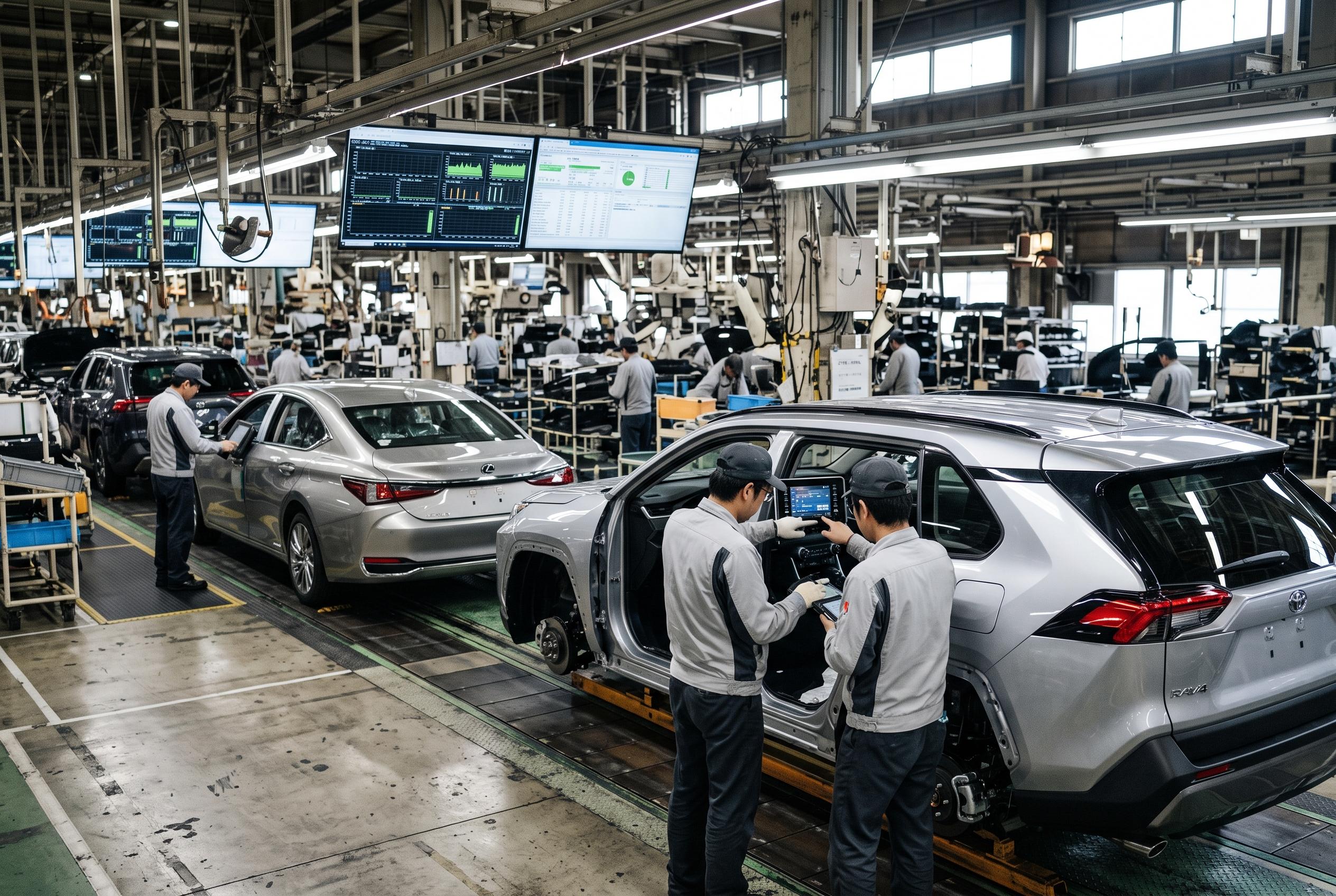
Toyota is turning its attention from engines and batteries to the code running behind the dashboard. The automaker plans to expand its Arene software platform from two vehicles today to 50 models and 10 million new vehicles annually by 2030, a move that could bring faster updates and smarter features to mainstream drivers worldwide.
Toyota wants software to become the car’s hidden engine
The most important change in future Toyota vehicles may be something drivers never see. Arene is designed to coordinate digital cockpits, safety technology, body functions, and eventually powertrain controls, making software a much bigger part of the ownership experience.
According to Autoblog, Toyota currently uses the platform in the RAV4 and Lexus ES, but the company wants to extend it to 50 models by 2030. That scale matters because Toyota sells vehicles across nearly every major market and price category, from practical crossovers to luxury sedans.
The ambition reflects a broader industry shift toward software-defined vehicles. Instead of treating a car as finished when it leaves the factory, automakers are building platforms that can be improved, expanded, and sometimes repaired through over-the-air updates.
Arene could make new features arrive faster
Toyota says Arene reduced the time required to assess advanced driver-assistance software in the latest RAV4 by 70 percent. That isn't a small engineering tweak. Faster testing could help Toyota bring safety improvements to market sooner while reducing some of the cost and repetition involved in development.
Japan Times reporting on Toyota's software-defined vehicle plans also highlights the company's effort to build a common digital foundation across a much wider range of vehicles. A shared platform can make development more consistent, although the real test will be how smoothly updates work for owners.
For drivers, the benefit could feel pleasantly ordinary. A warning system might become less fussy, a navigation feature could gain new capabilities, or a vehicle's interface might improve without a dealership visit. The best software updates are the ones that quietly make a car feel less frustrating.
This isn't just an electric vehicle story
Many software-defined vehicle programmes have been associated with electric cars, partly because EVs were designed around newer electronic architectures. Toyota's approach could broaden that trend by placing sophisticated software in a wider mix of hybrids, petrol vehicles, and other mass-market models.
Nippon.com and other reports said Toyota expects Arene to support 10 million new vehicles annually by 2030. That target would give the platform an enormous footprint, potentially making software-based updates familiar to drivers who aren't ready to switch to an EV.
Still, a common platform doesn't automatically mean every model will offer identical functions. Hardware differences, local regulations, subscription policies, and trim levels will shape what each vehicle can actually do. Buyers should look beyond the phrase "software-defined" and check which features are included, optional, or dependent on a connected-services plan.
What Toyota owners should watch for
The next practical question is which models will receive Arene after the RAV4 and Lexus ES. Toyota hasn't publicly identified the full rollout sequence, so shoppers shouldn't assume that every new Toyota will immediately gain the same software abilities.
The platform is expected to cover more than screens and voice controls. Toyota plans for Arene to manage body systems and powertrain functions, which could make updates more meaningful but also raises the stakes for reliability, cybersecurity, and clear customer communication.
If you're comparing a future Toyota, ask how long software support is expected to last, whether updates are free, and what happens if a connected feature is discontinued. Those details may soon matter almost as much as fuel economy and warranty coverage.
Toyota is building a wider digital ecosystem
The company has also discussed extending Arene beyond cars into infrastructure, homes, and robotics. Reports from KSLM News and AsiaOne noted that Toyota may share the platform with alliance partners such as Suzuki, Daihatsu, Mazda, and Subaru around 2035, potentially taking annual reach to roughly 16 million vehicles.
That could create a powerful network effect. More vehicles would generate more real-world data, while a larger customer base could help spread development costs across multiple brands. It also creates a bigger responsibility to protect that data and keep systems dependable.
Autonomous driving remains the most eye-catching long-term possibility, but fully driverless travel is still a distant and difficult target. Most vehicles today use Level 2 assistance, which requires continuous driver attention, and the pullback by some manufacturers on higher-level systems shows just how complicated the technology remains.
Toyota's software push won't make every car self-driving overnight. But it could make everyday vehicles more adaptable, connected, and updateable, which may be the quieter revolution most drivers notice first.
It's a small screen-sized change with potentially huge consequences for how cars age.
Disclaimer: This article may have been created with AI assistance and reviewed by our editorial team. It is provided for general informational purposes only. Readers should verify information independently before relying on this content.
