
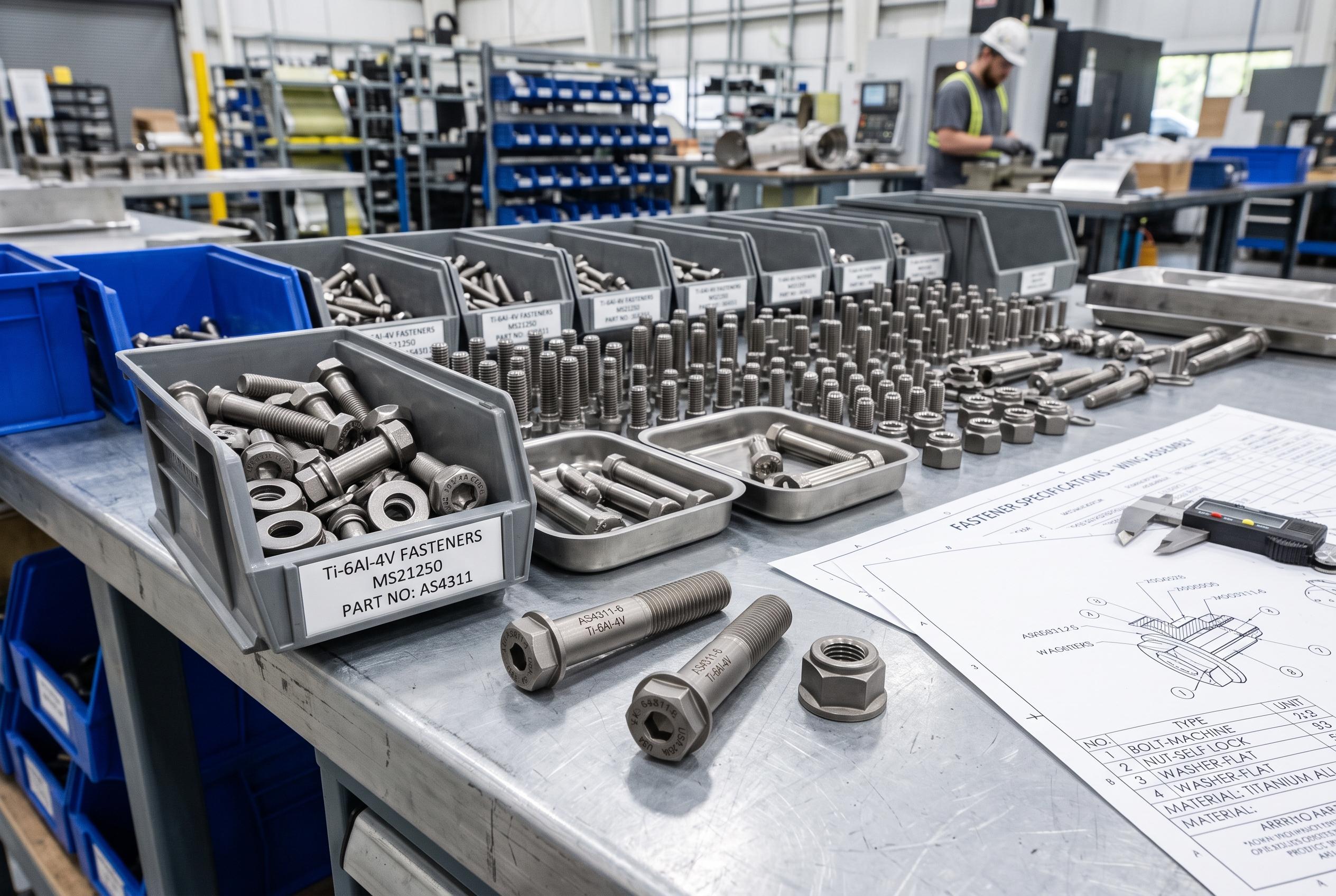
- Global demand for aircraft-grade titanium fasteners is expected to grow 4-6% annually through 2035
- Commercial aerospace and defense modernization are main demand drivers, with electronics emerging as a key market
- Supply chain concentration and new manufacturing tech may reshape industry dynamics in the coming years
The market for aircraft-grade titanium fasteners is really expected to keep growing for quite a while, as airlines, defense agencies, and industrial companies continue to focus on light yet incredibly strong parts. According to IndexBox, this sector is entering 2026 with stronger demand conditions, but also more careful and measured purchasing. Plus, the supply chain is spreading out beyond its usual strongholds , which traditionally have been North America, Europe, and Japan. The report suggests that worldwide consumption might grow between 4% and 6% each year through to 2035, with the index reaching roughly 160 compared to the 2025 baseline.
Now, a good chunk of that growth is linked to commercial aerospace. With record backlogs of aircraft piling up, manufacturers are being pushed to increase their production rates. IndexBox points out that premium alloys like Ti-6Al-4V and Ti-6Al-2Sn-4Zr-2Mo constitute around 55% to 65% of the volume and a even bigger slice of the market value. And if you look at industry reports from Grand View Research and other market trackers, it’s clear that mechanical fasteners in aerospace are incredibly durable , reliability, ease of maintenance, and certification are just as important as cutting weight.
Defense budgets are also playing a major role here. IndexBox notes that titanium fasteners are increasingly being used in military aircraft, helicopters, and autonomous systems as countries modernize their fleets and ramp up procurement. Meanwhile, electronics and semiconductor equipment are emerging as faster-growing outlets for titanium fasteners too. This demand is driven by the needs of cleanroom manufacturing, automation, and precision assembly. Thanks to titanium’s resistance to corrosion and its performance in rough environments, it’s attractive well beyond aviation , especially in applications requiring a long service life and tight tolerances.
On the supply side, things stay pretty tight. IndexBox highlights that over 70% of worldwide production comes from fewer than a dozen integrated manufacturing sites. That means lead times, certification paperwork, and trade policies can be just as critical as price. Similarly, Grand View Research describes the US aerospace fasteners market as highly concentrated, with high entry barriers , thanks to regulatory approval processes, heavy capital requirements, and advanced technical standards. Because of all this, buyers tend to prefer long-term agreements and validation-driven contracts instead of spot purchases.
Looking ahead, some technologies might help ease these constraints. IndexBox mentions additive manufacturing and near-net-shape production methods, which could cut scrap and really speed things up , potentially by 30% to 50%, once certification challenges are sorted out. For suppliers, it’s pretty clear that the next phase of growth will likely favor those with strong qualification records, reliable delivery histories, and the ability to serve not just aerospace but other highly precise industries as well. And honestly, it’ll be interesting to see how these advanced manufacturing techniques reshape the market in the coming years.
One important angle that often gets overlooked is sourcing strategy. In a market like this, buyers are not just purchasing a commodity item; they are managing a critical part that can affect safety, production flow, and compliance. That means procurement teams in aerospace, defense, and industrial electronics are increasingly treating titanium fasteners as a logistics and supply chain priority rather than a simple line item. Suppliers that can offer stable sourcing, transparent documentation, and predictable replenishment schedules are likely to stand out, especially when customers want to reduce risk across a more geographically dispersed supplier base.
There is also a clear lifestyle and mobility connection in the background of this trend. As global travel rebounds and aircraft utilization rises, the pressure on the broader aviation ecosystem grows as well. More flights, more maintenance cycles, and more new deliveries all translate into greater demand for dependable fastening systems. At the same time, the shift toward lighter, more fuel-efficient platforms supports the use of advanced materials across both commercial and military fleets. In that sense, titanium fasteners are part of a wider effort to improve mobility, lower operating costs, and extend service life across critical transportation assets.
For manufacturers, this means the competitive battlefield is not just about output volume. It is also about qualification depth, process consistency, and the ability to adapt to changing customer requirements. The companies most likely to gain share are those that can support multiple end markets, including aerospace, defense, electronics, and industrial automation, without sacrificing quality. They will also need to manage raw material access carefully, because even small disruptions in upstream titanium supply can ripple through the entire production schedule. In other words, the market rewards operational discipline just as much as technical capability.
Another factor shaping the outlook is customer behavior. Buyers are becoming more selective and more data-driven, especially as they compare total cost of ownership rather than just unit price. For aircraft manufacturers and maintenance providers, the cost of a fastener failure can be far greater than the cost of the part itself. That is why certification records, traceability, and long-term performance histories matter so much. This also explains why many customers prefer validated suppliers with established aerospace credentials instead of switching frequently in search of short-term savings. In a high-stakes industry, trust can be as valuable as titanium itself.
From a market development perspective, the next few years may also see more regional diversification in production. As companies work to reduce concentration risks, they may invest in additional manufacturing capacity in locations closer to final assembly lines or major industrial hubs. That could improve logistics efficiency, shorten lead times, and create a more resilient sourcing network. However, any geographic expansion will still need to meet strict aerospace and defense standards, which means the pace of change may be gradual rather than dramatic. Even so, the direction is clear: a more distributed and more resilient supply structure.
For investors and executives watching this space, the message is straightforward. Demand is likely to remain healthy, but the winners will be those who can balance scale, quality, and flexibility. Growth in commercial aerospace, modernization in defense, and rising demand from electronics manufacturing all point in the same direction. Yet the market’s technical barriers and supply constraints mean there is still room for specialized players with strong manufacturing discipline. If the industry can successfully adopt faster production methods without compromising certification, the outlook could become even stronger over the long term.
Takeaways:
- - Aircraft-grade titanium fasteners are positioned for steady growth through 2035.
- - Commercial aerospace remains the biggest demand driver, supported by large aircraft backlogs.
- - Defense modernization and autonomous systems are adding new demand streams.
- - Electronics and semiconductor manufacturing are becoming important growth markets.
- - Supply is concentrated, so sourcing, logistics, and certification remain critical.
- - Additive manufacturing and near-net-shape production could improve capacity and reduce scrap.
Disclaimer: This article may have been created with AI assistance and reviewed by our editorial team. It is provided for general informational purposes only. Readers should verify information independently before relying on this content.
Sources:
