
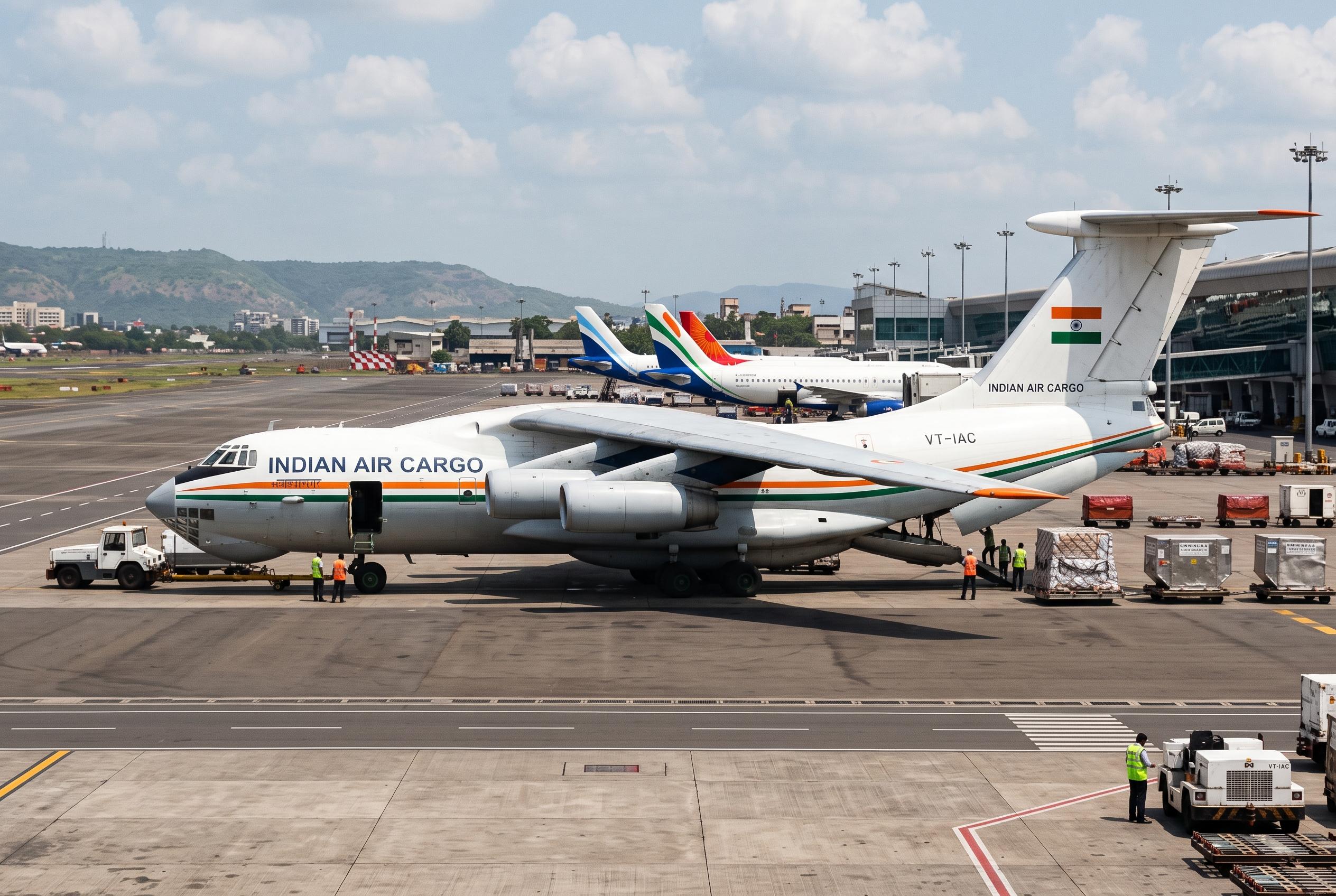
- Freight handled in India grows by 12% in Q2 2026, driven by e-commerce and electronics manufacturing
- Policy reforms including increased courier export cap boost export flexibility and market participation
- Transshipment infrastructure expansion enhances India's regional logistics role and operational efficiency
India’s air cargo scene is really starting to pick up, moving into a more expansion-focused phase. That’s partly thanks to policy shifts that are changing how exporters, logistics providers, and shippers deal with time-sensitive goods. According to the Whalesbook report, during the April-June quarter in 2026, freight handled grew by about 12% compared with the same period the year before, with international cargo seeing a boost of roughly 14%. And honestly, that’s not just a flash-in-the-pan kind of performance. It really signals a bigger shift, something happening across sourcing patterns, export logistics, and the crucial role air freight plays, especially in sectors where speed, dependability, and product sensitivity count the most.
A big part of this momentum is driven by cross-border e-commerce and a stronger push in the domestic electronics and semiconductor markets. These aren’t your average freight categories. They involve supply chains that are tightly timed, inventories that stay lean, and delays that could throw off downstream manufacturing or customer delivery commitments. In this kind of environment, air cargo is becoming more of a strategic tool rather than just another transport option. As India focuses on beefing up its manufacturing base and expands its position in mobile, electronics, and related tech supply chains, the demand for reliable air freight capacity seems set to stay high.
Policy changes have definitely played a big role here. One of the clearest signals came in the Union Budget 2026, which lifted the ₹10 lakh value cap on courier exports. For small and mid-sized e-commerce exporters, that’s a significant change because it removes a barrier that had capped how much value they could send out via courier channels. Basically, it’s a lot easier now for smaller sellers to take part in global trade without worrying about hitting an old, restrictive threshold. This, in practical terms, means more businesses can get their goods exported faster and more flexibly using air cargo and courier networks.
Meanwhile, the government is accelerating transshipment infrastructure at major airports including Delhi, Bengaluru, Ahmedabad, Mumbai, and Hyderabad. That matters because the efficiency of air cargo doesn’t just depend on how many planes you can fit in, but also on how smoothly freight moves between different points in the network. When airports are better equipped for transshipment, India’s position as a regional logistics hub improves. It’s no longer just about being a point of origin or destination; it’s about connecting seamlessly within a larger network. For exporters, that means less friction. For carriers and freight operators, it’s an opportunity to optimize routing and better utilize airport facilities.
And we’re really starting to see the impact of these changes operationally. Air India has already seen success in this area, with its pilot transshipment project doubling cargo volumes on key corridors like Chennai–Delhi–Frankfurt. Under the new framework, eligible cargo shipments can remain securely packed during transit, eliminating the need for piece-level re-screening and reducing connection times and handling requirements. That’s a pretty big deal because, in an industry where every minute counts, especially for high-value, temperature-sensitive, or time-critical cargo, less handling means more efficiency and less risk of damage.
One standout company in this evolving landscape is Blue Dart Express. It reported revenue of ₹6,141 crore for FY2025–26 and is set to launch a dedicated international cross-border e-commerce delivery product in September 2026. This move’s pretty significant because it shows how domestic logistics players are adapting to a market that’s more global, digital, and service-oriented. Instead of sticking solely to traditional parcel delivery, these firms are developing products that directly support international fulfillment, making global trade a bit more seamless.
The sector is also benefiting from the “Make in India” push in electronics. As companies like Micron Technology and Kaynes Technology expand their local assembly capabilities, the demand for air-freighting high-value components such as AI chips and server racks has increased. These aren’t your run-of-the-mill items, they’re technically sensitive, costly, and need quick, careful handling because delays could bottleneck the entire manufacturing or integration process. That’s why air cargo is becoming more and more vital in the broader electronics supply chain.
For sourcing teams, this shift is especially important. When a company is balancing domestic assembly with imported components, air freight can help reduce the risk of stockouts and support just-in-time production. That flexibility matters not only for factories, but also for brands selling mobile devices, consumer electronics, and lifestyle products that often have short product cycles and seasonal demand spikes. In these categories, a missed delivery window can quickly turn into lost sales, delayed launches, or excess inventory.
The logistics implications go beyond speed alone. Better transshipment and improved courier export rules can encourage companies to redesign their distribution plans around air cargo rather than relying only on slower modes. That can open the door to more agile inventory positioning, smaller batch replenishment, and quicker responses to market changes. For many shippers, the practical appeal is simple: faster turnaround, tighter control, and fewer disruptions when customer expectations are high.
This is also changing the competitive landscape inside the logistics industry. As more freight moves through air networks, carriers and service providers are under pressure to improve service levels, digital tracking, and customs coordination. That is particularly relevant for cross-border e-commerce, where buyers expect timely updates and sellers need predictable delivery performance. In that sense, the air cargo market is becoming more connected to the broader digital commerce ecosystem, rather than operating as a separate back-end function.
There is also a broader lifestyle angle to this growth. Consumers in India and abroad are increasingly accustomed to rapid fulfillment, whether they are ordering electronics accessories, mobile devices, or premium lifestyle goods. That creates a structural preference for logistics models that can support speed and reliability. Air cargo fits that need well, especially when product value, shelf life, or launch timing makes slower transport impractical.
However, the sector faces specific risks that investors should monitor. Competition is intensifying as global logistics giants and local carriers like IndiGo and Air India expand their capacity to control freight rates and capture the high-yield, time-sensitive shipment market. Furthermore, the industry remains vulnerable to global geopolitical tensions, which can lead to air-space restrictions and sudden supply chain volatility. Investors should track the success of new international product launches, the sustained volume growth in the e-commerce segment, and the efficiency of the new transshipment hubs in handling larger cargo loads.
Another point to watch is how evenly these gains are distributed across the market. Large exporters and established logistics operators may be quickest to benefit, but the real long-term test will be whether smaller firms can access the same infrastructure and policy advantages. If the new framework lowers operational friction for a wider range of businesses, it could deepen India’s role in global sourcing and help build a more resilient export ecosystem. If not, the gains may remain concentrated among a few major players.
The next phase will likely depend on execution. Policy support can create momentum, but sustained progress requires dependable airport operations, efficient customs handling, strong cargo visibility, and enough capacity to meet rising demand. If those pieces come together, India’s air cargo sector could become a more important part of regional trade flows, especially for electronics, mobile, and e-commerce shipments that require precision and speed.
Takeaways / FAQ: - Why is air cargo growing in India now? Policy changes, e-commerce expansion, and electronics manufacturing growth are increasing demand for fast, reliable logistics. - Which sectors benefit most? Electronics, semiconductors, mobile supply chains, and cross-border e-commerce are among the biggest beneficiaries. - What is the key policy change? The Union Budget 2026 raised the ₹10 lakh courier export cap, helping smaller exporters use air freight channels more easily. - Why do transshipment hubs matter? They improve routing efficiency, reduce handling, and strengthen India’s position as a logistics hub. - What risks should be watched? Rate competition, geopolitical disruptions, and the ability of new infrastructure to handle growing volumes.
Disclaimer: This article may have been created with AI assistance and reviewed by our editorial team. It is provided for general informational purposes only. Readers should verify information independently before relying on this content.
