
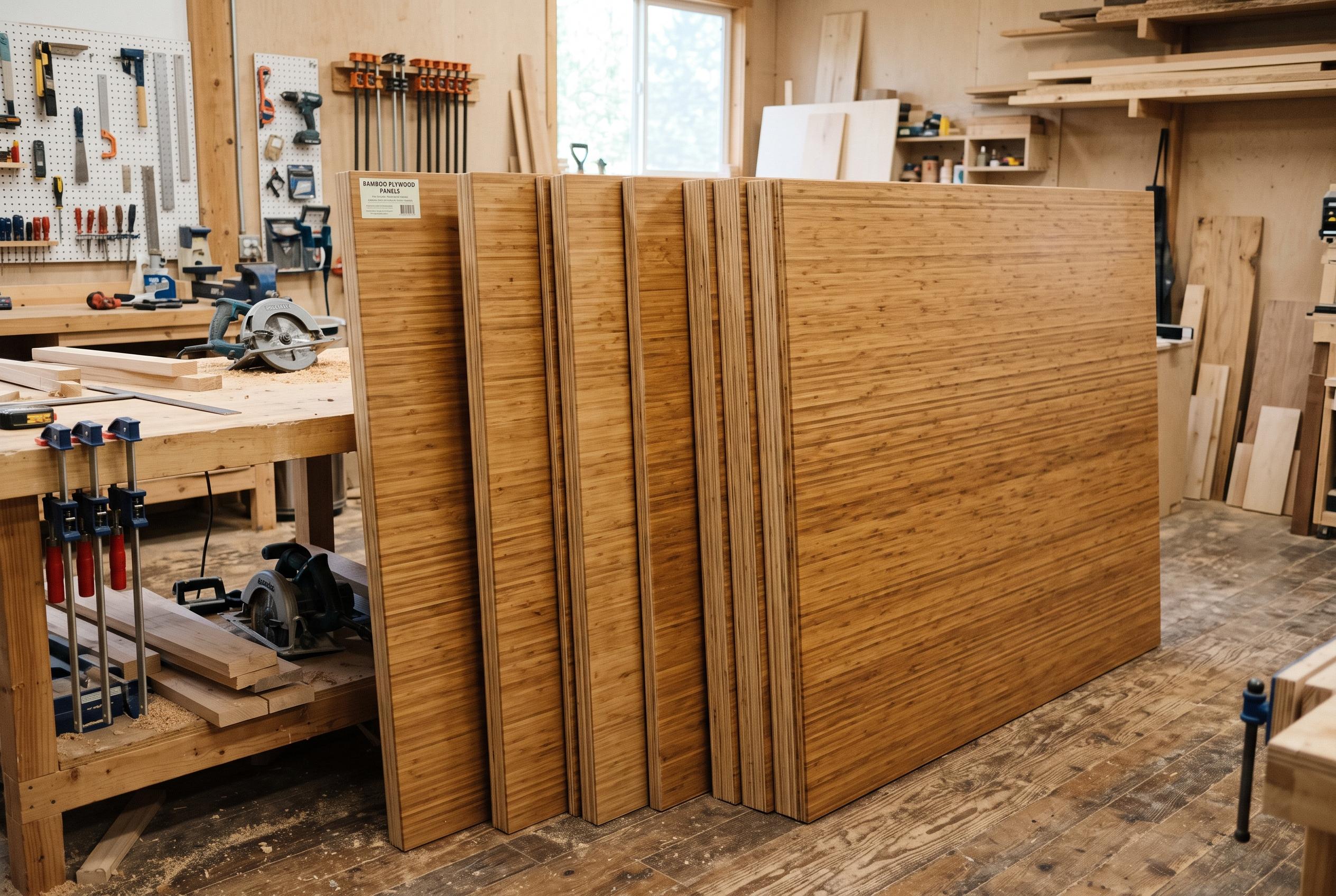
- Bamboo plywood is shifting from niche to mainstream applications
- Demand driven by sustainability standards and electronics uses
- Asia-Pacific remains dominant, with diversification in processing capacity
The worldwide market for bamboo plywood panels is gradually shifting from being a tiny niche into a more broad-based material category. IndexBox projects that this growth will continue through 2035, especially as sustainability standards tighten and buyers increasingly look for lower-carbon alternatives to traditional wood panels. The report states that the market should grow at a compound annual rate of about 6 to 8 percent. The baseline forecast suggests roughly 6.8 percent growth each year, with an index approaching 180 by 2035, using 2025 as the starting point. This reflects a deeper shift in how sourcing teams, builders, manufacturers and product designers evaluate materials, whether in construction, electronics or interior design.
Bamboo plywood is making its way into more categories where performance, appearance and environmental positioning all matter. It is increasingly specified for uses like interior cladding, cabinetry, flooring and other engineered products. That helps explain why it is no longer seen only as a stylish or design-driven material. IMARC Group describes it as laminated bamboo sheets used in cabinetry, flooring underlayments, wall panels, furniture parts, doors and specialty millwork. These are everyday building and manufacturing choices now, where sourcing managers often have to balance appearance, compliance needs and cost in the same cycle.
Industry updates from Bamborn reinforce this view, they show that bamboo material has moved beyond high-end design circles into more mainstream renovation projects and commercial fit-outs. That shift matters because it broadens the potential market and changes how buyers handle lead times and approved vendor lists. Instead of only being used in specialty projects, bamboo panels are now appearing in standard interior specifications, especially in Europe, North America, the Middle East and Southeast Asia. In these regions, the material is viewed as a practical choice for commercial interiors and renovation projects aiming for lower emissions without sacrificing the durability and finish quality that professionals expect.
A major factor driving this overall change is the steadily increasing focus on sustainability within construction and manufacturing. Bamboo plywood fits into that discussion because it is often promoted as a lower-carbon alternative to traditional wood-based panels. For many purchasers, particularly those under stricter environmental regulations, the concern is not just whether the material looks good or performs well. It is also about whether the supply chain, emissions footprint and documentation can support broader ESG compliance and sustainability goals. That is likely why bamboo plywood is gaining traction in sourcing conversations, it comes with a story that can support both product design and procurement strategies.
Demand is also being lifted by applications in electronics and cleanrooms, where low outgassing and anti-static qualities matter. IndexBox notes that bamboo plywood is gaining popularity for workstations, modular cleanroom furniture, anti-static flooring underlays, and packaging, as manufacturers look for materials aligned with net-zero commitments. This is a significant signal for the electronics industry because, in such controlled environments, material choice is not just about appearance. Sourcing teams often prioritize consistency, cleanliness and functional performance. The fact that bamboo plywood is being used more in workstations and cleanroom furniture suggests it is now seen as more than just a building product, it is being evaluated as a material capable of supporting specialized operational needs.
Meanwhile, the construction industry continues to favor panels that are certified and low in VOCs. For example, Smith & Fong’s Plyboo line emphasizes LEED-friendly features, formaldehyde-free adhesives and prefinished format options for interior use. That directly caters to buyers searching for panels that meet modern technical and compliance standards. It also reflects how lifestyle trends and construction standards are overlapping more and more. Today, interior materials are expected to support healthier, cleaner and more responsibly sourced spaces, especially in residential, hospitality and office projects where end users are paying close attention to material quality.
But on the supply side, things are still uneven. IndexBox reports that Asia-Pacific makes up about two-thirds of the global volume, with China holding the largest share and Indonesia and Vietnam expanding their processing capacities. That regional concentration matters in terms of procurement and logistics planning. Buyers wanting to diversify away from relying heavily on a single source are watching where capacity is growing and where documentation standards are improving. The growth happening in Indonesia and Vietnam as processing hubs may help reduce some of that concentration risk, but the market still depends quite a bit on regional supply chains that are vulnerable to delays, input costs and variations in quality.
This uneven supply situation creates extra challenges for buyers, especially those who need consistent product availability. Long lead times for premium panels remain a major hurdle, particularly for manufacturers who require stable quality and clear, reliable documentation across different markets. In procurement, it is not enough to evaluate bamboo plywood only on its material qualities. The resilience of the supply chain behind it is just as important. For teams handling complex sourcing, traceability and reliability are as critical as aesthetics and functionality.
IndexBox also highlights additional headwinds, things like rising costs for bamboo raw materials, volatile prices for adhesives and fragmented certification regimes. These factors can make purchasing decisions more complicated and drive up actual landed costs. For companies operating across borders, certification disparities get especially tricky because different markets have varying standards and expectations. Sometimes that slows down approvals or makes standardizing specifications across regions a real challenge. So, although demand looks promising, operational planning still needs to be careful and deliberate.
Even with those challenges, the value proposition is growing stronger. Bamborn points out that suppliers who can reliably deliver stable color, moisture resistance and customization options are capturing more market share. That is typical when an industry matures: once a product consistently meets practical requirements, buyers tend to focus more on uniformity, finish and supply reliability. For bamboo plywood, the ability to produce repeatable appearances and dependable performance can matter just as much as the sustainability story, especially in commercial interiors, furniture production and branded environments. These characteristics often influence whether a material gets specified right out of the gate.
DataIntelo also sheds light on this, it notes that horizontal bamboo plywood has found a firm footing in furniture and residential interiors thanks to its attractive grain and smooth surface. That helps explain why the market is moving beyond its initial niche. Materials that look good and are strong tend to spread across categories more easily. By supporting both design principles and procurement needs, they become more appealing. And in spaces driven by lifestyle or aesthetic priorities, the look really influences acceptance. Meanwhile, in manufacturing and commercial settings, consistency and process compatibility often carry more weight.
The overall direction of the market also reflects a shift in how industrial buyers look at material choices. Bamboo plywood is increasingly part of conversations involving electronics, modular interior systems and low-emission construction products. This means procurement is not isolated to one department or project anymore. Instead, teams from compliance, design and operations all play a role. For example, a panel picked for cabinetry might also need to meet emissions standards, support cleanroom conditions or align with regional sourcing strategies designed to reduce supply disruptions.
Looking ahead, the next phase of growth probably will not be just about sustainability claims. Instead, it is turning into a real shift toward industrial sourcing, focused on traceability, low emissions and regional supply resilience. In a landscape where logistics can dramatically impact timelines and certification can make or break approvals, bamboo plywood’s appeal depends on more than just being eco-friendly. How well suppliers can meet expectations around consistency, certification and reliable delivery will shape its future role across multiple applications.
If current trends hold, bamboo plywood panels will probably continue increasing their footprint, both in mainstream construction and specialized industrial uses. The combination of mounting sustainability pressure, expanding manufacturing capacity and broader acceptance in high-end and commercial projects suggests the market is maturing. For buyers, the opportunity is clear: access to a lower-carbon, practical material suitable for everything from interiors to furniture and electronics-related applications. And for suppliers, the mission is equally straightforward, deliver consistent quality, reliable supply and certifications that modern procurement teams now demand.
Key Takeaways
- - Bamboo plywood is shifting from a niche product to a broader range of industrial and interior applications.
- - Demand is driven by construction, electronics and eco-focused sourcing.
- - Asia-Pacific remains the main supplier region, but diversification, particularly in Indonesia and Vietnam, is gaining importance.
- - Buyers are increasingly emphasizing traceability, emissions, certification and supply chain resilience.
- - Sustainable appeal alone is not enough; consistent quality and reliable supply chains are crucial for ongoing growth.
Frequently Asked Questions
Q: What’s fueling the growth of bamboo plywood panels? A: Mainly tighter sustainability standards, demand for lower-carbon options and wider use across construction, electronics and interior projects.
Q: Which regions lead the supply now? A: The Asia-Pacific area still holds about two-thirds of the global volume, with China leading, though Indonesia and Vietnam are expanding their processing capacity.
Q: Where is bamboo plywood currently used? A: It is found in cabinetry, flooring underlayments, wall panels, furniture components, doors, specialty millwork, workstations, modular cleanrooms and anti-static flooring underlays.
Q: What are the main hurdles in supply? A: Rising costs for raw bamboo, fluctuating adhesive prices, fragmented certification standards and long lead times for premium panels.
Q: Why are sourcing strategies growing more important? A: Because traceability, emissions standards and regional supply resilience are now key factors influencing procurement decisions and specifications.
Disclaimer: This article may have been created with AI assistance and reviewed by our editorial team. It is provided for general informational purposes only. Readers should verify information independently before relying on this content.
Source Tidbits
Note: This overview may have been put together with AI help and checked for accuracy, but always double-check with current sources before making decisions.
