
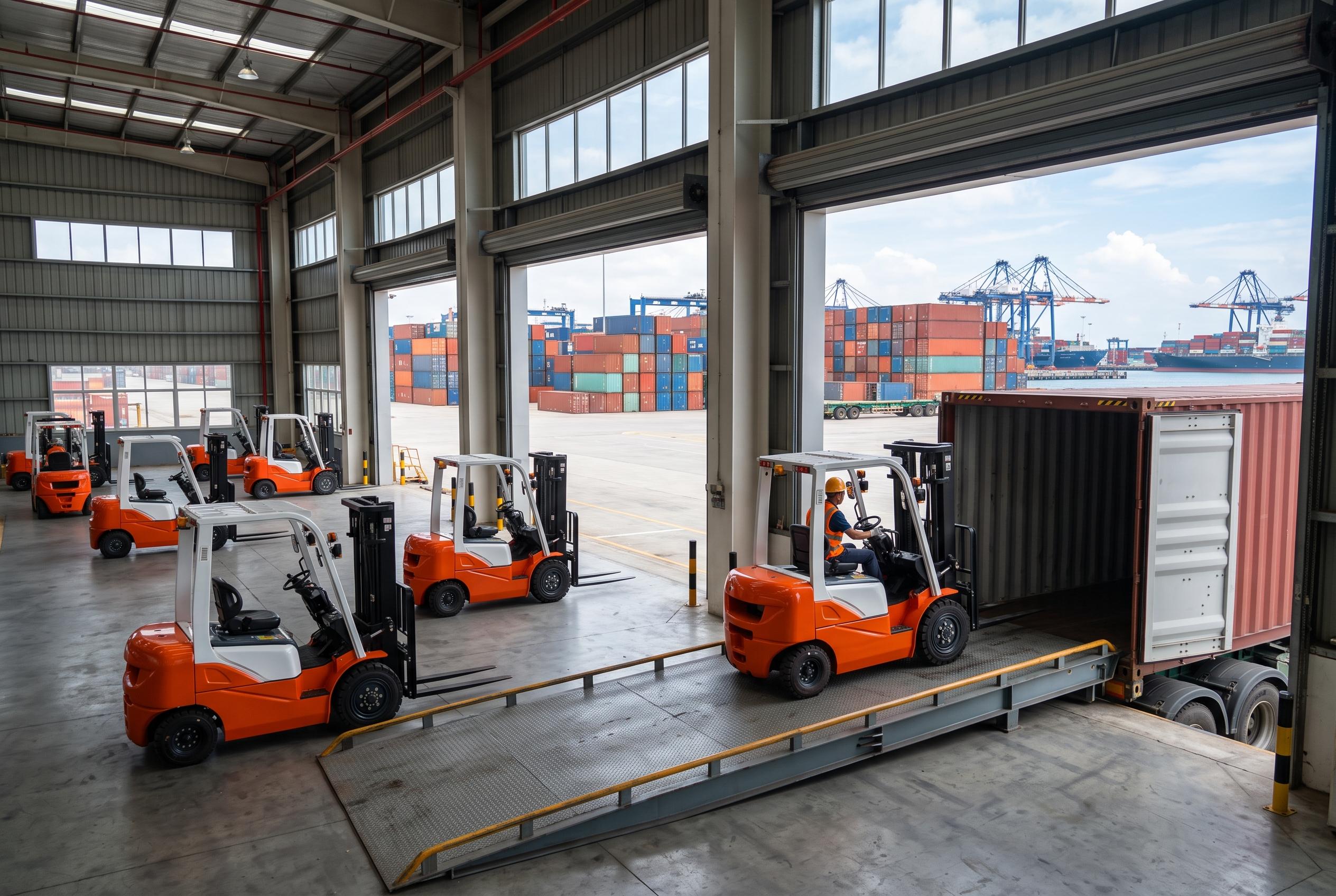
- Chinese electric forklift exports are surging, reaching over 127 countries.
- Smart features like rapid battery swapping are boosting global appeal.
- The export growth reflects broader shifts towards sustainable, cost-effective logistics solutions.
Chinese electric forklifts are seeing increased demand in overseas markets, according to manufacturers and exporters cited by the Global Times. Analysts attributed the increase in exports to global demand for cost-effective, low-carbon logistics equipment for factory and warehouse operations, AzerNEWS reported, citing the Global Times.
A representative of Zhejiang Goodsense Forklift Co., a Taizhou-based manufacturer and exporter of intelligent logistics systems including electric forklifts, told the Global Times on Sunday that the company's intelligent production lines are operating at full capacity.
"Once the various forklifts and logistics equipment come off the line, they will be shipped via dedicated logistics routes to 127 countries and regions in the world," the representative said.
The company's product portfolio includes more than 600 specifications, covering forklifts, warehouse handling equipment, baggage tractors, aircraft tow tractors, bulk cargo loaders, and emergency support vehicles, the representative said.
Forklifts are used to support loading and unloading operations and the movement of goods within factories and other industrial facilities.
Other electric forklift manufacturers are also reporting increased overseas demand, with some orders booked and production scheduled through the fourth quarter, CCTV News reported.
At another Zhejiang-based company's shipping area, 80 containers carrying nearly 400 forklifts are shipped to ports each day. Shipments are expected to increase to 100 containers per day by the end of the month, according to the report.
China's forklift exports also increased during the first seven months of the year, surpassing 380,000 units, up 22 percent year-on-year. Total forklift sales exceeded 1 million units during the same period, an increase of 17.7 percent year-on-year, according to data cited by CCTV News.
Hu Qimu, a professor at the Maritime Silk Road Institute of Huaqiao University, attributed the increase to factors including cost competitiveness, energy efficiency, and overseas demand for low-carbon equipment, according to the Global Times. He also noted that machinery and electrical products account for a significant share of China's exports, while smart and green equipment represents a growing portion of the export mix.
China accounts for more than 35 percent of the global electric forklift market, according to industry statistics, making it the world's largest single market for electric forklifts.
Chinese analysts said the country's forklift industry has shifted from predominantly fuel-powered models toward electric models. Chinese manufacturers have production capabilities covering batteries, motors, and complete vehicles, supporting overseas supply with production capacity, delivery capabilities, and cost structures.
The representative of Zhejiang Goodsense Forklift Co. said the company's intelligent battery-swapping technology can replace a forklift battery in three minutes. The company offers its products with an optional battery-swapping configuration.
According to an industry report from Interact Analysis, China's lithium-ion forklift shipments are projected to increase from 26,436 units in 2018 to more than 1 million units annually by 2034, representing an increase of more than 40 times.
The expansion of electric forklifts is occurring alongside the modernization of logistics operations in warehouses, distribution centers, ports, and other industrial facilities. Electric models are being used in applications involving material handling, fleet operations, and internal logistics, with equipment selection also taking into account energy consumption and emissions requirements.
The increasing adoption of electric forklifts is also placing greater emphasis on total operating costs in equipment purchasing decisions. Factors including battery life, maintenance requirements, charging and battery-swapping systems, and after-sales support are being considered alongside lifting capacity and other equipment specifications.
Overseas demand for electric forklifts includes applications in warehouses, ports, airports, and manufacturing facilities. These operations require material-handling equipment capable of supporting frequent use, varying operating schedules, and facility electrification and emissions-reduction requirements.
The export increase is also affecting industrial sourcing strategies. Buyers are evaluating equipment suppliers based on factors including production capacity, delivery networks, component availability, product range, and quality requirements. Chinese manufacturers with established production and logistics networks are supplying electric forklifts to multiple international markets.
For China's manufacturing sector, the increase in electric forklift exports is contributing to the export of equipment featuring lower-emission power systems, smart controls, and energy-saving functions. These features are relevant to markets where environmental requirements and energy costs are factors in industrial equipment procurement.
The longer-term development of the sector will depend on manufacturers' ability to maintain production capacity and meet changing international requirements. Current export data shows that Chinese electric forklift shipments are increasing across international markets and that demand extends across multiple industrial and logistics applications.
Takeaways:
- - Chinese electric forklifts are benefiting from global demand for low-carbon, cost-effective logistics equipment.
- - Battery-swapping and other smart features are becoming important selling points for overseas buyers.
- - The export surge reflects broader shifts in industrial sourcing, logistics efficiency, and green manufacturing.
- - China’s large production capacity and integrated supply chain remain key advantages in the global market.
- - The trend may continue as factories and warehouses look for mobile, energy-efficient equipment with lower operating costs.
Frequently Asked Questions: Q: Why are electric forklifts gaining attention in global markets? A: They can help reduce energy use, support carbon-reduction goals, and lower operating costs in logistics-heavy environments.
Q: What is a key advantage of battery-swapping forklifts? A: Battery swapping can reduce downtime and make refueling-style operations more convenient for busy facilities.
Q: What does the export trend suggest about Chinese manufacturing? A: It suggests that smart and green industrial equipment is becoming an important part of China’s export competitiveness.
Disclaimer: This article may have been created with AI assistance and reviewed by our editorial team. It is provided for general informational purposes only. Readers should verify information independently before relying on this content.
