
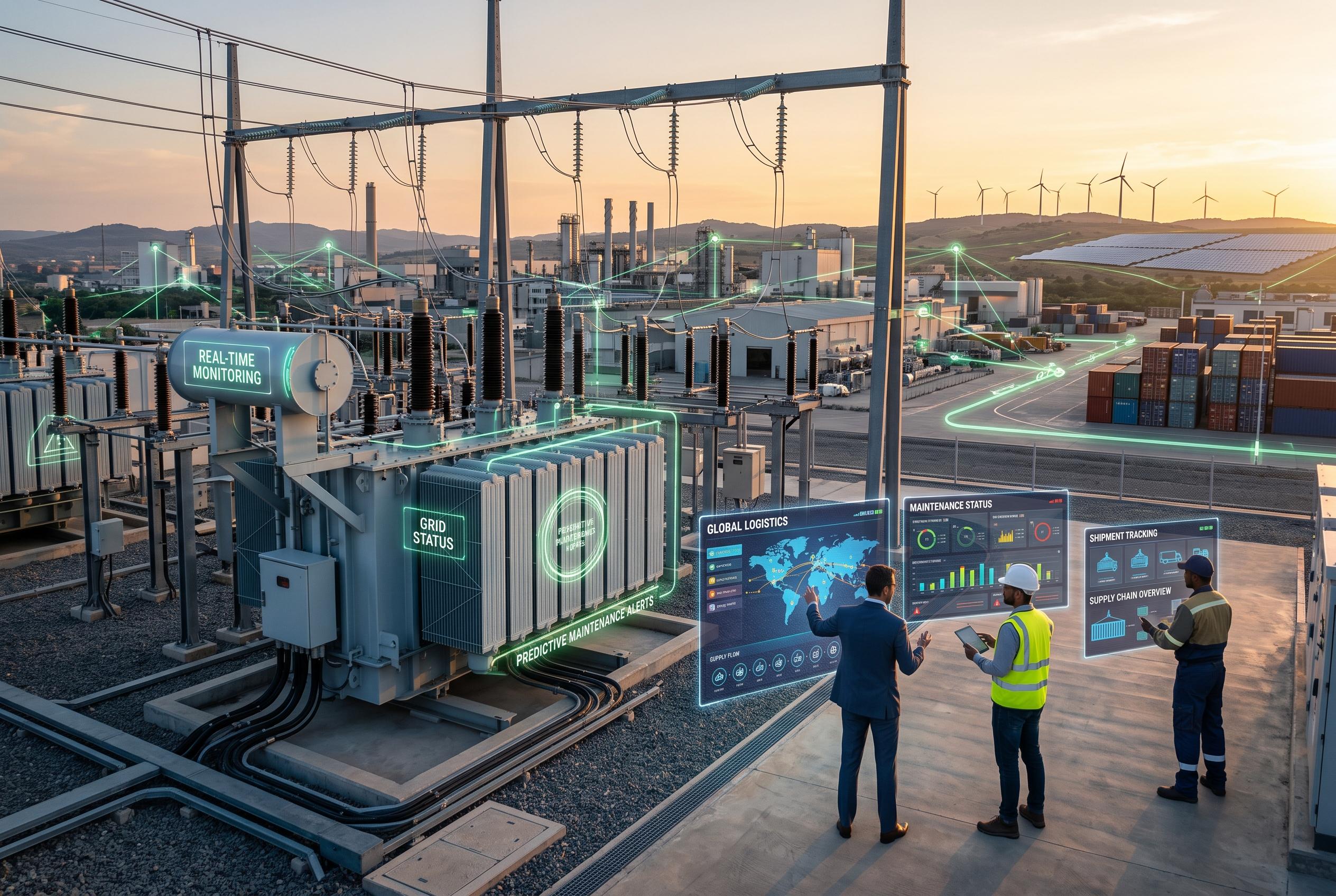
- Global transformer market expected to reach $88.48 billion by 2030, fueled by renewables and electrification
- Digital and smart transformers revolutionize grid management with real-time monitoring and predictive maintenance
- Supply chains, logistics, and regional policies are shaping procurement strategies and competitive dynamics
The global transformer market is heading into a more robust growth phase, as utilities, manufacturers, and grid operators are pouring significant investments into aging infrastructure. Estimates from MarketsandMarkets suggest that the market will hit around $64.64 billion in 2025 and is expected to grow to about $88.48 billion by 2030, which translates to an annual growth rate of approximately 6.5%. That outlook, honestly, reflects a mix of driving factors, like increasing demand for electricity, upgrades to the existing grid, the push for integrating renewable energy sources, and the broader move toward electrifying transportation and industry sectors. For those involved in B2B transactions, buyers and suppliers alike, the message is pretty clear: transformers are no longer just commodity electrical gear; they’ve become a key part of the energy transition and the expansion of industrial capacity.
Furthermore, the same research indicates that digital and smart transformers are becoming a real game-changer in this space. These advanced systems can support real-time monitoring, enable predictive maintenance, and facilitate automated control, helping operators cut down on outages and boost overall efficiency. This shift is also being pushed along by stricter environmental regulations, especially in regions like Europe and North America, where manufacturers face increasing pressure to develop designs with lower energy losses and alternative insulation solutions. This includes bio-based fluids and solutions that don’t use SF6, which is a potent greenhouse gas. As a result, procurement teams now have to balance initial costs with factors like lifecycle expenses, compliance, and ongoing service support.
The market’s evolution is also influenced by the specific needs within different segments. Power transformers continue to be the backbone of transmission and large-scale grid expansion projects. Meanwhile, distribution, instrument, and specialty transformers are benefiting from ongoing industrial growth and urban infrastructure developments. As more factors like cooling method, phase, power rating, and insulation type come into play, buyers are increasingly weighing these choices, trying to find the right mix of performance, safety, and sustainability. Yahoo Finance summarized the same research, emphasizing that these forces are fueling demand across the entire sector, especially in situations where reliable power delivery is absolutely crucial.
Europe stands out as a particularly active region, with a lot of policy momentum around decarbonization, boosting energy efficiency, and, you know, more cross-border power trading that supports investment. MarketsandMarkets points out that Europe is actually the third-largest growth market, partly thanks to modernization efforts underway in countries like Germany, Italy, and the UK. For major suppliers such as Hitachi Energy, Siemens Energy, Eaton, GE Vernova, and Toshiba Energy Systems & Solutions, the opportunity isn't just about selling equipment anymore. It’s also about offering connected services, local manufacturing options, and long-term maintenance packages that align with utility modernization efforts and increasingly strict procurement standards.
In practical terms, this market shift is also changing how organizations approach sourcing. Buyers are no longer focused only on the nameplate rating or purchase price of a transformer; they are building broader procurement strategies that consider lead times, factory testing capabilities, transportation constraints, spare parts availability, and after-sales support. In large infrastructure projects, sourcing decisions can shape schedule risk as much as technical performance, which is why utilities and industrial operators are paying closer attention to supplier reliability, regional production footprints, and logistics resilience. A transformer that meets the specification on paper still has to be manufactured, shipped, installed, commissioned, and serviced without disrupting the wider project timeline.
This is where logistics becomes a major competitive issue. Transformers are bulky, heavy, and often sensitive to handling, which means the path from factory to substation or plant can be just as important as the engineering itself. Carriers, project managers, and suppliers need to coordinate loading, customs clearance, route planning, and on-site delivery with precision, especially when oversized equipment must move through constrained infrastructure. As more projects expand across borders, logistics planning increasingly affects total cost, delivery confidence, and even the final selection of a vendor. In many cases, buyers are favoring suppliers that can demonstrate not only technical capability but also a strong track record in global logistics execution.
At the same time, the rise of smart transformers is creating opportunities for more connected operations in the electronics and mobile ecosystem around grid management. Monitoring tools, sensors, and control systems are giving operators better visibility into asset health, while mobile dashboards and remote alerts are making it easier for maintenance teams to react quickly to changing conditions. That matters because modern power systems are becoming more dynamic, with renewables, electric vehicles, distributed generation, and industrial loads all putting new pressure on the grid. In this environment, transformers are no longer isolated physical assets; they are part of a larger data-driven network that supports uptime, efficiency, and resilience.
There is also a growing lifestyle dimension to the conversation, even if it is less obvious than the utility and industrial side. Reliable electricity underpins everyday life, from home energy use to public transportation, telecommunications, healthcare, and digital services. As societies become more dependent on uninterrupted power, investment in transformer capacity and grid modernization has a direct effect on how people work, travel, communicate, and consume digital content. In other words, the transformer market is not just a story about heavy equipment and capital spending, it is also a story about the infrastructure that supports modern lifestyle expectations.
For suppliers, this means the competitive playbook is changing. Strong performance in the transformer market increasingly depends on end-to-end value creation: engineering depth, sourcing flexibility, compliance support, digital features, and dependable field service. Manufacturers that can offer both standard and customized designs are better positioned to serve utilities, data centers, industrial plants, transportation hubs, and renewable energy projects. Likewise, companies that invest in lower-loss designs, environmentally responsible materials, and smart monitoring capabilities may find themselves better aligned with procurement priorities over the next several years. In that sense, the market outlook is not only about volume growth; it is also about product differentiation and long-term customer relationships.
Takeaways / Q&A
What is driving transformer market growth? Rising electricity demand, grid modernization, renewable integration, and electrification across transport and industry.
Why are smart transformers important? They support real-time monitoring, predictive maintenance, and automated control, helping reduce outages and improve efficiency.
What should buyers focus on beyond price? Lifecycle cost, compliance, service support, logistics, lead times, and long-term reliability.
Which regions matter most? Europe is especially active, but demand is broad-based across utility and industrial markets.
What should suppliers emphasize? Connected services, manufacturing flexibility, sustainable designs, and strong project logistics.
Sources:
- - Paragraph 1: [2], [6]
- - Paragraph 2: [1], [2], [6]
- - Paragraph 3: [3], [4]
- - Paragraph 4: [1], [5]
- -
- -
- - Disclaimer: This article may have been created with AI assistance and reviewed by our editorial team. It is provided for general informational purposes only. Readers should verify information independently before relying on this content.
