
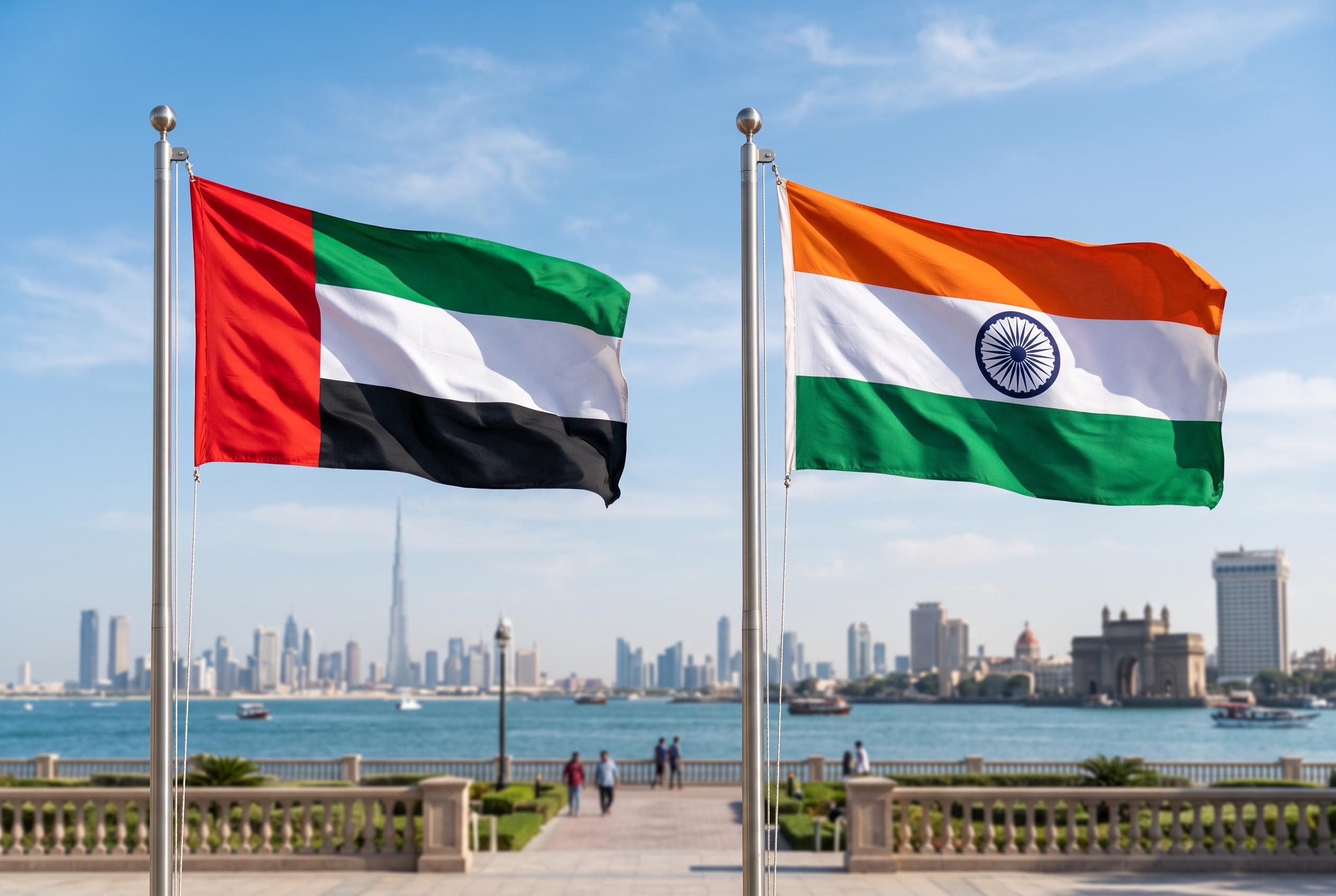
- Bilateral trade between UAE and India exceeds $101 billion in 2025-26, aiming for $200 billion by 2032
- Key initiatives like Bharat Mart, Virtual Trade Corridor, and IMEC are central to strengthening supply chains
- Digital infrastructure, logistics, and regional cooperation, including BRICS involvement, underpin future growth
UAE and India Strengthen Economic Ties Through Logistics, Supply Chains, and Infrastructure
The economic relationship between the United Arab Emirates and India is gradually moving into a broader phase, and it's not just about trading goods anymore. Now, there's a real focus on logistics, supply chain integration, cross-border infrastructure projects, and enhancing investment connections.
According to reports from Gulf Today and other regional outlets, bilateral trade hit $101.25 billion during the 2025-26 fiscal year. This marked the second year in a row that total trade surpassed the $100 billion mark, which really shows how quickly this partnership has grown.
Both countries are now aiming for $200 billion in annual trade by 2032. Achieving that milestone will require more than just increasing transaction volumes; it also depends on making transportation and customs processes much smoother and more efficient.
From Growing Trade to Full Supply-Chain Integration
Coverage from the region highlights initiatives like Bharat Mart, the Virtual Trade Corridor, and cooperation linked with the India-Middle East-Europe Economic Corridor, known as IMEC, as key parts of this wider plan.
All these projects are meant to bring supply chains closer together, speed up market access, and create alternative routes for trade and investment flows, things like diversifying options and improving resilience.
The Impact of the Comprehensive Economic Partnership Agreement
A big part of this expansion was set in motion through the UAE-India Comprehensive Economic Partnership Agreement, which officially went into effect in 2022. Interestingly enough, it was the UAE’s first agreement of this kind.
What’s been said is that this deal has expanded access for goods, services, and capital, while also offering more room for private-sector companies from both nations. For manufacturers, exporters, freight operators, and logistics providers, the real significance lies in reducing barriers and laying down a stronger policy foundation for sourcing and distribution networks.
UAE-India Cooperation Within BRICS
This partnership also has important implications within the BRICS grouping. The UAE became a full member in January 2024 and is also part of the New Development Bank, giving it a more substantial role in the bloc’s economic and financial cooperation efforts.
The 18th BRICS Summit kicked off in New Delhi on Saturday, September 12, 2026, under India’s presidency. The theme was “Building for Resilience, Innovation, Cooperation and Sustainability,” marking the 20th anniversary of BRICS.
In that context, the UAE-India relationship is being showcased as a model of how trade, logistics, investment, and innovation can be connected within a broader, more integrated regional system.
Key Takeaways
- - UAE-India bilateral trade reached $101.25 billion in 2025-26.
- - Both nations are eyeing $200 billion in yearly trade by 2032.
- - The initiatives like Bharat Mart, the Virtual Trade Corridor, and IMEC-related cooperation are core to this connectivity plan, as highlighted in regional reports.
- - The 2022 Comprehensive Economic Partnership Agreement helped create a stronger base for trade in goods, services, capital, and private-sector activities.
- - The UAE’s active role in BRICS and the New Development Bank broadens its economic and financial influence.
- - Moving forward, growth will depend heavily on smooth sourcing, logistics, customs procedures, infrastructure, and digital trade connections.
What the Next Phase Could Mean for Businesses
The next phase of UAE-India cooperation is likely to be judged not only by headline trade figures but also by how effectively businesses can use the systems being developed. A larger trading relationship requires companies to coordinate purchasing, production, warehousing, transportation, customs documentation, and final delivery across multiple markets.
For companies involved in sourcing, this can create a stronger basis for evaluating suppliers and organizing procurement across India and the UAE. Businesses may also look more closely at the location of warehouses, the availability of freight services, and the reliability of cross-border procedures. These considerations are especially relevant for manufacturers, distributors, retailers, and companies handling electronics or other products that depend on organized inventory management.
Logistics is another central part of the relationship. Efficient logistics can help businesses plan shipments with greater confidence, while digital trade tools may support the exchange of documents and information between commercial partners. Better coordination does not remove every challenge, but it can make the movement of goods easier to manage and potentially reduce unnecessary delays.
The importance of infrastructure extends beyond ports, roads, and storage facilities. It also includes digital infrastructure, data systems, payment connections, and communication between public agencies and private-sector operators. When these elements work together, companies can obtain clearer information about orders, shipments, customs requirements, and delivery schedules.
Opportunities for Smaller Companies
Large corporations are not the only businesses that may benefit from stronger economic ties. Smaller companies can also gain from improved market access if they are able to understand the relevant regulations and use available trade channels effectively.
For smaller exporters, practical questions may include how to identify buyers, how to prepare documentation, how to manage payment terms, and how to select a suitable logistics provider. Service companies may also find opportunities in areas such as freight coordination, warehousing, technology, compliance, and business support.
The growth of digital commerce could further connect businesses and consumers. Mobile platforms, online marketplaces, and digital payment systems can make it easier for companies to present products and communicate with customers. However, businesses still need to consider product standards, delivery expectations, returns, taxation, and customer service before expanding into a new market.
These issues are important in sectors ranging from industrial supplies to consumer goods and lifestyle products. They are also relevant to electronics companies, where sourcing, inventory control, product certification, and after-sales support can all affect the success of a cross-border operation.
The Role of Resilience and Diversification
Supply-chain resilience has become a major consideration for businesses worldwide. Companies generally want dependable access to materials, components, products, and transportation services. Cooperation between the UAE and India may support broader diversification by giving businesses more options for sourcing, distribution, and regional market access.
Diversification does not necessarily mean replacing existing suppliers or routes. Instead, it can involve developing additional relationships and contingency plans. Businesses may review alternative suppliers, transportation methods, storage locations, or distribution hubs. The objective is to be better prepared when market conditions change.
For policymakers and infrastructure planners, resilience may also involve improving coordination between different transport modes. Connections among maritime shipping, air freight, road transport, and warehousing can influence how efficiently goods move from origin to destination. The same principle applies to information flows, since delays in documentation or communication can affect physical shipments.
Questions Businesses May Need to Consider
As UAE-India trade develops, companies may need to assess several practical factors before entering or expanding in either market:
- - What products or services are best suited to the target market?
- - Which customs, labeling, licensing, and certification requirements apply?
- - Can existing suppliers support higher volumes or new delivery schedules?
- - Which logistics providers offer the right combination of cost, speed, and reliability?
- - How will inventory be managed across borders?
- - Are payment, currency, insurance, and contract arrangements clearly defined?
- - Can digital systems support order tracking and document exchange?
- - What customer-service and returns processes will be required?
These questions do not have one universal answer. Each company will need to consider its products, business model, budget, and risk tolerance. Still, addressing them early can help businesses make more informed decisions about sourcing and expansion.
Looking Ahead
The UAE-India economic relationship now covers much more than the exchange of goods. It includes infrastructure, investment, digital connectivity, logistics, trade policy, and regional cooperation. The ambition to reach $200 billion in annual trade by 2032 places additional attention on the systems that support commercial activity.
Whether that ambition is achieved will depend on continued cooperation and on how effectively companies use the available networks. Stronger customs processes, reliable logistics, practical digital tools, and transparent market access can all contribute to a more connected trading environment.
For businesses, the central message is straightforward: future growth will require careful planning across the entire supply chain. Sourcing decisions, transportation, technology, compliance, and customer expectations will increasingly be connected. The UAE and India are building a relationship in which these elements can support one another, creating new possibilities for trade, investment, electronics, mobile commerce, and broader economic activity.
Disclaimer: This article may have been created with AI assistance and reviewed by our editorial team. It is provided for general informational purposes only. Readers should verify information independently before relying on this content.
Sources:
