
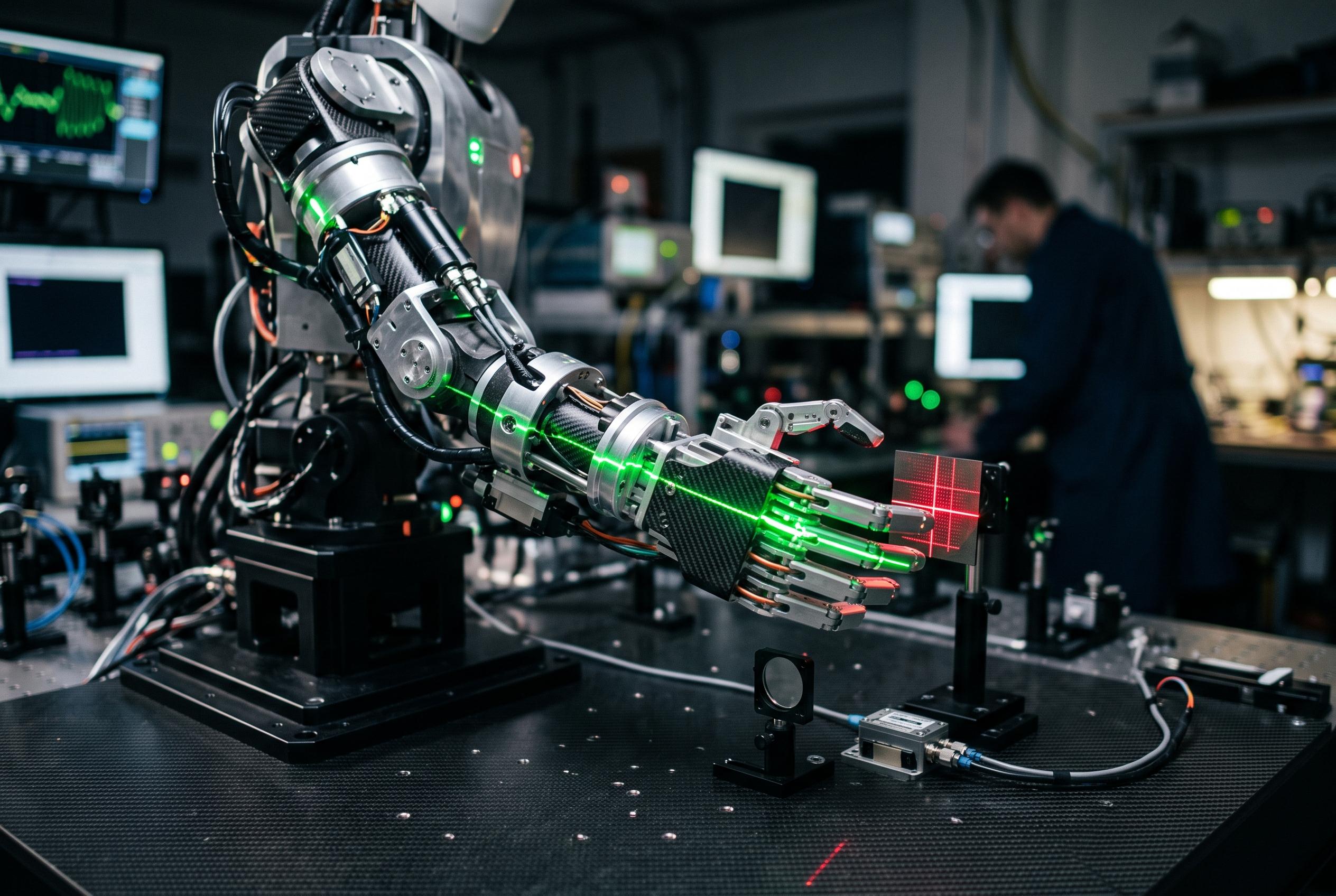
UBTECH and FAW-Volkswagen are taking humanoid robots beyond inspection work and into factory logistics, where the machines could eventually move parts, replenish stations, and support vehicle production. The partnership is still experimental, with no confirmed deployment date, robot order, or named factory, but it offers a fresh look at how adaptable robots might fit into busy manufacturing floors.
From Quality Checks to Factory Logistics
Humanoid robots are moving closer to the messy, practical side of manufacturing. Instead of simply checking finished vehicles or handling a tightly defined task, UBTECH and FAW-Volkswagen are now exploring how these machines might support the flow of parts across a factory floor.
The agreement, announced October 8, expands a relationship that began with trials at FAW-Volkswagen's Qingdao plant in 2024. According to reports from RobotsBeat and Robot AI Geek, the earlier work involved UBTECH's Walker S robot on production-line jobs such as tightening bolts, installing components, and handling parts.
That history gives the latest announcement more weight than a purely speculative partnership. Still, it remains a test program, not a confirmed fleet deployment. The distinction matters, especially in an industry where a polished demonstration can look a lot closer to everyday factory work than it really is.
Why Humanoid Robots Appeal to Car Makers
Factory logistics is an attractive proving ground because it involves constant movement, changing priorities, and plenty of repetitive work. A robot that can navigate human-designed spaces and use tools or equipment made for people could, in theory, fit into existing operations without requiring every workstation to be rebuilt.
Potential jobs might include bringing components to assembly stations, sorting parts, or keeping workers supplied during production. But those examples are possibilities, not a published task list. As Tech Yahoo reported, the companies haven't specified the exact logistics workflows they plan to test.
That flexibility is the appeal. Fixed automation can be wonderfully fast and precise, but it usually needs a carefully engineered environment. Humanoid machines promise more adaptability, although that promise comes with a much harder engineering challenge: the robot must cope with obstacles, variation, safety rules, and the occasional awkward moment that a factory floor inevitably produces.
Qingdao Provides the Important Backstory
The new logistics trials build on several strands of work at the Qingdao facility. UBTECH previously tested Walker S on production tasks, while its Walker S Lite was trained for vehicle quality inspection and connected with the plant's automation-control system, according to Humanoid Guide and Fenceless Robots.
Those earlier efforts are useful because they place the robots in an actual automotive setting rather than a laboratory-style showcase. They also let both companies learn how the machines interact with production systems, workers, safety procedures, and the physical rhythm of a working plant.
UBTECH has since highlighted its broader industrial robotics platform, which combines software, motion control, hardware, and coordinated robot operation. The company's growing manufacturing capacity may support larger pilots, but it shouldn't be confused with a FAW-Volkswagen purchase. No order volume has been made public.
The Big Questions Are Still Open
The announcement leaves plenty unresolved. FAW-Volkswagen operates five production bases, including sites in Changchun, Chengdu, Foshan, Qingdao, and Tianjin, but no host location has been named for the new demonstrations. The companies also haven't identified the robot model, fleet size, or timetable for testing.
Safety and performance will be just as important as movement. A robot may complete a task once in a controlled demonstration, but a production facility needs dependable results across long shifts, changing layouts, busy walkways, and unexpected interruptions. Science Report noted that the move into logistics raises precisely these questions about how humanoid systems perform beyond tightly scripted scenarios.
For shoppers, the connection may seem distant, but it could eventually influence how vehicles are built and how quickly factories respond to new models. The less glamorous jobs, such as parts replenishment, often determine whether a manufacturing system feels smooth or constantly catches its breath.
The Next Milestone Isn't a Dramatic Demo
The most convincing evidence will be quieter than a robot walking onto a stage. It will be a named factory, a defined production task, clear safety approvals, and published performance results showing that the machine can repeat the job reliably.
Industry coverage from RobotsBeat, Robot AI Geek, and Tech Yahoo all points to the same broad conclusion: this is a meaningful expansion of the partnership, but not proof that humanoid robots are ready for routine automotive logistics. The agreement creates a path for testing; it doesn't guarantee a production rollout.
That measured approach is probably sensible. Factory automation rewards reliability over spectacle, and the best robot may be the one that works steadily in the background, with little drama and even less downtime.
The next real breakthrough will be repeatable factory work, not another impressive demonstration.
Disclaimer: This article may have been created with AI assistance and reviewed by our editorial team. It is provided for general informational purposes only. Readers should verify information independently before relying on this content.
