
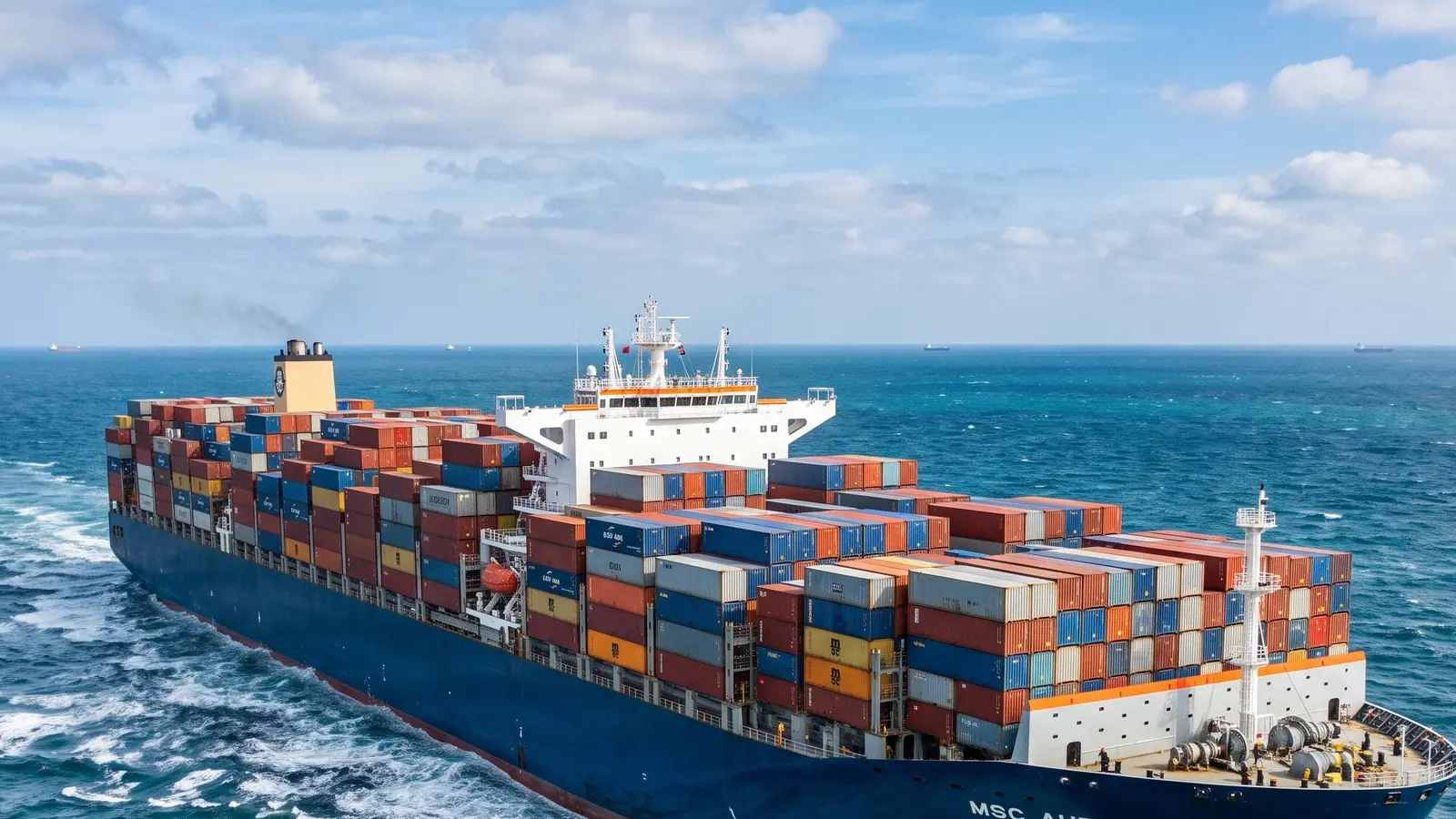
The Trump administration has pointed fingers at more than 40 countries, accusing them of helping Chinese goods slip past US tariffs by routing them through third-party nations. Countries like India, Canada, the European Union, Japan, and South Korea are among those named, based on reports from Business Today and statements attributed to White House trade adviser Peter Navarro. The core of these allegations revolves around what Navarro described as a “shadow transshipment network,” a system that supposedly allows Chinese exporters to hide the true origin of their products before they hit the American market.
Now, this isn’t a new phenomenon, according to the report, the practice started back in 2018, right around when Washington first slapped Section 301 tariffs on China. So, Chinese manufacturers, well, they apparently got pretty clever about it. They’ve been moving shipments through various jurisdictions where just light processing, like relabeling, repackage, or minor routing tweaks, could make the products appear as if they come from elsewhere, even if, honestly, much of the value still rests with Chinese producers.
One of the more detailed examples mentioned is the Pune-Gujarat-Chennai manufacturing corridor in India. Navarro claimed this route has been used to feed Chinese pumps and compressors into the U.S. supply chains. He argued that such rerouting, kind of like passing products through different places, affects industrial hubs such as Cincinnati, Dayton, and Columbus. He presented this not just as a customs problem, but also as a threat to American industry, framing it as a kind of unfair trade tactic.
To counter this, Washington’s approach seems to be leaning heavily on tech. Business Today highlighted that the administration is planning an AI-powered “Detective Border” system. This system would analyze shipping patterns, routing histories, product codes, connection details of ownership, and production capacities to spot suspect trade flow. The goal, according to the report, is to distinguish between legitimate nearshoring or foreign investments and those shady, illegal pass-through activities. Once identified, the government would pursue enforcement actions like penalties, collecting duties, or even excluding certain shipments altogether. So, for manufacturers, distributors, and logistics companies, the message comes through loud and clear: origin claims are going to be under much closer scrutiny, basically, as the US tightens its grip on potential tariff evasion.
For global sourcing teams, this is a reminder that trade compliance is no longer just a back-office paperwork function. It sits at the center of procurement strategy, supplier selection, and logistics planning. When companies source electronics, mobile devices, industrial components, or lifestyle products across multiple countries, the chain can become complicated fast. A shipment may be assembled in one country, tested in another, and packaged in a third. That complexity can be perfectly legitimate, but it also creates room for regulatory questions if the paperwork does not match the physical flow of goods.
This is why origin determination matters so much. In international logistics, the country of origin is not simply the last stop on a route. It often depends on how much value was added, whether the product underwent substantial transformation, and what documentation supports the claim. If a product is only relabeled or lightly repackaged, that is usually not enough to change its true origin. For importers, that distinction can affect tariffs, customs clearance, supplier audits, and even long-term access to the U.S. market.
The pressure also touches the electronics industry especially hard. Electronics sourcing tends to move through dense global networks involving semiconductors, boards, casings, batteries, cables, and software-enabled subassemblies. That means a single finished product may rely on a chain of suppliers spread across Asia, North America, and Europe. In that environment, a customs agency looking for suspicious routing patterns will likely focus on whether the commercial story matches the operational story. If a supplier says a product was made in one place, but the bills of materials, shipment records, and capacity data suggest otherwise, the risk of enforcement rises quickly.
Mobile products create a similar challenge. Smartphones, accessories, wearables, and related consumer electronics often depend on tightly coordinated sourcing and time-sensitive logistics. A delay at one port, a rerouted container, or a new tariff assessment can affect retail pricing, inventory turns, and launch timing. For brands trying to balance speed, cost, and compliance, the new scrutiny means they may need more robust supplier traceability, clearer labeling controls, and better coordination between sourcing, legal, and logistics teams.
The situation also shows how trade policy and technology are increasingly linked. An AI-powered monitoring tool, if used effectively, could help customs officials flag outliers faster than traditional spot checks. That may include unusual routing, mismatched importer behavior, improbable production volumes, or repeated changes in declared origin. But technology alone will not solve the issue. Enforcement still depends on accurate data from exporters, freight forwarders, customs brokers, and importers. If the underlying commercial documents are weak or inconsistent, even the best system will struggle to separate legitimate transshipment from tariff evasion.
From a business standpoint, the takeaway is straightforward: companies involved in sourcing and logistics should assume origin verification will become more demanding, not less. That means reviewing supplier declarations, strengthening traceability records, and testing whether a product’s supply chain can withstand regulatory review. It also means assessing secondary risks, such as delayed shipments, higher compliance costs, and disrupted distribution plans. For consumer brands, that can affect everything from product availability to pricing strategy in lifestyle categories. For industrial buyers, it can affect maintenance parts, replacement cycles, and downstream service contracts.
There is also a broader policy question underneath the headlines. If third-country routing is being used to circumvent tariffs, governments will likely respond with tighter rules, more audits, and stronger customs data analysis. But if the supply chains in question reflect genuine foreign direct investment, regional sourcing, or lawful manufacturing shifts, then policymakers must avoid treating every cross-border flow as suspicious. The challenge is drawing a line between legitimate globalization and hidden tariff avoidance without choking off normal trade.
In that sense, the issue is not just about China and the United States. It is about the structure of modern commerce. Logistics networks have become so distributed that origin disputes are now a routine risk in many sectors. Companies that once thought of customs as a documentation step now have to treat it as a strategic capability. Whether the product is an electronic component, a mobile accessory, or a heavy-duty pump, the same principle applies: if you cannot explain the sourcing path clearly, someone else may do it for you.
