




 Table of Contents
Overview of Comparison of UV, DTF, and UV DTF Printers
A Brief History of UV, DTF, and UV DTF Printers
UV Printers vs. UV DTF Printers
UV DTF Printers vs. DTF Printers
Sourcing Wholesale UV, DTF & UV DTF Printers on Global Sources
What are the Advantages of Sourcing on GlobalSources.com?
Gallery View of Hot-selling DTF Printers on Global Sources
The evolution of digital printers has been remarkable. Since the production of the first compact digital printer in the 1960s, printers have advanced to the point where they can print photo-realistic images on both flat and curved surfaces.
Today, the industry standard is comprised of ultraviolet (UV), Direct to Film (DTF), and UV DTF printers. Although the market is already saturated with various types of printers, these three stand out. This article will explain the differences between them and provide you with all the information you need to choose the right printer for your business.
UV printing technology has revolutionized the printing industry, offering a range of benefits such as high-quality prints, durability, and versatility. In recent years, two variations of UV printing have emerged, namely UV printers and UV DTF printers. While both technologies offer unique features and benefits, they differ in terms of their capabilities and applications.
In this article, we will explore the differences between UV printers and UV DTF printers, as well as the differences between UV DTF printers and DTF printers. We will examine the features, benefits, and applications of each technology to help you make an informed decision when choosing the right printing technology for your business.
Overview of Comparison of UV, DTF, and UV DTF Printers
| Printers | UV printer | DTF printer | UV DTF printer |
|---|---|---|---|
| Printing products | Phone case, leather, lithograph, crystal, acrylic, card, CD, U disk, and nameplate | Leather, textile, etc. | Phone case, leather, lithograph, crystal, acrylic, card, CD, U disk, nameplate, textile, etc. |
| Required consumables | UV ink | Hot melt adhesive powder, DTF ink, and PET film | UV ink, AB film, and glue |
| Printing steps | 1. Use software to prepare the design 2. Place the item on a platform 3. Print the design on the item 4. Wait for printing to finish | 1. Use software to prepare the design 2. Print the design on a PET film 3. Powder the PET film 4. Dry the PET film with a heat press 5. Heat-press the PET film onto the material 6. Tear off the PET film | 1. Install films A and B 2. Use software to prepare the design 3. Print and laminate the design on films 4. Transfer the laminated film to the item |
| Ink needed | UV ink | DTF ink | UV ink |
| Price | from $2200 to $2800 | About $2000 | About $5000 to $6000 |
A Brief History of UV, DTF, and UV DTF Printers
UV printing technology has been around for several decades, with the first UV printers introduced in the 1990s. These early UV printers used mercury lamps to cure the ink, which resulted in high heat output and limited substrate compatibility. Over time, advances in technology led to the development of LED UV printers, which use LED lamps to cure the ink and offer lower heat output and wider substrate compatibility.
DTF printing technology has its roots in traditional screen printing, which involves applying ink to a mesh screen and pressing it onto the fabric. In the early 2000s, advances in digital printing technology led to the development of direct-to-garment (DTG) printing, which allowed for high-resolution prints on textiles. However, DTG printing had limitations when it came to printing on dark or colored fabrics, which led to the development of DTF printing.
UV DTF printing is a relatively new technology that combines UV printing and DTF printing. It was developed as a solution to the challenges of printing on dark or colored fabrics using UV printing technology. By using a combination of UV-curable ink and DTF powder, UV DTF printers are able to print high-quality designs on textiles without the need for a white ink layer.
Today, UV, DTF, and UV DTF printers are widely used in a variety of industries for their unique features and benefits. From custom apparel to packaging materials to signage and displays, these printing technologies have revolutionized the way we print and create products.
What Are UV Printers
UV printers use ultraviolet light to cure inks on a variety of substrates, including paper, plastic, metal, glass, and more. The inks used in UV printing are specially formulated to cure instantly when exposed to UV light, resulting in high-quality prints that are durable and scratch-resistant. Here are some of the applications, pros, and cons of UV printers:
Applications - How Do UV Printers Work:
- Printing on non-traditional substrates such as wood, leather, and textiles
- Printing on promotional items such as pens, keychains, and USB drives
- Printing on packaging materials such as boxes and bags
- Printing on signage and displays
Pros:
- High-quality prints with vibrant colors and sharp details
- Durable and scratch-resistant prints that last longer than traditional prints
- Ability to print on a wide range of substrates
- Instant curing of inks, allowing for faster production times
Cons:
- Higher cost compared to traditional printing methods
- Limited ability to print on curved or irregular surfaces
- Limited color gamut compared to other printing technologies
What Are DTF Printers
DTF (Direct-to-Fabric) printing is a process that involves printing directly onto textiles using water-based or solvent-based inks. Unlike traditional screen printing, DTF printing allows for high-resolution prints with vibrant colors and gradients. Here are some of the applications, pros, and cons of DTF printers:
Top Picks
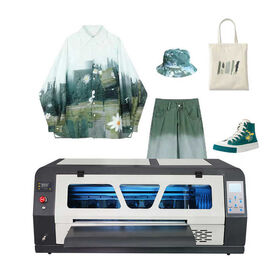
Wholesale Dual Print Head XP600 A3 30Cm 33Cm 50Cm DTF Digital Inkjet Printing Machine Xp600 DTF Printer
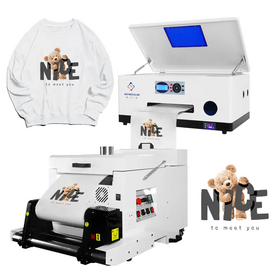
New DTF Printer Double XP600 Printhead A3 Direct To 30cm Film T-shirt Printing Machine For All Fabrics
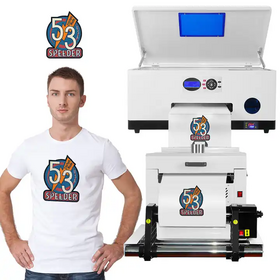
New DTF Printer Double XP600 Printhead A3 Direct To 30cm Film T-shirt Printing Machine For All Fabrics
Applications - How Do DTF Printers Work
- Custom apparel such as t-shirts, hoodies, and hats
- Home textiles such as curtains, bed sheets, and pillowcases
- Promotional items such as tote bags and backpacks
Pros:
- High-quality prints with vibrant colors and gradients
- Ability to print on a wide range of fabrics
- Soft feel to the printed design
- No need for a white ink layer when printing on dark fabrics
Cons:
- Limited ability to print on non-textile substrates
- Limited washability compared to other printing technologies
- Longer production times compared to other printing technologies
What Are UV DTF Printers
UV DTF printers combine the capabilities of UV printing and DTF printing to offer high-quality prints on textiles. The process involves first printing the design onto a special film using UV-curable ink. The printed film is then transferred onto the textile using heat and pressure, causing a special powder called DTF powder to adhere to the ink and create a durable print. Here are some of the applications, pros, and cons of UV DTF printers:
Top Picks
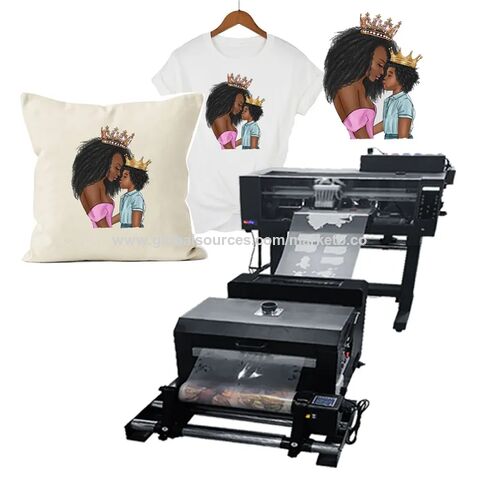
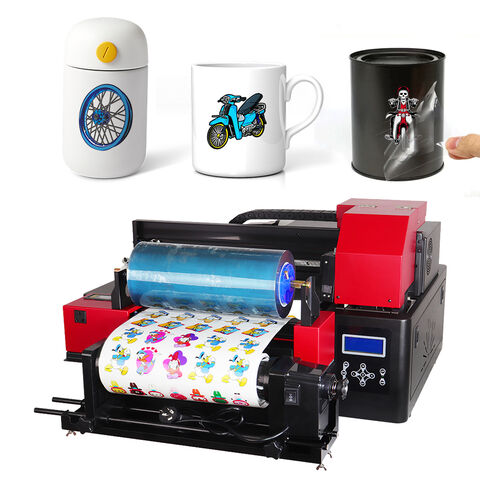
Refinecolor Roll To Roll UV DTF Sticker Printer Dtf Printing Machine
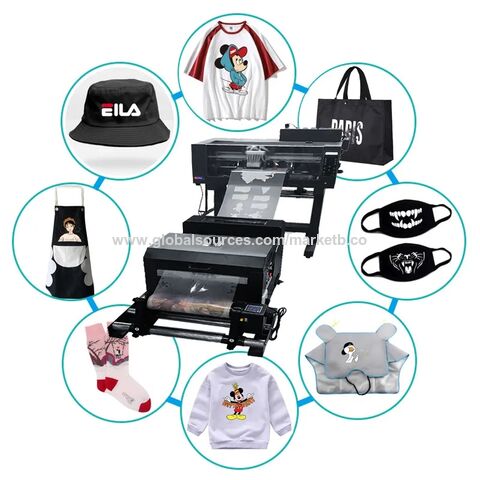
Applications - How Do UV DTF Printers Work
- Custom apparel such as t-shirts, hoodies, and hats
- Home textiles such as curtains, bed sheets, and pillowcases
Pros:
- High-quality prints with vibrant colors and gradients
- Ability to print on dark or colored fabrics without the need for a white ink layer
- Soft feel to the printed design
- Durable prints that withstand washing and wear
Cons:
- Limited ability to print on non-textile substrates
- Longer production times compared to other printing technologies
- Higher cost compared to traditional printing methods
In conclusion, UV printers, DTF printers, and UV DTF printers offer unique features and benefits that make them ideal for different printing needs. When choosing the right technology for your business, consider factors such as the substrate you will be printing on, the quality of the prints you require, and your budget. By carefully weighing the pros and cons of each technology, you can make an informed decision that will help your business succeed.
UV Printers vs. UV DTF Printers:
UV printers use ultraviolet light to cure inks on a variety of substrates, including paper, plastic, metal, glass, and more. The inks used in UV printing are specially formulated to cure instantly when exposed to UV light, resulting in high-quality prints that are durable and scratch-resistant. UV printers are known for their ability to print on a wide range of materials, making them ideal for printing on non-traditional substrates such as wood, leather, and textiles.
UV DTF printers, on the other hand, use a combination of UV-curable ink and a special powder called DTF powder to print on textiles. The process involves first printing the design onto a special film using UV-curable ink. The printed film is then transferred onto the textile using heat and pressure, causing the DTF powder to adhere to the ink and create a durable print.
One of the main advantages of UV DTF printing is its ability to print on dark or colored textiles without the need for a white ink layer. This is because the DTF powder acts as a white base layer, allowing colors to appear vibrant and accurate even on dark fabrics. Additionally, UV DTF printing offers a soft feel to the printed design, making it ideal for custom apparel applications.
UV DTF Printers vs. DTF Printers:
DTF (Direct-to-Fabric) printing is a process that involves printing directly onto textiles using water-based or solvent-based inks. Unlike traditional screen printing, DTF printing allows for high-resolution prints with vibrant colors and gradients. However, DTF printing requires a white ink layer to be printed first on dark or colored textiles to ensure accurate color representation.
UV DTF printing offers several advantages over traditional DTF printing. Firstly, UV DTF printing does not require pre-treatment of the fabric with chemicals or heat. This saves time and reduces the environmental impact of the printing process. Secondly, UV DTF printing offers a soft feel to the printed design, making it ideal for custom apparel applications. Finally, UV DTF printing allows for faster production times compared to traditional DTF printing, as the curing time is significantly reduced.
Sourcing Wholesale UV, DTF & UV DTF Printers on Global Sources
Global Sources is a popular online B2B marketplace that connects buyers with suppliers from around the world. If you are looking to source wholesale UV, DTF, or UV DTF printers, Global Sources can be an excellent platform to find reliable suppliers. Here are some steps to follow when sourcing wholesale printers on Global Sources:
Step 1: Visit the Global Sources website
To begin sourcing wholesale printers on Global Sources, start by visiting their website at www.globalsources.com. Once on the homepage, you will find a search bar where you can enter relevant keywords such as "wholesale UV printer," "wholesale DTF printer," or "wholesale UV DTF printer." This will help narrow down your search and provide more accurate results.
Step 2: Refine your search
Global Sources provides helpful filters that allow you to refine your search further. You can filter by product type, supplier location, price range, and more. These filters enable you to find wholesale printer options that align with your specific requirements and preferences.
Step 3: Browse through the search results
Once you have entered your search criteria and applied the desired filters, you can browse through the search results. Each listing will provide detailed information about the wholesale printers offered by different suppliers. You can review product specifications, pricing details, minimum order quantities, and shipping options to assess which suppliers meet your needs.
Step 4: Verify supplier credibility
When sourcing wholesale printers or any other product, it's essential to conduct thorough research and due diligence. Consider factors such as product quality, supplier reputation, pricing, minimum order quantities, and shipping options before making a purchasing decision. Global Sources offers additional resources to assist you in making informed decisions. Supplier profiles offer insights into the company's background, manufacturing capabilities, and certifications. You can also read customer reviews and ratings to gain a better understanding of the supplier's reputation and reliability.
Step 5: Contact suppliers
When you find a wholesale printer option that interests you, Global Sources provides contact information for the supplier. You can reach out to them directly to inquire about pricing, negotiate terms, request samples, or seek clarification on any details. Building a direct line of communication with potential suppliers allows you to establish a relationship and gather all the necessary information before making a purchasing decision.
In addition to Global Sources, there are other online B2B platforms and trade shows where you can explore wholesale printer options. Some popular platforms include Alibaba.com, Made-in-China.com, and TradeKey.com. Attending trade shows related to the printing industry can also provide opportunities to connect with printer manufacturers and wholesalers.
Remember to verify the credibility and legitimacy of suppliers before entering into any business transactions. Request product samples, ask for references or certifications if necessary, and communicate clearly with potential suppliers to ensure a successful wholesale printer sourcing experience.
What are the advantages of sourcing on GlobalSources.com?
GlobalSources.com provides a one-stop online shopping platform designed to make the buying experience smooth, safe, enjoyable and worry-free. Here are the advantages of buying on GlobalSources.com:
Optimized UI Design
Searching for products and suppliers is straightforward and intuitive as GlobalSources.com is optimized for both desktop and mobile use. Searching for specific products or suppliers is easy and buyers can use search filters to narrow down their searches. The site also provides a section for recommended suppliers. Moreover, buyers can search for products according to category and sub-category or per section as such the Most Popular, Low MOQ, New Products, Ready to Order, Source by Region and Analyst’s Choice.
Verified Suppliers
Looking for reliable suppliers online can be challenging at times but at GlobalSources.com, buyers can simply look check a supplier’s credibility by looking if there is a “Verified” badge which means that a supplier has been independently verified by relevant government agencies and third-party organizations.
Aside from the Verified Supplier mark, buyers can also check if a supplier is a 100 percent real manufacturer through a “Manufacturer” badge.
Competitive prices & Low MOQs
Verified manufacturers offer products at affordable wholesale rates. There is also a section dedicated to buyers looking for products with low MOQs.
Safe & Secure Transactions
GlobalSources.com provides a dedicated page for FAQs and tips on how to evaluate and negotiate with suppliers, minimize online sourcing risks, avoid sourcing traps and more so buyers can be at ease.
More importantly, GlobalSources.com has independently verified suppliers, diverse payment options and a secure payment gateway to ensure that buyers are transacting with trustworthy suppliers and on a safe platform.
Regional Selections
For buyers who prefer to source from rest-of-world suppliers with specialized niches or offer distinct “regional” products, buyers can find these suppliers on GlobalSources.com via the India Sources, South Korea Sources and Vietnam Sources pages under the site’s Services section.
Earn Rewards and Sourcing Coupons
By participating in some activities such as when you use the Request For Inquiry feature or source products on GlobalSources.com, you can earn points and use those points to redeem eGift Cards which you can use on Global Sources, Amazon and Starbucks.
360° Virtual Tour
A new feature on GlobalSources.com, the virtual factory visit lets buyers have virtual tours of factories which is a cost-effective way to make a better assessment of the suppliers’ capabilities and see their production lines and how they manufacture products.
Tools tailored for buyers
GlobalSources.com has various sourcing tools for buyers such as the following:
- Global Sources Apps - Buyers can search for millions of products, find and chat with suppliers, discover the latest news, trends and bestsellers, submit inquiries and compare quotations at their fingertips and wherever they are in the world.
- Import & Export Services – This provides a list of service providers to help buyers in several aspects of sourcing, including Credit Checks, Import/Export Records, Inspection, Logistics, Video Production and Amazon Seller Services.
- Sourcing Knowledge Center – This serves as a depository of information about the latest product and industry trends, sourcing news and events, expert-curated unique and innovative products, and downloadable eBooks.
- Sourcing eMagazines – Buyers can subscribe for free and choose from eight industry-specific magazine titles such as Consumer Electronics, Mobile Electronics, Electronic Components, Lifestyle & Fashion, Home & Kitchen, South Korea Products, India Products and Hardware, Auto & Machinery.
- Request for Quotations – An 100 percent free service wherein buyers can request, receive and compare quotations.
Also Read:
- What Is Direct To Film Process
- DTF vs Sublimation Printing
- 20 Best DTF Printers
- UV, DTF & UV DTF Comparison
- Ultimate Guide: UV DTF Printing
- Best UV Printers
- 10 Best 3D Printers
- Top 8 Printers
- Best 3D Printers for Kids
- Stepper Motors in 3D Printers
FAQs
Can a UV printer print DTF?
Yes, a UV printer can print DTF. DTF stands for direct-to-film. It is a relatively new printing technology that uses a special ink to print onto a film. The film is then applied to a substrate, such as a t-shirt, and heat is applied to transfer the ink from the film to the substrate.
UV printers use ultraviolet light to cure the ink, which makes it dry instantly. This makes UV printers ideal for printing DTF, as it allows for a quick and efficient production process.
However, there are some things to keep in mind when using a UV printer for DTF. First, the ink used for DTF is different from the ink used for traditional UV printing. DTF ink is designed to be transferred from the film to the substrate, so it needs to be able to adhere to both surfaces. Second, the film used for DTF is also different from the film used for traditional UV printing. DTF film is designed to be heated and transferred to the substrate, so it needs to be able to withstand the heat.
If you are considering using a UV printer for DTF, it is important to make sure that you are using the right type of ink and film. You should also consult with a DTF expert to get more specific advice on how to set up your printer and process your prints.
What is the difference between UV DTF and DTF?
UV DTF and DTF are both printing technologies that use a film to transfer ink to a substrate. However, there are some key differences between the two technologies.
UV DTF uses ultraviolet light to cure the ink, while DTF uses heat. This makes UV DTF a more efficient process, as it allows for a quicker production time. UV DTF is also more durable than DTF, as the ink is cured with ultraviolet light, which makes it more resistant to fading and chipping.
However, UV DTF is also more expensive than DTF. This is because UV printers are more expensive than traditional printers, and UV ink is also more expensive than traditional ink.
Ultimately, the best choice for you will depend on your specific needs and budget. If you need a durable, high-quality print that can be produced quickly, then UV DTF is the best option. If you are on a budget, then DTF is a more affordable option.
What do you need for UV DTF?
To print DTF with a UV printer, you will need the following:
- A UV printer
- DTF ink
- DTF film
- A heat press
- A squeegee
- A substrate (such as a t-shirt)
The first step is to print your design onto the DTF film. You can do this using any software that can print to a printer. Once your design is printed, you will need to apply it to the substrate. To do this, you will need to use a heat press. The heat press will help to transfer the ink from the film to the substrate.
Once the ink has been transferred, you will need to use a squeegee to remove any excess ink. Finally, you will need to allow the ink to cure. This can be done by leaving the print in a warm place for a few hours.
What is UV DTF direct to film?
UV DTF direct to film is a new printing technology that combines the best of both worlds from DTF and UV printing. DTF stands for direct-to-film, while UV stands for ultraviolet.
With DTF, you print your design onto a special film, which is then applied to a substrate (such as a t-shirt) and heat-pressed. With UV printing, you print your design directly onto the substrate.
UV DTF direct to film combines these two processes by printing your design directly onto a special film that is then coated with UV ink. This ink is then cured with ultraviolet light, which makes it dry instantly and gives it a high-gloss finish.
This process has several advantages over traditional DTF and UV printing. First, it is much faster, as you don't need to apply the film to the substrate and then heat-press it. Second, it is more durable, as the UV ink is cured with ultraviolet light, which makes it more resistant to fading and chipping. Third, it is more versatile, as you can print on a wider variety of substrates, including t-shirts, hats, mugs, and more.
If you are looking for a high-quality, durable, and versatile printing solution, UV DTF direct to film is the best option for you.
Gallery View of Hot-selling DTF Printers on Global Sources
DTF Digital Inkjet Printing Machine Xp600 DTF Printer
Company: Wenzhou Start Inzok Co.,Ltd
MOQ: 50 Cartons Price: $ 2980 - 3250 Lead time: 5–7 days
Direct To 30cm Film T shirt Printing Machine For All Fabrics
Company: Shenzhen Refinecolor Technology Co.,Ltd.
MOQ: 1 Piece Price: US$ 2500 - 3200 Lead time: 3–10 days
New DTF Printer Double XP600 Print head A3
Company: Shenzhen Refinecolor Technology Co.,Ltd.
MOQ: 1 Piece Price: US$ 2000 - 3200 Lead time: 3–10 days
Heat Transfer Pet Film Dual XP600 A3 Dtf Printer with Powder Shaker
Company: Free Market Co., Ltd.
MOQ: 1 Piece Price: $ 4400 Lead time: 15–25 days
Refinecolor Roll To Roll UV DTF Sticker Printer Dtf Printing Machine
Company: Shenzhen Refinecolor Technology Co.,Ltd.
MOQ: 1 Piece Price: $ 280 - 3680 Lead time: 3–10 days
Dtf Printer A3 Pet Film XP600 Dual Head 30cm
Company: Free Market Co., Ltd.
MOQ: 1 Piece Price: $ 4400 Lead time: 15–25 days

