




8 Best AI Wearables 2026 (AI glasses/watches/rings and more)
How AI Wearables are Transforming Healthcare
Trends Shaping the AI Wearables Market in 2026
Artificial intelligence now lives on our bodies. AI wearables have evolved from passive trackers to intelligent companions that interpret data, predict outcomes, and assist in real time. From meeting recorders that generate instant summaries to smart rings monitoring women's health and glasses translating conversations hands-free, these devices are reshaping how we work, manage health, and interact daily.
This guide covers the best AI wearables in 2026, their key features, healthcare impact, and market trends. Whether you need productivity tools, health insights, or hands-free assistance, understanding this rapidly evolving landscape will help you choose the device that truly fits your life.
What are AI Wearables?
AI wearables are smart devices worn on the body that combine sensors with artificial intelligence to collect and interpret personal data in real time. Unlike standard fitness trackers that simply display metrics, these devices analyze physiological signals, behavioral patterns, and environmental context to deliver personalized insights and automated assistance.
In healthcare, AI wearables continuously monitor vital signs like heart rate, ECG, and glucose levels while machine learning algorithms detect anomalies and predict potential health risks before symptoms appear. This transforms patient care from reactive, appointment-based visits to proactive, continuous health management—empowering both individuals and clinicians with actionable intelligence.
8 Best AI Wearables of 2026 (AI glasses/watches/rings and more)
The AI wearable market has matured significantly, with devices specializing in distinct use cases rather than attempting to be everything to everyone.
At a glance, here's how the top AI wearables compare:
| Device | Category | Price | Key Feature | Battery Life | Best For | Privacy Certification |
|---|---|---|---|---|---|---|
| Plaud NotePin | Voice Recorder | $159 | 98% accurate transcription, AI summaries | 20h recording | Professionals, students, clinicians | GDPR, HIPAA, ISO 27001 |
| Plaud Note | Voice Recorder | $159 | Pocket-sized, dual-mode recording | Extended sessions | Meeting capture, lectures | GDPR, HIPAA, ISO 27001 |
| Bee | Ambient Wearable | $49 | Always-on listening, daily summaries | 7 days | Personal reflection, memory support | None specified |
| Omi | Ambient Wearable | $89 | Open-source ecosystem, app integrations | 5-7 days | Customizable AI assistance | SOC 2, HIPAA |
| Ray-Ban Meta Gen 2 | AI Glasses | $379–$799 | Camera, voice assistant, translation | 8h active use | Content creation, hands-free capture | None specified |
| Muse Ring One | Smart Ring | $300–$350 | Blood pressure, NFC payments | 7 days | Advanced health tracking | None specified |
| Evie Ring | Smart Ring | $269 | Women's health tracking, no subscription | 4+ days | Menstrual health, general wellness | None specified |
| Garmin + Connect+ | AI Watch | $100–$800 + $70/yr | AI fitness insights, nutrition analysis | Varies by watch | Fitness enthusiasts, athletes | Strong privacy standards |
1. AI Voice Recorders & Note-Takers
Plaud NotePin
A wearable AI recorder that clips to clothing, wrist, or lanyard, automatically transcribing conversations and generating structured notes, summaries, and action items with high accuracy.
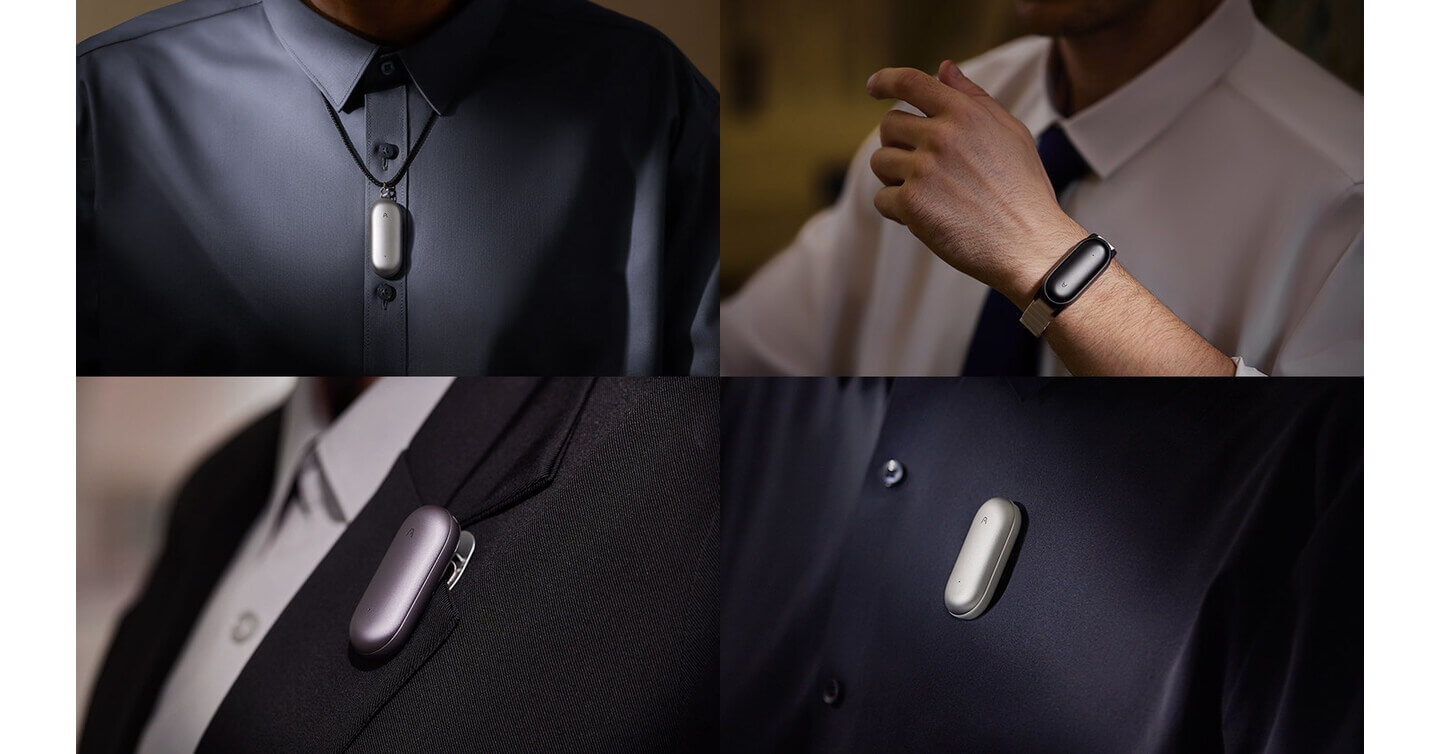
- Price: $159
- Key Features:
- Dual MEMS microphones with noise reduction for clear audio capture
- Automatic transcription with up to 98% accuracy
- AI-generated summaries, action items, and structured notes
- 64GB local storage and unlimited cloud history
- 20-hour continuous recording, 40-day standby battery
- Searchable notes and transcripts in companion app
- GDPR, HIPAA, ISO 27001, ISO 27701 certified
- Pros: Ultra-lightweight (0.59 oz), generous free plan (300 min/month), responsive customer support, multiple wearing options
- Cons: No voice-activated controls, requires app connection for AI features
Plaud Note
A pocket-friendly AI voice recorder that captures meetings, lectures, and calls, transforming them into editable transcripts and actionable notes.
- Price: $159
- Key Features:
- Compact design for pocket or bag carry
- Dual-mode recording for in-person and virtual calls
- AI transcription and summarization engine
- Unlimited cloud storage for notes and transcripts
- Long battery life for extended recording sessions
- Pros: Same AI capabilities as NotePin, portable form factor, no subscription required for basic features
- Cons: Not hands-free wearable, must be manually activated
2. Ambient AI Wearables
Bee
An always-on wearable that listens to daily interactions and automatically generates summaries, reminders, and memory prompts for personal reflection.
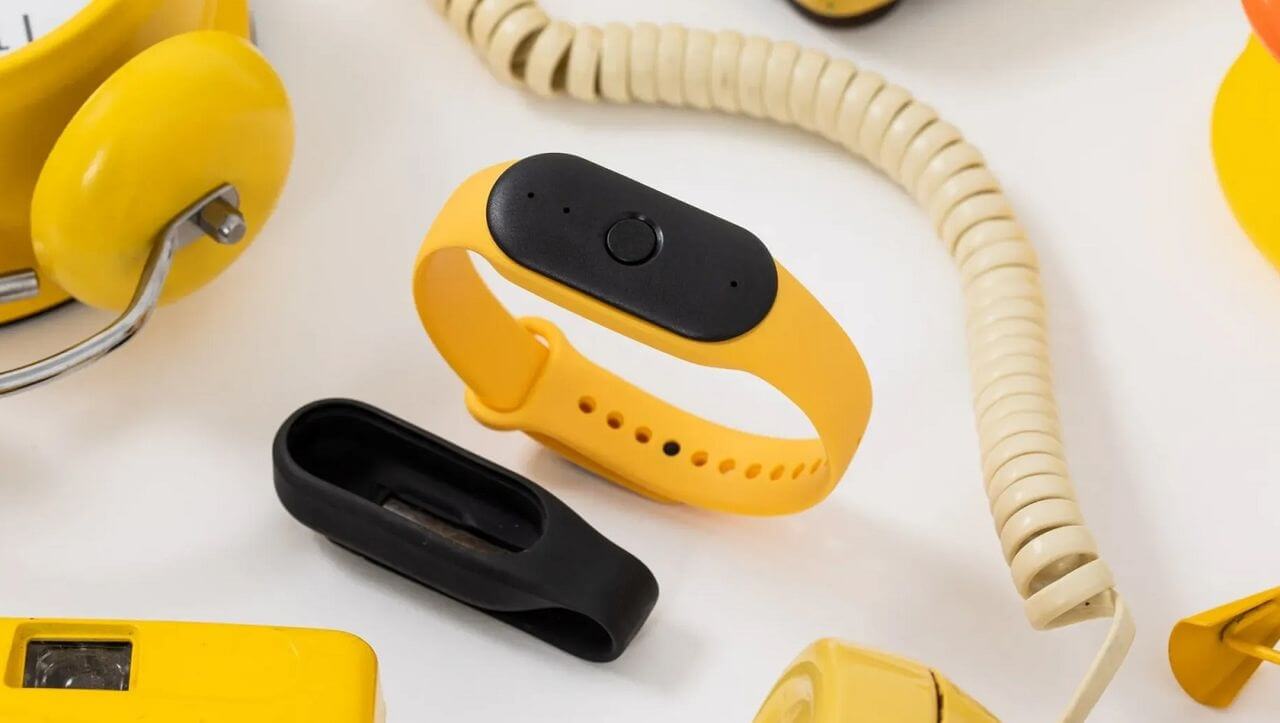
- Price: $49
- Key Features:
- Always-on ambient listening (no button presses)
- Automatic daily summaries and personalized reminders
- Screenless, lightweight design
- Companion mobile app for review and search
- Seamless Google services integration
- 7-day battery life
- Pros: Completely hands-free, very easy to use, long battery life, affordable
- Cons: Privacy concerns (acquired by Amazon), less control over recording, not designed for structured professional notes
Omi
An open-source wearable AI assistant that records conversations and turns them into summaries, action items, and reminders with community-built app integrations.
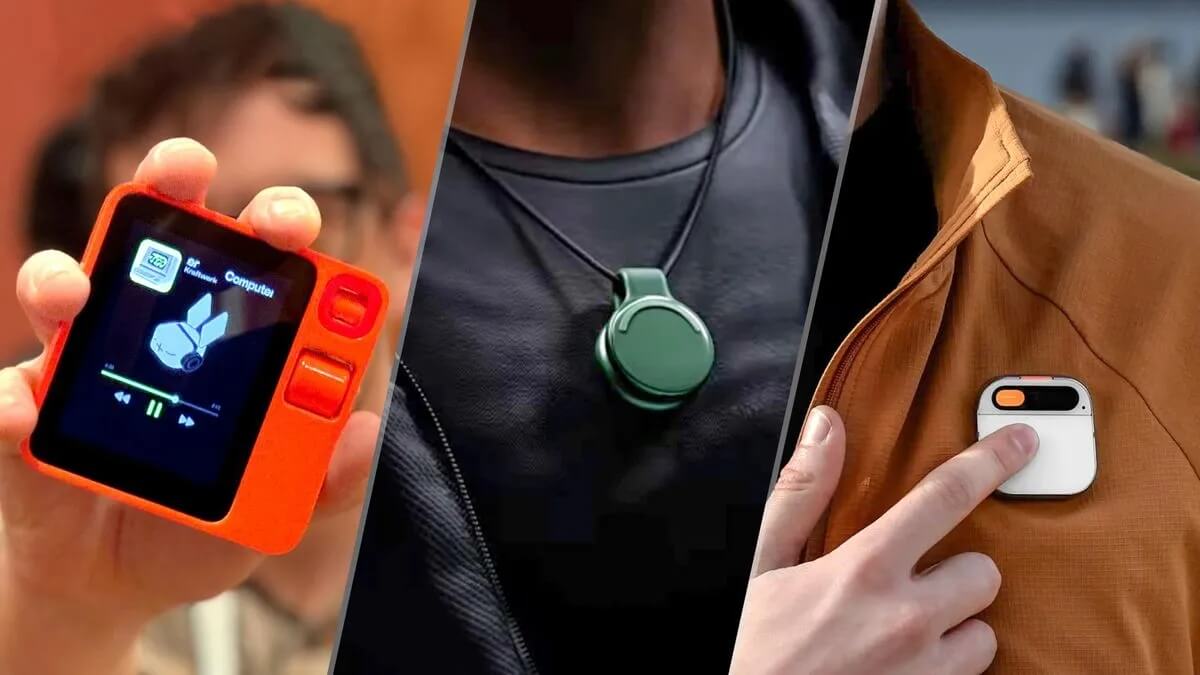
- Price: $89
- Key Features:
- Always-listening audio capture with real-time transcription
- Automatic summaries, action items, and reminders
- Open-source app ecosystem for custom integrations
- Worn as pendant, necklace, or clip-on
- Syncs with Google Drive, calendar apps, and more
- SOC 2 and HIPAA compliant
- Pros: Compact and affordable, extensible via community apps, summarizes conversations effectively
- Cons: Always-on capture raises privacy questions, accuracy depends on recording environment, requires smartphone connectivity
3. AI Glasses
Ray-Ban Meta Gen 2
Smart glasses integrating cameras, open-ear audio, and Meta's voice assistant for hands-free content capture and AI interactions.

- Price: $379–$799 (depending on style)
- Key Features:
- 12MP ultra-wide camera for photo/video capture up to 3K
- Meta AI voice assistant for questions, commands, translation
- Five built-in microphones and open-ear speakers
- 8-hour battery life
- Bluetooth and app support for phone syncing
- Available in multiple styles
- Pros: True hands-free operation, high-quality audio, stylish designs, real-time translation
- Cons: Not a productivity device for structured notes, privacy concerns with camera/mic, expensive, no conversation summarization
4. AI Smart Rings
Muse Ring One
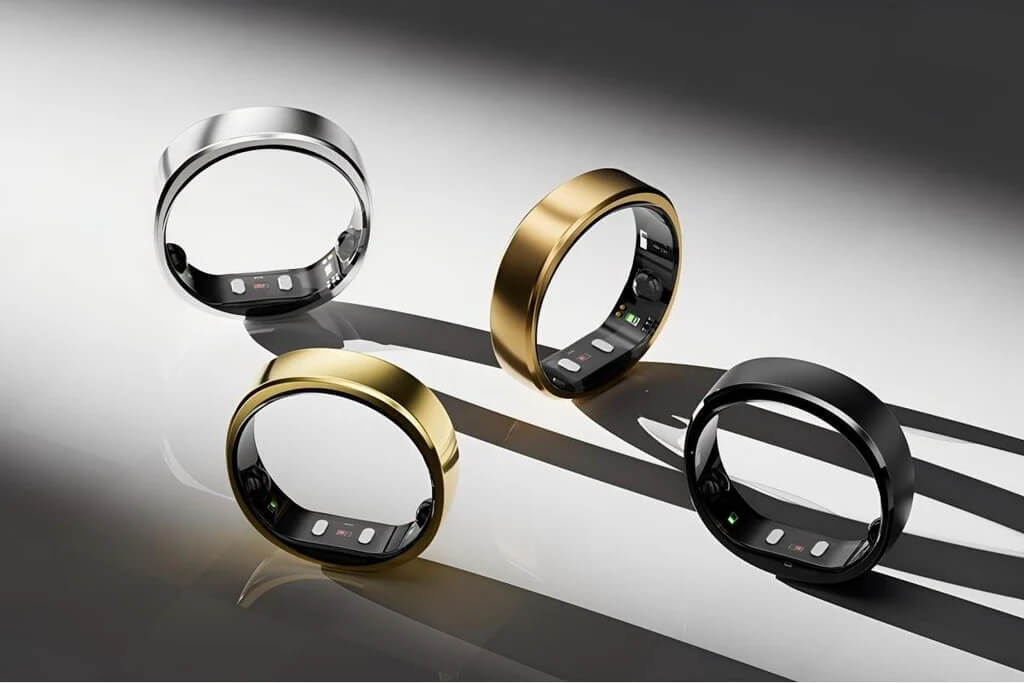
A health-centric smart ring that tracks advanced biometrics including blood pressure while enabling contactless payments.
- Price: $300–$350
- Key Features:
- Continuous heart rate, SpO2, sleep, and activity tracking
- Blood pressure estimation and HRV monitoring
- NFC contactless payments with tokenization
- 7-day battery life with smart charging case
- Titanium and ceramic construction
- App with custom insights and goal tracking
- Pros: Advanced health metrics beyond basic tracking, payments secure (only work when worn), durable materials, long battery
- Cons: Payments often unreliable in some regions, health insight accuracy varies, high price for primarily health data
Evie Ring
A smart ring designed specifically for women's health, tracking menstrual cycles alongside standard biometrics without subscription fees.

- Price: $269
- Key Features:
- Tracks heart rate, SpO2, temperature, respiration, sleep
- Menstrual health monitoring with symptom tracking
- EvieAI provides personalized daily summaries
- Open-ring design accommodates finger changes
- Water and scratch resistant
- 4+ day battery life
- Pros: No subscription fees, comfortable open design, specialized for women's health, all features included out of box
- Cons: Some users report inconsistent data accuracy, limited Android support, fewer ecosystem integrations
5. AI-Enhanced Watches
Garmin Smartwatches with Garmin Connect+
An AI subscription tier that transforms existing Garmin watches into personalized fitness companions with advanced insights and recommendations.
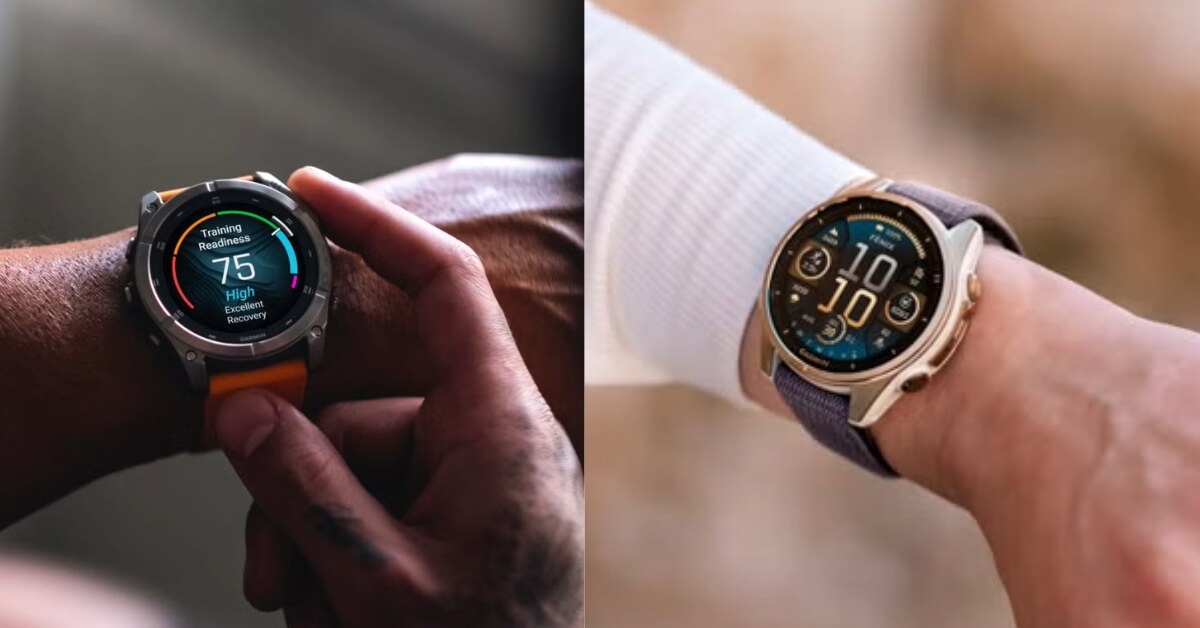
- Price: Watch $100–$800 + Connect+ $6.99/month or $69.99/year
- Key Features:
- AI-powered personalized health and activity insights
- Nutrition tracking with AI analysis of diet impact
- Real-time activity sharing and tracking
- Customizable analytics dashboards
- Social and motivational training features
- Works with existing Garmin watch hardware
- Pros: Adds AI to hardware you may already own, useful nutrition feedback, strong privacy standards, comprehensive fitness focus
- Cons: Subscription required for AI features, early AI insights can feel basic, purely fitness-focused (not productivity)
Key Features of AI Wearables
AI wearables distinguish themselves from conventional smart devices through their ability to not only collect data but also interpret it intelligently and act upon it autonomously. While specific feature sets vary by use case—ranging from health monitoring to productivity enhancement—several core capabilities define this emerging category of technology.
- Intelligent Data Processing
On-device AI or cloud-based algorithms transform raw sensor inputs into actionable insights. This includes real-time transcription of conversations, automatic summarization of meetings, and pattern recognition in biometric data that would otherwise require manual analysis. - Contextual Awareness
Advanced wearables maintain memory of past interactions and environmental context. They can deliver timely reminders based on previous conversations, adjust recommendations based on behavioral patterns, and anticipate user needs without explicit commands. - Voice-First Interaction
Hands-free operation through natural language processing allows users to query information, capture notes, or control connected services using voice commands. This eliminates the need to access a smartphone for routine tasks. - Continuous Biometric Monitoring
Optical and electrochemical sensors track physiological markers including heart rate variability, sleep stages, skin temperature, and stress levels. AI interprets these signals to provide personalized wellness guidance rather than merely displaying raw numbers. - Multimodal Sensing
Beyond basic vitals, some devices analyze voice tone for emotional state, detect coughing patterns for respiratory insights, or monitor gait for fall risk—expanding the definition of what wearables can observe. - Seamless Ecosystem Integration
Data syncs automatically with productivity tools, health platforms, and calendar applications. Captured information becomes searchable, actionable, and integrated into existing digital workflows without manual entry. - Privacy-Conscious Architecture
Given the sensitivity of continuously collected personal data, reputable devices implement local processing where possible, end-to-end encryption, and transparent data policies with certifications like GDPR or HIPAA compliance for medical applications.
How AI Wearables are Transforming Healthcare
AI-powered wearables are shifting healthcare from reactive, appointment-based care to continuous, proactive health management. By combining real-time physiological data with machine learning, these devices enable early intervention, personalized treatment, and more informed clinical decisions.

- Continuous Monitoring
Wearables track ECG, respiration, temperature, and glucose 24/7. AI analyzes this data against personal baselines to detect early signs of irregularities, enabling preventive action before symptoms escalate. - Personalized Intelligence
Machine learning translates raw sensor data into customized insights—adjusting activity goals, sleep guidance, or medication timing based on individual patterns rather than population averages. - Clinical Collaboration
Remote monitoring gives clinicians continuous access to patient data outside office visits. This supports timely interventions, reduces unnecessary appointments, and fosters shared decision-making between doctor and patient. - Key Challenges
Widespread adoption requires solving sensor accuracy, battery life, data interoperability with electronic health records, and robust privacy protections to maintain patient trust. - Enabling Technologies
Advances in low-power sensors, medical-grade batteries, and custom health chips allow these capabilities to fit into compact, daily-wear formats—from smart rings to epidermal patches.
Trends Shaping the AI Wearables Market in 2026
The AI wearables market is experiencing explosive growth, projected to expand from $23.56 billion in 2024 to $303.59 billion by 2035 at a CAGR of 17.6%. This rapid acceleration reflects a fundamental shift in how consumers and professionals interact with artificial intelligence—moving from smartphone-dependent applications to dedicated wearable devices that integrate AI seamlessly into daily life. Below are the key trends defining this transformation.
#1 Market Expansion and Major Tech Entry
The market has attracted significant attention from technology giants and startups alike. Amazon acquired Bee AI in July 2025, signaling confidence in ambient wearable technology. OpenAI is reportedly developing its own compact AI companion device, suggesting that major players view wearables as the next critical computing platform. Current devices span a broad price range from $49 to $199, making the technology accessible across consumer segments while allowing for premium feature differentiation.
#2 Diverging Use Cases: Productivity vs. Companionship
A clear market split has emerged between devices serving professional productivity needs and those targeting emotional or lifestyle support. Productivity-focused wearables like Plaud NotePin and Limitless cater to journalists, clinicians, lawyers, and students who need accurate transcription, summarization, and action item extraction from meetings and conversations. These devices emphasize ROI through time savings and improved documentation accuracy.
Conversely, companionship devices like Friend and ambient assistants like Bee focus on emotional support, memory prompts, and personal reflection. Friend responds to tone and mood as a digital companion, while Bee creates personalized reminders from daily interactions. This divergence reveals different visions for AI integration—one as a professional tool, another as a lifestyle partner.
#3 Ambient Computing and Always-On Intelligence
The rise of always-listening ambient devices represents a significant shift in human-computer interaction. Rather than requiring explicit commands or button presses, devices like Bee and Omi operate continuously in the background, capturing conversations and providing summarized insights. This ambient computing model reduces friction but introduces new privacy considerations that manufacturers must address through transparent data policies and physical controls like mute switches.
#4 Clinical Integration and Patient Safety
Wearable AI is moving beyond consumer fitness into regulated healthcare applications. Peer-reviewed research published in npj Digital Medicine demonstrates AI wearables' potential for enhancing patient safety through real-time clinical guidance. Applications include continuous glucose monitoring with predictive alerts for dangerous fluctuations, AI-enhanced cardiac monitors detecting subtle arrhythmias, and computer vision systems in operating rooms detecting medication errors during surgery. These clinical-grade applications require FDA approval and rigorous validation, representing a higher barrier to entry but greater long-term impact.
#5 Privacy and Data Security as Competitive Differentiators
As wearables collect increasingly sensitive personal data—from conversation recordings to biometric health metrics—privacy practices have become central to purchasing decisions. Leading manufacturers differentiate through on-device processing options, end-to-end encryption, and certifications like GDPR, HIPAA, and ISO 27001. Physical indicators like mute buttons and recording LEDs address user concerns about always-on devices. The backlash against perceived "surveillance capitalism," exemplified by vandalized ads for Friend devices, highlights consumer sensitivity to data practices.
#6 Subscription Models and Total Cost of Ownership
The industry remains divided on pricing models. Some manufacturers, like Plaud and Evie, include all features upfront with generous free tiers, building trust through transparency. Others require ongoing subscriptions for full functionality—Bee charges $19 monthly, Garmin Connect+ costs $70 annually, and Limitless offers unlimited access at $29 per month. This split forces consumers to calculate total cost of ownership over time, with some inexpensive devices becoming more expensive than premium alternatives when subscription fees accumulate.
#7 Technical Maturation and Form Factor Innovation
Devices are rapidly improving in core technical capabilities. Transcription accuracy now reaches 95–98% in optimal conditions. Battery life varies by form factor but continues improving: AI recorders offer 20+ hours continuous use, ambient devices last 5–7 days, and smart rings achieve 4–7 days per charge. Form factors have diversified beyond wrist-worn devices to include pendants, pins, clips, glasses, rings, and even shoes, allowing users to choose devices that match their comfort preferences and use cases.
#8 Regulatory Scrutiny and Clinical Validation
As AI wearables increasingly inform health decisions, regulatory attention has intensified. Cardiac monitors and vital sign tracking devices now require FDA approval for clinical claims. Research institutions are conducting validation studies to establish evidence bases for wearable AI applications, from sepsis prediction to dengue fever deterioration monitoring. This regulatory maturation will likely accelerate consolidation, favoring manufacturers with resources to navigate approval processes.
#9 Ecosystem Integration and Interoperability
Standalone devices are giving way to integrated ecosystems. Modern AI wearables sync with productivity tools (Google Calendar, task managers), health platforms, and communication apps. Open-source initiatives like Omi's developer ecosystem allow third-party integrations, extending device capabilities beyond manufacturer roadmaps. This trend toward interoperability recognizes that wearables function best as part of broader digital workflows rather than isolated gadgets.
Conclusion
AI wearables have matured from experimental gadgets into essential tools for productivity, health, and daily assistance. The market now offers specialized devices for virtually every need—professionals offload note-taking to AI recorders, fitness enthusiasts receive personalized coaching, and individuals capture life's moments with ambient wearables. Privacy practices, subscription models, and comfort now determine which devices earn a permanent place in users' daily routines.
With the market projected to grow seventeen-fold by 2035, AI wearables represent a fundamental shift in how we leverage technology. The right device, matched thoughtfully to your specific needs, won't just augment your capabilities—it will change how you navigate work, health, and daily life.

