Download App
Better Online and Trade Show Sourcing Experiences.Scan the QR code to download.
Learn More
Hot Topics
by Arvi Marie Dacuba (Content Editor)
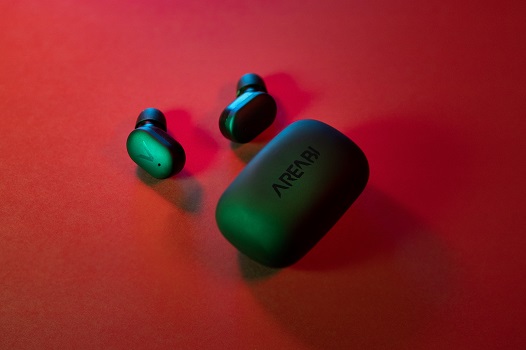
Bluetooth, a technology that allows devices to communicate wirelessly given a certain distance, has managed to integrate itself into people’s daily lives. Bluetooth, commonly used in audio streaming, file sharing in Android phones, computer products & peripherals, plus in smart home integration, has come a long way since its first release in 1999. Learn about its advancements throughout the years to have a better idea when sourcing consumer and mobile electronics such as wireless headphones, Bluetooth speakers and TWS earbuds.
Most modern devices today support at least Bluetooth 4.0 or higher. This was introduced in 2010, during the early days of the smartphone era. Via BLE (Bluetooth Low Energy), fitness trackers, headphones and hearing aids could stay connected while using less power compared to the previous Bluetooth versions. Bluetooth-enabled devices like phones, laptops and tablets were used as a hub when sending and receiving information.
An issue previous versions had was that Bluetooth and 4G/LTE signals would overlap and interfere with one another. 4.1 has managed to solve this problem. This version also allowed all Bluetooth devices to act as both the end point and the hub, allowing them to communicate directly with each other.
Data transmission speed more than doubled, plus the amount of data that can be sent increased tenfold. Furthermore, IPV6 (Internet Protocol version 6) was introduced, which enabled Bluetooth-enabled devices to connect to the internet, therefore paving way to the advancement of IoT (Internet of Things). Its range could reach up to 60m without obstacles.
Released in 2016, this upgrade allowed a speed of up to 2Mbps over the previous 1Mbps. The transmission range increased up to 240m, if without walls or other connections. Dual audio was introduced, wherein users could play audio on two connected devices at the same time. This was evidently seen in Samsung’s Galaxy S8. Two people using a separate pair of headphones could listen to the same song. In addition, its stereo pairing allowed users to create a dedicated left and right channel for two Bluetooth speakers. Battery life has also improved thanks to its lower power consumption. Bluetooth 5.0 is prevalent in wireless headphones, game controllers, computer mice, and smart home speakers and smart LED lights. This version has allowed for a more secure wireless communication and lower power consumption on gadgets like mobile phones and headphones. It is compatible with other devices since Bluetooth offers the benefit of backward compatibility.
The most crucial upgrade is the ability of Bluetooth 5.1-enabled devices, which use more antennas, to pinpoint another device’s location down to the centimeter based on signal strength. The process involves the receiving device using the angle of arrival (AoA), while the transmitter uses the angle of departure (AoD) feature when determining an object’s position. This major upgrade in 2019 has opened doors for Bluetooth-enabled tracking. Apple’s AirTags and other smart tags in the market use this technology.
An issue the older version 5.0 had was that the pairing between devices A and B could get interrupted due to “data package collisions.” Devices need to cycle between three channels in exact order. If another Bluetooth device is on the same channel, data collision occurs, causing a delay in connection. With version 5.1, enabled gadgets to support the “periodic advertising sync transfer” feature wherein these gadgets could start advertising themselves. Other devices get more room to avoid interfering with each other. The pairing process is sped up and more battery energy is saved. That is beneficial in areas with several Bluetooth devices. According to Headphonesty, “Bluetooth 5.1 has become a standard for new high-end wireless headphones today.” It also expects to see a rise of Bluetooth 5.1-enabled devices, with wireless headphones leading this trend.
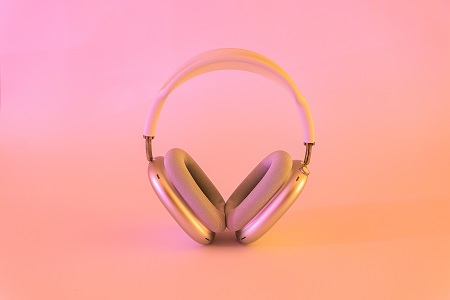
Released in 2020, this latest version introduces a new generation of Bluetooth audio called LE Audio, which operates on the Bluetooth Low Energy radio. It integrates the LC3 Codec, which can provide high-quality audio while using the lowest amount of power. Delays from the left and right channels are also eliminated, a reduced latency upgrade that gamers who use wireless headphones would appreciate. Hearing aids also benefit from this version through LE Audio, which allows them to transmit audio directly from a TV to the earpiece.
Having isochronous channel support allows users to connect their earphones to their phones, laptops, tablets or TVs at the same time. In a group setting, a large number of people could connect to a single audio source.
Keep these in mind when sourcing today’s hottest and most innovative audio devices, brought to you by Global Sources verified suppliers.
More Sourcing News
Read Also

关注 “环球资源外贸” 官方微信,获取实时外贸资讯
iOS & Android
iOS & Android(Mainland China)
Copyright © 2026 Publishers Representatives Limited. All rights reserved.




