Download App
Better Online and Trade Show Sourcing Experiences.Scan the QR code to download.
Learn More
Hot Topics
Importers push through with plans to buy more in 2013 [Survey]
Posted: September 20, 2013 |
|
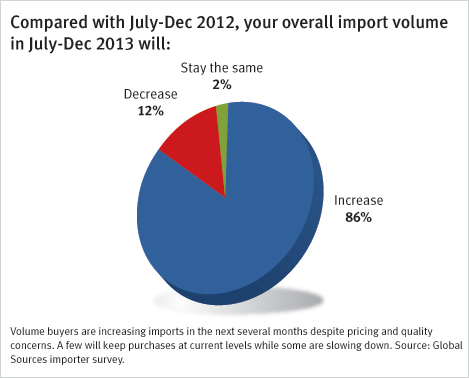
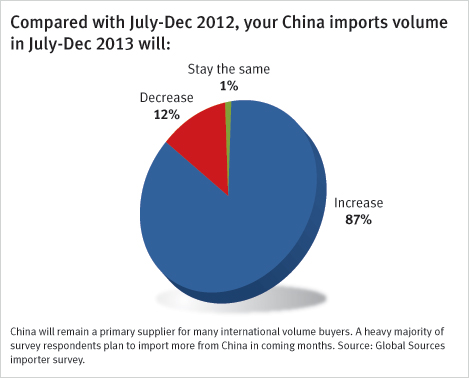
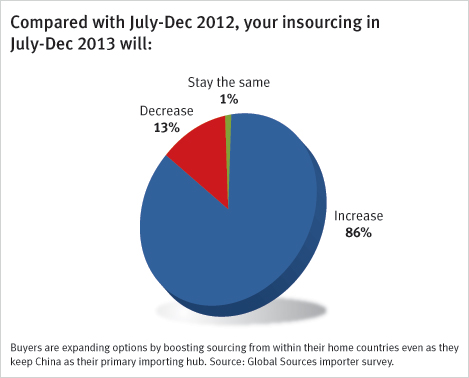
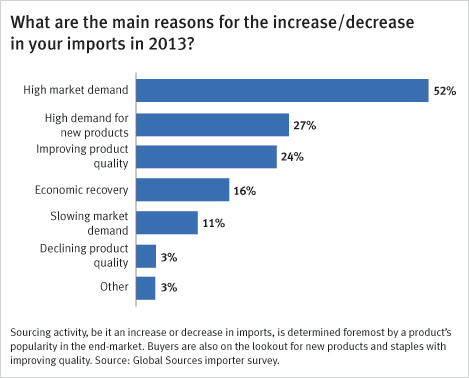
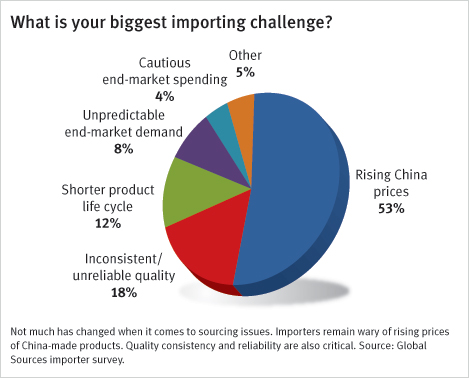
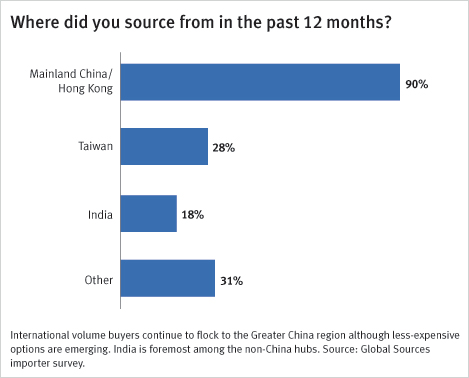
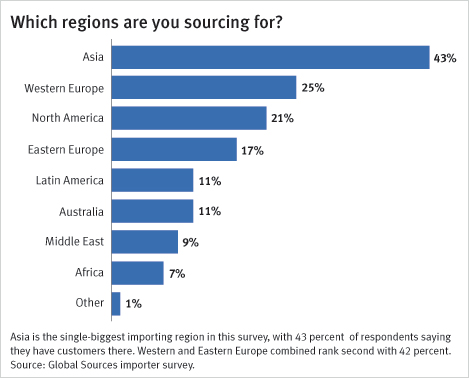
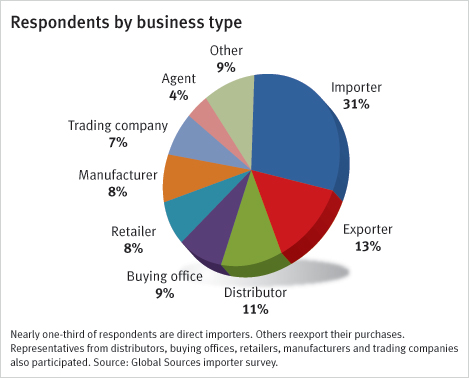
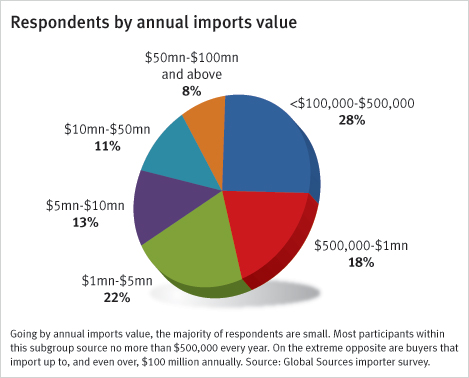
Rising overseas orders help put China back on the road to recovery. Expanding manufacturing activity in China suggests international buyers are seeing through their plans of boosting imports in second-half 2013. The country's official Purchasing Managers' Index climbed to 51 in August, the highest in the past 16 months, on the back of rising new orders. In Global Sources' survey of 1,500 importers conducted in April, 86 percent expected July to December 2013 sourcing volume to outpace purchases from the same period in 2012. This is a further improvement from the already rosy outlook from a survey conducted in October 2012. That time, 81 percent of respondents said they anticipated importing more in 2013 than in 2012. China sourcing plans also remain unhampered, even though importers have raised concerns about China-made products becoming more expensive. A heavy majority of participants in the most recent survey see their China purchases increasing in the last six months of 2013. Only 12 percent will reduce business there and 1 percent will keep their current volume. Within the largest subgroup, China imports will climb at mostly moderate levels. Close to one-third will increase sourcing 10 to 20 percent. Growth for nearly a quarter of respondents will be between 21 and 30 percent. Several will be more aggressive, upping China business by as much as 50 percent. Two months into second-half 2013, China is already seeing the effects of such plans. The August PMI export orders sub-index went up 2 percent to 50.2 while customs figures show export value that month increasing more than 7 percent YoY to about $190.6 billion. The August growth rate is 2.1 percentage points higher than July's. That time, China shipped out almost $186 billion worth of products. The electronics and machinery segment is the country's biggest export earner in August, accounting for approximately 56 percent of revenue. Value reached $106.4 billion for 7 percent growth. Our survey reflects this positive mood. Among the participating importers of electronics and components, 91 percent indicated bigger China purchases in the months ahead. Many China exporters actually anticipated strong business in second-half 2013. More than 70 percent of suppliers that Global Sources polled recently are confident revenue in July to December 2013 will increase YoY even if they de-emphasize pricing flexibility. How long this strategy will work for exporters is anybody's guess. "Expensive China" is already underway and buyers are looking at alternatives. One such option is insourcing. Eighty-six percent of polled importers will be placing more orders with manufacturers within their home countries. On the other hand, 13 percent are reducing domestic purchases, although this does not necessarily mean these buyers will be turning to mainland China. Outside of the mainland, respondents named Hong Kong, Taiwan and India among the primary sources of their imports. Regardless of where they source products, buyers will be keeping a close eye on quality. Survey participants identified the last both as a demand driver and a key challenge. Many guides and checklists to address quality issues are available at Global Sources' information hub Sourcing News & Advice. This product quality inspection template, for instance, has detailed requirements across five different checkpoints. The inspection report was created by QA agency Sofeast Ltd exclusively for Global Sources. This survey was conducted among 1,500 international volume buyers. Direct importers form the largest group, representing nearly one-third of the survey pool. Distributors, exporters, buying offices, retailers, manufacturers and trading companies were likewise interviewed. With regard to importing regions, Asia is the biggest, with 43 percent of poll participants serving customers there. An almost similar number have products sent to Europe, primarily to countries in the region's west. |
|
 |
|
 |
|
 |
|
 |
|
More Sourcing News
Read Also

关注 “环球资源外贸” 官方微信,获取实时外贸资讯
iOS & Android
iOS & Android(Mainland China)
Copyright © 2026 Publishers Representatives Limited. All rights reserved.