Download App
Better Online and Trade Show Sourcing Experiences.Scan the QR code to download.
Learn More
Hot Topics
LeEco wants to use Vizio TVs to push its online platform abroad.
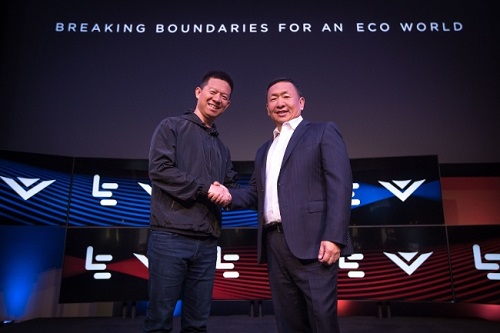
LeEco CEO YT Jia and Vizio CEO William Wang announcing the acquisition (Source: Jeff Lewis/AP via LeEco)
LeEco is finally making its way into the US market. The China company is buying US TV maker Vizio for $2 billion. Vizio has about a fifth of the US market thanks to its affordable products that are known for providing good value. LeEco might be looking to do what Lenovo did with its IBM acquisition, where the electronics maker bought its way into one of the world's largest consumer markets. Yet unlike Lenovo, which is struggling in the midst of a tough PC market, LeEco wants to use hardware to build up its software services.
As Wired pointed out, LeEco has basically been China's Netflix before Netflix even existed. The company, which used to be known as LeTV, is one of the biggest streaming services online. It even produces its own content. The company started making TVs and smartphones to expand the reach of its platform. Vizio represents a new opportunity for the company to do this in the US, but the US could present new challenges.
Smart TVs are critical to today's TV market, but having the right apps and content available is also important. The dominant smart TV platforms in the US today come from Apple, Google and Amazon. Other companies put apps on their TVs for services such as Netflix, Hulu and YouTube, which are the most popular video streaming sites in the US. Netflix and YouTube also have massive global audiences. LeEco's online video platform is not well known outside China. Perhaps that is why the company is targeting China speakers in the US first.
In some ways, Vizio is a logical acquisition for a China brand. Like other companies from the country, Vizio provides value by innovating at the low and middle tiers of the market. It keeps prices affordable to lure in consumers but does not short-change them on quality and features. The company's recently-announced P-Series TVs effectively reinvented television by using a tablet as a remote and Google Cast to send content to the device. The least expensive P-Series TV measures 50in with a 4K display and costs just $1,000.
This kind of hardware business would look familiar to the many suppliers in China today. However, getting consumers to switch their viewing habits is difficult. But Western market will still be looking for good TV hardware at low prices. There is still room in the industry for platform-agnostic consumer electronics.
More Sourcing News
Read Also

关注 “环球资源外贸” 官方微信,获取实时外贸资讯
iOS & Android
iOS & Android(Mainland China)
Copyright © 2026 Publishers Representatives Limited. All rights reserved.




