Download App
Better Online and Trade Show Sourcing Experiences.Scan the QR code to download.
Learn More
Hot Topics
by Vianie Li & Cecile de Veyra
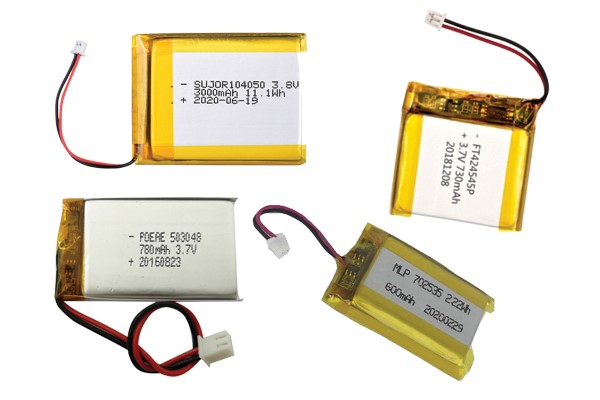
Compared to traditional Li-ion batteries, Li-polymer batteries have a higher specific energy density, or the measure of capacity in weight, a particularly welcome advantage in compact electronic devices. They come in aluminum foil pouches, which are lighter by more than 20 percent than the rigid cases that others require and can be made in any size and shape. Because the electrolyte is in gel form, leakage is also less likely, making LiPo batteries the safer solution in mobile electronics, wearables, medical devices and robotics.
In automotive electronics, the increasing demand for onboard comfort and entertainment is expected to fuel a shift to lithium-polymer batteries in the coming years, replacing standard Li-ion units.
This has driven Chinese LiPo battery manufacturers to develop models with higher capacity and voltage, and a longer operating life span.
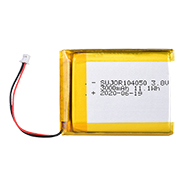
One supplier interviewed by Global Sources, Shenzhen Sujor Energy Technology Co. Ltd, has recently introduced a unit for automotive applications. This battery has a rated voltage of 3.85V and its energy density is 720Wh/L, which is 13.8 percent higher than common 3.7V batteries. It lasts 1,000 cycles or double the typical life span of ordinary types. Measuring 10x40x50mm and weighing about 53.5g, this battery packs a nominal capacity of 3,000mAh. It can also be used in smartphones, laptops, Bluetooth headsets, portable speakers, emergency lighting and medical equipment.
In the near term, the potential for automotive electronics to expand further is virtually assured, with gradually improving conditions in the car industry worldwide. In 2022, “global sales are forecast to increase but are likely to remain about 6 percent below the 2019 pre-pandemic level,” according to Fitch Ratings. Based on a 2021 to 2028 projection by Market Research Future, the automotive industry will reach 205 million units by the end of the period at 4.5 percent CAGR.
In China, the largest car market in the world, sales are expected to increase by 5.4 percent or reach 27.5 million units by the end of 2022, according to the China Association of Automobile Manufacturers (CAAM). In the preceding year, the total was 26.28 million, a 3.8 percent improvement over 2020.
This steady recovery is reflected in the country’s automotive electronics market, which was estimated to have reached $110.4 billion in 2021 from $102.9 billion. It is projected to rise further to $118.1 billion in 2022 and $148.6 billion by 2026, according to Qianzhan Research Institute. This forecast is also based on the premise that, thanks to advancements in technology, onboard electronics now account for nearly 50 percent of a vehicle’s total manufacturing costs.
Demand for Li-polymer batteries is expected to increase on the back of these market improvements. Many Chinese companies already boosted their output in 2021 and will continue to do so this year, according to suppliers interviewed by Global Sources. Shenzhen Sujor, for instance, spent $88.23 million on automatic manufacturing equipment last year. It is looking to have another 10 percent uptick in production, anticipating more orders in the coming months.
For automotive electronics applications, the widely available Li-polymer batteries from Chinese manufacturers have a nominal voltage of 3.7V and a life span exceeding 500 cycles.
They have built-in protection against short circuits, overcharging, -discharging, -current and -temperature, and perform at optimal level within 0 to 90 C operating temperature. There are suppliers that can extend the operating temperature range to 100 C as required.
In terms of capacity, the typical range is 500 to 1,200mAh, while 1C is the usual charging and discharging rate.
Most companies ensure their products are CE-approved, RoHS-compliant, UL-listed and receive UN 38.3 certification.
Main inputs used in manufacturing Li-polymer batteries include cathode and anode materials, electrolyte and aluminum foil usually sourced from domestic providers. Their costs rose significantly in 2021, leading to a price adjustment of 10 to 15 percent or higher. These may stabilize or continue going up in the coming months.
There are hundreds of Chinese suppliers in this category, led by CATL, BYD, Lishen, Gotion, BAK and EPT. Many are based in Shenzhen, Dongguan, Zhongshan, Guangzhou, Xiamen, Suzhou and Changzhou.
For companies that also produce Li-ion batteries, Li-polymer variants represent between 10 and 40 percent of shipments.
Most Chinese manufacturers export 30 to 80 percent of their batteries to Europe, North America and the Asia-Pacific region.
More Sourcing News
Read Also

关注 “环球资源外贸” 官方微信,获取实时外贸资讯
iOS & Android
iOS & Android(Mainland China)
Copyright © 2026 Publishers Representatives Limited. All rights reserved.




