Download App
Better Online and Trade Show Sourcing Experiences.Scan the QR code to download.
Learn More
Hot Topics
Advancements in technology have spawned transition devices that enable retrofitting of legacy solutions such as power plugs. A must for ensuring safe and reliable connection to wall outlets or sockets, power plugs have over the years acquired more bells and whistles thanks to adapters, which extend plug functionality to fit sockets in other countries, have USB and similar ports for charging mobile devices and integrate smart features for remote control and monitoring.
Both plugs and adapters are governed by the same safety standards to prevent accidents such as electric shocks, burns, explosions and fires while ensuring no damage to equipment and property.
In China, manufacturers of power plugs for household appliances, consumer electronics, computers and peripherals, and medical and industrial equipment put a premium on safety, reliability and stability. Typical safety standards include IEC TR60083:2015 and IEC 60884. This compliance covers designs introduced to add convenience to the safety equation.
For instance, Chinese companies have released easy-pull plugs featuring a pushbutton for quick and safe pulling and plugging in homes. Buyer reception to these plugs has been good. To capitalize on this, major suppliers, including Ningbo Ouchuang, the Bull Group, Delixi Electric and the CHINT Group, undertook an initiative toward standardization. They formulated a standard called “Single Phase Easy-to-Pull Plugs for Household and Similar Purposes,” which was officially issued in late 2021 after receiving approval from the China Consumers Association.
And to keep up with the smart trend in the electronics industry, Chinese manufacturers have also been launching plug adapters with connectivity features for wireless control. An example is Dongguan Maijia Intelligent Technology Co. Ltd’s Wi-Fi plug that operates on the 2.4GHz frequency. Others have a Zigbee 3.0 module that allows turning lights or home appliances on and off, adjusting settings and monitoring energy consumption remotely all via the owner’s mobile device.
Power plugs have a considerable market, with types for low-, medium- and high-power applications used in the residential, commercial and industrial sectors. Combined with electrical sockets, they reached $10.06 billion in 2022 and are projected to hit $12.58 billion by 2028, according to Research Reports World.
In China, the same upward trend is expected in the coming years. Power plugs and sockets will have a production value of more than $5.88 billion by 2025, according to ChinaIRN.
Many Chinese enterprises maintained their output levels over the past two years, and those confident of a demand increase invested in expansion. Ningbo Junsheng allocated $44.4 million for the construction of a 60,030sqm facility for power plugs, connectors and other products. Completed in 2022, this manufacturing base started operating on a mass scale in early 2023, with a goal of realizing $73.5 million annually.
An estimated 2,000 manufacturers make up the production pool in China, including foreign companies. Major homegrown suppliers include Bull, UGREEN, Pisen, CHINT and Delipox. Some are also among top-ranked global players. More than 200 power plug manufacturers are found in Ningbo, with others operating in Shenzhen, Dongguan, Zhongshan, Foshan, Yueqing, Suzhou, Changzhou, Beijing and Qingdao.
Most suppliers also offer sockets and switches, with power plugs and adapters representing between 20 and 30 percent of shipments.
Chinese companies export 30 to 80 percent of their power plugs, including smart adapters, with a few sending their entire shipments overseas. Europe, North America, the Asia-Pacific region and Southeast Asia are the main destinations.
Widely available power plugs and adapters from Chinese manufacturers have two or three round, flat or rectangular pins, to be used in household appliances, communications devices and industrial equipment. They have a rated voltage of 36, 125 and 250V, frequency of 50/60Hz and rated current of 2.5, 5, 10, 13 and 16A.
OEM/ODM services and customization are widely offered. Orders based on them continue to form the bulk of shipments, with as much as a 50 percent share.
Most suppliers ensure their products comply with UL, CE, TÜV, VDE, GS, CCC and RoHS safety standards. They use copper, tin, gold, nickel, PVC, PC and ABS from domestic sources.
Copper costs have been fluctuating but might stabilize, along with the prices of power plugs, in the next six months.
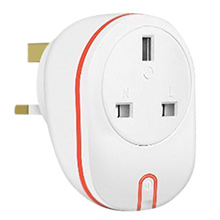
Company: Dongguan Maijia Intelligent Technology Co. Ltd
This Wi-Fi plug adapter from Dongguan Maijia, the MJ-V102, has 100 to 240V and maximum 10A rated voltage and current, 2.4GHz frequency and 1,100W maximum power at 110V. This RoHS-compliant unit weighs 95g.
MOQ: 500 units
Lead time: 25 days
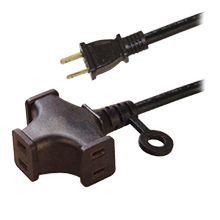
Company: Hangzhou Assem Technology Co. Ltd
Model QP4 from Hangzhou Assem is a PSE-standard power plug with two pins, usually used in Japan. It has a rated voltage and current of 125V and 5 to 7A.
MOQ: 1,000 units
Lead time: 15 days
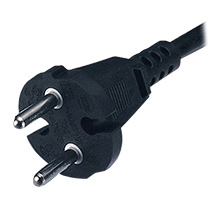
Company: Ningbo A-Line Cable and Wire Co. Ltd
Ningbo A-Line’s AL300 Korea-type or F power plug has two poles and meets RoHS requirements. It is rated at 250V, 7 to 16A.
MOQ: Negotiable
Lead time: 15 days
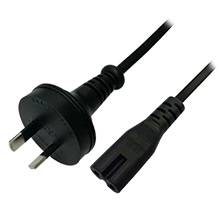
Company: Zhongshan Ruiteng Electronics Co. Ltd
Zhongshan Ruiteng’s RT-P002-4608 is a UK-type power plug with three pins and an IEC C7 connector. It has a rating of 5V, 3A or 250V, 13A , and comes in black, white or custom color.
MOQ: 100 units
Lead time: 7 days
More Sourcing News
Read Also

关注 “环球资源外贸” 官方微信,获取实时外贸资讯
iOS & Android
iOS & Android(Mainland China)
Copyright © 2026 Publishers Representatives Limited. All rights reserved.




