
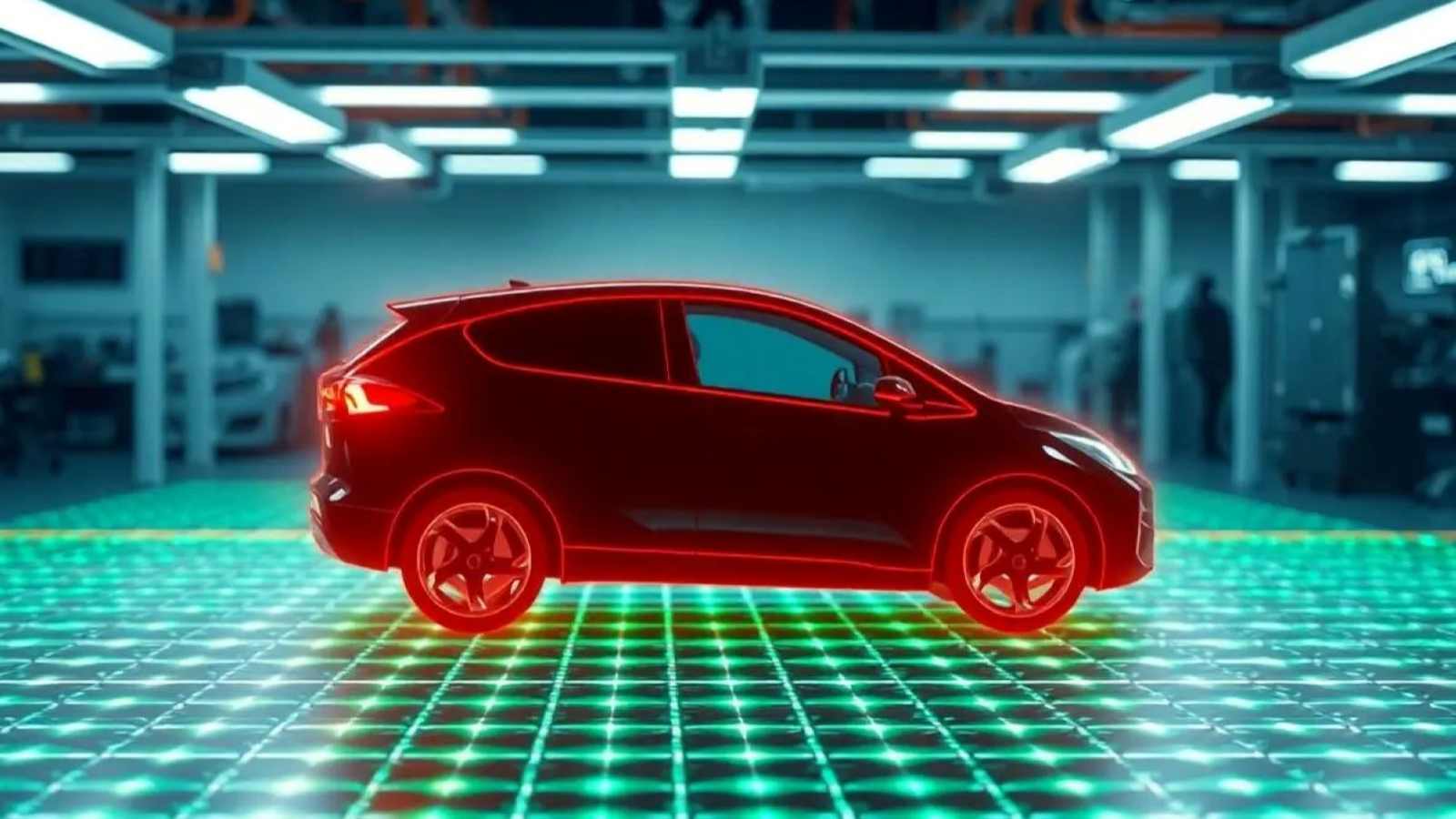
The race to make all-solid-state batteries ready for commercial use is really picking up steam, moving beyond just lab experiments and into pilot production. According to TrendForce, 2026 has seen a noticeable jump in how prepared the technology is, especially in Japan, South Korea, and China. Big names like Toyota, Honda, Nissan, and Samsung are really driving things forward now, as the industry shifts its focus from just proving the chemistry works to actually making the batteries reliably and at a quality suitable for vehicles. TrendForce pointed out that these companies are now putting way more effort into improving yield, consistency, and validation than they are on just exploring concepts.
Japan has pretty much become the most visible hub of this progress. As TrendForce reports, government help has played a big part in speeding things up, with subsidies reaching around $660 million. Plus, the Ministry of Economy, Trade and Industry has approved five major projects related to the entire supply chain of these solid-state batteries. Toyota, Honda, and Nissan have already set up pilot lines, and while they’re still working on refining output quotas and materials, their ultimate goal is to bring these batteries to market around 2030. Interestingly enough, in the first half of 2026, Japanese and Korean companies managed to verify sample performance on engineering lines, looking at things like how well they charge and discharge, and how durable they are.
One pretty concrete example of this progress is Nissan’s thick-format, 23-layer stacked automotive cell. TrendForce mentioned that this battery has gone through charge and discharge tests and has shown better capacity retention compared to regular liquid lithium-ion cells. This really highlights how some automotive candidates have come a long way from early prototypes. At the same time, the market as a whole is seeing more investment. TrendForce says the global solid-state battery industry raised over $1.3 billion through more than 57 deals from 2025 to early 2026, with a good chunk of that money , like, mainly , going into sulfide and polymer-oxide composite electrolytes.
China is also building up momentum, but most of their efforts are still at smaller pilot stages. Companies like CATL, BYD, and FAW are continuing to push towards Technology Readiness Levels (TRL) 4 and 5, expanding their pilot lines, and validating processes. But what’s more significant here, or at least what the industry is emphasizing, is that the real advantage doesn’t just belong to whoever makes the first breakthrough in the lab anymore. The next big winners will be those companies that can consistently produce cells at automotive quality, at large scales, and at prices that the supply chain can handle. TrendForce also mentioned that solid-state batteries aren’t just for electric vehicles anymore, they’re starting to find applications in drones, eVTOLs, microelectronics, construction equipment, and even humanoid robots.
It’s pretty interesting, right? I mean, this shift from proving the chemistry to actual manufacturing is a big deal. And, honestly, seeing all this progress across different countries makes you wonder just how soon these batteries will become a common sight. But, yeah, the road to widespread adoption still has quite a few hurdles to clear.
What makes this moment so important is that the discussion is no longer centered only on scientific promise. It is increasingly about sourcing the right materials, building dependable manufacturing systems, and strengthening logistics across the supply chain. That matters because a battery technology can look excellent in a laboratory and still struggle when it is asked to perform inside a mass-market vehicle line, where consistency, scale, and cost control matter just as much as raw performance. For the electronics and mobile industries, that same pressure is familiar: innovation only becomes meaningful when it can be produced reliably and shipped efficiently.
Another reason the current phase feels different is that the industry is maturing in a very practical way. Pilot lines are not just symbolic milestones; they are where real-world production problems show up. Questions about yield, separator stability, electrolyte compatibility, and long-term durability become much harder to ignore once the process leaves the lab. In that sense, the move toward engineering validation is a lifestyle shift for the battery industry itself, less about experimentation for its own sake and more about building something consumers can eventually trust in everyday use.
This also helps explain why funding is flowing into specific material platforms rather than broad exploratory bets. Sulfide-based and polymer-oxide composite electrolytes are getting attention because they appear more aligned with the manufacturing realities companies are trying to solve. Investors and manufacturers alike are looking for paths that can support reliable output, not just eye-catching performance claims. In a market shaped by electric vehicles, mobile electronics, robotics, and advanced transport, the winners are likely to be the groups that can connect laboratory science with industrial sourcing and scalable logistics.
It is also worth noting that the commercial opportunity extends beyond passenger cars. Solid-state batteries could influence a wide range of sectors where energy density, safety, and form factor are especially valuable. Drones and eVTOLs need lightweight solutions. Construction equipment needs durability. Microelectronics and humanoid robots need compact power sources that can support new designs. That broader application mix could accelerate development because it gives manufacturers more than one path to revenue while they refine production.
Still, the transition from pilot success to mass adoption is rarely smooth. Vehicle qualification takes time, supply chains need to be stabilized, and manufacturers have to prove not only that a cell works, but that it works the same way thousands or millions of times. That is why validation is now such a major theme. If the current trend continues, the next few years may be less about flashy announcements and more about steady gains in quality, throughput, and cost reduction. In the battery world, that kind of progress can be just as important as a scientific breakthrough.
For consumers and industry watchers, the key takeaway is simple: solid-state batteries are no longer just a future concept. They are entering the phase where commercial reality starts to matter more than lab headlines. The pace is still uneven across regions, but Japan, South Korea, and China are all showing that the move toward production is real. As pilot lines mature and automotive validation advances, the conversation will likely shift again, from whether solid-state batteries can be built, to which companies can build them best, at scale, and with a supply chain ready for the demands of the next generation of mobility and electronics.
