
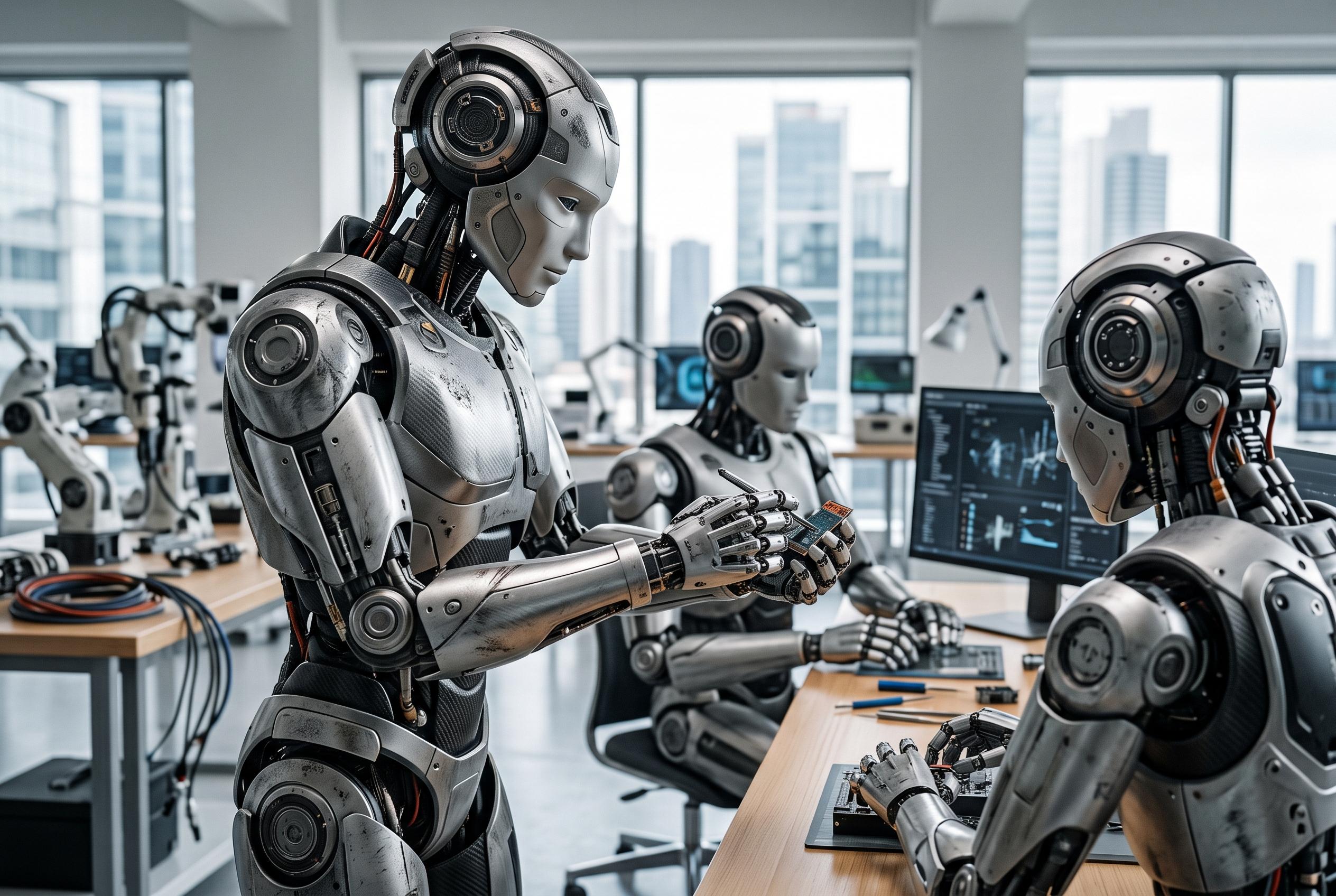
Humanoid robots can run, leap and even perform kung fu, but their real breakthrough may depend on something far less flashy: dexterous hands. As Chinese manufacturers expand production and factories become testing grounds, better gripping, sensing and movement could determine whether these machines remain impressive demonstrations or become practical tools in warehouses, workshops and homes.
The impressive robot demos hide a serious weakness
A humanoid robot can sprint across a track or throw a convincing martial-arts punch, yet still struggle with the humble task of picking up a small object. That contrast captures the industry's central problem. Big movements look spectacular, but useful work often depends on quiet precision, tactile feedback and the ability to adjust a grip in a fraction of a second.
According to reporting from Bloomberg, only a smaller share of the roughly 20,000 humanoid robots installed worldwide last year were doing regular work. Many were used for demonstrations, entertainment or promotional events. The machines may look ready for the future, but a robot that can't reliably turn a key, tie a lace or handle a fragile component has limited value outside a carefully staged show.
McKinsey has described dexterous hands as a crucial link between robotic systems and the physical world. Without them, humanoids may be restricted to pushing carts, moving bulky items or performing other repetitive jobs that don't require fine control. It's a little like giving someone an advanced computer but no reliable keyboard.
Why robot hands are becoming the next big race
The stakes are attracting specialist manufacturers, including China's LinkerBot. Company founder Alex Zhou told Bloomberg that robot hands connect machines with the world around them, making them central to the next stage of humanoid development. The firm reportedly plans to double capacity to 10,000 advanced hands a month as demand grows.
The wider market is already drawing interest from major industrial and technology companies. Reported customers include Samsung Electronics, Meta Platforms and Siemens, while Chinese robotics firms are also working with automakers, logistics companies and electronics suppliers. That mix matters because a good robotic hand isn't just a clever gadget. It must be durable, serviceable and consistent enough for long shifts.
The most valuable designs will likely combine several abilities: strong grip, delicate fingertip control, compact motors, accurate sensors and fast responses to changing pressure. A hand that can lift a metal part but crushes a soft package isn't truly versatile. Nor is one that performs beautifully for five minutes but overheats before the lunch break.
China has the hardware advantage, while America chases the brain
China's lead comes from more than government support. Its huge manufacturing base, technical workforce and established component suppliers give robot makers a fast route from prototype to production. South China Morning Post reported that Chinese companies accounted for more than 80 percent of global humanoid robot installations, underlining the scale of that advantage.
The country also has a deep pool of engineers and a large industrial workforce where new machines can be tested. Factories and warehouses provide real-world data, which can help improve robots' movement, balance and decision-making. That feedback loop is important. A robot learns far more from repeated handling of real boxes, tools and components than from a polished laboratory demonstration.
The United States still has major strengths, especially in artificial intelligence, advanced chips and venture capital. Companies such as Nvidia are investing in so-called physical AI, which links software intelligence to action in the real world. The emerging contest is therefore less a simple race between countries than a division of strengths: China is strong in bodies, components and production, while American firms are pushing the brains.
Falling costs could move humanoids beyond the showroom
Price remains another major obstacle. Industry forecasts cited in the reporting suggest that the cost of components for a China-made humanoid could fall to below $17,000 by the end of the decade. If that happens, businesses may find it easier to justify fleets of robots for repetitive or physically demanding work.
McKinsey's research suggests that commercial adoption will depend on more than a lower sticker price. Companies also need reliable performance, clear safety systems, manageable maintenance and a convincing return on investment. A cheap robot that spends too much time being repaired is still an expensive employee.
Supply chains will shape that calculation. China controls large portions of the markets for permanent magnets, precision bearings, sensors and power electronics used in robotic joints. Analysis cited by Morgan Stanley found that removing Chinese components from Tesla's Optimus supply chain could dramatically increase its parts cost. That dependence could make future trade restrictions and local manufacturing efforts especially consequential.
The next breakthrough may come from learning human skills
Robot makers are increasingly collecting demonstrations of people performing precise actions. LinkerBot, for example, reportedly studies videos of cooks slicing vegetables, pianists moving across keys and dentists handling instruments. The goal is not simply to copy motion, but to capture the timing, pressure and coordination that make a task work.
Chinese startups are also developing "world models" designed to help robots understand their surroundings and plan movement. This could allow a machine to recognise that a cup is fragile, a floor is slippery or an object has shifted slightly from where it was expected. Those small judgements are exactly where human workers remain remarkably good.
The outlook is promising, but the timeline deserves a dose of caution. Forecasts of millions or even billions of humanoid robots assume that hardware, software, safety and economics all improve together. For now, the winning robot won't necessarily be the one that performs the flashiest backflip. It'll be the one that can pick up the right part, every time, without dropping it.
It's the hands, not the kung fu, that may decide whether humanoid robots become genuinely useful.
Disclaimer: This article may have been created with AI assistance and reviewed by our editorial team. It is provided for general informational purposes only. Readers should verify information independently before relying on this content.
