
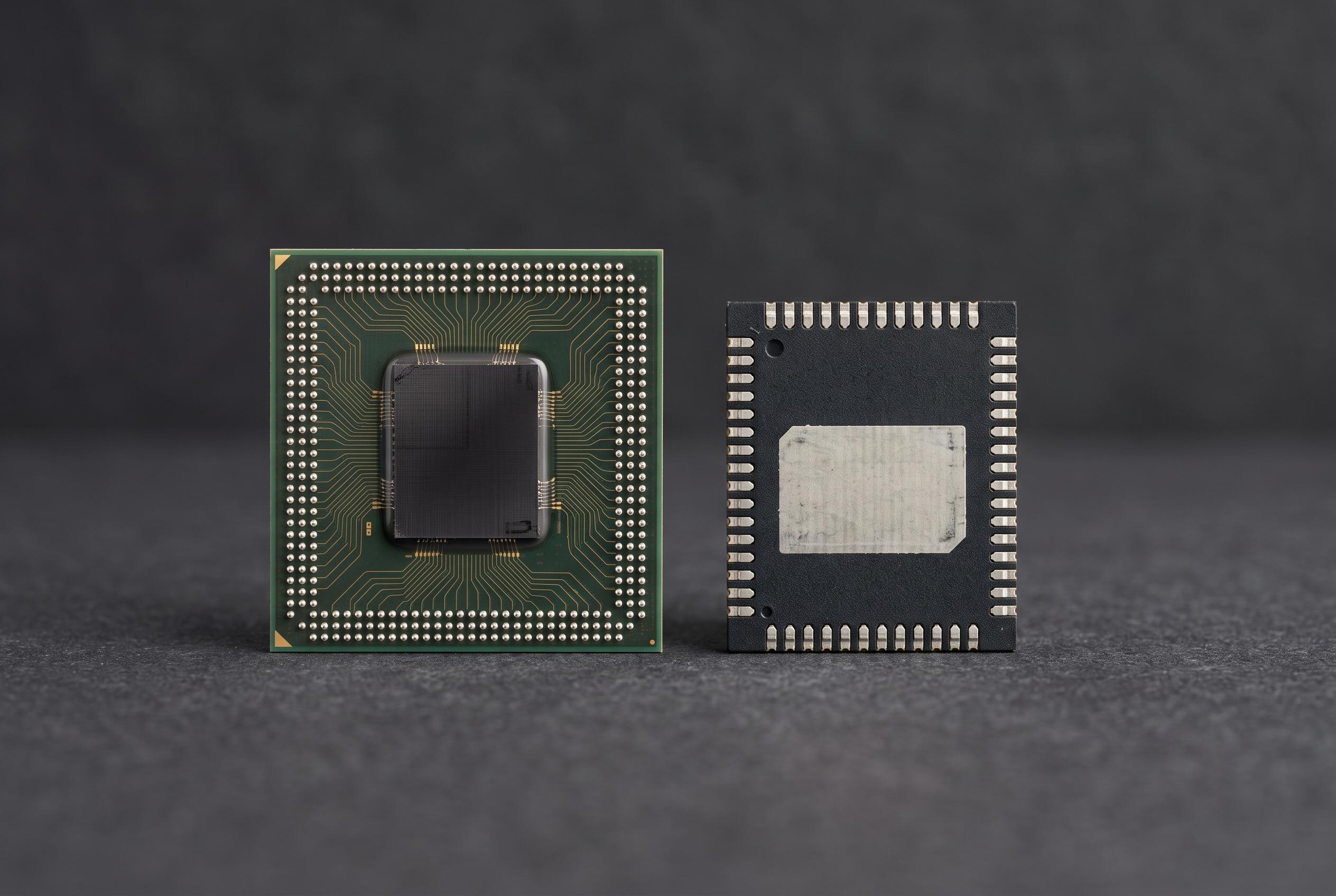
- China expected to reduce reliance on foreign chips with 46% annual wafer capacity growth
- SMIC to lead capacity expansion and yield improvements
- Critical lithography equipment shortages threaten full self-sufficiency prospects
Goldman Sachs Foresees Major Advances in China’s Chipmaking, But Equipment Gaps Could Stall Full Independence
Goldman Sachs, one of the world’s leading investment banks, has published an in-depth analysis forecasting considerable growth in China’s domestic semiconductor manufacturing capabilities over the next decade. The report highlights that Chinese chipmakers, spearheaded by Semiconductor Manufacturing International Corporation (SMIC), are positioned to substantially reduce their dependence on foreign suppliers of advanced process node chips, especially those manufactured at 7-nanometer (nm) scale or below, between 2025 and 2035. However, despite these optimistic projections, the bank cautions that persistent shortages in crucial advanced lithography equipment could significantly impede China’s ability to achieve complete self-sufficiency in semiconductor production.
Rapid Expansion of China's Advanced Semiconductor Supply Anticipated
According to Goldman Sachs, the volume of wafers fabricated at 7nm or smaller process nodes within China is expected to grow at a staggering compound annual growth rate (CAGR) of approximately 46% during the 2025-2035 period. This rate vastly outpaces the forecasted domestic demand growth for advanced chips, which is estimated at a more modest 17% annually over the same span. If these projections hold true, the supply gap, the difference between China’s domestic production capabilities and its demand for advanced semiconductors, could shrink dramatically from 92% in 2025 to roughly 34% by 2035. This suggests a more than halving of China’s reliance on foreign imports for cutting-edge chips, a strategic objective aligned with the government’s broader “Made in China 2025” and “14th Five-Year Plan” initiatives aimed at bolstering technological self-reliance.
This forecast is anchored primarily on the aggressive capacity build-out plans at SMIC, currently the largest contract chipmaker in China and a key beneficiary of national policy support. Goldman Sachs anticipates SMIC will maintain a robust expansion trajectory, with monthly wafer fabrication capacity increases ranging between 30,000 to 50,000 wafers starting in 2026 until 2031. Post-2031, the monthly increments are projected to moderate to about 20,000 wafers through 2035. These capacity enhancements are expected to be accompanied by continuous improvements in manufacturing yields, a critical factor determining the effective output of functional chips from raw wafers, which further amplifies productive efficiency.
Lithography Equipment: The Achilles’ Heel in China’s Semiconductor Ambitions
While capacity and yield improvements create a promising outlook, the Goldman Sachs report underscores equipment shortages, above all, in lithography tools, as a fundamental bottleneck threatening to delay or constrain China’s quest for semiconductor independence. Lithography, the process of patterning silicon wafers with intricate circuit designs, especially at advanced nodes such as 7nm and beyond, relies on highly sophisticated and expensive machinery. Currently, such tools, particularly extreme ultraviolet (EUV) lithography systems, are manufactured by a small number of global companies, with Dutch firm ASML holding a near-monopoly on EUV equipment.
Export restrictions and geopolitical tensions have severely limited China’s access to these state-of-the-art lithography tools. Although domestic firms have made strides in developing deep ultraviolet (DUV) lithography equipment, these are often insufficient for the most advanced chip manufacturing stages. Without a steady supply of advanced lithography machinery, even rapid capacity growth and yield improvements may not translate into transformative industry breakthroughs. In effect, the report suggests that while China can make meaningful progress in volume and technological sophistication, full self-sufficiency, particularly for leading-edge semiconductors, will remain elusive in the near to medium term.
Implications for China and the Global Semiconductor Landscape
China’s semiconductor sector is approaching a critical inflection point. Goldman Sachs’ forecasts imply that within the next decade, China could establish a far stronger domestic capability for producing advanced chips, which are central to high-tech products from smartphones to electric vehicles and artificial intelligence systems. Such progress would represent a strategic diversification away from expensive and politically vulnerable foreign supply chains. However, the situation is nuanced, reflecting the complex interplay between industrial policy, supply chain dependencies, and high technology barriers.
Effective semiconductor manufacturing depends not only on wafer fabrication capacity but also on a tightly coordinated ecosystem that integrates raw materials, process expertise, cutting-edge equipment, and logistics. Lithography tool shortages are just one illustration of how a supply chain bottleneck can restrict overall advancement. Furthermore, the maturation of domestic chipmakers like SMIC will require ongoing investment, stable policy support, favorable trade conditions, and technical know-how transfer, variables that can be influenced by external pressures such as export controls, international collaboration, and global market dynamics.
For multinational corporations and investors tracking this sector, the Goldman Sachs report serves as a reminder that semiconductor industry competition is multidimensional. While headline figures about capacity growth are important, the true measure of progress lies in overcoming timing challenges, resource constraints, and technical bottlenecks. Even rapid theoretical growth models must be tempered with an understanding of real-world complexities and risks.
Key Takeaways
- -
Rapid growth in domestic advanced wafer supply: The supply of wafers at 7nm or smaller nodes in China potentially rising at a 46% CAGR over the next decade, significantly outpacing demand growth.
- -
SMIC’s central role: SMIC is expected to drive much of the capacity expansion and yield improvements underpinning China’s semiconductor ambitions.
- -
Equipment shortages remain critical: Lack of access to leading-edge lithography, especially EUV systems, poses the most significant hurdle to achieving full self-sufficiency.
- -
Partial independence likely: While reliance on foreign suppliers will decrease sharply, achieving complete autonomy in advanced chip manufacturing will be challenging and slow.
- -
Global semiconductor dynamics: The evolving landscape is shaped by geopolitical factors, supply chain resilience, and technological innovation, making the market highly complex and sensitive to disruptions.
Frequently Asked Questions (FAQs)
Q: What is the central conclusion of Goldman Sachs' report on China’s semiconductor industry? A: China is on track to dramatically reduce its dependence on imported advanced chips over the next ten years, but a shortage of critical manufacturing equipment, particularly lithography tools, is likely to prevent full technological self-reliance.
Q: Why is lithography equipment so crucial to chip production? A: Lithography machines are essential for imprinting circuits onto silicon wafers at the nanoscale. Advanced lithography technologies, like EUV, enable the production of smaller, faster, and more power-efficient chips. Without access to these tools, scaling advanced semiconductor manufacturing is difficult.
Q: How significant is Semiconductor Manufacturing International Corporation (SMIC) in this outlook? A: SMIC is central, as the bank’s forecast depends heavily on SMIC expanding its monthly wafer capacity by tens of thousands through 2035 and improving manufacturing efficiencies.
Q: Does the forecast imply China will become fully independent in advanced semiconductor manufacturing soon? A: Not necessarily. Although China is expected to cut the supply-demand gap substantially, technical bottlenecks, particularly lithography tool shortages, mean full self-sufficiency is unlikely in the near term.
Q: What factors could influence whether these projections come true? A: Outcomes depend on trade policies, capital investments, technological breakthroughs, supply chain stability, and geopolitical developments. These variables introduce significant execution risks.
Disclaimer: This article was developed with reference to AI tools and reviewed by our editorial team. It is intended for informational purposes only. Readers should independently verify any facts or figures before making decisions based on this content.
